
Distinguishing AC Impedance and DC Resistance in Prismatic Cell Quality Control
AC impedance screens tab welds at high speed while DC resistance predicts real operating voltage drop, thermal runaway risk, and pack degradation.
AC impedance screens tab welds at high speed while DC resistance predicts real operating voltage drop, thermal runaway risk, and pack degradation.
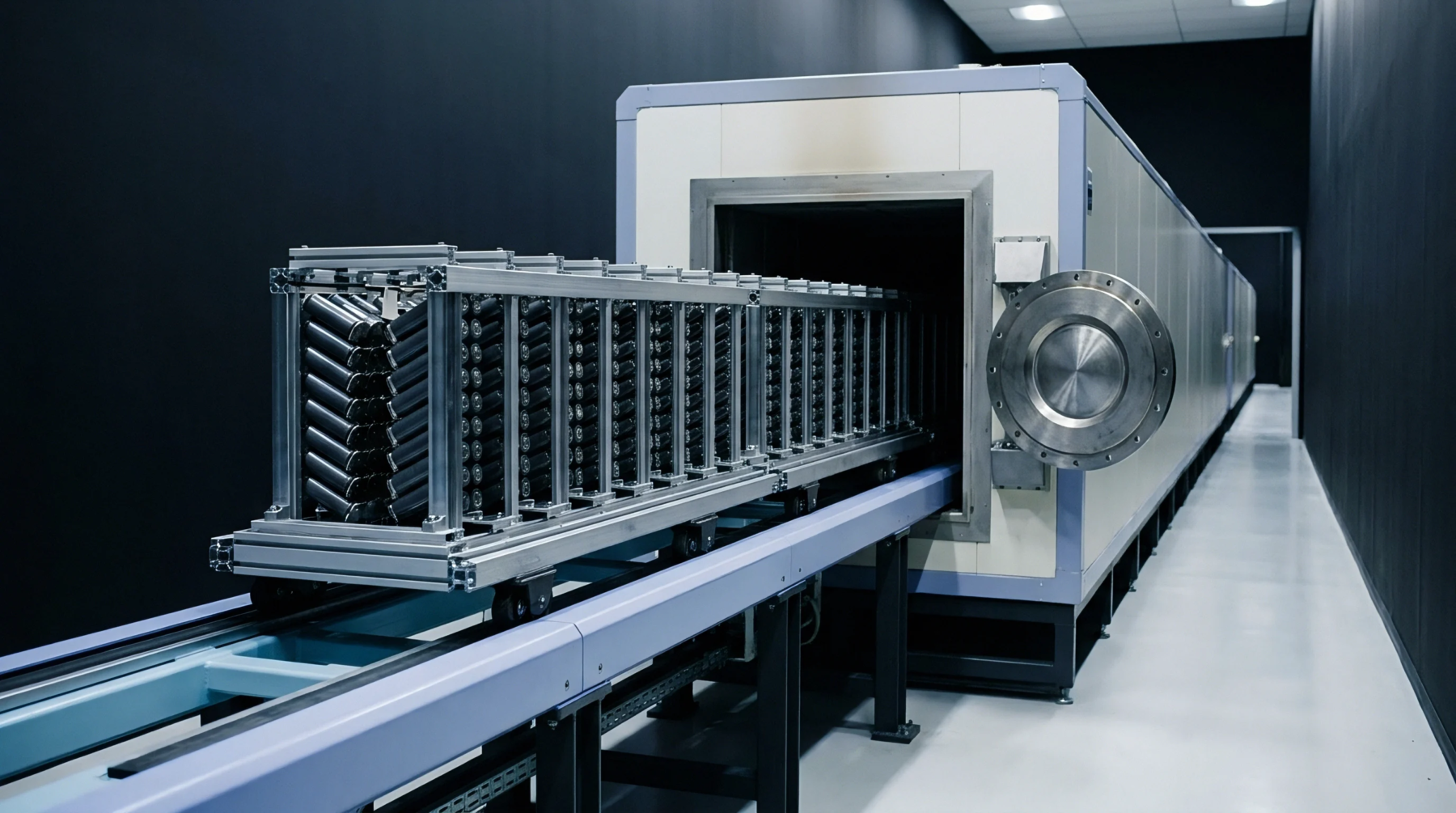
Thermally corrected degradation mode quantification decouples kinetic impedance masking from true lithium inventory loss to prevent false warranty claims.

Three electrode impedance testing decouples anode and cathode degradation by isolating half cell charge transfer resistance without breaking full cell geometry.

LFP capacity loss stems primarily from active lithium loss via interphase growth, requiring differential capacity screening and precise thermal control.
Contractual impedance guarantees depend on ten-second DC resistance metrics, bridging microstructural interphase degradation models to commercial warranty enforcement.

Combining high-frequency impedance metrics with dQ/dV peak shifting catches early cell resistance variations before cycling degradation becomes visible.

Data acquisition delay inflates cell transient resistance measurements by capturing double-layer charging decay rather than pure ohmic voltage drops.

Direct current pulse testing isolates cell ohmic and polarization resistance within milliseconds to reject structural defects before pack integration.

Four-wire Kelvin testing eliminates lead and contact resistance errors, enabling precise micro-ohm battery internal resistance measurement for cell grading.

High voltage thermal cycling accelerates electrolyte salt depletion and interphase resistance growth, requiring combined spectroscopic and mass transport verification.

Early lithium cell resistance rise stems from passive layer growth and cathode microcracking, shifting procurement risk to initial DCIR specifications.
Expertise is a utility, not a secret. sentiention™ publishes its working knowledge as open reference: intelligence layer covering the materials it sources, the markets it enters, and the reference that serves both.