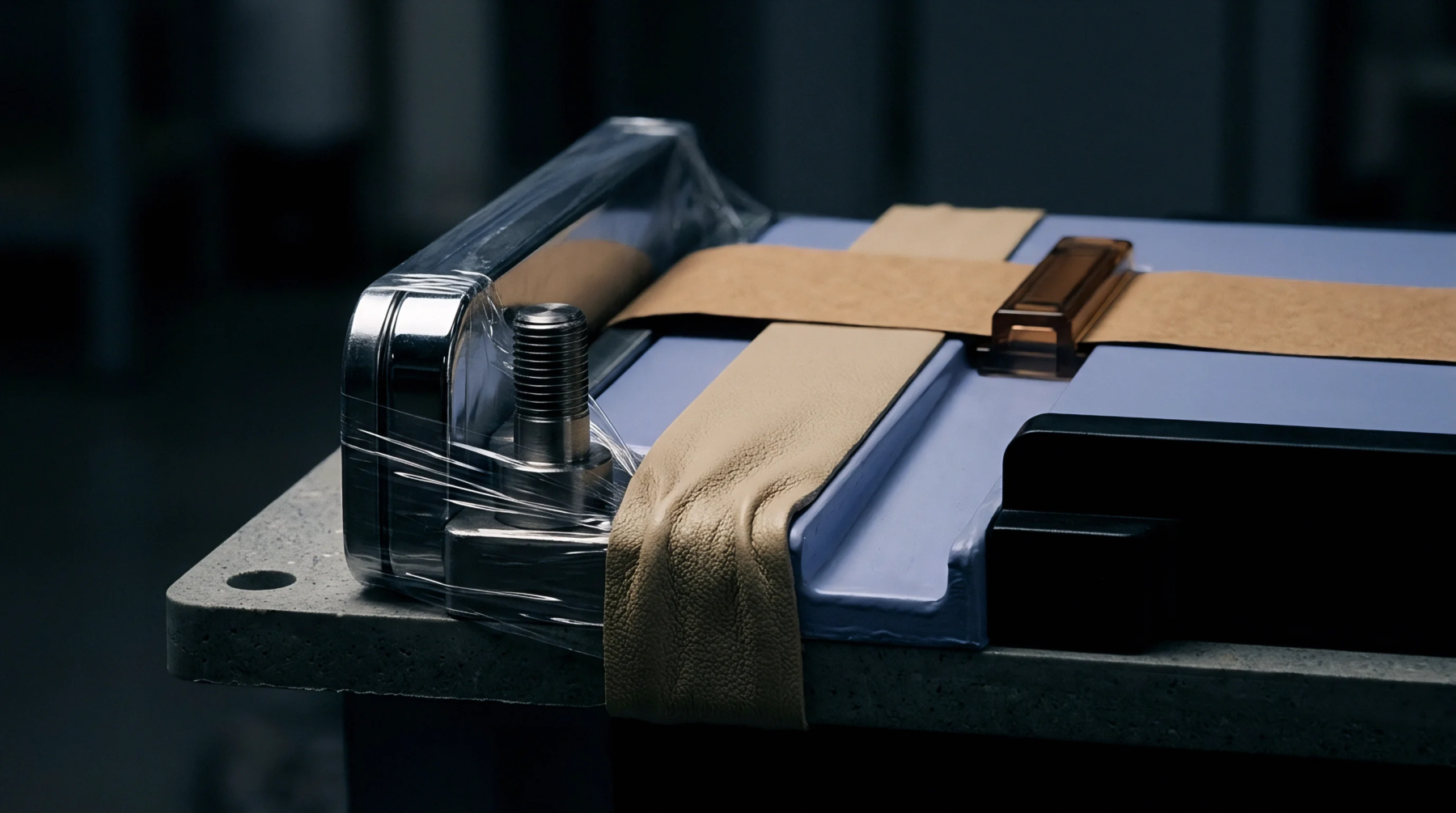
Mechanical Clamping Compression Mechanics under Cyclic Lithium Cell Swelling
Controlled mechanical clamping combines rigid platen bracing with elastomeric cushions to constrain cyclic lithium cell swelling stress between 0.2 and 0.5 MPa.
Time dependent reduction in internal compressive stress occurring within constrained battery assemblies under sustained mechanical strain over prolonged operational lifetimes defines a critical rheological degradation process. The mechanism of pressure creep relaxation involves the viscoelastic flow of intermediate foam cushions, microscopic settling of porous electrode coatings, and plastic deformation in module structural bands. Boundaries of the concept exclude rapid elastic recoil upon mechanical release, immediate thermal expansion adjustments, and instantaneous yield failures under extreme crash loads.
Mechanical test frames measure this stress decay under constant displacement boundary conditions at controlled ambient temperatures over hundreds or thousands of hours. Pack sourcing contracts specify creep resistance limits to ensure that clamping forces remain sufficient to sustain cell cycling without permitting active material delamination.
Constant compressive deflection applied to internal module components initiates molecular rearrangement within polymer cushion pads and separator membranes. Microcellular silicone foams and polyurethane elastomer pads exhibit stress relaxation curves where resistive force drops logarithmically against log time. Polyolefin separator micropores deform under sustained pressure, reducing membrane thickness and permanently collapsing localized porous structures.
Porous graphite and nickel-rich cathode layers undergo particle rearrangement and binder creep, decreasing electrode thickness without external mechanical intervention. High operating temperatures significantly accelerate viscoelastic flow rates according to standard time temperature superposition principles.
Loss of clamping pressure across module stacks eliminates the intimate physical contact required between electrode active surfaces and separator membranes. As pressure creep relaxation reduces the load delivered by module end plates, cells experience micro-gapping during cold discharge cycles when thermal contraction coincides with minimum swelling state. Reduced contact stress allows conductive carbon additives to disconnect from active particle surfaces, accelerating cell impedance rise and premature capacity fade.
Liquid electrolyte shifts toward low pressure perimeter regions, drying out center active zones and causing non-uniform degradation. Conversely, if creep leads to excessive separator thinning, internal micro-shorts can develop along burrs or high points on electrode foil edges.
Qualification standards for module structural components require accelerated stress relaxation testing at elevated temperatures, often sixty degrees Celsius or higher, under fixed displacement tooling. Design engineers quantify retained compressive force after simulated eight to ten year spans to confirm that minimum contact pressures will persist through end of life. Selecting open cell silicone formulations with low compression set parameters counters long term stress decay better than cheap polyurethane alternatives.
Procurement teams evaluate foam supplier creep data sheets alongside module tie band tensile relaxation curves before approving bill of materials entries. Pressure creep relaxation limits dictate the long term mechanical viability and warranty horizons of constrained battery module systems.
Controlled mechanical clamping combines rigid platen bracing with elastomeric cushions to constrain cyclic lithium cell swelling stress between 0.2 and 0.5 MPa.
Expertise is a utility, not a secret. sentiention™ publishes its working knowledge as open reference: intelligence layer covering the materials it sources, the markets it enters, and the reference that serves both.