Meaning
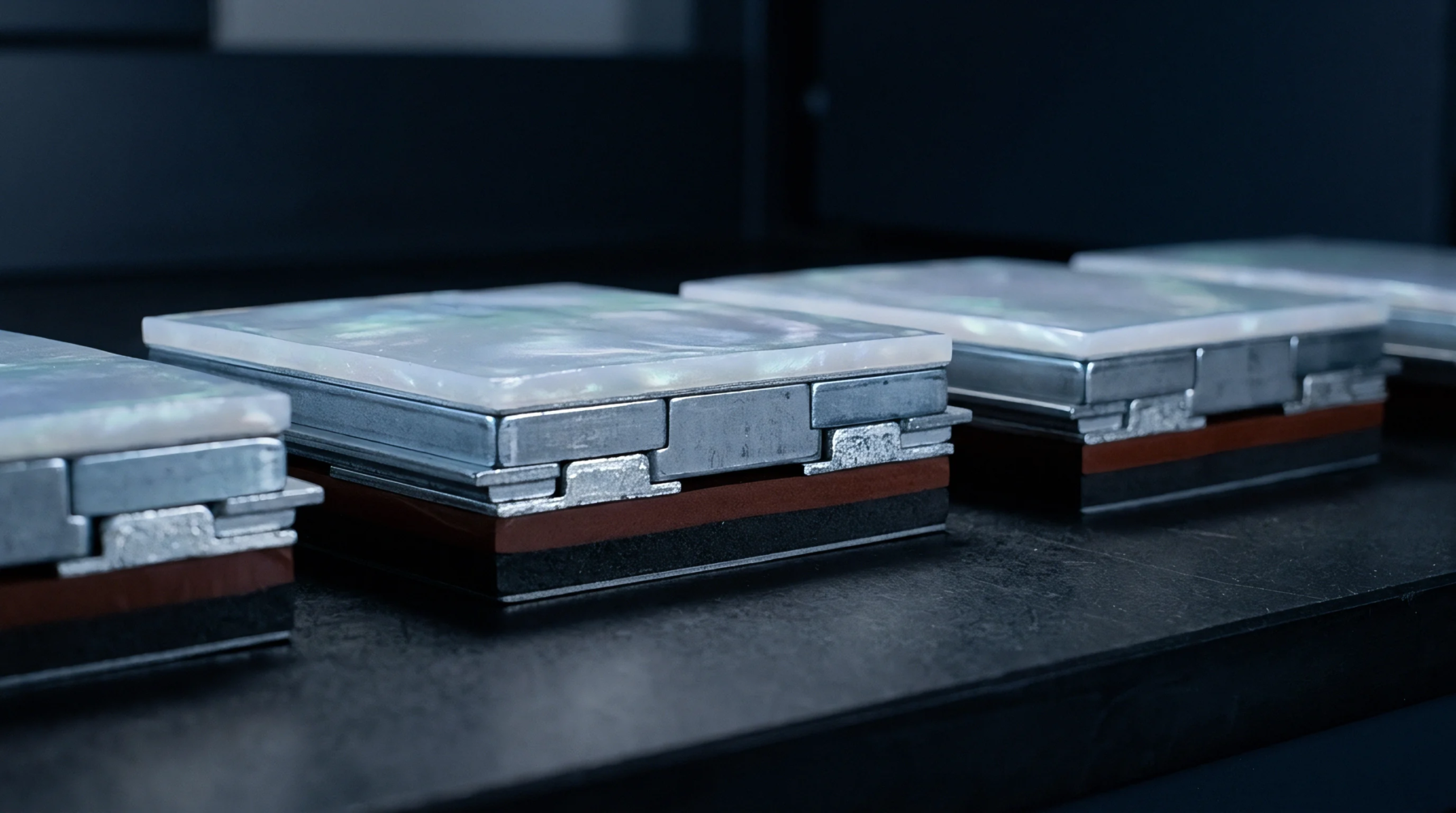
Stress related failure mode involves the horizontal sliding of internal electrode layers relative to one another within the flexible plastic housing of a lithium ion cell. Prismatic pouch cell shearing occurs when the external pressure or high intensity impacts overcome the internal friction that normally keeps the active material stacks and separators perfectly aligned in their containers.
Internal Dislocation
Initiation of the slide usually coincides with mechanical shocks from vehicle movement or rapid fluctuations in pack volume that create unequal forces across the flat face of the cell. Any prismatic pouch cell shearing forces the copper and aluminum foils to move closer to the outer edges where the chemical seals are most vulnerable to physical abrasion or puncture. This event is critical because the thin separators between the layers can be torn or folded by the sideways force which then leads directly to an internal electrical bypass.
Detection is typically performed by measuring the physical flatness of the pouch since internal layers that have shifted will create an irregular bulge or localized thickening at the casing periphery.
Mechanical Stress
Clamping forces from module frames are intended to prevent this movement by pressing the layers together, yet excessive force can also damage the active materials through high friction. Any strategy for avoiding prismatic pouch cell shearing focuses on the balance between enough squeeze to stop the sliding and not enough to crush the delicate ceramic or polymer separators. Observations indicate that the risk rises as the cells age because the internal pressure from gas generation slightly lowers the effective clamping friction between the wet electrode interfaces.
Engineers observe these shifts during simulated crash events to ensure that the internal components do not move more than a fraction of a millimeter even under severe deceleration.
Structural Result
Movement within the stack puts unwanted tension on the ultrasonic welds where the metal tabs join the main battery terminals which can eventually lead to higher electrical resistance. Preventing prismatic pouch cell shearing ensures that the battery can safely supply high currents without hotspots forming at these stressed joints during rapid acceleration. Quality reports use ultra sound or high resolution scans to verify that the core remains locked in position after passing the rigorous mechanical certification sequence.
Final assurance comes from maintaining the specified compression throughout the design life of the battery to stop the slow migration of layers that would otherwise degrade electrical efficiency and overall pack longevity.