Meaning
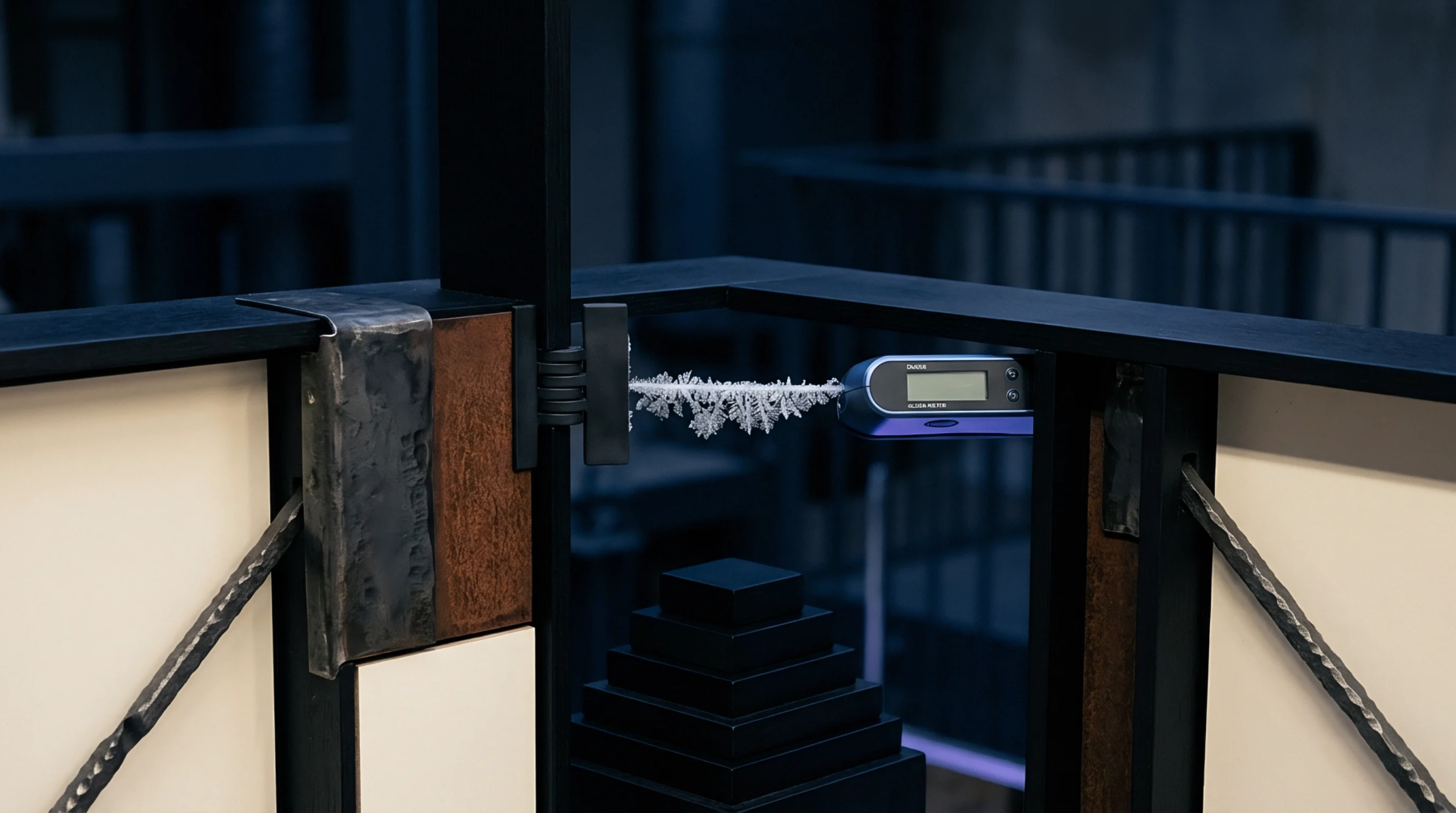
Mechanical fastening applied during solid-state welding or heat treatment processes prevents thermal distortion by holding workpieces under controlled pressure. Thermal clamping uses localized heating elements alongside pneumatic or hydraulic actuators to maintain dimensional stability while high temperatures alter metallurgical structures. Manufacturing plants rely on this technique during battery housing assembly to prevent weld seam failure caused by rapid thermal expansion.
Precise temperature controllers regulate the clamping force to compensate for material softening during the heating cycle.
Thermal Gradient
Temperature differentials across the workpiece boundary dictate the required clamping pressure to counteract localized thermal stress. High heating rates generate steep gradients that demand rapid actuator response to prevent joint displacement during bonding phases. Industrial engineers calculate the necessary force threshold by multiplying the material yield strength reduction factor by the cross-sectional area of the joint.
Cooling rates subsequently govern the release sequence of the pressure actuators to avoid residual stress buildup in the finished assembly.
Actuation Mechanics
Pneumatic cylinders and induction coils combine within the tooling fixture to apply simultaneous pressure and thermal input. Hydraulic systems provide higher clamping forces for thick-walled components where mechanical distortion poses a severe risk to dimensional tolerance. Controllers monitor displacement sensors mounted on the actuator rods to detect thermal expansion in real time.
Voltage supplies to the heating elements modulate automatically based on feedback from embedded thermocouples.
Fixture Degradation
Cyclic exposure to extreme temperatures accelerates mechanical wear on contact surfaces and reduces the fatigue life of the clamping hardware. Alloy steels utilized in fixture construction undergo progressive thermal softening and creep over extended operational periods. Maintenance schedules specify periodic dimensional inspection of the contact blocks to ensure the applied force remains uniform across every production batch.
Premature degradation of the pressure seals leads to inconsistent clamping force and subsequent rejection of the welded components.