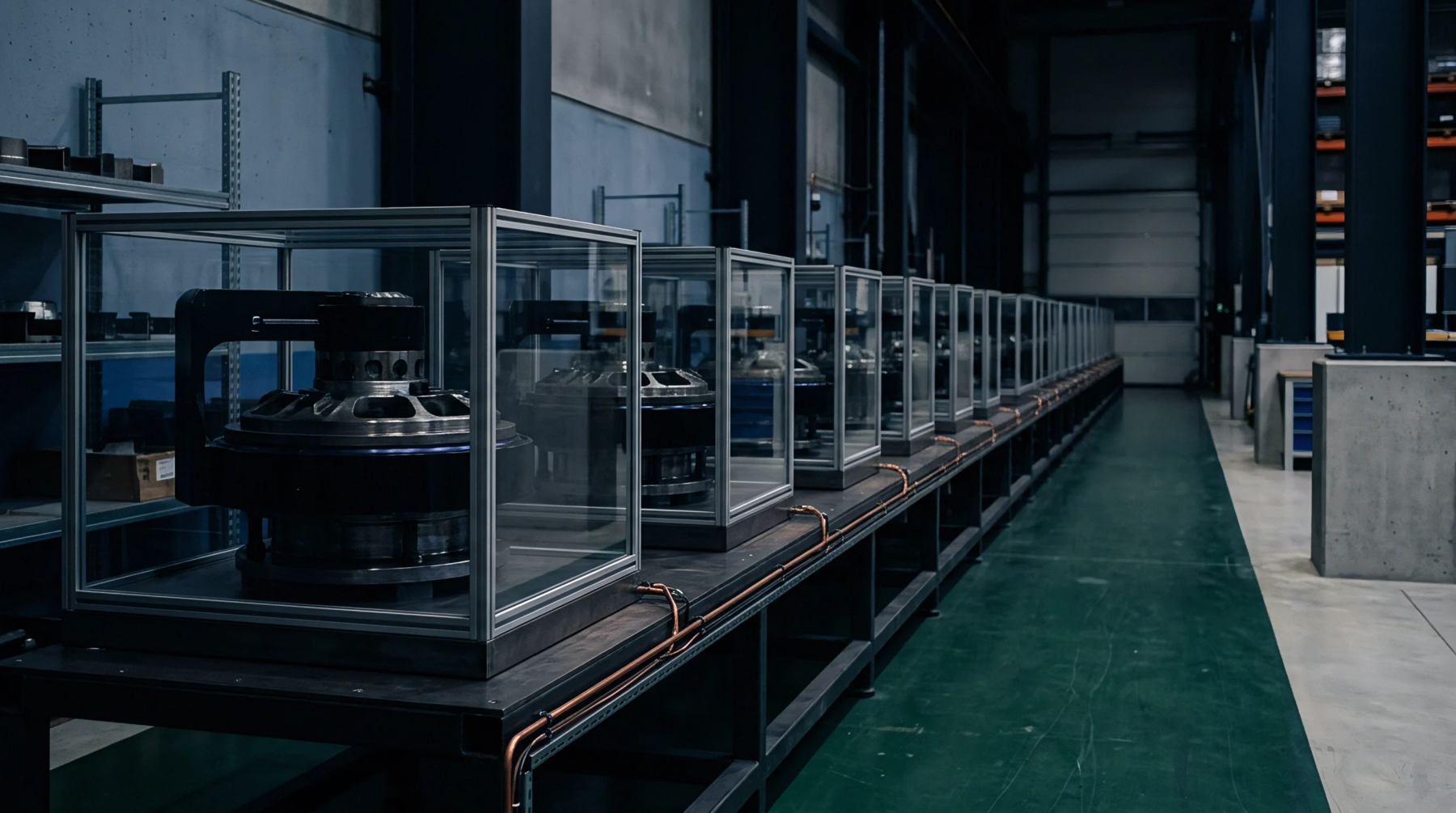
Ultrasonic Nondestructive Testing of Encapsulated Structural Lithium Ion Cell Bonding
Ultrasonic phase inversion and time-of-flight gating accurately quantify bond disbonds, voids, and adhesion integrity in encapsulated structural battery packs.
High-viscosity resin systems providing both mechanical fastening and heat dissipation between electrical components represent a specialized class of chemical bonding agents. A thermally conductive structural adhesive functions by creating a permanent bridge across a joint while simultaneously lowering the interfacial thermal resistance between mated surfaces. These materials contain suspended filler particles, usually metal oxides or ceramic powders, to facilitate phonon transport through the cured matrix.
When applied in the assembly of power electronics or battery packs, the substance ensures that heat generated at the junction moves efficiently toward a heat sink or chassis. The bond line thickness remains the primary constraint during application, because excessive gaps increase resistance while insufficient quantities compromise the shear strength of the connection.
Heat transfer properties derive from the filler loading density and the base polymer chemistry within a thermally conductive structural adhesive. Effective formulations balance the flow characteristics required for dispensing with the high solid content necessary to achieve lower thermal impedance. Chemists modify epoxy or acrylic resins to ensure the dispersed particles stay suspended without settling, as phase separation ruins the uniformity of heat dissipation.
Precision manufacturing processes monitor the rheology of these compounds to prevent air voids that act as insulators and reduce the total efficiency of the heat path. Cooling performance depends on the contact area, the thinness of the layer, and the intrinsic conductivity of the ceramic fillers chosen for the specific design environment.
Structural integrity stays secondary only to thermal efficacy when selecting a thermally conductive structural adhesive for vibration-heavy hardware environments. These formulations require sufficient tensile strength and elongation to survive thermal cycling without cracking or delaminating from the substrate. Manufacturers test these bonds through lap shear protocols to verify that the resin maintains a permanent grip even when operating at elevated temperatures.
A chemical cross-linking process creates the final rigid bond that resists fatigue during rapid expansions and contractions of different metals. Rigorous cure schedules, involving controlled temperature ramps, ensure that the internal grid locks into a stable configuration that withstands external mechanical stress during the full product lifecycle.
Surface preparation dictates the bond quality of a thermally conductive structural adhesive on metallic surfaces or polymer housings. Workers remove oil, dust, and oxidized layers to allow the liquid precursors to wet the contact area fully for a void-free interface. Metering equipment mixes the resin and hardener components precisely at the nozzle to initiate the chemical reaction before deposition occurs.
Automated dispensing robots maintain a consistent bead geometry, which determines the final thickness and coverage ratio between the joined components. Monitoring the bond line pressure during assembly prevents the displacement of the adhesive and ensures that the material achieves its rated heat dissipation value once the curing cycle finishes. The reliance on accurate deposition makes the dispensing equipment as critical as the chemical properties of the material itself.
High-performance bonds remain robust under continuous mechanical load and repetitive heating cycles.
Ultrasonic phase inversion and time-of-flight gating accurately quantify bond disbonds, voids, and adhesion integrity in encapsulated structural battery packs.
Expertise is a utility, not a secret. sentiention™ publishes its working knowledge as open reference: intelligence layer covering the materials it sources, the markets it enters, and the reference that serves both.