Tool Steel Powder Sphericity and Gas Recirculation Vortex Dynamics
Gas recirculation vortex dynamics govern tool steel powder sphericity; suppressing secondary eddies reduces attached fine debris and boosts yield.

Atomization
Liquid H13 tool steel at 1600 degrees Celsius flows through a zirconia delivery tube into the primary breakup zone. High-pressure argon jets strike the molten metal filament at supersonic speeds, transferring kinetic energy to break the continuous stream into thin liquid sheets. Surface tension forces immediately pull these liquid fragments into spherical droplets while they descend through the spray chamber.
Controlling the gas-to-metal mass ratio forms the foundational control lever for particle size distribution and initial droplet geometry.

Supersonic Gas Nozzle Dynamics
Close-coupled geometry channels high-pressure argon jets directly against the molten metal stream. High gas pressures between 3.5 MPa and 5.0 MPa generate gas velocities exceeding Mach 2.2 at the nozzle exit tip. Melt streams shear under pressure.
Gas velocity dominates droplet size. Higher gas kinetic energy creates a fine droplet population with median diameters below 30 microns. Reducing the delivery pressure shifts the median size upward into the range required for hot isostatic pressing feedstocks.
Tool steel alloys containing refractory elements like vanadium, molybdenum, and chromium exhibit high melt viscosities that resist aerodynamic breakup. Operating the melt delivery orifice at superheat temperatures 150 degrees Celsius above the liquidus point lowers liquid viscosity, accelerating sheet disintegration. Argon consumption rises rapidly.
Balancing gas consumption against droplet refining requires continuous pressure regulation across the melt run.
Gas atomization of H13 tool steel at a gas-to-metal mass ratio of 2.8 and 4.5 MPa argon delivery pressure yields a d50 median particle diameter of 32 microns.
Improper matching of melt flow rate and gas ring pressure causes liquid metal buildup on the nozzle face. Metal accumulation alters the gas jet angle, producing asymmetrical shearing forces that generate elongated, non-spherical particles. When gas pressure drops below the design threshold, large melt droplets solidify before surface tension completes spherical shaping, resulting in teardrop morphology that compromises downstream flow performance in additive manufacturing machines.

Recirculation
Swirling gas flow patterns inside the atomization tower dictate how entrained droplets cool before contacting vessel walls. High-velocity gas exiting the nozzle drags surrounding gas downward, creating a low-pressure zone near the central spray axis. This negative pressure differential pulls cooler gas from the lower tower sections back upward along the periphery, establishing a continuous recirculating vortex loop.

Vortex Structure inside Atomization Towers
Pressure differentials between the central spray core and wall boundaries generate toroidal secondary currents. Recirculation eddies trap fine droplets. Vortex cores retain thermal energy.
Fine solidified particles carried by the recirculating gas stream re-enter the hot primary plume where molten droplets are still deforming.
- Gas jet momentum expands downward along the central core, driving primary atomization gas toward the lower collection cone.
- Wall friction slows the descending boundary layer gas, creating a upward pressure gradient near the chamber sidewalls.
- Cool gas recirculates upward into the expansion zone, carrying lightweight solidified fines into the liquid spray path.
- Re-entrained fine particles collide with semi-molten droplets, welding to their surfaces before final cooling completes.
Tower aspect ratios influence vortex intensity. Deep towers with height-to-diameter ratios above 4.0 promote long recirculating pathways that cool entrained fines before re-entry. Narrow towers amplify vortex kinetic energy, increasing collision frequencies between cold particles and liquid droplets.
| Alloy Grade | Gas-to-Metal Ratio | Vortex Recirculation Velocity (m/s) | Particle Sphericity Index | Attached Fine Density (counts/100 particles) |
|---|---|---|---|---|
| H13 Tool Steel | 2.5 | 4.2 | 0.91 | 14 |
| M2 High Speed Steel | 3.1 | 6.8 | 0.86 | 28 |
| 1.2709 Maraging Steel | 2.8 | 5.1 | 0.89 | 19 |
| D2 Die Steel | 2.2 | 3.5 | 0.93 | 9 |
Suppliers frequently claim that elevated fine particle adhesion stems entirely from raw material scrap contamination rather than tower fluid dynamics. Processing logs demonstrate that adjusting secondary gas extraction ports suppresses vortex loop formation, directly reducing attached surface debris without altering raw material purity.


Sphericity
Particle morphology determines how efficiently powders pack inside additive manufacturing hoppers. High sphericity minimizes interparticle friction, enabling uniform layer deposition during laser powder bed fusion. Quantifying particle shape relies on dynamic optical image analysis measuring aspect ratio, circularity, and Wadell sphericity across tens of thousands of individual particles per batch sample.
Do Vortex Flow Structures Induce Particle Adhesion?
Fine semi-solid particles swept upward by secondary thermal currents collide with liquid droplets. Particle shape dictates bed density. Fine particles adhere to molten surfaces.
Adhered micro-droplets alter the geometric profile of the host particle, lowering overall Wadell sphericity from 0.94 to less than 0.85.
Consider a 1000-kilogram lot of H13 tool steel powder produced under high vortex recirculation conditions. Optical particle analysis reveals an average circularity of 0.86 with an attached fine frequency of 32 adhering particles per 100 host particles. Implementing a secondary gas injection skirt breaks the vortex loop, reducing recirculation velocity by 65 percent.
Re-testing the subsequent 1000-kilogram lot yields an average circularity of 0.93 and cuts attached fine frequency to 6 per 100 host particles, increasing apparent powder density from 4.1 g/cm³ to 4.5 g/cm³.
Specification under ISO 52907 clause 6.3 mandates optical sphericity exceeding 0.88, rejecting powder lots with elevated surface-attached debris.
- High Surface Drag increases interparticle friction and prevents smooth recoater blade movement across the powder bed.
- Irregular Packing Density introduces localized density variations that produce micro-voids during laser melting.
- Variable Laser Absorption alters energy distribution across irregular particle geometries, causing uneven melt pool dynamics.
- Flow Rate Instability causes inconsistent dosing from supply hoppers into the additive printing chamber.
Procurement contracts specifying additive-grade tool steel powder incorporate ISO 52907 compliance clauses that set absolute lower limits on optical sphericity and upper thresholds on fine particle attachment count, enabling automatic lot rejection upon inspection failure.


Mesh
Mechanical screening separates raw powder into distinct particle size fractions suitable for additive manufacturing. Laser powder bed fusion typically utilizes a fine cut ranging from 15 to 45 microns. Direct energy deposition and hot isostatic pressing applications require coarser distributions spanning 45 to 105 microns or 50 to 150 microns.

Classifying Particle Fractions
Ultrasonic sieves prevent blind spots while isolating sub-forty-five micron powder cuts. Screen clogging alters particle distribution. Air classification improves yield purity.
Precise particle separation eliminates oversized particles that disrupt blade spreading and fine dust that causes health hazards during handling.
High gas velocity suppresses secondary vortex strength near the nozzle orifice.
| Process Target | Size Cut Range (μm) | Hall Flow Rate (s/50g) | Apparent Density (g/cm³) | Hausner Ratio | Fines Content ( |
|---|---|---|---|---|---|
| Laser Powder Bed Fusion | 15 – 45 | 18.2 | 4.42 | 1.12 | 1.8 |
| Direct Energy Deposition | 45 – 105 | 14.5 | 4.58 | 1.08 | 0.4 |
| Hot Isostatic Pressing | 50 – 150 | 12.8 | 4.65 | 1.05 | 0.1 |
| Binder Jetting | 10 – 25 | No Flow | 3.95 | 1.28 | 8.5 |
| Testing conditions: Hall flow measured per ASTM B213; Apparent density measured per ASTM B212 at 21°C and 45% relative humidity. | |||||
- Screen Mesh Aperture selection determines the strict upper cut-off limit for laser powder bed fusion feedstocks.
- Ultrasonic Transducer Frequency prevents fine powder agglomeration from blinding screen openings during sieving operations.
- Air Classifier Gas Velocity balances separation sharpness against fine powder loss in the cyclone extraction system.
- Sample Moisture Level must remain below 0.03 percent water content to prevent interparticle capillary bonding during classification.
Unresolved fluid dynamic interactions during air classification leave open the question of whether active thermal control of classifying argon streams can eliminate sub-ten-micron dust without incurring unrecoverable gas energy losses.


Rheology
Bulk metal powder behavior during recoater blade spreading relies on surface friction and interparticle cohesion. Highly spherical particles flow smoothly through testing funnels, displaying short hall flow times. Irregular shapes and high surface roughness restrict particle movement, increasing flow time or causing complete funnel blockages during measurement.

Apparent Density and Interparticle Friction
Funnel-based velocity tests measure the time required for fifty grams of powder to pass through a standardized orifice. Interparticle friction halts powder flow. Moisture contamination degrades powder rheology.
Powder beds with low Hausner ratios below 1.15 pack tightly, offering high tap density and low bed porosity during build layer deposition.
Powder bed fusion operations demand consistent Hall flow times below twenty-five seconds per fifty grams.
High proportions of attached surface fines increase interparticle mechanical interlocking, causing bulk powder to exhibit elevated avalanche angles in dynamic powder rheometers. Lowering attached fine concentrations restores free-flowing characteristics.
Excessive surface oxidation forms a thick oxide film that increases surface roughness, impairing bulk powder flow regardless of geometric sphericity.
Yield
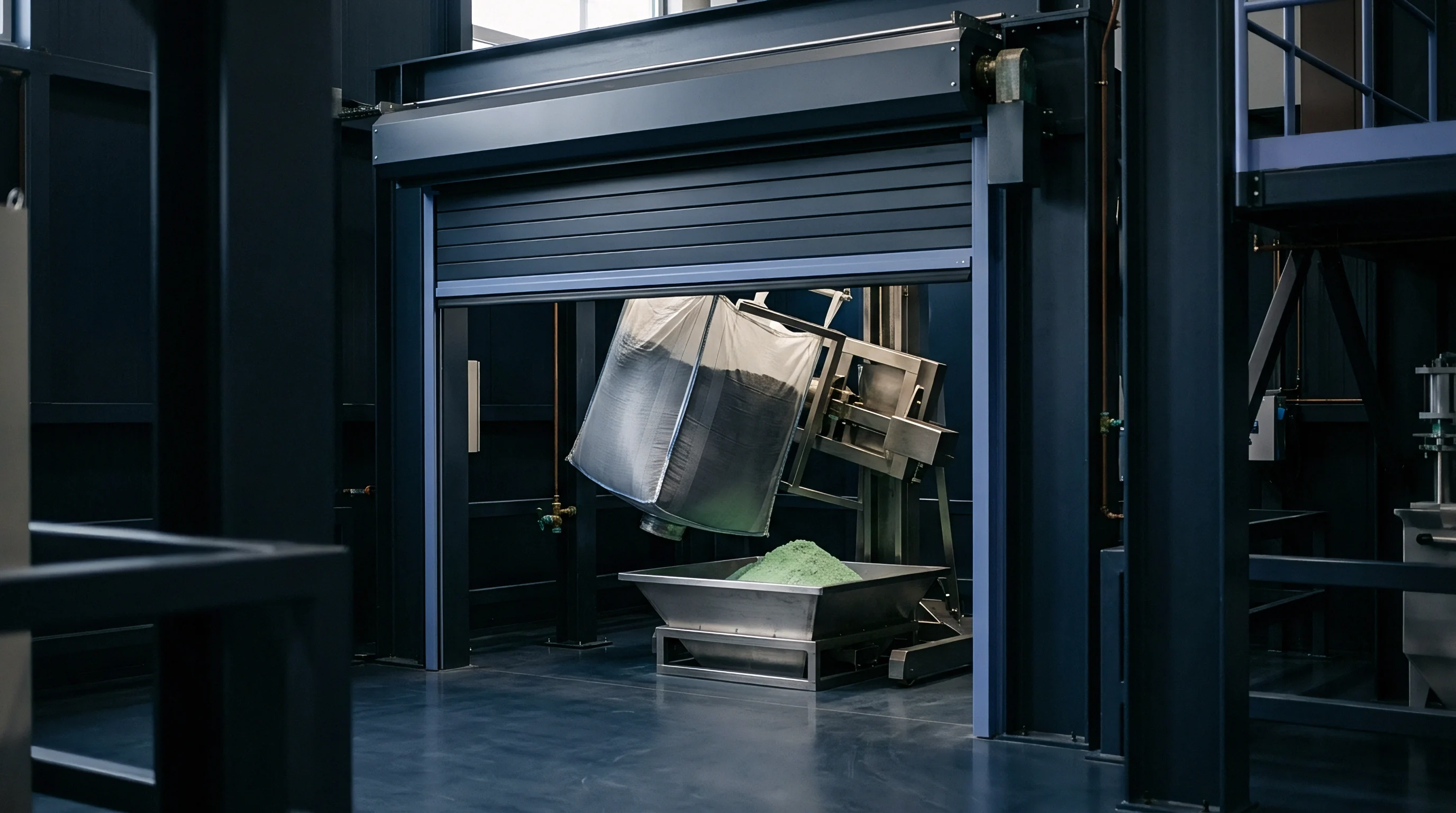
Financial viability in gas atomization hinges on maximizing the mass fraction within target particle size windows. Standard inert gas atomization of tool steel yields approximately 40 to 50 percent of total melt mass in the 15 to 45 micron range. The remaining mass consists of oversized particles and unrecoverable fine dust.
Optimizing gas recirculation vortex dynamics shifts particle size distributions toward the target cut, boosting process profitability.
Landed Powder Cost Structures
Recycling argon gas reduces processing expenses by forty percent over open-loop delivery. Inert gas recovery limits expenses. Tool steel scrap increases unit costs.
High-efficiency gas closed loops compress utility overhead while maintaining consistent atomization gas purity standards.
Assume an atomization campaign processing 5000 kilograms of M2 high-speed tool steel at a raw melt cost of $8.50 per kilogram. Standard processing yields 2100 kilograms of additive-grade powder (15-45 μm) sold at $65.00 per kilogram, with the remaining 2900 kilograms re-melted at a scrap recovery value of $4.00 per kilogram. Operating costs total $18,000 per run.
Gross revenue equals $148,100, yielding a net profit of $87,600.
Optimizing vortex recirculation dynamics elevates target powder yield from 42 percent to 54 percent, producing 2700 kilograms of additive-grade powder per run. Target output increases by 600 kilograms while reducing re-melt scrap mass to 2300 kilograms. Revenue rises to $184,700 under identical operating expense, increasing net run profit to $124,200.
This 41.7 percent profit expansion demonstrates the commercial leverage of internal fluid dynamic control.
| Process Stage | Energy Input (kWh/kg) | Gas Losses (m³/kg) | Yield Percentage (%) | Cost Impact ($/kg) |
|---|---|---|---|---|
| Induction Melting | 0.65 | 0.00 | 99.2 | 1.12 |
| Gas Atomization | 1.20 | 0.45 | 100.0 | 8.45 |
| Vortex Gas Recirculation | 0.35 | 0.08 | 98.5 | 2.10 |
| Ultrasonic Classification | 0.12 | 0.00 | 54.0 | 3.80 |
- Certificate of Analysis documentation verifying chemical composition within ASTM A681 limits for H13 tool steel.
- Particle Size Distribution Report derived from laser diffraction matching volume fraction specifications for d10, d50, and d90.
- Morphology Evaluation Certificate presenting dynamic optical imaging data for circularity and Wadell sphericity.
- Flowability and Density Test Log verifying Hall flow speed, apparent density, and tap density metrics.
Controlling gas recirculation flow structures preserves particle sphericity, minimizes surface debris attachment, and secures the metallurgical performance demanded by tool steel additive manufacturing operations.