Converting Vacuum Bombing Helium Signal Data into Air Leak Equivalents
Converting helium bombing signal data to standard air leak rates requires applying the Howl-Mann equation with explicit cavity volume and dwell parameters.


Chamber
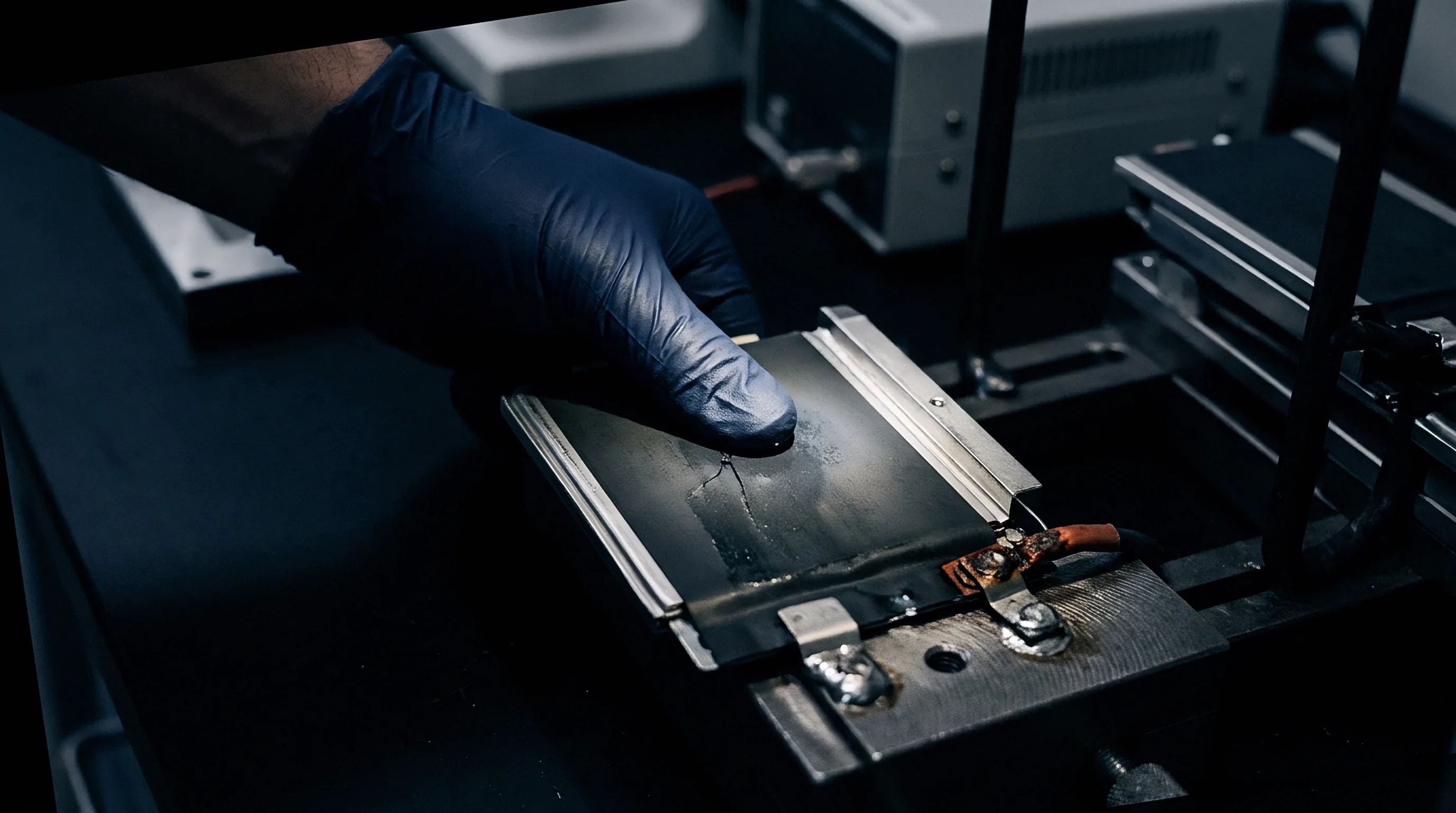
Pressurizing hermetic battery enclosures within a controlled helium bomb forces tracer gas through microscopic tortuous pathways in seals and weld seams. The charging vessel holds cells at target pressure for specified exposure periods, allowing helium partial pressure inside internal voids to build toward equilibrium with the external bombing gas. For rigid cell cases, including cylindrical steel cans and aluminum prismatic containers, internal volume remains constant under pressure.
Flexible pouch structures demand specialized fixture supports during pressurization to prevent mechanical distortion of seals and feedthrough tabs under differential stress.
Cell cavity free volume establishes the upper limit of helium mass that enters through a given leak path during the bombing cycle. Small internal voids accumulate partial pressures rapidly, whereas large cavities require extended bombing durations to collect sufficient helium for downstream detection. Gas purity within the bombing vessel directly alters tracer accumulation rates.
Using industrial grade helium containing moisture or atmospheric air dilutes tracer concentration, effectively lowering the driving partial pressure gradient across seal boundaries.
A bombing dwell time of 4 hours at 0.5 MPa helium pressure forces measurable tracer gas into cell cavities with free volumes as small as 0.12 cubic centimeters.
Bombing parameters dictate subsequent signal magnitude. Temperature stability during pressurization influences gas density and permeation rates through polymeric grommets or glass-to-metal terminal seals. Uncontrolled heating inside the bombing vessel increases gas kinetic energy, accelerating flow through micro-capillaries but risking thermal stress on cell internal chemistry.
Incoming inspection protocols specify fixed bombing pressures, exposure times, and post-bombing transfer windows to maintain test repeatability across production lots. Elevated background signals often stem entirely from residual surface helium trapped in external crimp gaskets, even while structural seals remain fully intact.
Signal
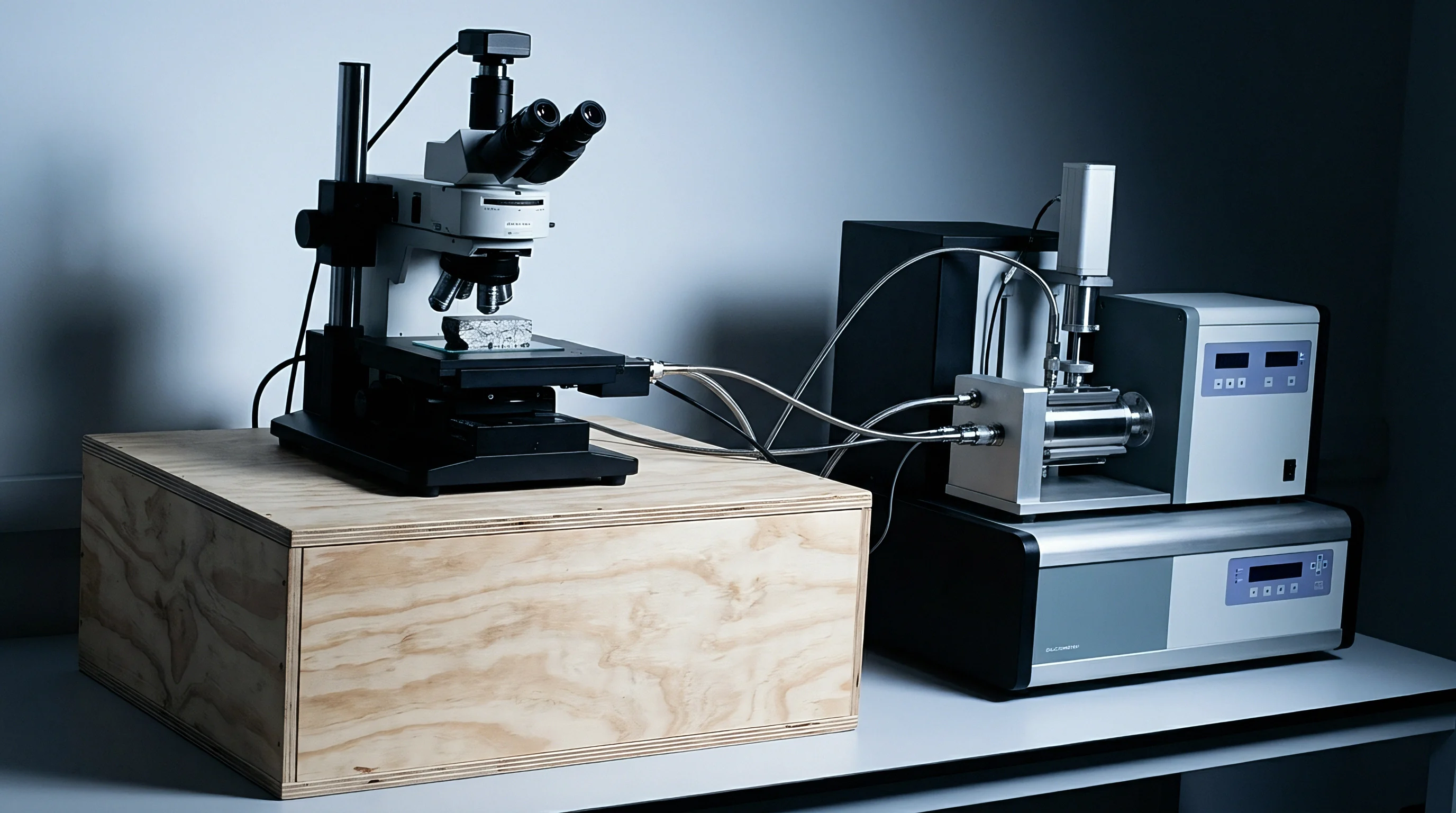
Transferring bombed cells into a high-vacuum test vessel initiates the extraction phase where helium escaping internal cavities enters the mass spectrometer detector. Lowering vessel pressure below ambient creates a maximum pressure gradient, pulling helium out through the exact pathways traversed during pressurization. Ion collector response generates a real-time current proportional to helium partial pressure inside the sensing manifold.
Helium molecules loosely adsorbed onto external cell surfaces, plastic wrap, or ceramic insulators desorb rapidly under vacuum, creating a high initial response peak that decays exponentially.
Isolating Cavity Outflow from Surface Retention
Distinguishing internal cavity leakage from surface desorption requires precise timing control during the ambient flush phase. Between removal from the pressure vessel and insertion into the vacuum chamber, an air wash removes surface-bound tracer gas. If the ambient flush duration runs too short, surface outgassing elevates baseline noise, masking true micro-leaks or triggering false rejections.
Extended flush durations allow internal helium charges to bleed off completely through gross breaches, resulting in false passes where catastrophic seal failures produce zero detector signal.
Gross leak masking represents a primary failure mode in helium leak testing regimes. When breach diameters exceed several micrometers, helium accumulated during pressurization escapes entirely during the transfer window before vacuum measurement begins. Verification of hermeticity therefore incorporates secondary gross leak detection methods, such as bubble testing or optical displacement monitoring, prior to fine leak vacuum testing.
| Cell Format | Cavity Free Volume (cm³) | Bombing Pressure (kPa) | Outgassing Decay Constant (s⁻¹) | Maximum Ambient Dwell (s) |
|---|---|---|---|---|
| 18650 Cylindrical Steel | 0.45 | 400 | 0.082 | 600 |
| 21700 Cylindrical Aluminum | 0.85 | 400 | 0.065 | 900 |
| Prismatic Hermetic Case | 3.20 | 300 | 0.034 | 1800 |
| Pouch Glass-Feedthrough | 1.10 | 200 | 0.110 | 450 |
Managing the transition between gross desorption and fine cavity outflow forms the basis for repeatable test protocols. Operating personnel monitor signal decay curves against baseline standards to verify that background noise drops below target detection thresholds before accepting measured flow values.
- Atmospheric Air Wash Step removes gross external helium trapped within mechanical crimp folds using high-velocity nitrogen blowers.
- Controlled Ambient Transfer Dwell stabilizes internal gas temperature while allowing surface-adsorbed tracer gas to desorb into ambient room air.
- Rapid Vacuum Chamber Evacuation drops manifold pressure below one Pascal to initiate molecular gas flow through seal micro-channels.
- Baseline Signal Subtraction Routine filters residual chamber background noise from the measured ion collector current.
Extending ambient flush times past the optimal window allows micro-leak helium charges to fully dissipate before vacuum measurement begins.

Formula
Converting measured ion collector currents into equivalent standard air leak rates depends on the mathematical relationship governing gas flow regimes through micro-capillaries. Helium flows faster than air through identical channel dimensions due to lower molecular mass and smaller atomic diameter. The Howl-Mann equation models tracer gas accumulation and release across closed volumes, providing the physics foundation for converting measured helium signal values into standardized air leakage figures under atmospheric conditions.
When breach dimensions remain small relative to the mean free path of gas molecules, Knudsen numbers exceed unity, establishing molecular flow mechanics where flow rate varies inversely with the square root of molecular weight. The mass ratio between air at 28.97 grams per mole and helium at 4.00 grams per mole yields a conversion multiplier of 2.69 under pure molecular flow conditions. Laminar continuum flow applies to larger pathways, where viscosity ratios dominate gas transport kinetics.
Under What Conditions Does Gross Leak Masking Distort Standard Air Rates?
The Howl-Mann relationship expresses measured helium leak signal as a function of equivalent standard air leak rate, bombing pressure, exposure duration, internal free volume, and post-bombing dwell time:
R1 = (L_std Pb / P0) sqrt(M_air / M_He) (1 – exp(- (L_std t1 / (V P0)) sqrt(M_air / M_He))) exp(- (L_std t2 / (V P0)) sqrt(M_air / M_He))
In this equation, R1 represents measured helium signal in atmosphere cubic centimeters per second, L_std represents equivalent standard air leak rate in atmosphere cubic centimeters per second, Pb represents bombing pressure in absolute atmospheres, P0 represents standard atmospheric pressure of 1.0 atmosphere, M_air represents air molecular weight, M_He represents helium molecular weight, V represents internal free volume in cubic centimeters, t1 represents bombing exposure time in seconds, and t2 represents ambient flush dwell time in seconds.
Consider a practical worked calculation for a 21700 cell enclosure. Assume internal free cavity volume V equals 0.85 cubic centimeters. Specify bombing pressure Pb at 4.0 atmospheres absolute (304 kPa gauge), exposure duration t1 at 7,200 seconds (2.0 hours), and ambient flush dwell time t2 at 900 seconds (15 minutes).
The vacuum chamber mass spectrometer records a peak helium signal R1 of 3.5 multiplied by 10 to the power of negative 8 atmosphere cubic centimeters per second.
Solving the Howl-Mann equation iteratively for L_std produces an equivalent standard air leak rate of 1.2 multiplied by 10 to the power of negative 8 atmosphere cubic centimeters per second. Now test sensitivity to ambient transfer delay by stressing one operational assumption. Increase ambient dwell time t2 from 900 seconds to 2,700 seconds (45 minutes) due to transfer line delays, while holding measured signal R1 fixed at 3.5 multiplied by 10 to the power of negative 8 atmosphere cubic centimeters per second.
Applying molecular flow conversion models to leak pathways larger than two micrometers underestimates air ingress by more than one order of magnitude.
Recalculating under extended dwell conditions yields an equivalent standard air leak rate L_std of 4.8 multiplied by 10 to the power of negative 8 atmosphere cubic centimeters per second. The four-fold increase in calculated air leakage for identical detector signals highlights how unrecorded transfer delays cause gross underestimation of actual seal breach sizes.
Whether non-isothermal expansion during rapid vacuum pump-down skews calculated gas escape rates across flexible pouch seals remains subject to ongoing debate among test laboratories.

Calibration
Standardizing mass spectrometer response requires traceable reference leaks that introduce known helium mass fluxes into the sensing manifold. Permeation type standards utilize quartz membranes to emit helium at steady rates, exhibiting temperature dependence of approximately 3.8 percent per degree Celsius. Capillary reference leaks feature micro-tubes calibrated against volumetric primary standards, offering lower temperature sensitivity but increased susceptibility to particulate clogging.
Mass spectrometer ion source sensitivity drifts as filament emission decays and internal surfaces collect vaporized organic contaminants from outgassing cell materials. Vacuum chamber response time depends on effective pumping speed and internal manifold volume, requiring regular verification to ensure ion collector signals reflect true gas concentration changes rather than manifold evacuation lag.
Reference Standards and Sensor Drift Controls
Maintaining measurement integrity demands structured routine verification schedules for both dry vacuum test vessels and mass spectrometer detectors. Daily sensitivity checks align detector electronic gain with physical helium flux values from traceable master standards.
| Reference Leak Type | Target Flow Rate Range (atm·cm³/s) | Temperature Coefficient (%/°C) | Recalibration Interval (Months) |
|---|---|---|---|
| Quartz Permeation Leak Standard | 1.0 × 10⁻⁸ to 5.0 × 10⁻⁷ | 3.8 | 12 |
| Metal Capillary Leak Standard | 5.0 × 10⁻⁷ to 1.0 × 10⁻⁴ | 0.3 | 12 |
| Variable Micrometer Leak Valve | 1.0 × 10⁻⁶ to 1.0 × 10⁻³ | 0.1 | 6 |
| All calibration values assume 23°C ambient reference temperature and ISO 17025 accredited master standardization. | |||
Executing daily baseline checks verifies detector linearity before running production batch verification sweeps.
- Isolate mass spectrometer sensing manifold from test vacuum chamber.
- Open calibrated helium reference leak valve to supply known tracer flux into collector manifold.
- Measure steady state ion collector current once response curve reaches stability plateau.
- Calculate chamber sensitivity factor in ampere per atmosphere cubic centimeter per second.
- Compare calculated sensitivity factor against historical control boundaries to verify sensor health.
Daily verification of background helium partial pressure prevents false rejection of compliant production lots.
Systematic errors in vacuum bombing setups destroy measurement validity across production batches.
- Particulate Clogging of Capillary Standards restricts reference gas flow, leading to artificially elevated calculated sensitivity factors and false pass results.
- Temperature Fluctuation inside Sensor Enclosures causes quartz permeation leak output to drift beyond acceptable standard calibration tolerances.
- Helium Accumulation in Vacuum Pump Oil elevates system background noise, reducing fine leak signal-to-noise ratios below resolution limits.
- Uncalibrated Manifold Pressure Transducers corrupt volume calculations and skew vacuum pump-down timing profiles.
Incorporating ISO 20485 Clause 8.3 into incoming inspection contracts shifts the financial burden of calibration drift audits directly onto the cell vendor.
Threshold
Defining quantitative leak limits determines whether a sealed cell survives multi-year warranty periods without moisture-induced degradation or electrolyte discharge. Lithium-ion cell chemistries react violently with ambient moisture. Trace water ingress hydrolyzes lithium hexafluorophosphate salt formulations, generating hydrofluoric acid that corrodes current collectors and dissolves cathode active materials.
Establishing maximum allowable equivalent standard air leak rates prevents premature capacity fade and internal short circuits.
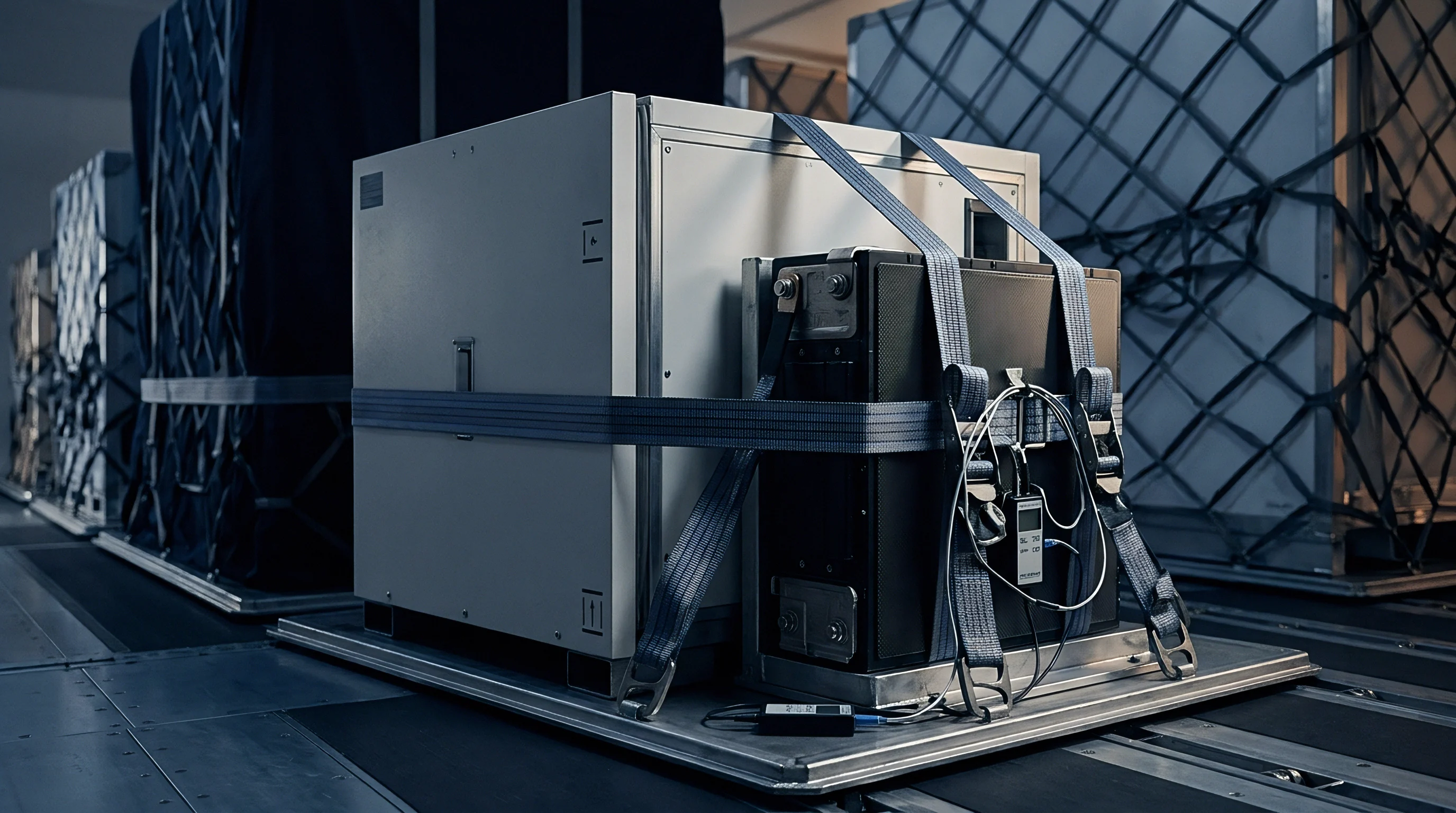
Transportation safety mandates under UN 38.3 test T.1 subject cell packages to extreme low-pressure environments simulating aircraft hold conditions at 11.6 kilopascals absolute pressure. Sealed enclosures with equivalent air leak rates exceeding 1.0 multiplied by 10 to the power of negative 6 atmosphere cubic centimeters per second risk seal vent rupture or liquid electrolyte weeping under non-operating pressure drops.

Translating Air Leak Equivalents into Warranty Exposure
Commercial acceptance thresholds balance test cycle time against multi-year product reliability targets. Standard consumer cylindrical formats target equivalent air leak limits of 1.0 multiplied by 10 to the power of negative 7 atmosphere cubic centimeters per second, whereas long-life automotive prismatic containers demand tighter limits below 1.0 multiplied by 10 to the power of negative 8 atmosphere cubic centimeters per second.
| Equivalent Air Leak Rate (atm·cm³/s) | Primary Leak Pathway | Failure Mechanism | UN 38.3 Altitude Test Outcome |
|---|---|---|---|
| < 1.0 × 10⁻⁸ | Sub-micron Weld Pore | No measurable moisture ingress over 10-year service life | Full Compliance Passed |
| 1.0 × 10⁻⁸ to 1.0 × 10⁻⁶ | Gasket Crimp Micro-Gap | Gradual capacity fade via hydrofluoric acid formation | Conditional Pass without Weeping |
| > 1.0 × 10⁻⁶ | Feedthrough Seal Fracture | Rapid electrolyte loss and thermal runaway hazard | Mandatory Test Failure |
Quality agreements link measured helium leak converted air equivalents directly to lot rejection criteria and warranty indemnification clauses. Cell buyers enforce lot acceptance sampling based on verified leak conversion dossiers to protect assembly plants from incoming component contamination.
Miscalibrating leak rate cutoffs allows moisture ingress to hydrolyze internal electrolyte salts, generating hydrofluoric acid that destroys cathode structures and triggers multi-million dollar warranty recalls.