Verifying Test Summaries for Cross Border Energy Storage Shipments
Verify UN 38.3.5 summary authenticity and lab ISO 17025 scope before tendering battery cargo to prevent customs seizure and catastrophic demurrage.


Rule
Moving energy storage systems, stationary battery banks, or commercial lithium ion cells across borders depends entirely on documentation traceable to the United Nations Manual of Tests and Criteria, Part III, sub-section 38.3. Freight forwarders, customs inspectors, and ocean carriers verify the package before a container moves to the berth or loading arm. Without a valid UN 38.3 test summary, port marshals have immediate statutory authority to impound cargo on arrival, because the dangerous goods declaration signed by the shipper of record draws its legal validity from that single filing.
Regulation EU 2023/1542 widens this obligation across European Union member states by tying transport test summaries directly to the digital battery passport framework. Manufacturers, pack assemblers, and distributors share explicit liability for keeping UN 38.3 summaries publicly accessible or digitally verifiable for every cell design and pack configuration moving through the supply chain. A missing signature, an unaccredited lab, or an unverified cell part number stops customs clearance on the spot, regardless of project deadlines.
Sub-section 38.3.5 of the UN Manual of Tests and Criteria imposes strict liability on downstream distributors who tender lithium batteries for transport without verified test summaries.
The UN 38.3.5 standard specifies ten structural elements that must appear in every compliant summary. Omitting even one invalidates the filing during dangerous goods audits.
- Cell, module, or battery manufacturer information includes the full legal corporate name, registered headquarters address, telephone contact number, email address, and official website URL.
- Testing laboratory credentials list the complete corporate identity, physical bench location, contact details, and accreditation numbers of the facility executing the test series.
- Unique test report identification number supplies the specific alphanumeric tracking index assigned by the laboratory to the primary test file.
- Date of the underlying test report specifies the exact day, month, and year when testing concluded and the formal engineering report was approved.
- Detailed description of the cell or battery details the chemistry type, physical envelope format, mass in kilograms, electrical parameter limits, and model nomenclature.
- List of tests completed and passed documents compliance across sub-clauses T.1 through T.8 with explicit pass or fail notation for each distinct trial.
- Test standard revision and amendment level references the precise edition of the UN Manual of Tests and Criteria applied during bench testing.
- Mass energy ratio and equivalent lithium content states nominal watt-hour ratings for lithium ion formulations or total active lithium mass for primary cells.
- Assembled battery testing selection indicates whether the unit is tested as a standalone component or inside an integrated assembly under sub-section 38.3.3.
- Authorized signatory verification carries the typed name, official title, and original or authenticated digital signature of the responsible corporate executive.
Customs agents reconcile these ten elements against bill of lading entries. Any mismatch between the model number on the test summary and markings on cell casings inside the container triggers an immediate hold, with compliance officers treating incomplete documentation as a hazardous materials violation.
Procurement agreements backstop these requirements with explicit risk-shifting terms. Standard supply contracts require cell vendors to deliver accredited UN 38.3.5 summaries twenty days before cargo departs the factory gate, passing all demurrage and port holding fees back to the seller if import documentation fails review.
Bench
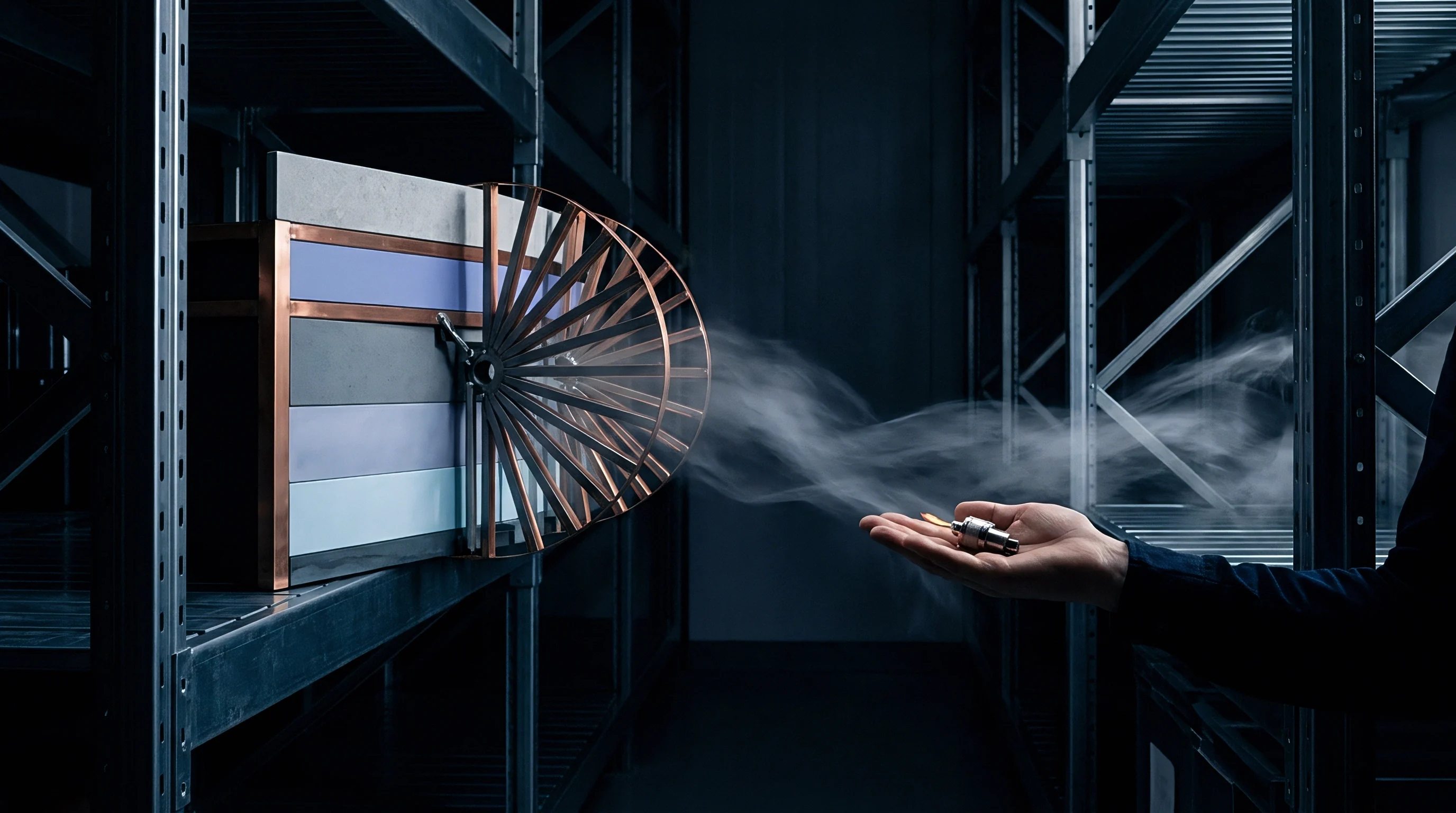
Physical qualification under UN 38.3 exposes cells and modules to mechanical, thermal, and electrical extremes simulating transit by air, sea, and road. Clearing all eight trials is meant to demonstrate that a design will not vent, ignite, rupture, or short-circuit when subjected to freight vibration, temperature swings, or rough handling.
| Test ID | Stress Profile | Environmental Conditions | Pass Threshold | Failure Mechanism |
|---|---|---|---|---|
| T.1 Altitude | Absolute pressure 11.6 kPa | 20 degrees Celsius for 6 hours | No mass loss, no venting, voltage open-circuit within 10 percent | Seal breach from internal overpressure |
| T.2 Thermal | 72 degrees to minus 40 degrees Celsius | 10 cycles, 4 hours dwell time per extreme | No disassembly, no rupture, no fire | Differential thermal expansion of casing and busbars |
| T.3 Vibration | Sinusoidal 7 Hz to 200 Hz sweep | 15 minutes per axis, 3 orthogonal axes for 3 hours | Mass loss below 0.1 percent, stable terminal voltage | Tab fatigue failure or active material delamination |
| T.4 Shock | 150 gn peak acceleration or 50 gn for heavy packs | Half-sine pulse, 6 milliseconds duration, 18 shocks total | Structural integrity maintained, no voltage drop | Internal electrode stack displacement |
| T.5 Short Circuit | External resistance below 0.1 ohm | 55 degrees Celsius ambient until casing returns to 55 degrees | Casing peak temperature below 170 degrees Celsius, no fire | Separator breakdown or thermal runaway propagation |
| T.6 Impact/Crush | 9.1 kilogram bar drop from 61 centimeters or 13 kN crush | Ambient temperature, single cell level test | External temperature under 170 degrees Celsius, no disassembly | Internal separator tearing and localized shorting |
| T.7 Overcharge | 2x maximum continuous charge current | 24 hours monitoring, minimum double rated charge voltage | No fire or disassembly within 7 days of test completion | Lithium plating, electrolyte oxidation, internal gas explosion |
| T.8 Forced Discharge | 12V DC power supply in series | Reversed polarity at maximum discharge rate for 1 hour | No fire or disassembly within 7 days of test completion | Anode copper dissolution and dendritic short circuiting |
Large battery assemblies present distinct mechanical challenges during T.4 shock testing. Modules over 12 kilograms receive a reduced 50 gn profile, and utility-scale containerized equipment follows the dedicated verification pathways in sub-section 38.3.3. Cell-level qualification does not substitute for module-level certification: passing a bare cell does not clear the assembled module from T.1 through T.5 and T.7 requirements.
A complete test report bears little resemblance to the brief public summary document. Running forty to eighty pages, the raw report compiles thermocouple logs, thermal imaging, voltage traces, calibration certificates, and environmental chamber records. The summary condenses those findings into an attestation, which buyers and freight agents then verify by querying the report number against lab databases.
- Reconcile the cell part number, physical dimensions, and weight on the summary with sample measurements taken from the incoming lot.
- Confirm the lab report reference number directly with the issuing facility to ensure the document is authentic.
- Verify that the cited standard edition matches the revision mandated by modal transport authorities for the departure date.
- Check that mass loss values recorded across T.1, T.2, and T.3 sit safely below the 0.1 percent limit across all samples.
- Review post-cycling open-circuit voltages to confirm cells maintained charge stability without developing internal micro-shorts.
- Confirm that current and voltage levels applied in T.7 and T.8 reflect the actual ratings on the cell manufacturer datasheet.
Gaps in raw test data often point to compromised bench procedures. A non-accredited laboratory might truncate dwell times during thermal cycling, masking poor seal integrity. If cells vent or short at sea, cargo underwriters pull the raw laboratory books; missing chamber logs or skipped calibration runs provide grounds to deny casualty coverage, leaving the importer to absorb the loss.
A 0.15 percent mass loss recorded during thermal shock testing indicates electrolyte seal venting, rendering the underlying cell model ineligible for international freight transit.
The practical fallout from an invalid qualification goes well beyond missed delivery windows. A thermal runaway event inside a containerized battery system aboard a cargo vessel can force port diversions, emergency response deployments, and environmental remediation claims totaling tens of millions of dollars.

Transit
Lithium batteries move internationally under Class 9 dangerous goods rules, but individual transport modes enforce distinct requirements. Ocean shipments fall under the International Maritime Dangerous Goods Code; air freight must satisfy the International Civil Aviation Organization Technical Instructions and IATA Dangerous Goods Regulations; overland trucking across Europe follows the ADR agreement.
| Transport Mode | Governing Regulation | State of Charge Limit | Packing Instruction | Primary Hold Risk |
|---|---|---|---|---|
| Ocean Freight | IMDG Code | Recommended under 50 percent | P903, P908, P910 | Missing UN 38.3.5 summary at port gate |
| Air Cargo | ICAO TI / IATA DGR | Mandatory 30 percent maximum | PI 965 Section IA/IB | State of Charge exceeds 30 percent threshold |
| Passenger Aircraft | ICAO TI / IATA DGR | Forbidden for cargo quantities | Forbidden | Unauthorized tender of commercial cells |
| European Road | ADR Agreement | No statutory ceiling | P903, LP903 | Inadequate container structural rating |
Air freight imposes a strict ceiling on stored energy. Standalone cells shipped under Packing Instruction 965 must be discharged to a State of Charge of 30 percent or less prior to carrier tender. Ground acceptance crews check open-circuit voltages against chemistry-specific discharge curves and will reject pallets on the tarmac if readings point to capacity above the 30 percent limit.
Customs agencies run automated targeting systems that flag battery consignments arriving from facilities without audited compliance histories. Flagged boxes are shunted to hazardous cargo staging bays for container stripping, physical seal inspections, and random cell sampling for independent testing.
Air cargo carriers reject lithium ion cell consignments immediately if random voltage checks reveal an average State of Charge above 30 percent.
Paperwork discrepancies routinely generate generic compliance assurances from cell suppliers, though such explanations rarely survive port clearance checks.
Treating a factory test report as valid for modified cells because cathode chemistry matches the baseline unit fails regulatory scrutiny: changes in dimensions, tab layout, or casing design require full re-testing under UN 38.3.3 rules. Similarly, reliance on testing facilities certified only by local authorities collapses at the border unless the laboratory holds ISO/IEC 17025 accreditation under recognized international mutual recognition agreements.
Audit
Auditing test summaries requires verifying lab accreditation, tracking serial batches, and confirming that physical cells match their type-approval drawings. Unvetted PDF documents circulate widely through broker networks; defensible compliance requires querying original records in independent registries.
How Is Lab Accreditation Verified across International Borders?
International accreditation relies on the International Laboratory Accreditation Cooperation Mutual Recognition Arrangement. Testing labs must hold ISO/IEC 17025 accreditation from an ILAC-affiliated national body. Importers verify standing by checking national accreditation registries to confirm that the bench facility was accredited specifically for UN 38.3 on the exact date the test report was signed.
Schedules of accreditation define precisely which standards a facility may execute. A lab certified for consumer electronics under IEC 62133 is not automatically accredited for grid-scale battery testing under UN 38.3; compliance auditors must review the formal schedule to ensure Section 38.3 appears in the accredited scope.
- Accreditation body identity checks match the laboratory logo against official ILAC MRA signatory registries to ensure legitimate oversight.
- Scope schedule expiration dates confirm that testing occurred within the active temporal window of the laboratory accreditation license.
- Specific test method listing verifies that sub-clauses T.1 through T.8 appear explicitly within the approved laboratory schedule.
- Physical address match ensures the actual testing location corresponds precisely to the geographical address listed on the accreditation certificate.
- Signatory authorization lists check that the individual approving the test summary holds verified authority within the laboratory quality management structure.
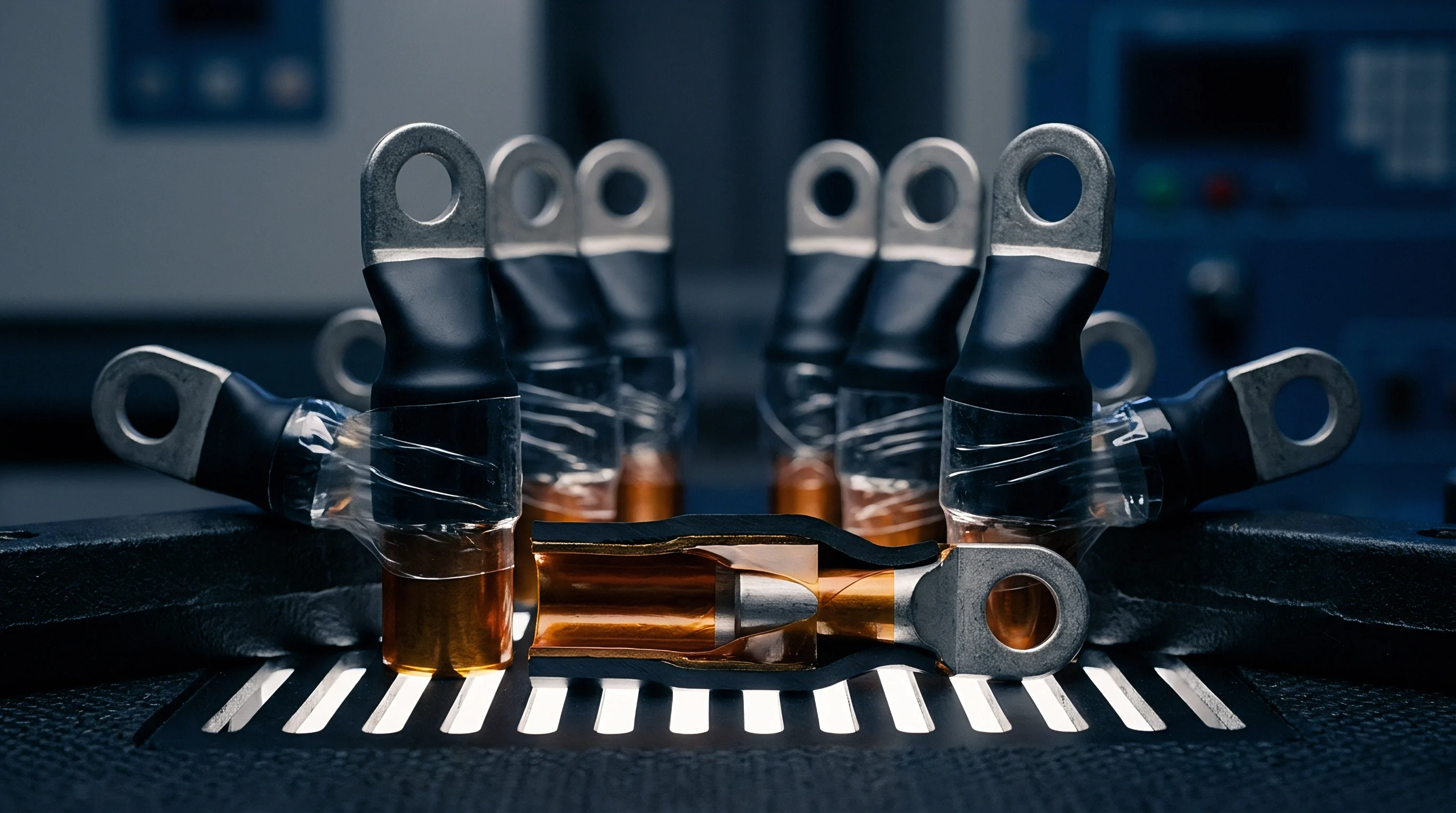
Matching production lots to test summaries helps prevent the introduction of degraded cells. In secondary markets, re-wrappers sometimes apply counterfeit shrink sleeves to B-grade or scrapped inventory, labeling them with certified part numbers. Detecting the switch requires stripping the external sleeve to inspect the laser etching on the bare steel or aluminum casing.
Peeling outer cell insulation sleeves frequently reveals secondary laser etching that contradicts part numbers declared on dangerous goods shipping documents.
Physical receiving inspections check burst vent geometry, terminal cap profiles, and insulator ring colors against original factory engineering drawings. Variations between arriving stock and the type-tested design usually indicate undocumented manufacturing changes or parallel-market sourcing.
Inside sealed enclosures, traceability remains difficult to verify without physical intervention. Pack assemblers occasionally switch internal cell suppliers without putting the redesigned pack through UN 38.3.3 qualification. Proving an assembly matches its certified bill of materials ultimately requires destructive teardown of sample packs from incoming production runs.

Exposure
Statutory liability for hazardous materials compliance rests squarely on the importer of record. Under United States 49 CFR rules and European dangerous goods directives, tendering lithium batteries with missing, incomplete, or forged test summaries triggers administrative and criminal penalties. Civil enforcement fines can exceed 80,000 USD per day for knowing violations, with penalties escalating sharply if non-compliance results in personal injury or property damage.
The financial mechanics of a customs hold escalate quickly. Take a consignment of four 40-foot high-cube containers carrying utility-scale modules valued at 1.2 million USD arriving at a European container terminal. If customs halts clearance because the UN 38.3 summary cites an expired lab accreditation scope, the port authority moves the containers to a hazardous cargo holding area billed at 3,500 EUR per box per day.
Commissioning an emergency test campaign at an accredited European facility takes six weeks and costs 45,000 EUR in laboratory fees, during which demurrage and storage accrue to 294,000 EUR. The resulting holding and verification costs exceed 25 percent of the consignment’s original value, before factoring in project liquidated damages for delayed site commissioning.
Marine cargo policies routinely exclude losses arising from statutory violations or unlawful tenders. If an investigation finds that a shipment lacked valid UN 38.3 documentation prior to departure, underwriters can reject claims for cargo loss, hull damage, and general average contributions. In that scenario, the importer of record absorbs the entire cost of vessel damage and loss resulting from transit fires or thermal events.
Master procurement agreements require clear indemnity provisions shifting these exposures back to the supplier. Contract terms should mandate direct reimbursement for port storage, re-testing, legal expenses, and regulatory penalties caused by defective or non-compliant paperwork, establishing enforceable recourse before funds are released.
Structuring payment milestones around port clearance limits exposure during transit. Letters of credit should require presentation of an authenticated ISO/IEC 17025 accredited UN 38.3.5 summary as an explicit condition for drawing funds. Retaining twenty percent of the contract balance until cargo clears customs and arrives at the receiving facility ensures sufficient leverage to cover unexpected holding or testing expenses.
Binding contract terms turn dangerous goods regulations from an operational vulnerability into managed commercial risk. Verifying test documentation before containers leave the origin facility protects cross-border movements, satisfies statutory clearance standards, and prevents costly delays across global energy storage supply chains.