High Voltage Cathode Dissolution Mechanics in Lithium Ion Battery Cells
High-voltage cathode dissolution leaches transition metals via acid attack and lattice destabilization, poisoning graphite anodes and forcing premature pack fade.

Voltage
Channels cycling nickel-rich NMC811 pouch cells to a 4.40 charge endpoint show transition metal concentrations in the electrolyte exceeding twelve parts per million after eighty cycles at forty-five degrees Celsius. Operating layered oxides at elevated charge endpoints forces lithium extraction beyond seventy-five percent of initial crystal capacity. Deep delithiation alters cathode thermodynamics, collapsing local electronic shielding around trivalent and tetravalent transition metal cations.
As positive electrode potential rises relative to the lithium reference, valence orbitals of nickel, cobalt, and manganese cross the highest occupied molecular orbital of organic carbonate solvents, extracting electrons directly from alkyl carbonates and triggering solvent breakdown, transition metal reduction, and surface restructuring.
Lattice destabilization accelerates when the charge cutoff moves from 4.20 V to 4.35 V and above. In standard NMC622 and NMC811 materials, nickel provides the bulk of charge capacity through the Ni2+/Ni3+ and Ni3+/Ni4+ redox couples. Tetravalent nickel ions generated at high states of charge are highly reactive, oxidizing carbonate solvents.
This parasitic interfacial oxidation reduces surface nickel back to divalent states whose ionic radii are incompatible with host octahedral lattice sites, causing divalent nickel to detach from the solid particle matrix into the liquid electrolyte.
Lattice oxygen release at high charge endpoints triggers rapid reduction of trivalent nickel to divalent rock-salt phases.
Lattice oxygen release compounds this instability. When delithiation strips the host oxide beyond critical stoichiometry, metal-oxygen covalent bonds weaken, forming irreversible oxygen vacancies and releasing singlet oxygen gas. This non-stoichiometric metal-to-oxygen ratio forces surface layers to reorganize into disordered, catalytically active phases that leach transition metals into solution at accelerating rates.
Structural Degradation beyond Four Point Two Cutoffs
Layered lithium nickel manganese cobalt oxides lose lattice stability when lithium extraction drives nickel into unstable tetravalent oxidation states. Above 4.25 V versus Li/Li+, the layered R-3m crystal structure undergoes severe anisotropic lattice contraction, with hexagonal c-axis parameters shrinking by over three percent during deep delithiation. This sudden mechanical strain induces extensive intergranular microcracking along primary crystallite boundaries, exposing unpassivated interior crack surfaces directly to the electrolyte.
Microcracks allow electrolyte to infiltrate the core of secondary agglomerates, pushing dissolution kinetics up by an order of magnitude once liquid reaches internal grain boundaries. These newly exposed facets suffer the same oxidative attack and structural decay seen on outer particle surfaces, turning transition metal release from a perimeter effect into bulk erosion throughout the particle.
Surface Reconstruction and Rock Salt Phase Formation
Oxidation of coordinated oxygen anions causes metal cations to migrate irreversibly into vacant lithium sites within the outer crystallite shell. This migration converts the layered R-3m structure into an intermediate disordered spinel phase with Fd-3m symmetry, before settling into an electrochemically inactive rock-salt phase with Fm-3m symmetry. The resulting two-nanometer rock-salt layer exhibits negligible lithium-ion conductivity, creating a bottleneck that steadily increases interfacial charge-transfer resistance over cycling.
Divalent nickel cations accelerate impedance growth by occupying octahedral positions vacated by migrating lithium ions, driven by their closely matched ionic radii of 0.069 nm and 0.076 nm. This cation mixing pins the crystal lattice, blocking lithium reinsertion during discharge. The resulting surface layer traps reduced transition metal ions, leaving them vulnerable to acid-driven dissolution by trace protic impurities circulating in the cell.
| Cathode Chemistry | Upper Voltage Cutoff (V vs Li/Li+) | Operating Temperature (°C) | Dissolved Metal Rate (ug/cm2/day) | Surface Rock-Salt Thickness (nm) |
|---|---|---|---|---|
| LiNi0.6Mn0.2Co0.2O2 (NMC622) | 4.20 | 25 | 0.08 | 1.2 |
| LiNi0.6Mn0.2Co0.2O2 (NMC622) | 4.35 | 45 | 0.64 | 3.8 |
| LiNi0.8Mn0.1Co0.1O2 (NMC811) | 4.20 | 25 | 0.14 | 1.8 |
| LiNi0.8Mn0.1Co0.1O2 (NMC811) | 4.40 | 45 | 1.85 | 5.4 |
| LiMn1.5Ni0.5O4 (LNMO) | 4.85 | 55 | 3.40 | 6.2 |
| LiCoO2 (LCO) | 4.50 | 45 | 0.92 | 4.1 |
Operating layered oxides below four point two five volts suppresses phase transformation while restricting the cell to ninety percent of theoretical state of charge.

Acid
Hydrofluoric species form continuously through the thermal breakdown of hexafluorophosphate anions when trace moisture is present. Standard commercial electrolytes use lithium hexafluorophosphate dissolved in mixtures of cyclic and linear alkyl carbonates, where the salt maintains a dynamic equilibrium with solid lithium fluoride and gaseous phosphorus pentafluoride. As a strong Lewis acid, phosphorus pentafluoride reacts readily with trace water inside the cell to produce phosphorus oxyfluoride and hydrofluoric acid, which then attacks exposed grain boundaries.
Strict moisture control during cell manufacturing dictates initial acid generation rates. Assembly standards typically limit electrolyte water content to under ten parts per million and electrode moisture to under twenty parts per million. Any residual water above these thresholds drives ongoing production of hydrofluoric acid during storage and formation cycling.
When cell temperatures rise under fast charging, hexafluorophosphate salt dissociation accelerates, raising equilibrium levels of phosphorus pentafluoride and doubling hydrofluoric acid generation rates.
Manganese dissolution rates reach four micrograms per square centimeter per day in standard carbonate electrolytes at fifty-five degrees Celsius.
Industrial acid leaching of nickel and cobalt ores in hydrometallurgical refining mirrors this microscopic degradation, relying on the same proton exchange dynamics to strip metal ions from mineral matrices. Inside a sealed battery, this leaching occurs continuously at micro-scale dimensions, eating away at the oxide crystal lattice responsible for storing energy.
Lattice Leaching Pathways
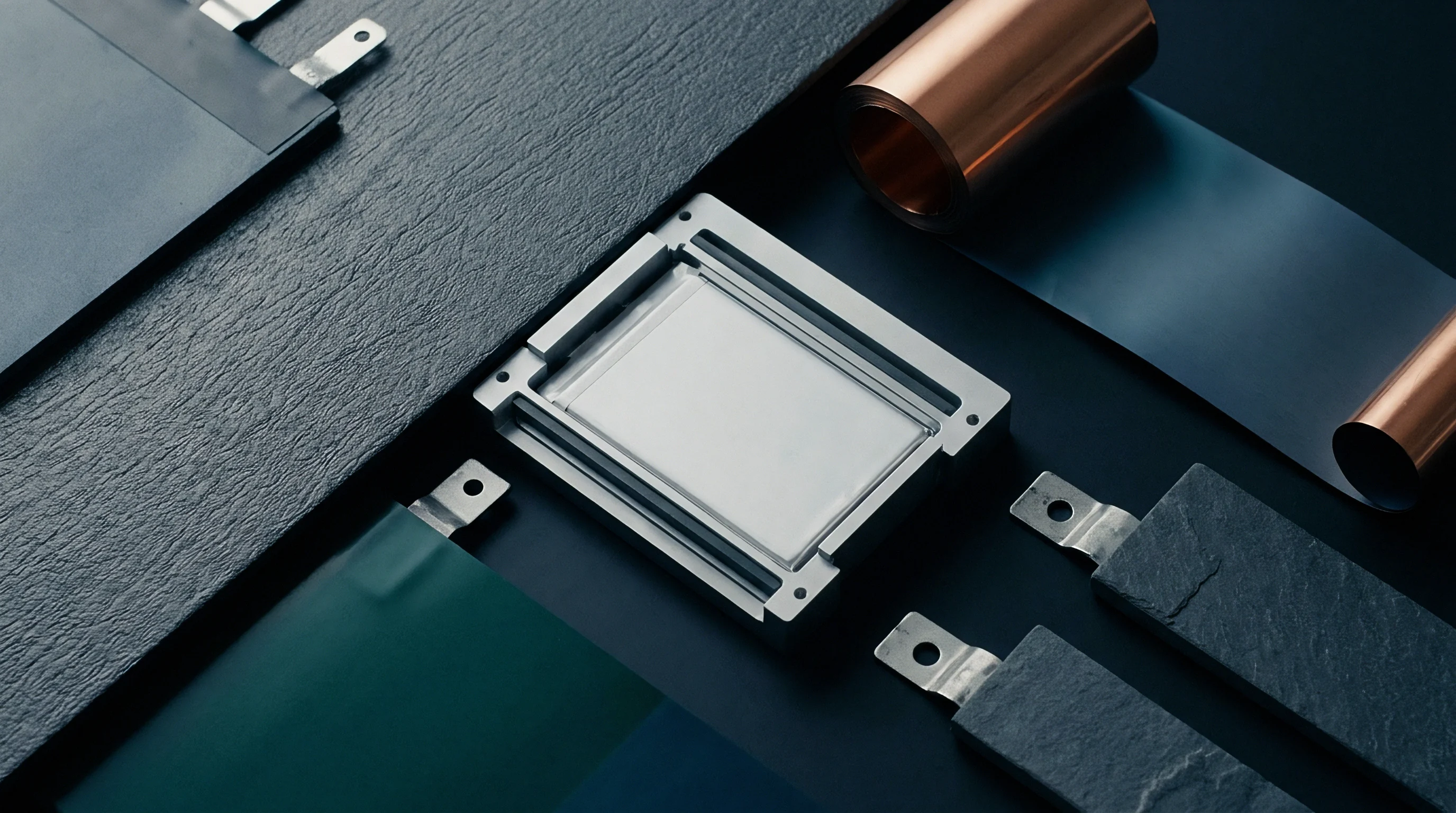
Protic species strip divalent and trivalent transition metal ions directly from exposed particle facets. Hydrofluoric acid launches an electrophilic attack on metal-oxygen bonds at the solid-liquid boundary, where protons displace transition metal cations from the oxide matrix. This forms soluble metal fluoride complexes or aquated cations while leaving behind surface hydroxyl groups and oxygen vacancies.
- Manganese disproportionation converts two trivalent manganese cations into one stable tetravalent ion and one soluble divalent ion through Jahn-Teller lattice distortions that destabilize metal-oxygen bonds.
- Cobalt leaching proceeds via direct electrophilic displacement by protons at defect sites, yielding solvated divalent cobalt complexes in the carbonate solvent.
- Nickel extraction targets divalent surface nickel species formed during parasitic solvent oxidation reactions, driving rapid metal detachment into alkyl carbonate solutions.
- Oxygen vacancy clustering follows transition metal loss, causing outer atomic layers to collapse into porous, non-stoichiometric oxide fragments that detach mechanically from the primary particle.
Among layered oxides, manganese dissolves fastest while cobalt leaches slowest. In manganese spinels and nickel-rich oxides, trivalent manganese undergoes spontaneous disproportionation under acidic conditions. The resulting divalent manganese ions dissolve readily into carbonate solvent mixtures, migrating away from the positive electrode and leaving a damaged, manganese-deficient lattice behind.

Electrolyte Oxidation and Protic Byproducts
Ethylene carbonate and ethyl methyl carbonate blends decompose catalytically at positive electrode surfaces operating under high electrical bias. Dehydrogenation of ethylene carbonate by active surface oxygen radicals yields vinylene carbonate, carbon dioxide, and free protons. These liberated protons interact with coordinating anions to generate more acid in the electrolyte phase, feeding a self-sustaining cycle of chemical corrosion.
Linear carbonates such as ethyl methyl carbonate and dimethyl carbonate undergo transesterification and oxidative cleavage at high cell voltages, producing alkyl fluorophosphates, organic acids, and gaseous alkenes. While gaseous breakdown products increase internal cell pressure, mobile acidic fragments diffuse toward positive active particles, sustaining metal leaching long after initial water content has been fully consumed.
Proprietary fluorinated additives consume acidic species before transition metals detach from the oxide lattice.
Crossover
Solvated nickel, manganese, and cobalt cations migrate through separator micropores under concentration gradients and the internal electric field. Once detached from the cathode lattice, divalent and trivalent transition metal ions coordinate with solvent molecules into positively charged complexes. During charge cycles, the inter-electrode electric field drives these solvated cations toward the negative electrode.
Standard polyolefin separators with pore dimensions between thirty and fifty nanometers offer no physical barrier to these species, which measure under two nanometers in solvated diameter.
Transition metal migration rates scale with charge current density, electrolyte viscosity, and operating temperature. At twenty-five degrees Celsius, dissolved ions traverse a standard twenty-micrometer separator within several dozen operating hours. At forty-five degrees Celsius, lower electrolyte viscosity and faster diffusion shorten this window further.
Transition metals accumulate on the negative electrode during initial qualification cycles, long before factory testing detects capacity fade.
Transition metal ions deposited on graphite continuously strip electrons from active lithium and destroy the passivation layer.
Divalent manganese poisons graphite interphases. Upon reaching the graphite negative electrode, solvated manganese ions encounter an electrochemical potential near zero volts versus lithium, causing them to reduce rapidly and plate out as metallic clusters or insoluble fluoride and carbonate compounds within the solid electrolyte interphase.
Which Ions Drive Severe Capacity Loss?
Manganese dissolves fastest among common transition metals because trivalent manganese undergoes Jahn-Teller disproportionation into soluble divalent species. This divalent manganese migrates across the separator and incorporates into the negative electrode surface film, where each deposited manganese atom catalyzes the reduction of surrounding carbonate solvent molecules and consumes active lithium to form resistive breakdown products.
Nickel and cobalt also deposit on the negative electrode, but their degradation mechanics differ. Plated metallic nickel clusters form localized conductive pathways through the passivation film that catalyze continuous electrolyte reduction. This electronic leakage permits steady electron transfer from the graphite matrix to the electrolyte, consuming cyclable lithium even while the cell rests.
Cobalt forms similar catalytic reduction zones, though its dissolution rates remain well below those of manganese and nickel across typical voltage windows.
- Electrochemical reduction deposits metallic manganese, nickel, and cobalt nanoparticles directly within the organic and inorganic matrices of the solid electrolyte interphase.
- Catalytic decomposition of alkyl carbonate solvents occurs on the newly formed metallic nanoparticles, generating thick organic polycarbonates and lithium alkyl carbonates.
- Active lithium trapping converts mobile cyclable lithium into immobilized lithium fluoride, lithium carbonate, and lithium oxide species.
- Passivation layer fracturing occurs as continuous electrolyte decomposition products thicken the interphase non-uniformly, creating severe localized mechanical stresses.
- Impedance escalation chokes lithium-ion transport through the thickened surface layer, causing rapid cell polarization and premature voltage cutoff during charge and discharge.
The loss of cyclable lithium inventory irreversibly reduces discharge capacity. Because the active cathode material retains vacant lithium sites that cannot be refilled by trapped lithium, the cell develops a growing mismatch between the operational state-of-charge windows of the positive and negative electrodes.

Anode Passivation Film Breakdown
Deposited metallic clusters alter the electronic conductivity of the solid interphase, converting an insulating barrier into a catalytic conductor. Standard passivating films rely on an inner layer of compact lithium fluoride and lithium oxide to block electron tunneling from lithiated graphite to the electrolyte. Transition metal nanoparticles embedded in this layer act as conductive stepping stones, enabling electron transport across several nanometers of passivating material.
Electrolyte reduction continues at the negative electrode throughout the battery’s operating life. Ongoing formation of decomposition products consumes liquid solvent, dries out the separator, and thickens the surface film on graphite particles. Over five hundred cycles at elevated temperatures, negative electrode impedance can rise by three hundred to five hundred percent, increasing lithium plating risks during cold charging.
| Active Cathode Material | Upper Cutoff (V) | Anode Mn Content (ppm) | Anode Ni Content (ppm) | Capacity Retention After 500 Cycles (%) | Impedance Rise (%) |
|---|---|---|---|---|---|
| LiNi0.5Mn0.3Co0.2O2 (NMC532) | 4.20 | 140 | 22 | 88.4 | 42 |
| LiNi0.5Mn0.3Co0.2O2 (NMC532) | 4.35 | 480 | 68 | 76.1 | 128 |
| LiNi0.6Mn0.2Co0.2O2 (NMC622) | 4.25 | 210 | 85 | 84.6 | 64 |
| LiNi0.6Mn0.2Co0.2O2 (NMC622) | 4.40 | 620 | 290 | 69.3 | 195 |
| LiNi0.8Mn0.1Co0.1O2 (NMC811) | 4.20 | 95 | 140 | 82.1 | 88 |
| LiNi0.8Mn0.1Co0.1O2 (NMC811) | 4.35 | 310 | 540 | 64.5 | 265 |
| LiMn1.5Ni0.5O4 (LNMO) | 4.85 | 1250 | 410 | 52.0 | 410 |
Uncontrolled transition metal crossover halves the usable cycle life of the pack and forces premature system decommissioning.

Assay
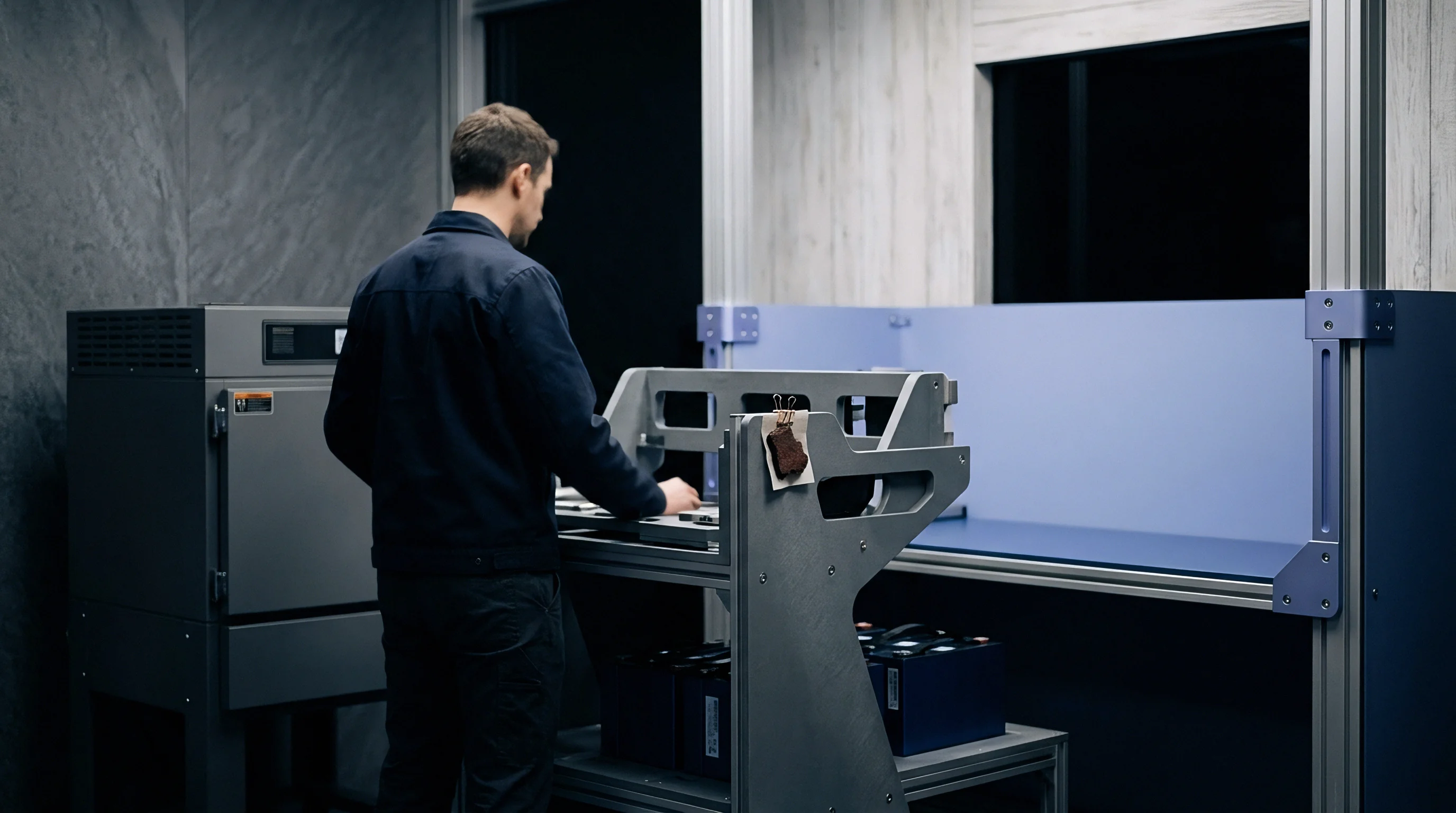
Inductively coupled plasma mass spectrometry quantifies trace transition metals in harvested anode specimens down to single-digit parts per billion. Verifying dissolution severity requires destructive physical analysis inside controlled atmospheres. Cells are opened inside dry argon glove boxes where moisture and oxygen levels remain strictly below zero point one parts per million.
Electrodes are washed quickly with anhydrous dimethyl carbonate to extract residual electrolyte salts without dissolving insoluble surface decomposition compounds.
Harvested graphite anodes undergo total acid digestion using high-purity nitric acid and hydrochloric acid mixtures under microwave heating. Inductively coupled plasma detects sub-ppm concentrations. Comparing the mass ratio of deposited manganese, nickel, and cobalt against baseline values from uncycled control cells yields precise dissolution and crossover rates.
Published research from 2021 indicates that pristine cells display background transition metal levels below two parts per million on graphite, whereas cells cycled beyond 4.30 V routinely exhibit levels between one hundred and one thousand parts per million.
IEC 62660-1 cycle durability criteria trigger immediate batch rejection when internal resistance spikes exceed one hundred percent over baseline.
Electrochemical impedance spectroscopy tracks dissolution-induced damage non-destructively. Mid-frequency semicircles reflect charge-transfer resistance across electrode interfaces, while low-frequency Warburg tails represent solid-state lithium diffusion through host lattices. Transition metal dissolution manifests as an initial increase in cathode charge-transfer resistance, followed by a sharp rise in anode passivating film resistance as crossed-over metals poison the negative interphase.

Spectroscopic and Analytical Tools
Laboratory quantification requires separating cell constituents inside an argon-filled glove box to prevent atmospheric contamination. Total reflection X-ray fluorescence enables non-destructive elemental mapping across harvested electrode surfaces, identifying localized hotspots of metal deposition without acid digestion. X-ray photoelectron spectroscopy resolves oxidation states of deposited species, distinguishing metallic clusters from metal fluorides and carbonates.
Titration isolates fluoride concentrations precisely, while operando differential electrochemical mass spectrometry tracks gas evolution rates in real time during formation cycling. Oxygen outgassing above 4.25 V signals lattice breakdown and serves as an immediate proxy for transition metal dissolution. Online mass spectrometry systems detect ethylene, carbon monoxide, and carbon dioxide during charge cycles, providing early warning of solvent oxidation before metallic species appear in solution.
| Analytical Technique | Target Species | Lower Detection Limit | Operational Stage | Primary Output |
|---|---|---|---|---|
| Inductively Coupled Plasma Mass Spectrometry | Mn, Ni, Co cations and deposits | 0.01 ppm | Destructive post-mortem | Total quantitative metal mass fraction |
| Total Reflection X-ray Fluorescence | Transition metals on anode surface | 0.5 ppm | Destructive post-mortem | Surface elemental areal distribution |
| X-ray Photoelectron Spectroscopy | M0, M2+, M3+ valence states | 100 ppm | Destructive post-mortem | Chemical bonding and oxidation states |
| Differential Electrochemical Mass Spectrometry | O2, CO2, CO, C2H4 gases | 0.1 ppm gas phase | Operando qualification | Gas evolution onset potential and rate |
| Electrochemical Impedance Spectroscopy | Charge-transfer and interphase resistance | 0.01 mOhm | In-situ non-destructive | Resistance growth across frequency domain |
Will Atomic Layer Deposition Arrest Metal Migration?
Conformal aluminum oxide and titanium dioxide coatings applied by gas-phase reactions passivate catalytic crystal facets against direct contact with corrosive electrolyte species. Atomic layer deposition places pinhole-free, ultrathin ceramic films measuring between one and five nanometers directly onto synthesized cathode particles. These oxide barriers prevent direct orbital overlap between surface transition metal cations and organic solvent molecules, suppressing electron transfer and solvent oxidation.
Surface coatings also act as sacrificial acid scavengers. Aluminum oxide reacts with circulating hydrofluoric acid to produce stable aluminum fluoride and water, neutralizing local acidity before protons attack the underlying nickel-rich lattice. Uncoated materials fail within three hundred cycles, whereas cells using aluminum oxide coated NMC811 cathodes retain over eighty-five percent capacity after eight hundred cycles at 4.35 V, with an eighty percent reduction in crossed-over transition metals on the negative electrode compared to uncoated production cells.
The precise partitioning ratio of dissolved manganese trapped inside separator pores versus that deposited directly onto the graphite anode remains difficult to isolate. Laboratory studies report retention figures spanning fifteen to sixty-five percent depending on separator polymer composition, ceramic coating thickness, and tortuosity. Sourcing engineers manage this analytical uncertainty by treating all leached transition metals as active poisons capable of reaching the negative electrode during commercial field operation.
Section 8 of standard procurement contracts binds the cell supplier to maximum dissolved metal concentrations of fifty parts per billion in the electrolyte after standard burn-in cycling.

Boundary
Operating limits defined in cell procurement specifications dictate the long-term structural integrity of layered oxide cathodes. Cell manufacturers frequently specify upper cutoff limits at 4.35 V or 4.40 V on preliminary sales datasheets to advertise industry-leading specific energy figures. Sourcing engineers evaluating cells for long-life stationary storage or automotive applications routinely derate these thresholds to 4.20 V or 4.25 V during operational deployment.
Derating the upper cutoff by one hundred and fifty millivolts sacrifices roughly eight to ten percent of usable capacity while suppressing transition metal dissolution rates by more than seventy percent.
Transition metal dissolution directly drives severe gassing, pouch swelling, and prismatic can expansion through continuous electrolyte breakdown at the negative electrode. Cells experiencing rapid metal crossover generate substantial volumes of methane, ethylene, and carbon monoxide during field operation. Physical pack integration enclosures must incorporate mechanical clamping systems capable of delivering uniform compression between zero point three and zero point six megapascals to restrain delamination and maintain uniform interfacial contact.

Thermal Runaway Propagation Stakes
UN 38.3 test protocols expose pre-cycled cells to intense heat and mechanical crushing to assess separator stability. Severe transition metal dissolution degrades the intrinsic thermal stability of positive active materials. As layered oxides forfeit transition metals and develop surface oxygen vacancies, the onset temperature for catastrophic cathode decomposition drops.
Pristine NMC811 cathodes exhibit exothermic decomposition onset around two hundred and ten degrees Celsius; heavily leached and delithiated cathodes decompose exothermically at temperatures as low as one hundred and sixty-five degrees Celsius.
Lattice oxygen released during thermal decomposition reacts instantly with flammable carbonate solvent vapors, generating uncontrollable self-heating rates exceeding one hundred degrees Celsius per second that trigger cell thermal runaway. Plated transition metals on the negative electrode concurrently degrade the thermal stability of the solid electrolyte interphase, lowering the initial self-heating trigger temperature to under eighty degrees Celsius and invalidating UN 38.3 compliance.
Commercial Exposure and Warranty Arithmetic
Procurement contracts allocate financial liabilities associated with field-level capacity drop and internal short-circuiting. Dissolution-induced degradation creates substantial commercial exposure when cells fail to achieve warrantied cycle-life metrics under field operating conditions. Sourcing teams enforce rigorous lot qualification frameworks to identify early chemical leaching before accepting containerized shipments.
Consider a commercial energy storage project requiring a ten-megawatt-hour containerized pack system operating at high daily throughput. Assuming procurement involves one hundred thousand pouch cells rated at fifty ampere-hours, built with NMC811 cathodes and artificial graphite anodes, cycling the system to 4.35 V to maximize initial energy density causes transition metal dissolution to pull capacity retention below eighty percent after twelve hundred equivalent full cycles. At that degradation rate, module replacement arrives eighteen months ahead of the amortized financial schedule.
Recalculating the operating envelope with a conservative 4.20 V charge cutoff extends cycle life to twenty-eight hundred cycles before hitting the eighty percent retention threshold. The lower cutoff sacrifices eight percent of nameplate capacity per cell, requiring eight thousand additional cells in the initial balance of plant. While this adds one hundred and twenty thousand dollars in upfront capital expenditure at baseline cell pricing, avoiding early cell restacking and preserving system uptime yields net operational savings exceeding five hundred and forty thousand dollars over the seven-year warrantied asset lifespan.
Warranty reserves double under elevated cutoff thresholds. Qualification teams should mandate chemical crossover audits as part of incoming lot acceptance testing. Measuring transition metal concentrations on negative electrodes harvested from representative sample cells cycled through accelerated formation programs provides empirical proof of cell quality before releasing balance-of-plant payments.
Lower charge cutoff voltages preserve cathode crystal integrity and extend pack longevity far beyond supplier warranty commitments.