Modeling Non Linear Mechanical Stress Contributions to Interfacial Lithium Nucleation Kinetics in High Silicon Composite Anodes
Non-linear mechanical stress shifts Butler-Volmer kinetics in high-silicon anodes, lowering nucleation barriers and driving local lithium plating under stack pressure.

Pressure
Phase transformations during lithium insertion into silicon composite anodes produce spatial volume variations exceeding three hundred percent. In constrained pouch cells, this anisotropic expansion generates localized compressive stress fields at the interface between electrochemically active sub-micron silicon particles and the solid electrolyte interphase. Mechanical stress directly alters the local electrochemical potential of metallic lithium.
Within this interfacial zone, the chemical potential of neutral lithium depends on both the concentration gradient and the mechanical strain energy tensor. When internal compressive stress exceeds two hundred megapascals, the shift in Gibbs free energy for the intercalation reaction diverts local current from uniform silicon alloying toward planar metal deposition.
Because atomic jump frequencies across the phase boundary depend on stress, mechanical deformation interacts non-linearly with interfacial reaction kinetics. High compressive stress increases the strain-energy barrier for ion transfer, suppressing the lithiation rate constant. As local intercalation capacity drops, adjacent, less constrained regions must carry higher current densities.
These micro-scale stress variations create distinct domains where the effective charge-transfer overpotential falls below zero volts relative to a pure lithium reference electrode.

Mechanical Stress Gradients in Silicon Composite Electrodes
In composite electrodes containing twenty to sixty percent silicon by weight, volumetric expansion creates steep stress gradients from the surface to the particle core. Local ionic transport through the solid matrix is governed by spatial variations in hydrostatic pressure: inner cores face severe hydrostatic compression, while outer surface layers experience axial compression during charge and tangential tensile yield during delithiation. Because gradient magnitude scales inversely with particle diameter, sub-micron structures develop marked mechanical heterogeneity.
Mathematical models describing these interfacial stress gradients incorporate the partial molar volume of lithium in silicon, experimentally set at nine point two cubic centimeters per mole. When spatial gradients exceed ten gigapascals per millimeter, lithium diffusion pathways distort. The non-linear stress contribution shifts flux vectors toward regions of stress relief, crowding current at particle-binder boundaries.

Chemo-Mechanical Coupling at the Solid State Interface
Non-uniform lithium nucleation occurs primarily at the contact boundary between the composite matrix and the liquid or polymer electrolyte. Mechanical pressure from the surrounding separator matrix or a rigid cell housing alters the thermodynamic work of nucleation. The total work needed to form a critical lithium nucleus combines bulk chemical free energy, surface energy costs, and the mechanical strain work done against the surrounding matrix during phase precipitation.
Stack pressure exceeding fifteen megapascals reduces interfacial voiding but accelerates mechanical degradation of thin separator materials under dynamic cycling conditions.
Adding mechanical strain energy to the interfacial free energy balance alters the critical nucleus radius. High compressive fields lower the energy barrier for precipitating a stable metallic nucleus if the surrounding matrix yields plastically as the particle volume grows. By contrast, a rigid, non-yielding matrix imposes a high strain penalty that suppresses nucleation at modest overpotentials.
Ignoring the elastoplastic behavior of the surrounding matrix leads to severe underestimation of the localized current density required to trigger lithium plating during fast charging.
Swell
Dimensional instability in high-capacity composite anodes stems from the phase transformation between crystalline silicon and fully lithiated amorphous phases. As lithium concentration approaches the theoretical limit of four point four atoms per silicon atom, atomic volume per silicon atom expands from twenty-two to over eighty-eight cubic angstroms. This expansion creates macroscopic strain fields that distort the binder matrix, fracture conductive carbon networks, and alter interfacial contact pressure across the cell assembly.
Non Linear Elastoplastic Matrix Deformation Dynamics
The constitutive behavior of silicon composite anodes shifts from linear elasticity at low states of charge to non-linear plasticity once lithium concentration exceeds twenty percent of nominal capacity. Stress-strain measurements during electrochemical lithiation show yield stress falling from over three gigapascals in pristine silicon to under five hundred megapascals when fully lithiated. Yielding releases localized elastic energy, but leaves permanent void networks upon delithiation.
Internal compressive stresses are accompanied by a continuous decline in elastic moduli as lithiation proceeds. Young’s modulus for pure silicon drops from one hundred thirty gigapascals to twelve gigapascals at maximum lithiation, changing the mechanical compliance of the electrode. Kinetic models must update elastic tensor values continuously against local lithium stoichiometry to avoid errors in calculated nucleation overpotentials.
| Component Material | Young’s Modulus (GPa) | Yield Strength (MPa) | Volumetric Strain Limit (%) | Poisson Ratio |
|---|---|---|---|---|
| Crystalline Silicon (Unlithiated) | 130 to 160 | 1750 to 2200 | 0 | 0.22 |
| Amorphous Li4.4Si (Fully Lithiated) | 12 to 35 | 250 to 450 | 300 to 320 | 0.28 |
| Synthetic Graphite Matrix | 8 to 15 | 80 to 140 | 10 to 12 | 0.25 |
| Polyacrylic Acid (PAA) Binder | 2 to 7 | 40 to 90 | 80 to 120 | 0.35 |
| Fluoroethylene Carbonate SEI Film | 1.5 to 4.0 | 15 to 35 | 15 to 25 | 0.38 |
Cell manufacturers often attribute rapid capacity loss and poor initial coulombic efficiency solely to irreversible electrolyte consumption during initial film formation. That explanation overlooks the mechanical drivers of solid-state fracture and localized plating kinetics. Without modeling mechanical strain fields, localized stress peaks break the passivating film, exposing fresh silicon that continuously consumes active lithium and creates sites for dendritic growth.

Barrier
External mechanical loading substantially modifies thermodynamic resistance to interfacial ion transfer. Standard electrochemical models treat charge-transfer kinetics using Butler-Volmer expressions driven strictly by activation energy and electrical overpotential. Under high stress, mechanical strain work contributes directly to the activation free energy, creating a coupled electro-chemo-mechanical rate equation in which local hydrostatic pressure alters the interfacial exchange current density.
Modified Butler-Volmer Kinetics under Strain Energy
Incorporating stress work into charge-transfer kinetics modifies exchange current density through an exponential term equal to the stress tensor multiplied by the ion transition activation volume. As interfacial compressive stress rises, the higher activation barrier for lithium reduction shifts localized equilibrium potential. The effective overpotential governing reduction incorporates this mechanical strain energy term, with hydrostatic pressure divided by Faraday’s constant acting as an effective negative potential shift.
Non-linear modifications to Butler-Volmer kinetics become dominant when local mechanical stress exceeds fifty megapascals. Beyond this point, charge-transfer resistance rises non-linearly, causing sharp potential drops across the interface. Current distribution destabilizes and concentrates flux into micro-cracks where compressive stress relaxes locally near free surfaces.
Can Hydrostatic Compression Suppress Dendrite Nucleation Thresholds?
Applying external stack pressure perpendicular to the electrode plane compresses the porous composite, tightening particle contacts and lowering electrical contact resistance. Hydrostatic compression also changes the chemical potential of metallic lithium relative to the silicon host. By increasing the strain energy needed to form a solid metallic phase within interfacial pores, compression raises the critical overpotential required for stable nucleus growth.
A four-fold increase in local mechanical compressive stress elevates the required overpotential for stable metallic lithium nucleus formation by approximately eighteen millivolts.
Controlled cell-confinement experiments confirm that uniform hydrostatic pressure suppresses random surface nucleation up to specific current thresholds. However, if stack pressure exceeds the plastic yield strength of the composite matrix, binder networks collapse and close open pores, restricting liquid electrolyte transport. The resulting concentration polarization outweighs the mechanical stabilizing effect, accelerating mossy metal growth along the electrode boundary.
The threshold at which stack pressure shifts from inhibiting nucleation to restricting transport remains debated. Differences in binder cross-linking density, silicon particle morphology, and pore tortuosity yield optimal stack pressures ranging from zero point five to three point two megapascals across commercial formats. Resolving whether these discrepancies stem from testing artifacts or chemo-mechanical physics will require standardized mechanical tests that maintain uniform internal current density during pressure application.
Deformation
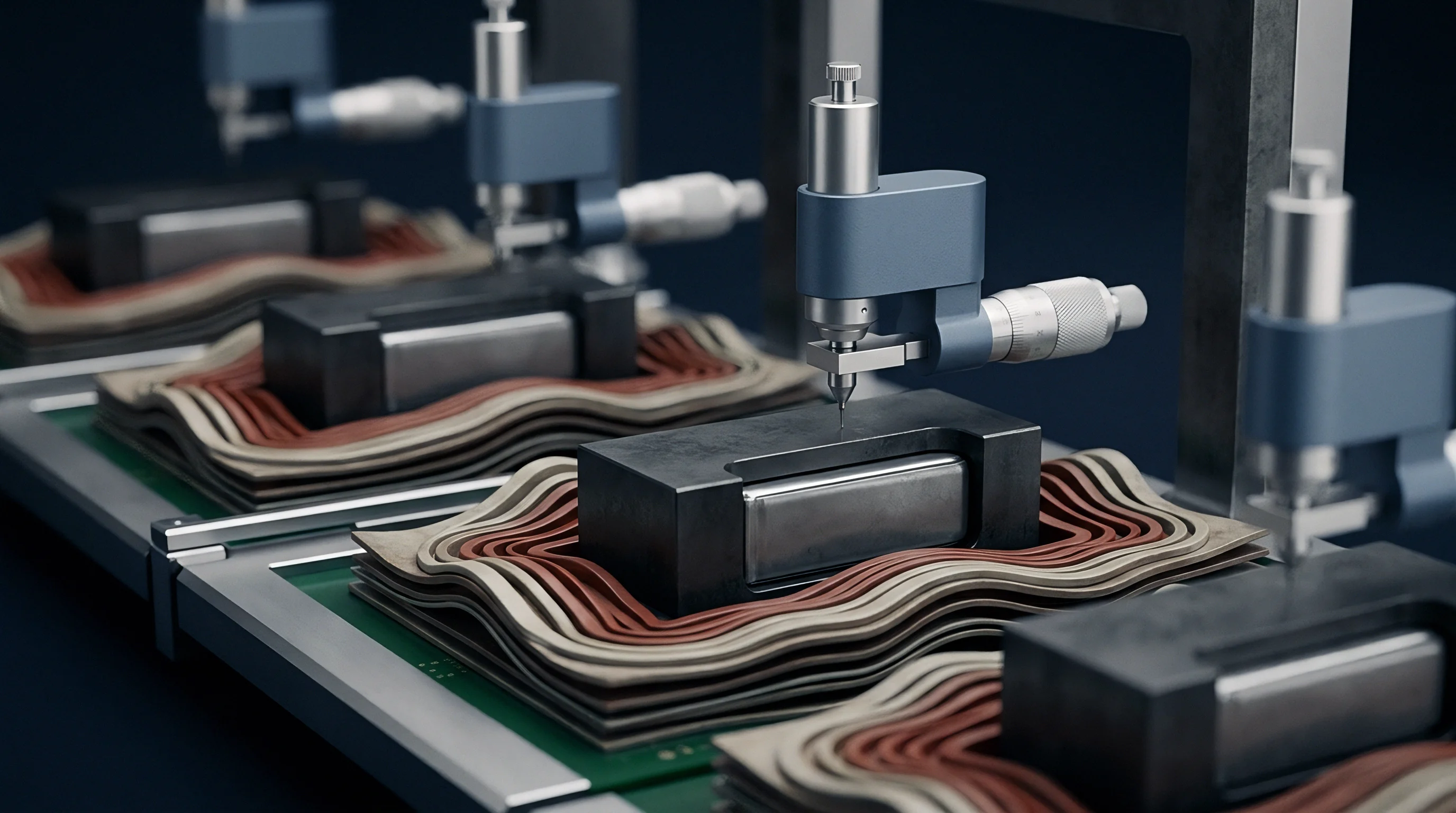
Microscopic structural failure drives localized electrochemical instability in high-silicon composite anodes. As silicon particles expand against rigid carbon networks and polymer binders during lithiation, stress concentrates at sharp corners and contact asperities. The resulting localized shear stress fields can exceed the ultimate tensile strength of the solid electrolyte interphase.

Localized Stress Concentrations and Film Rupture Dynamics
Mechanical fracture of the protective surface film exposes unreacted silicon directly to the liquid electrolyte. Exothermic reactions immediately reform the passivating layer, consuming cyclable lithium and creating local surface topography variations. These micro-defects distort the local electric field, forming hot spots for concentrated ionic flux during subsequent charging.
Uneven current density near film rupture zones produces sharp overpotential gradients across sub-micron regions. Repeated particle expansion and contraction accumulate stress that can delaminate active material from current collector foils. Losing electronic contact isolates unlithiated zones adjacent to hyper-lithiated regions, exacerbating local strain rates and driving destructive lithium metal precipitation.
The mechanical stability of the anode system under high-stress operation depends on specific failure mechanisms that develop at particle, matrix, and cell interfaces:
- Interfacial film fracture driven by localized tensile hoop stress exceeding thirty megapascals during silicon volume expansion.
- Polymeric binder bond rupture occurring when matrix shear strain exceeds eighty percent, leading to isolation of conductive carbon black additives.
- Particle micro-cracking caused by steep internal lithium concentration gradients that produce core-shell tensile stress mismatches above one gigapascal.
- Current collector foil wrinkling originating from non-uniform planar expansion across the electrode area during aggressive lithiation cycles.
- Localized separator puncture resulting from severe mechanical stress concentration at isolated metallic lithium projection sites.
Purchasing specifications for high-silicon cells should require continuous stack expansion profiling under temperature-controlled conditions. Omitting limits on strain energy accumulation leaves buyers exposed to premature failure from unmodeled chemo-mechanical degradation. RFQ addendums should specify that dimensional expansion at full charge remains under six percent of total cell thickness over one thousand consecutive cycles under two hundred kilopascals of fixed mechanical restraint.

Creep
Time-dependent deformation in composite anode components helps mitigate peak mechanical stress during charging. Silicon particles, polymeric binders, and metallic lithium exhibit marked viscoelastic and viscoplastic relaxation between twenty and fifty degrees Celsius. These relaxation mechanisms relieve localized stress during longer charge durations, altering the interfacial nucleation risk compared to rapid charge regimes.
Time Dependent Viscoelastic Relaxation and Rate Dependency
Viscoelastic relaxation allows the composite electrode to redistribute internal forces over time. During fast charging above 1C, volumetric expansion outpaces the relaxation rate of the binder and solid electrolyte interphase. Compressive stress peaks build up, increasing charge-transfer resistance and lowering the barrier for metallic lithium nucleation.
At lower charge rates, time-dependent plastic flow relaxes compressive stress peaks, keeping local stress below critical nucleation thresholds. The interplay between C-rate, temperature, and relaxation dynamics creates an operational window where mechanical impacts on nucleation kinetics can be managed with tailored current profiles.
Validating non-linear chemo-mechanical models and establishing dynamic strain limits requires a systematic multi-stage qualification testing sequence:
- Operate symmetrical single-layer pouch cells inside calibrated mechanical fixture frames equipped with continuous load cell monitoring systems.
- Apply baseline stack pressure of zero point two megapascals at twenty-five degrees Celsius while equilibrating the cell state of charge at fifty percent.
- Impose stepped C-rate charge pulses ranging from zero point two C up to three C while logging real-time mechanical force generation and differential expansion rates.
- Extract differential voltage curves and electrochemical impedance spectra at fixed strain intervals to detect onset points of interfacial capacity degradation.
- Perform high-resolution post-mortem cross-sectional scanning electron microscopy under cryogenic preservation to quantify interfacial micro-fracture density and metallic plating morphology.
Sustaining high charge rates requires step-down current profiles, reducing peak C-rate as state of charge rises to match the matrix’s plastic relaxation rate.

Margin
Designing modules with high-silicon composite anodes requires balancing volume expansion containment at the cell level against stack-level compression management. Mechanical restraint systems must accommodate reversible swelling and maintain layer contact without causing local mechanical damage or triggering early nucleation instabilities.
Engineering Window Calibration and Stack Force Specifications
Dynamic stack compression control requires mapping the stress-overpotential envelope across the cell’s lifespan. Module designs that rely on rigid, fixed-distance plates experience large internal stress spikes as silicon expands ~ exceeding twenty megapascals at ninety percent state of charge ~ inducing high mechanical overpotentials that accelerate lithium plating.
Flexible compliance systems using calibrated elastomeric foam or spring-loaded containment keep stack pressure within narrow limits. Holding stack pressure between zero point three and zero point eight megapascals throughout lithiation buffers stress transients, minimizing mechanical overpotentials while preserving electrical contact.
| Stack Control Regime | Pressure Range (MPa) | Capacity Retention at 800 Cycles (%) | Plating Onset Overpotential (mV) | Primary Failure Mode |
|---|---|---|---|---|
| Unconstrained (Free Expansion) | 0.0 to 0.05 | 42 to 55 | -45 | Delamination and severe isolated particle fatigue |
| Low Compliance (Spring Fixed) | 0.3 to 0.8 | 82 to 89 | -12 | Gradual SEI thickening and minor capacity fade |
| Medium Rigid (Foam Padded) | 1.5 to 3.0 | 74 to 81 | -28 | Localized strain-induced lithium deposition |
| High Rigid (Fixed Enclosure) | 5.0 to 12.0 | 38 to 50 | -85 | Accelerated separator collapse and dendrite formation |
Consider stack pressure selection for a fifty ampere-hour pouch cell with a forty weight-percent silicon composite anode. Assuming nominal capacity of fifty ampere-hours, twenty-eight percent maximum expansion at full lithiation, and an unconstrained nucleation overpotential threshold of minus fifteen millivolts at 1C, internal pressure in a rigid enclosure rises to eight megapascals at eighty percent state of charge. Using the stress-modified kinetic rate equation with a partial molar volume of nine point two cubic centimeters per mole, this eight megapascal stress induces a negative potential shift of thirty-two millivolts.
The effective overpotential drops to minus forty-seven millivolts, triggering lithium nucleation across particle boundaries.
Re-evaluating the cell under a compliant stack design that maintains zero point five megapascals limits the mechanically induced potential shift to two point acres millivolts. Total effective overpotential remains at minus seventeen point acres millivolts, maintaining stable lithiation kinetics above the nucleation threshold. Mechanical module design thus directly influences electrochemical reaction pathways.
Structuring engineering qualification criteria for silicon anode cell procurement demands systematic assessment of mechanical performance indicators across three primary operational dimensions:
- Volumetric displacement tolerance defining maximum allowable pouch swell under standardized zero point five megapascal spring confinement across lifetime cycles.
- Dynamic load response verifying that pressure generation during 2C fast-charge pulses remains below two point five megapascals across all state-of-charge windows.
- Interfacial impedance stability measuring charge-transfer resistance growth under continuous thermal and mechanical cycling to ensure less than twenty percent growth over five hundred cycles.
- Mechanical creep recovery evaluating elastomeric pad thickness retention after extended storage at elevated temperatures and maximum compression states.
Cell specifications mandating fixed-distance rigid clamping accelerate internal capacity loss by generating local stress spikes that force lithium plating during fast-charging operations.
Integrating non-linear mechanical stress into electrochemical kinetic models provides a foundation for predicting cell degradation and optimizing pack design. Coupling elastoplastic deformation, stress-dependent Butler-Volmer kinetics, and viscoelastic strain relaxation allows battery engineers to turn high-expansion silicon composites into practical, high-energy storage systems.