Acceptance Sampling Strategies for High Volume Prismatic Cell Imports
High-volume prismatic cell imports demand c=0 sampling, stack pressure metrology, and K-value decay tracking to reject defective production lots.

Arrival
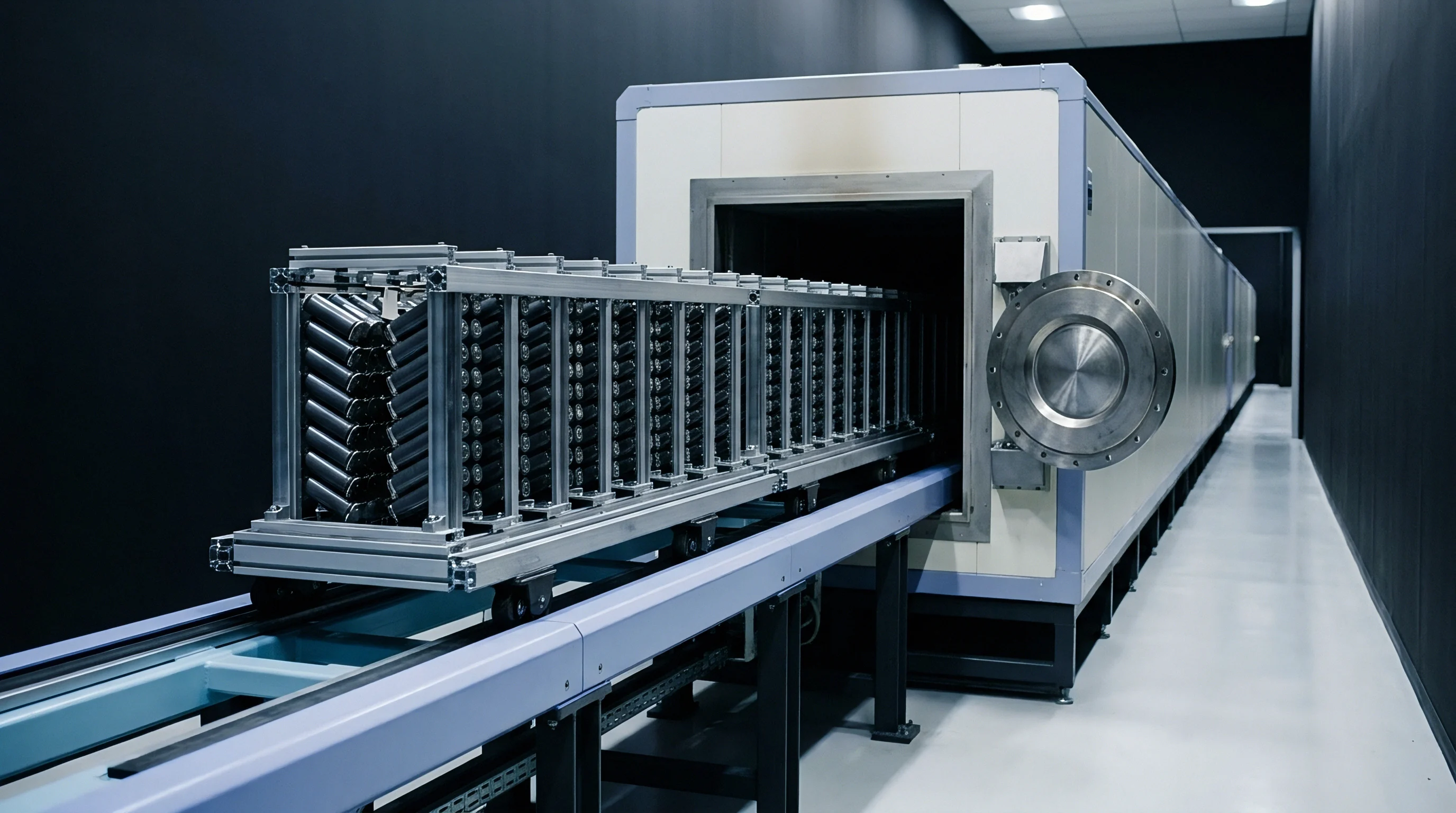
Containerized freight landing at receiving bays carries sealed pallets of aluminum-canned lithium iron phosphate cells. A standard forty-foot refrigerated container holds up to thirty-two thousand four hundred prismatic cells in the two-hundred-eighty ampere-hour format, stacked on reinforced wooden pallets and wrapped in vapor-barrier foil packaging. Environmental sensors inside the shipping crate track temperature and relative humidity continuously across the ocean voyage.
Receiving engineers pull the environment logs immediately upon breaking the container seal to verify that ambient transit conditions remained within fifteen to twenty-five degrees Celsius without relative humidity exceeding sixty percent.
Thermal excursions during sea transit shift cell equilibrium. When a reefer unit fails or operates outside specified parameters, temperature gradients across the container generate cell-to-cell open-circuit voltage variance that mimics internal discharge defects. Inspection begins by isolating pallets from three distinct container zones: front near the refrigeration unit, center core, and rear doors.
Pallet selection from edge locations alone fails to capture environmental extremes experienced by internal crates during three weeks at sea.
Pallets positioned near container doors experience the highest thermal swings during ocean transit and demand isolated inspection.

Container Inspection and Thermal Logger Extraction
Environmental tracking devices attached to internal crate walls record ambient conditions during maritime transport. Data extraction from these devices confirms whether acceleration forces stayed below three times gravity along three orthogonal axes. Physical crate damage, punctured barrier bags, or broken security tape on pallet corners trigger an immediate hold on the shipment.
Liquid ingress or dried salt residue on outer cell cartons indicates barrier envelope failure during sea transit. Moisture breach ruins vacuum sealed barrier packaging.
Structural integrity of the pallet framing prevents mechanical compression of bottom-tier cells. Prismatic cells sit upright inside molded polyethylene trays, held under light static retention to prevent face-to-face friction. Inspectors examine outer tray walls for structural cracking caused by side-load shifting in heavy seas.
Trays showing physical distortion force complete visual screening of every cell in that specific crate layer.
Physical Reception and Sample Isolation Sequence
- Verify freight container tamper seals against ocean bill of lading records before opening door latches.
- Extract environmental data loggers from container door zones and download temperature, humidity, and acceleration history files.
- Inspect exterior pallet shrink-wrap, corner boards, and moisture barrier foil bags for physical puncture or moisture ingress.
- Stage selected inspection pallets in an environmentally controlled intake area held at twenty-three degrees Celsius for twelve hours.
- Affix red quarantine labels to non-sampled pallets, restricting warehouse movement until the inspection dossier receives formal engineering approval.
Suppliers often claim that open-circuit voltage drift during ocean transit stems entirely from benign temperature fluctuations rather than internal micro-shorts.


Clamp
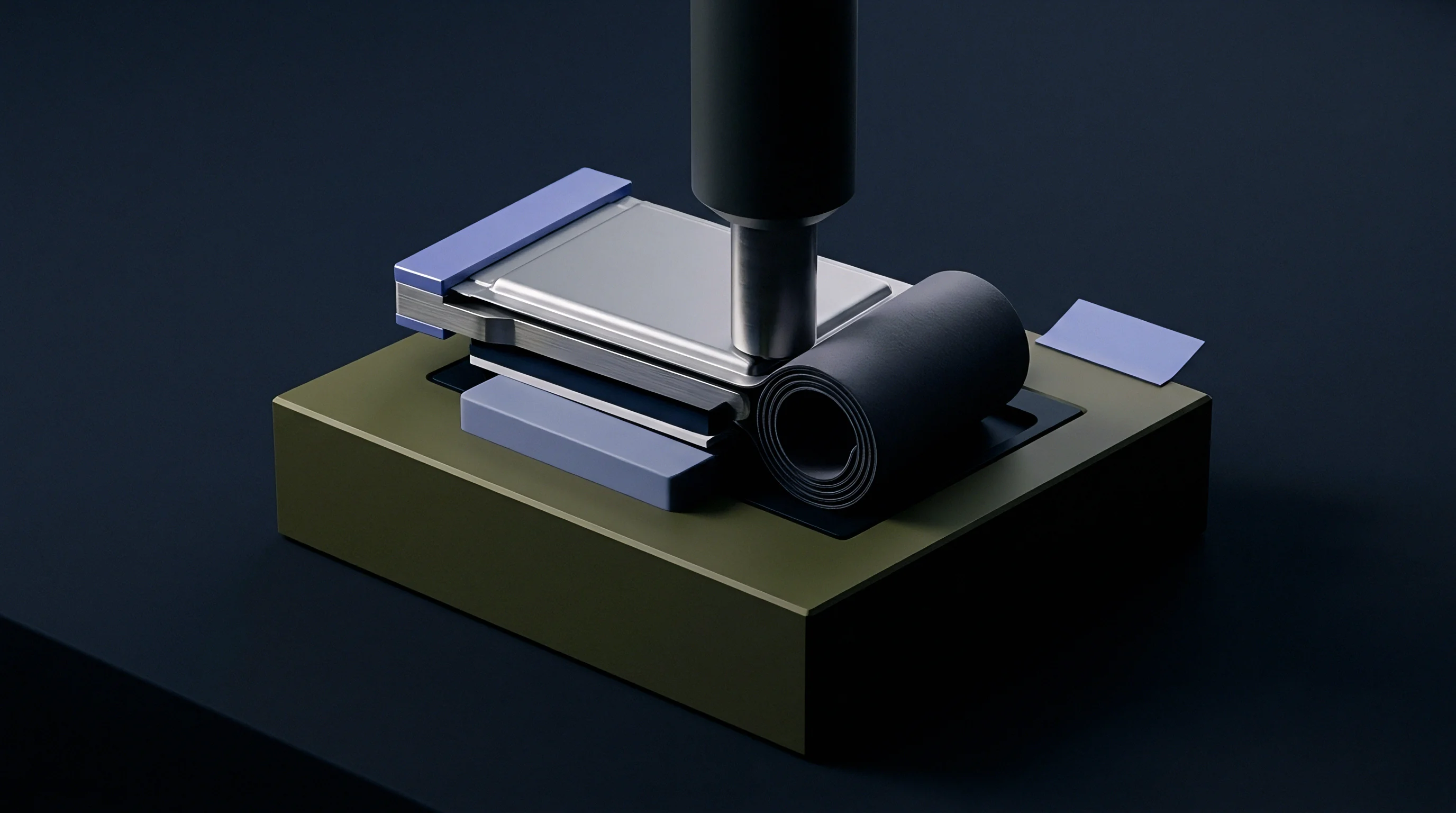
Mechanical dimensions of rigid aluminum prismatic housings depend heavily on internal gas pressure and structural restraint. Fresh LFP prismatic cells exhibit broad-face breathing, expanding and contracting during formation cycles and subsequent storage. Metrology performed on an unconstrained prismatic cell produces inaccurate figures because broad faces bow outward without external compression fixtures.
Standardized dimensional measurement requires mounting the cell inside a calibrated mechanical clamp calibrated to apply three hundred kilograms of uniform static force across the primary faces.
Stack pressure dictates broad face swelling limits. Under nominal three hundred kilogram pre-load, a standard seventy-two millimeter thick cell casing measures seventy-one point five millimeters plus or minus zero point five millimeters. Unclamped measurement allows face deflection to add up to one point two millimeters to total thickness, causing false dimensional rejections.
Height over terminals, broad face flatness, and terminal coplanarity remain sensitive indicators of internal electrode assembly alignment and header plate welding quality.
| Parameter | Nominal Dimension | Acceptance Tolerance | Test Condition and Fixturing |
|---|---|---|---|
| Cell Body Thickness | 71.50 mm | ±0.50 mm | Restrained at 300 kg static preload across broad faces |
| Width Across Main Faces | 173.80 mm | ±0.30 mm | Unconstrained measurement via optical coordinate fixture |
| Height Over Terminal Post | 207.20 mm | ±0.40 mm | Measured from cell bottom plate to aluminum terminal flat |
| Terminal Coplanarity | 0.00 mm | ≤0.20 mm | Differential height between positive and negative terminal planes |
| Safety Vent Burst Pressure | 0.80 MPa | ±0.08 MPa | Destructive pneumatic burst test on isolated header cap sample |
| Helium Leak Rate | 1.0×10⁻⁹ Pa m3/s | ≤5.0×10⁻⁸ Pa m3/s | Vacuum chamber mass spectrometer leak detector |

Structural Metrology and Dimensional Envelopes
Casing width, height, and broad-face flatness fall within tight tolerances to prevent mechanical binding inside pack sub-modules. Coordinate measuring machines scan broad faces to calculate maximum crown deflection relative to the aluminum perimeter edge. Deflection exceeding zero point four millimeters across the central region indicates internal gas buildup generated by incomplete degas steps during cell formation.
Aluminum wall thickness on standard prismatic cans measures less than one millimeter, making header ring laser welds vulnerable to fatigue under thermal cycling.
Safety vent caps integrated into the top aluminum cover undergo burst verification on a destructive destructive sample drawn from incoming lots. Pneumatic pressure testing confirms that score lines rupture within zero point seven two to zero point eight eight megapascals. Vents that rupture below zero point seven zero megapascals risk premature venting during elevated operational temperatures, while vent scores resisting pressure above zero point nine zero megapascals risk casing rupture before pressure relief occurs.
ISO 12405-4 dictates that dimensional compliance on prismatic aluminum enclosures be verified while the cell body is restrained under specified nominal stack pressure.

Terminal Coplanarity and Weld Torque Resistance
Electrical connections across aluminum and copper busbar interfaces demand flat, unmarred contact surfaces. M6 female threaded copper terminals welded to cell header plates undergo planar alignment testing to prevent bending moments on internal current collector tabs during busbar assembly. Terminal shear destroys internal copper tab bonds.
Laser-welded joint seals must withstand mechanical torque without cracking the glass-to-metal or ceramic-to-metal insulating seals surrounding the terminal posts.
Torque testing applies eight Newton-meters of rotational force directly to M6 terminal threads using a calibrated digital torque driver. Thread stripping or terminal rotation relative to the top cover constitutes a critical mechanical defect. Microscopic inspection of terminal seal perimeters following torque testing exposes electrolyte micro-seepage through microscopic fractures in the fluoroelastomer gasket ring.

Defect Classification and Defect Tolerances
- Critical Safety Defects include electrolyte leakage, housing fractures, inverted terminal polarity, vent seal degradation, and insulation resistance readings below one hundred megohms at five hundred volts direct current. Zero defective units permitted in the inspection sample.
- Major Functional Defects consist of broad-face thickness exceeding seventy-two point zero millimeters under restraint, terminal coplanarity variance above zero point two millimeters, open-circuit voltage below three point two five volts, and AC internal resistance exceeding zero point three five milliohms. Accepted under strict statistical acceptance thresholds.
- Minor Cosmetic Defects encompass minor surface scratches on plastic insulation film, readable barcode label misalignment, small paint blemishes on aluminum top plates, and minor cardboard tray denting. Evaluated under relaxed quality thresholds.
Terminal seals that show microscopic electrolyte crystallisation during initial mechanical clamping inevitably fail long-term helium leak tightness checks.


Variance
Statistical sampling plans establish the mathematical boundary between accepting a compliant production lot and releasing defective hardware into manufacturing lines. High-volume prismatic cell imports involve large discrete lots where total inspection costs prove prohibitive. A lot of twenty-five thousand cells requires rigorous statistical controls to balance inspection load against consumer risk.
Standard sampling schemes like ANSI/ASQ Z1.4 utilize Acceptable Quality Limit levels, whereas zero-acceptance sampling plans set the acceptance number to zero across all sample sizes.
Attribute inspection schemes balance buyer protection against the operational cost of physical testing. Under standard ANSI/ASQ Z1.4 General Inspection Level II single sampling, a lot of twenty-five thousand units yields a sample size of three hundred fifteen cells. For a major defect Acceptable Quality Limit of zero point four zero, the lot passes if three or fewer defective units appear, and fails if four units appear.
This structure provides high acceptance probability for high-quality factory lots, but exposes the buyer to consumer risk when latent defect rates drift upwards.

Does Zero Acceptance Sampling Protect against Latent Defects?
Single sampling plans with an acceptance number of zero concentrate statistical power at extremely low defect fractions. Zero-defect sampling plans designed by Nicholas Squeglia index sample sizes directly to an Acceptable Quality Limit value, forcing lot rejection upon finding a single non-conforming unit. Defective cells elevate thermal runaway risk.
The zero acceptance plan tightens consumer risk.
Evaluating an incoming shipment of twenty-five thousand cells using a Squeglia zero-acceptance plan at an Acceptable Quality Limit of zero point four zero requires testing a reduced sample size of one hundred twenty-five units. If zero defects appear in the one hundred twenty-five cell sample, the lot enters production. If one defect surfaces, the entire twenty-five thousand cell lot undergoes quarantine.
Operating Characteristic curves reveal the exact consumer risk profile for both approaches.
| Sampling Scheme | Sample Size (n) | Acceptance Number (c) | Pa at 0.1% Defect Rate | Pa at 0.5% Defect Rate | Pa at 2.0% Defect Rate | LTPD (Pa = 0.10) |
|---|---|---|---|---|---|---|
| ANSI/ASQ Z1.4 Level II (AQL 0.40) | 315 | 3 | 0.994 | 0.932 | 0.121 | 2.15% |
| Squeglia c=0 Index (AQL 0.40) | 125 | 0 | 0.882 | 0.534 | 0.080 | 1.83% |
| ANSI/ASQ Z1.4 Tightened Level II | 315 | 2 | 0.981 | 0.785 | 0.043 | 1.70% |
| Squeglia c=0 Tightened (AQL 0.25) | 200 | 0 | 0.818 | 0.367 | 0.018 | 1.14% |
Operating Characteristic probability calculations highlight the stark contrast in lot acceptance rates when latent factory defects contaminate a batch. At a true lot defect rate of zero point five percent, the standard ANSI/ASQ Z1.4 plan maintains a ninety-three point two percent probability of accepting the lot, allowing approximately one hundred twenty-five defective cells into module manufacturing. The zero-acceptance plan drops the acceptance probability to fifty-three point four percent under identical batch quality, rejecting nearly half of contaminated lots.
The Lot Tolerance Percent Defective represents the defect rate at which the buyer faces a ten percent probability of accepting a bad lot. The zero-acceptance plan reaches its Lot Tolerance Percent Defective point at a lower defect percentage than the standard single-sampling plan, offering superior protection against catastrophic safety defects such as separator pinholes or metallic particle contamination.
Under a single c=0 sampling plan with a sample size of 125 units, a cell lot containing a 1.8 percent defect rate maintains a 10 percent probability of passing incoming inspection.

ISO 2859 Switching Rules for Quality Shifts
- Normal to Tightened Transition occurs when two out of five consecutive incoming lots undergo rejection at initial inspection, compelling an immediate increase in sample size and reduction in allowable defect numbers.
- Tightened to Normal Return activates only after five consecutive tightened inspection lots receive full technical acceptance without non-conformances.
- Discontinuation of Inspection executes if tightened inspection remains active across ten consecutive lots, legally suspending cell acceptance rights until the supplier completes formal root-cause corrective action.
- Normal to Reduced Streamlining applies when ten consecutive lots pass without non-conformance, production maintains stable statistical process control, and total non-conforming units fall below administrative thresholds.
Selecting an inappropriate acceptance quality limit for internal resistance variance allows out-of-spec cells into module assembly, driving localized thermal imbalances that destroy pack cycle life.


Assay
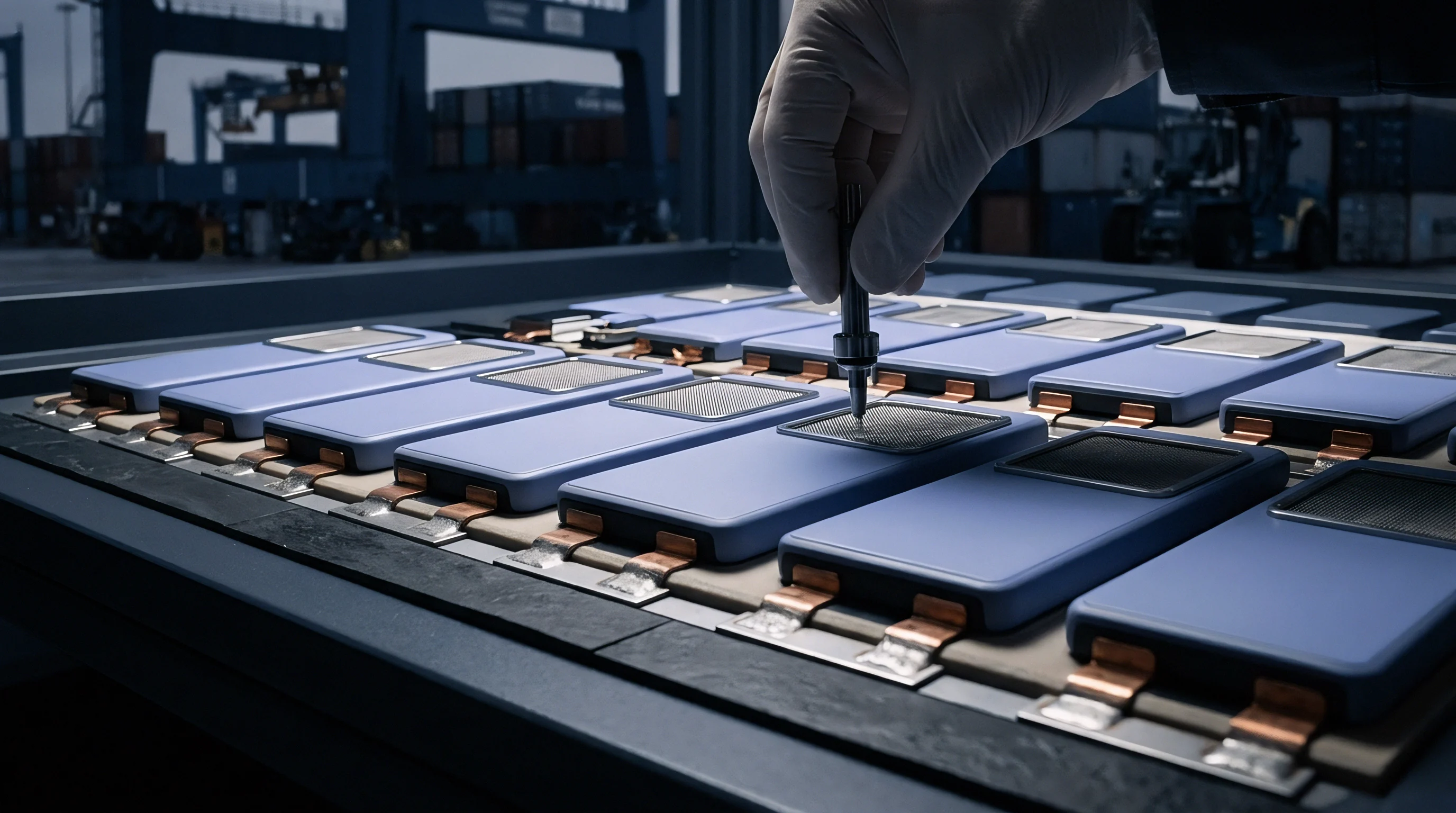
Electrochemical evaluation of incoming cell lots pinpoints subtle manufacturing flaws that escape mechanical measurement. Parameter verification begins with stabilization in a thermal chamber set to twenty-five degrees Celsius plus or minus zero point five degrees. Test channels apply precision current pulses to evaluate open-circuit voltage, alternating-current internal resistance at one kilohertz, and direct-current internal resistance over a ten-second discharge pulse.
Measurement fixtures utilize four-wire Kelvin sensing leads attached directly to terminal posts to eliminate contact resistance errors.
Micro-shorts accelerate open-circuit voltage decay. Open-circuit voltage drops rapidly during initial storage following cell formation, stabilizing into a predictable linear decay slope known as the K-value. Calculating the K-value involves recording cell open-circuit voltage at intake and re-measuring voltage precisely fourteen days later under identical temperature conditions.
K-value expressed in millivolts per day isolates self-discharge caused by internal impurity contamination from normal electrochemical relaxation.
| Electrical Parameter | Target Specification | Acceptance Bound | Measurement Hardware and Condition |
|---|---|---|---|
| Open-Circuit Voltage (OCV) | 3.295 V | 3.280 V to 3.310 V | 7.5 digit DMM after 14-day hold at 25°C |
| AC Internal Resistance (1 kHz) | 0.22 mΩ | ≤0.28 mΩ | Precision 1 kHz AC milliohm meter with Kelvin clips |
| DC Internal Resistance (10s) | 0.45 mΩ | ≤0.52 mΩ | 100A 10-second discharge pulse at 50% SoC |
| K-Value Decay Rate | 0.02 mV/day | ≤0.05 mV/day | Differential OCV calculation over 14-day hold |
| Discharge Capacity (0.5C) | 282 Ah | ≥280 Ah | Constant current discharge down to 2.50 V cutoff |
| Insulation Resistance | 500 MΩ | ≥100 MΩ | 500 V DC applied between positive post and can body |
Electrical Parameter Verification and Hold Times
Open-circuit voltage drops rapidly during the initial forty-eight hours following formation before stabilizing into a predictable decay baseline. Temperature drifts alter measured AC internal resistance. Alternating-current internal resistance measured at one kilohertz captures ohmic resistance dominated by electrolyte conductivity and terminal tab weld impedance.
A tight distribution of AC internal resistance across the sample reflects consistent tab welding and uniform electrolyte wetting across the separator layers.
Direct-current internal resistance calculated via a ten-second discharge pulse at fifty percent state of charge incorporates charge-transfer resistance and mass transport limitations. Cells displaying normal AC internal resistance alongside elevated DC internal resistance suffer from poor active material coating quality or degraded binder cohesion on the electrode foils. Capacity mismatch reduces available pack energy.
Capacity variance across an incoming cell lot creates module-level cell imbalance that no passive battery management system can correct during rapid charge cycles.
Capacity Screening and Voltage Decay Mechanics
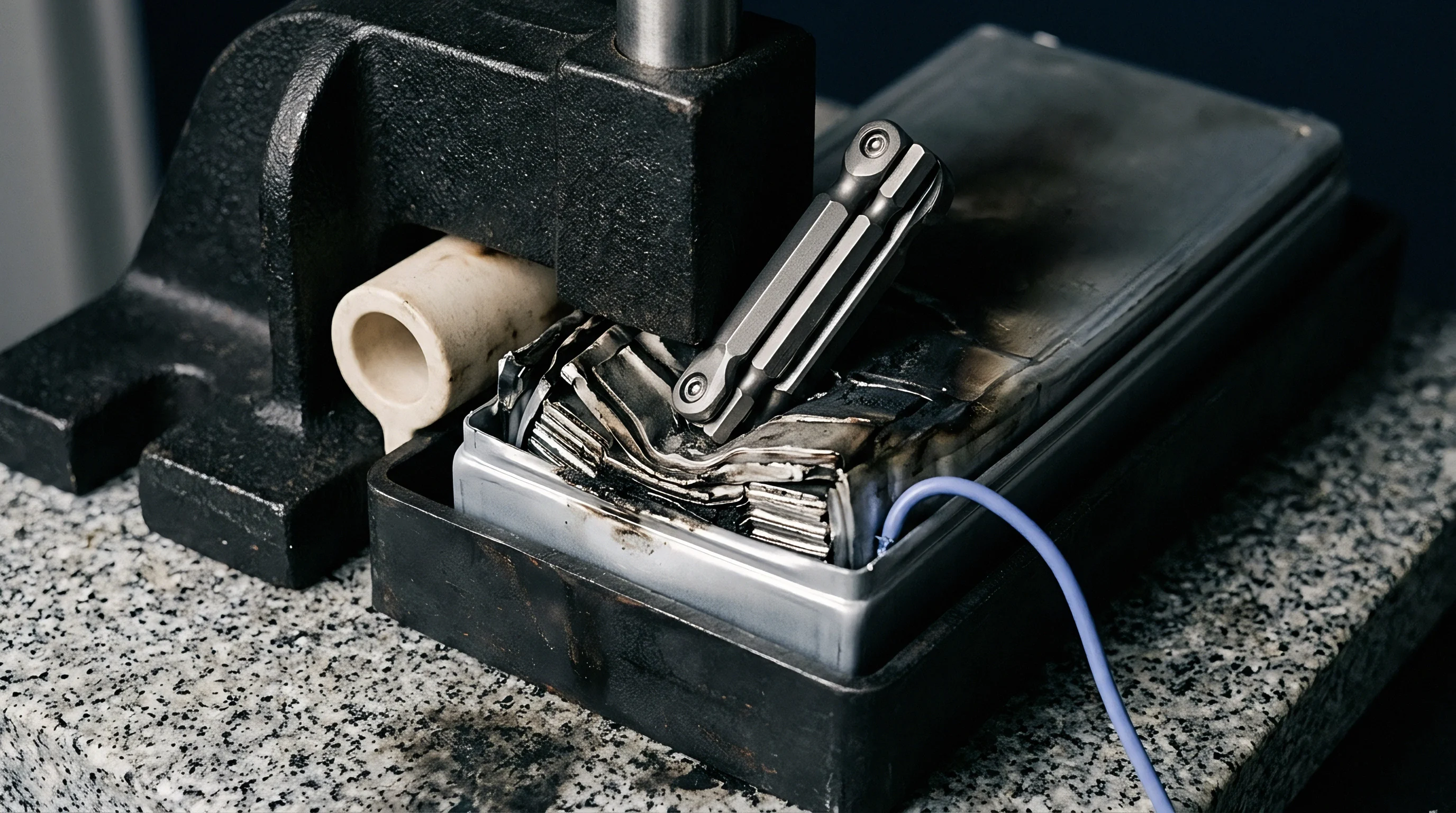
Long-term self-discharge measurements identify micro-short circuits caused by metallic burrs on current collector foils. Slitting operations during electrode manufacturing generate copper and aluminum microscopic particles that migrate through porous polyethylene separators over time. When a burr bridges opposing electrode faces, localized micro-short currents drain cell charge, shifting the K-value above zero point zero five millivolts per day.
Capacity verification tests run full charge-discharge cycles on a zero point five percent subsample drawn from incoming lots. Test channels charge cells under constant current at zero point five C rate up to three point six five volts, holding constant voltage until current drops below zero point zero five C. Discharge proceeds at zero point five C down to two point five zero volts. Cells delivering less than rated nominal capacity fail acceptance criteria, triggering complete lot quarantine.

Dossier Requirements for Lot Release Authorization
- Factory Formation Logs containing individual cell serial numbers, final degassing pressures, formation charge capacities, and initial factory grading data.
- Certificate of Analysis detailing material batch numbers for cathode powder, anode graphite, separator film, and electrolyte formulation lots.
- Incoming Inspection Test Record documenting calibrated physical metrology, multi-point electrical readings, K-value calculations, and zero-acceptance statistical evaluation sheets.
- UN 38.3 Transport Compliance Dossier validating that imported cell formats successfully passed altitude, thermal, vibration, shock, external short-circuit, impact, overcharge, and forced discharge safety testing.
IEC 62619 clause 6.2 dictates that secondary lithium cells undergo continuous short-circuit monitoring during lot acceptance testing, shifting financial liability to the vendor whenever cell surface temperatures exceed 55°C.


Remedy
Commercial contracts dictate the precise workflow when an imported lot fails physical or electrical acceptance testing. Incoming inspection failure triggers immediate containment actions to prevent non-conforming inventory from mixing with approved production stock. Quarantine holds prevent line contamination.
The buyer issues a Non-Conformance Report accompanied by raw metrology logs, Kelvin bridge resistance data, and statistical sample evaluation records within five business days of container receipt.
Quarantine flags lock the affected lot inside warehouse software, blocking pick requests from pack assembly teams. The vendor retains the contractual right to review incoming inspection data and request secondary verification within ten calendar days. Re-testing the same sample units is strictly forbidden, as statistical re-testing without physical root-cause justification destroys the mathematical integrity of the original acceptance sampling plan.
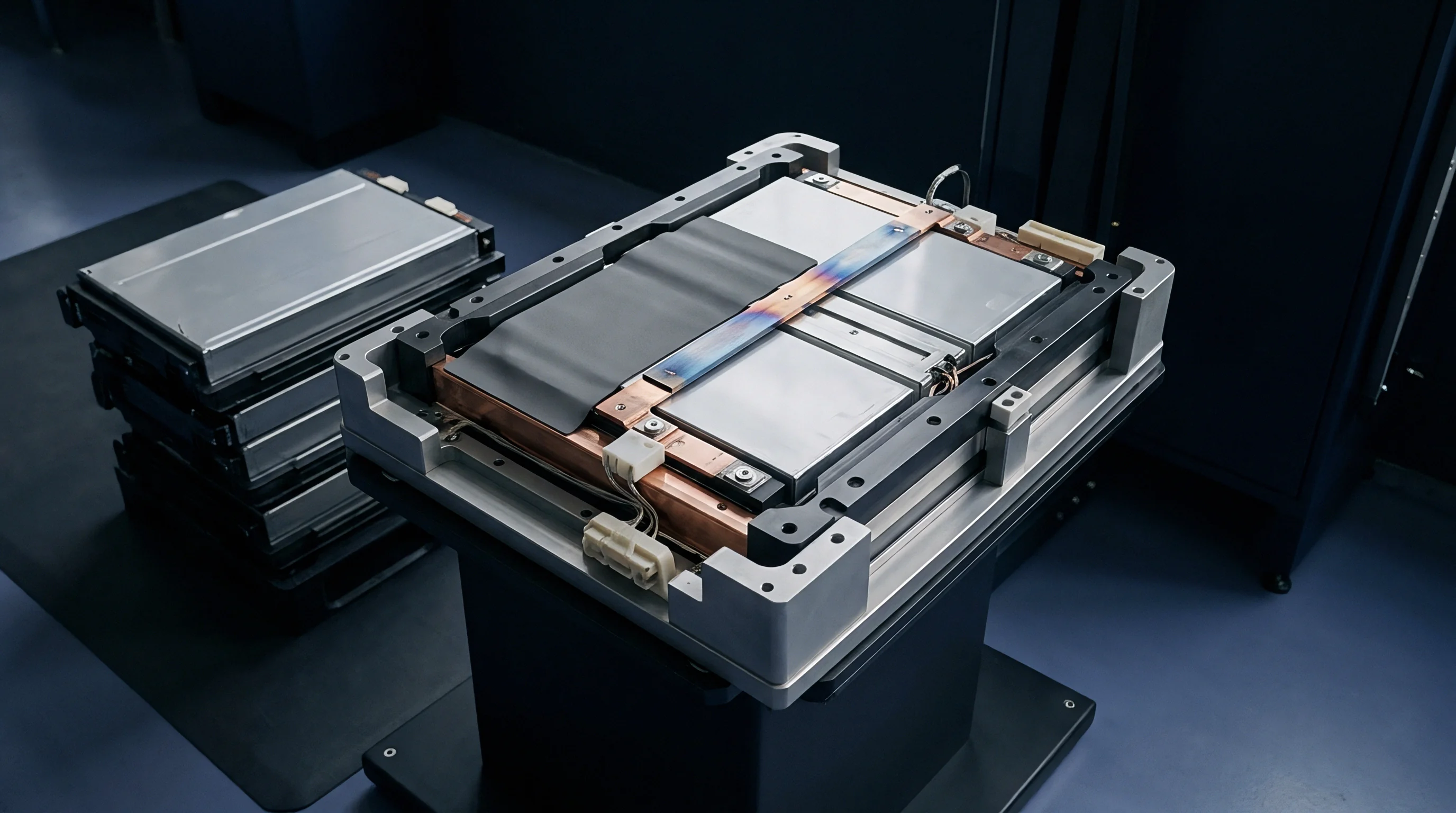
Quarantine Execution and Non-Conformance Notifications
Formal written notices transmit test failure data to the cell vendor within five business days of lot receipt. The notification packet contains detailed photographic evidence of physical defects, serial number logs of failed sample units, calibration certificates for test fixtures, and environmental data logger records from transit crates. Landed costs spike during dock holds.
Quarantine holds incur storage fees and disrupt module assembly schedules, creating immediate commercial friction between buyer and vendor.
Commercial agreements outline three resolution pathways following confirmed lot rejection: full lot replacement at vendor expense, vendor-funded hundred percent sorting at buyer facility, or commercial price markdown reflecting degraded cell utility. Sorting operations performed on site require dedicated technical personnel provided or paid for by the vendor, operating under buyer quality oversight.
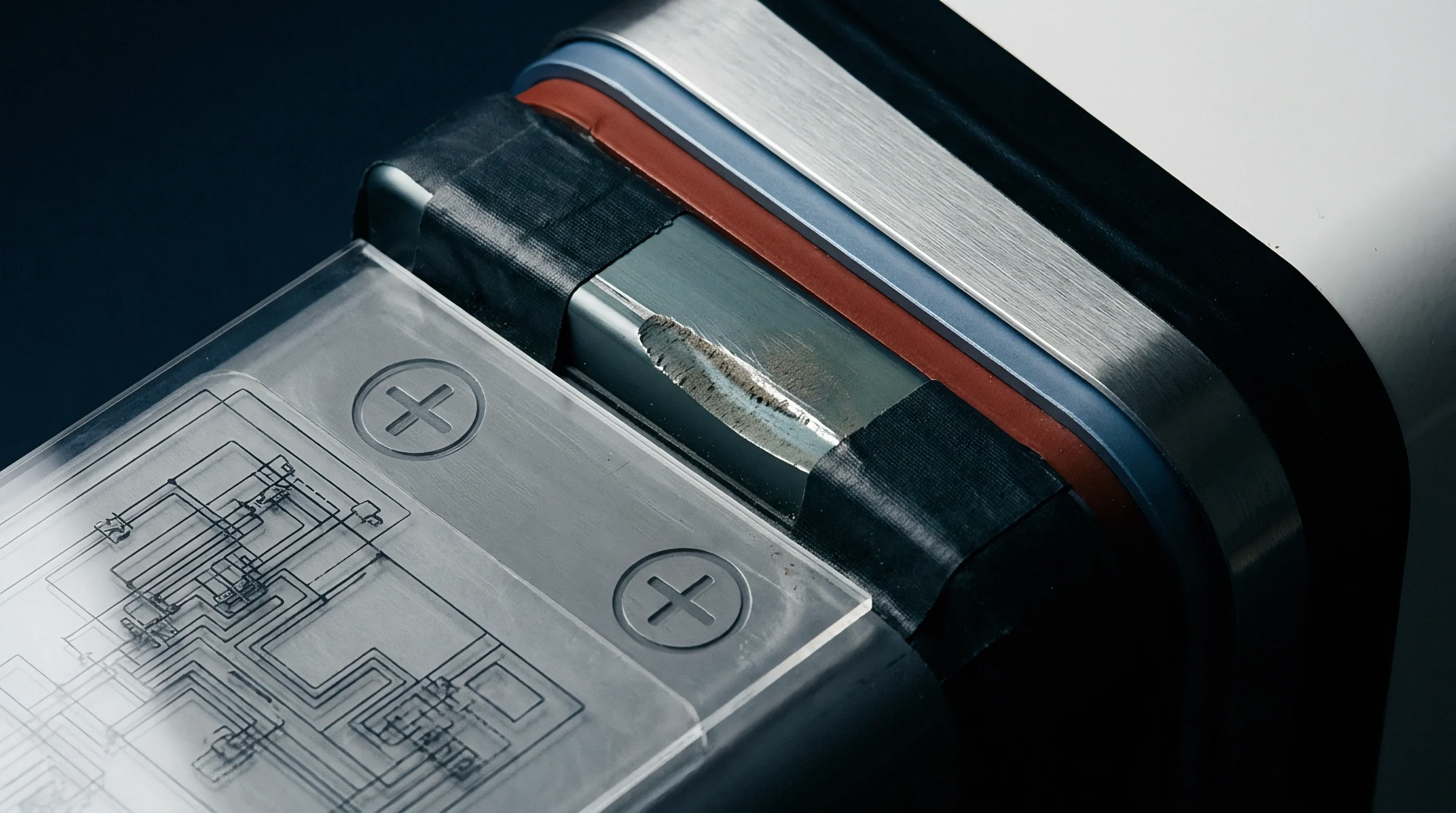
Umpire Testing and Commercial Settlement Mechanics
Independent laboratory evaluations arbitrate technical sampling disputes. Independent laboratory evaluations arbitrate conflicting test results between the cell buyer and the factory. Umpire laboratories operate under ISO/IEC 17025 accreditation, utilizing identical test fixtures, temperature stabilization protocols, and electrical equipment specifications agreed upon in the primary purchase contract.
Umpire laboratories arbitrate technical disputes. Results delivered by the umpire facility bind both commercial parties as final technical judgment.
Dangerous goods clearance demands valid UN38.3 dossiers. Returning rejected cell lots internationally presents complex logistics challenges under dangerous goods transport regulations. Defective or compromised lithium cells fall under UN 3480 provisions, requiring specialized flame-retardant overpack containers and explicit authorization from national maritime authorities before export loading.
When international shipping regulations prevent physical return of defective inventory, contracts compel the vendor to fund local certified hazardous material recycling and issue complete financial credit against outstanding purchase invoices.
Whether international maritime carriers will continue to accept return shipments of rejected cell lots without requiring costly containerized fire-suppression retrofit systems remains an open commercial friction.