Coupled Thermomechanical Viscoelastic Creep Solver Integration for Multi Layer Ceramic Coated Separators under Thermal Transient Runaway
Integrating viscoelastic creep routines into thermomechanical transient solvers predicts separator mechanical collapse thresholds under battery thermal runaway conditions.


Film
Microporous polyolefin membranes in lithium-ion batteries use ultra-high-molecular-weight polyethylene or polypropylene matrices to isolate opposing electrode faces electrically. Applying sub-micron ceramic particles such as alumina or silica via aqueous or solvent slurry coating raises the thermal stability threshold substantially. Uncoated polyolefin membranes collapse dimensionally near their polymer melting point ~ between 130 degrees Celsius and 168 degrees Celsius depending on crystallinity and orientation ratio.
A double-sided three-micrometer alumina layer forms a structural scaffold capable of bearing mechanical loads even after the underlying polyolefin matrix turns into a viscous fluid.
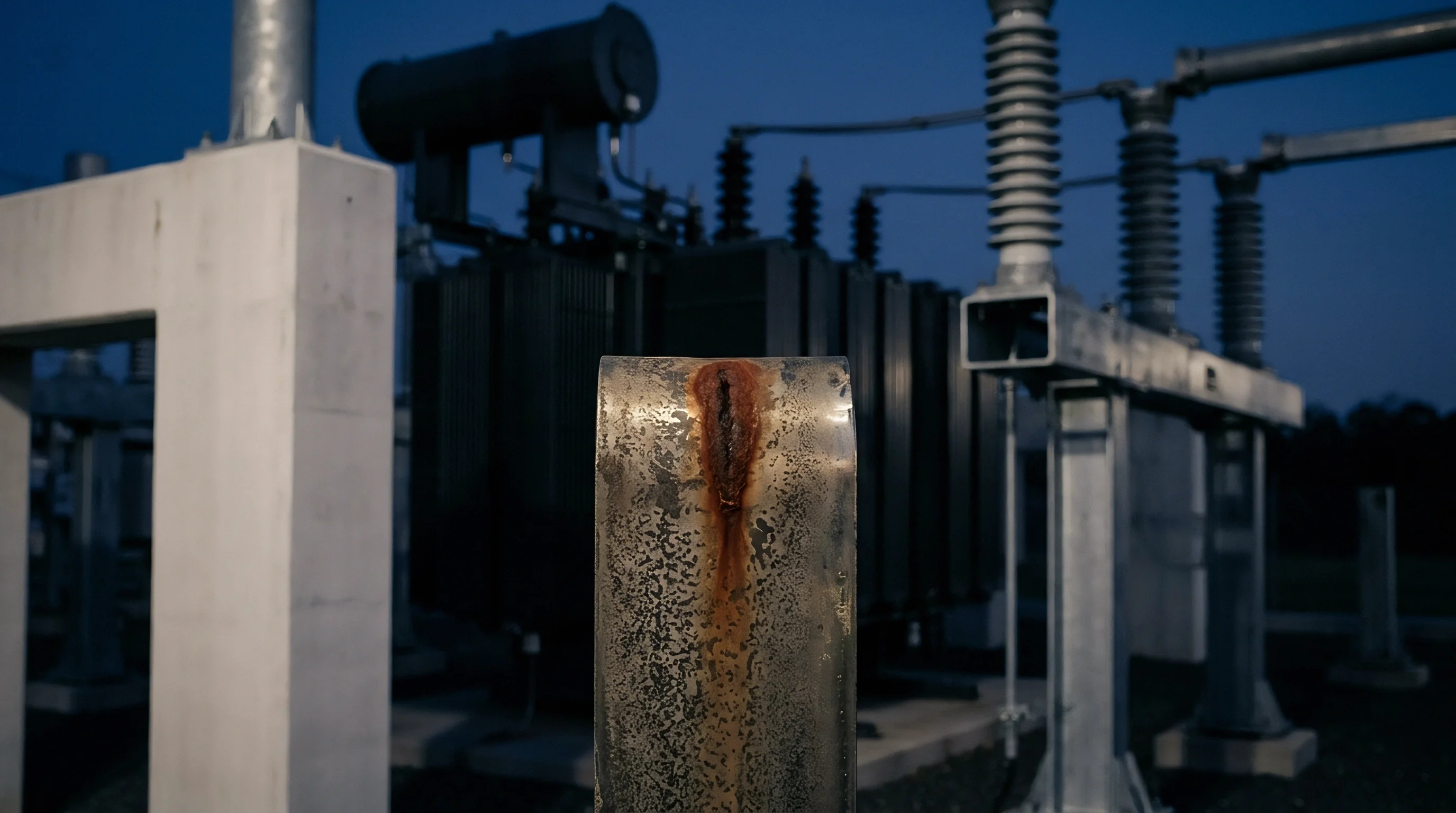
Substrate Microstructure and Ceramic Coating Interfaces
Base polyolefin membranes are mono-axially or bi-axially stretched during wet or dry manufacturing to produce uniform sub-micron pore networks. Dry-process phase inversion yields elongated, slit-like pores with marked directional anisotropy, while wet extraction generates an isotropic, sponge-like structure. The bond strength between the inorganic ceramic layer and this polymeric web dictates overall mechanical integrity under steep thermal gradients.
Adhesion depends on binders like polyvinylidene fluoride hexafluoropropylene or acrylic resins, applied at low mass loadings so pores remain open. If temperature spikes faster than 100 degrees Celsius per second during an internal short, thermal expansion mismatches between the ceramic particle bed and the polyolefin matrix generate interfacial shear stress. When this stress overcomes the binder yield point, the ceramic layer spalls off, leaving the softening polymer backbone vulnerable to mechanical pinching against adjacent electrode topographies.
| Separator Architecture | Base Thickness (µm) | Coating Mass (g/m²) | Melt Temperature (°C) | Shrinkage at 150°C (%) |
|---|---|---|---|---|
| Uncoated Mono-PE | 12.0 ± 0.5 | 0.0 | 134 ± 2 | 48.5 ± 3.2 |
| Trilayer PP/PE/PP | 16.0 ± 0.8 | 0.0 | 166 ± 2 | 22.1 ± 1.8 |
| Single-Sided Al2O3 Coated PE | 12.0 ± 0.5 | 2.5 ± 0.2 | 135 ± 2 | 8.4 ± 0.9 |
| Double-Sided Al2O3 Coated PE | 9.0 ± 0.4 | 4.2 ± 0.3 | 135 ± 2 | 1.8 ± 0.3 |
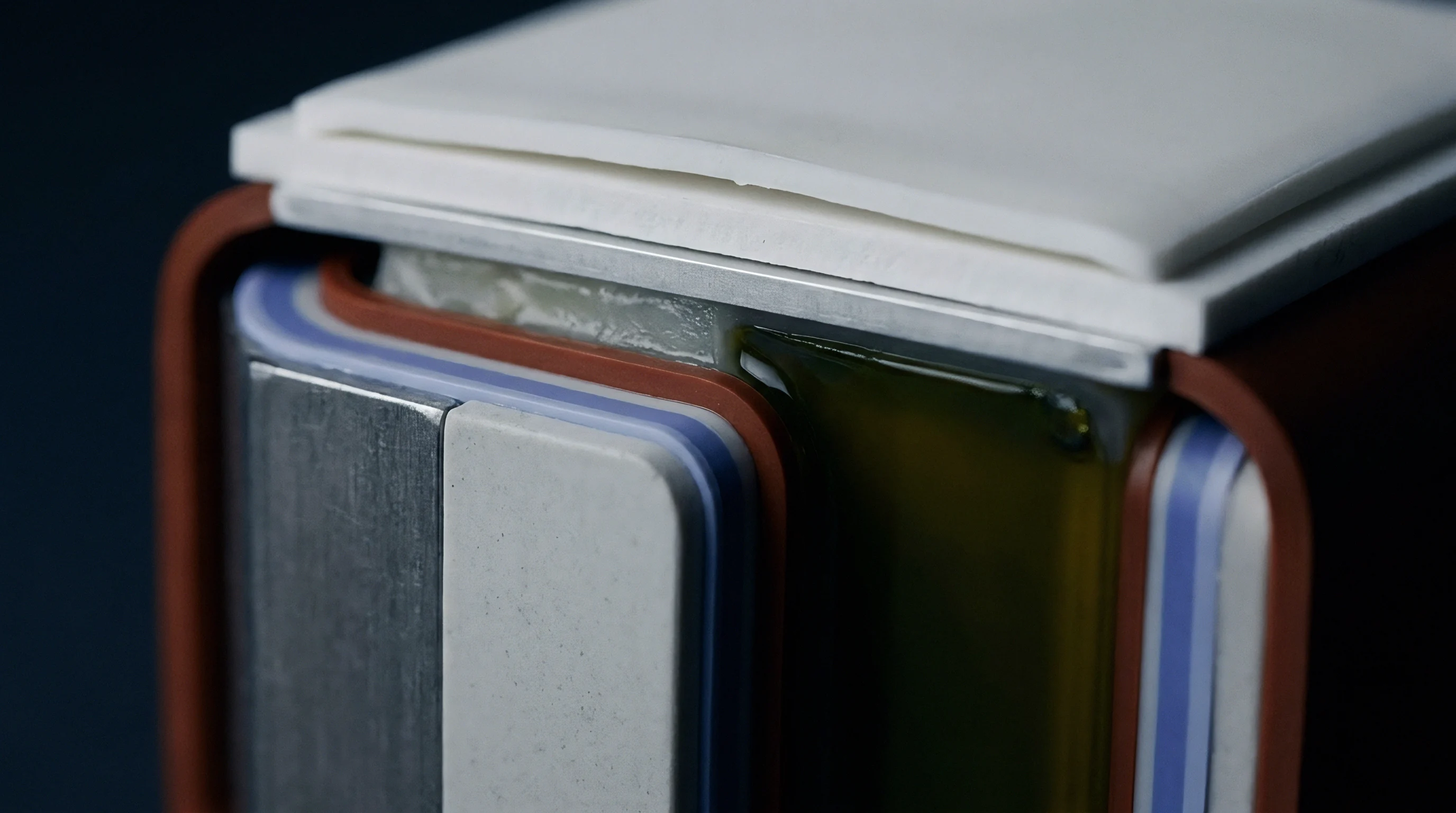
Thermal Expansion and Differential Strain Incompatibility
Volumetric shifts across a multi-layer separator during rapid heating reflect two competing physical mechanisms. Below the glass transition temperature, polyolefins show positive isotropic thermal expansion, but once polymer chains become mobile, entropic retraction causes contraction along orientation directions. By contrast, the inorganic ceramic coating maintains a consistently low, positive thermal expansion coefficient near seven times ten to the minus sixth power per Kelvin.
Double-sided ceramic coatings hold transverse thermal shrinkage below two percent at 150 degrees Celsius by forming a rigid inorganic bridge across the softening polyolefin substrate.
This divergence in expansion drives internal bending moments in asymmetric, single-sided ceramic-coated films. During early thermal runaway, single-sided separators curl toward the coated face, encouraging edge delamination and exposing margins near cell casing walls. Symmetrical double-sided coatings eliminate this curl by balancing stress across the neutral axis.
While single-sided ceramic coatings lower overall unit weight, the resulting asymmetric moment pulls the exposed polymer edge away from the electrode margin during thermal events.

Strain
How the polymeric substrate flows under transient heating determines its mechanical deformation right up to void closure. Viscoelastic models treat this behavior by splitting stress into instantaneous elastic storage and time-dependent viscous relaxation. As an exothermic reaction drives temperature up, relaxation spectra compress toward shorter time scales, accelerating material creep under applied stack loads.
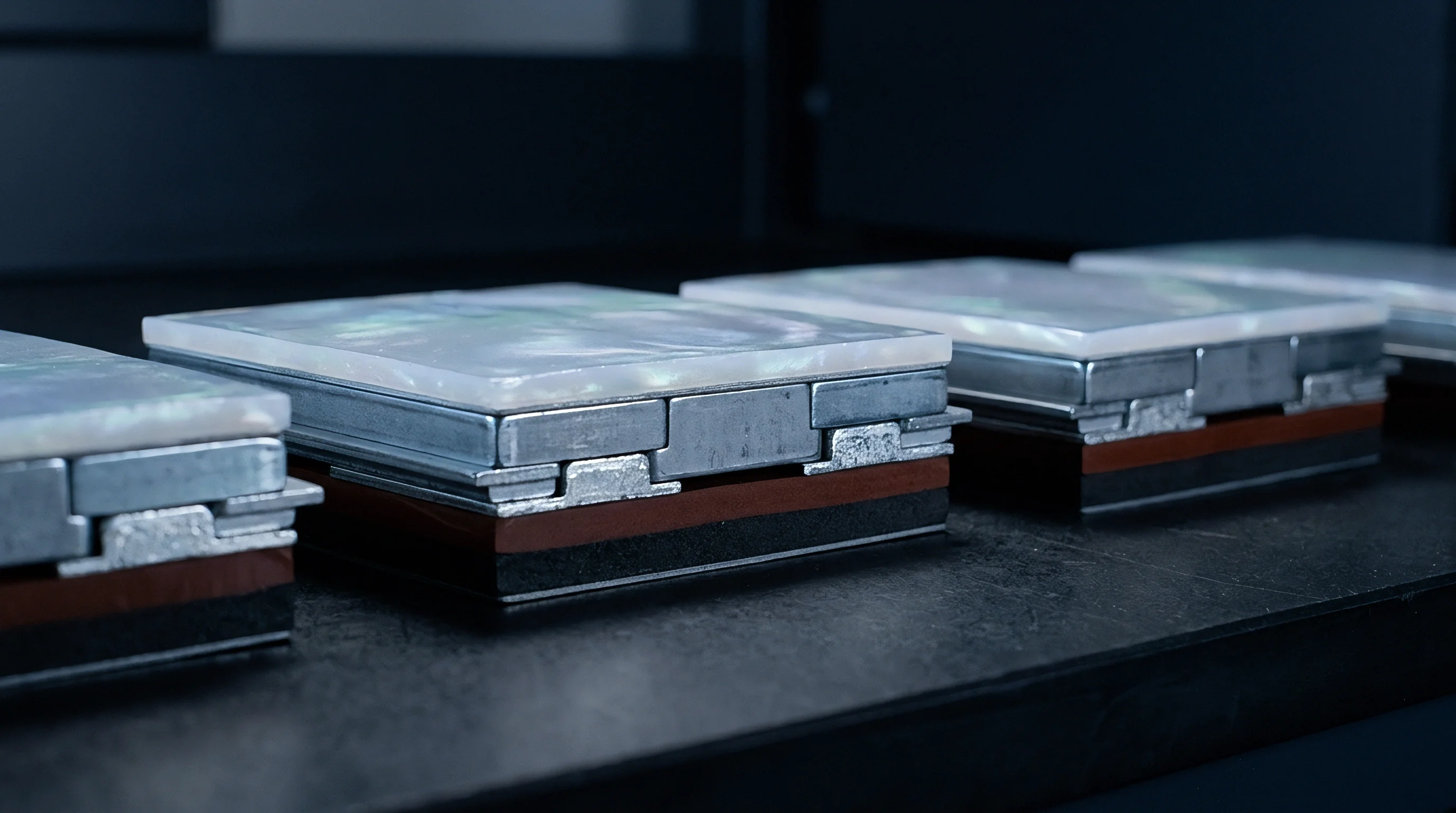
Viscoelastic Relaxation Modulus and Temperature Dependence
Linear viscoelastic formulations represent the stress relaxation modulus through a generalized Maxwell model expressed as a Prony series. Temperature adjustments follow Time-Temperature Superposition, using the Williams-Landel-Ferry equation above glass transition or an Arrhenius shift factor below it. The reduced time variable scales physical time by this shift factor, speeding up modeled viscous flow during local temperature spikes.
Dynamic mechanical thermal analysis tracks storage and loss moduli through continuous temperature sweeps to produce Prony parameters tied to specific heating rates. Under rapid thermal transients, chain entanglement drops sharply above 110 degrees Celsius, collapsing the storage modulus by over two orders of magnitude within a twenty-degree window. Solvers handling this regime must recalculate the constitutive matrix at every integration point for each global thermal step.
Polymer chain relaxation acceleration under high thermal ramp rates shifts peak viscoelastic creep strain into time domains shorter than ten milliseconds.
Viscous Creep Kinetics above Polymer Glass Transition
Under steady compression, mechanical strain progresses through primary, secondary, and tertiary creep regimes as temperature rises. Inside a battery stack, cell swelling and gas evolution build compression, pushing the separator past steady-state secondary creep into tertiary acceleration, where localized necking begins.
Incorporate the following failure modes into the creep kinetics solver framework:
- Entropic Retraction Shrinkage occurs when oriented polymer chains recoil along major stretching axes upon reaching mobility temperatures, imposing internal tensile stress within the film plane.
- Viscous Pore Collapse develops as compressive stress forces molten polymer into adjacent void spaces, reducing ionic permeability prior to complete film melting.
- Ceramic Layer Crazing happens when underlying polymer lateral contraction exceeds the strain-to-failure limit of the brittle inorganic particle matrix.
- Localized Thickness Runaway forms where localized hot spots reduce viscous resistance, concentrating stack pressure and thinning the film until direct electrode contact initiates.
Polymer creep rates scale exponentially with localized temperature once thermal energy overcomes the activation barrier for molecular chain slip.
Puncture
Localized mechanical failure during thermal events stems from high temperatures, heavy stack pressure, and electrode surface defects acting together. Lithium dendrites, burrs from foil slitting, and agglomerated cathode particles act as indenters against the softening separator sheet. The separator yields when local shear stress under an indenter exceeds the combined strength of the ceramic layer and polymer matrix.
Stack Compression and Electrode Burr Penetration Mechanics
Pouch and prismatic cells typically experience stack compression between 0.5 and 3.0 megapascals during normal operation. When thermal runaway starts, gas generation, thermal expansion of solid electrodes, and external housing constraints can push local stack pressure above 10 megapascals. At these loads, micro-features on the electrode surface press directly into the separator face.
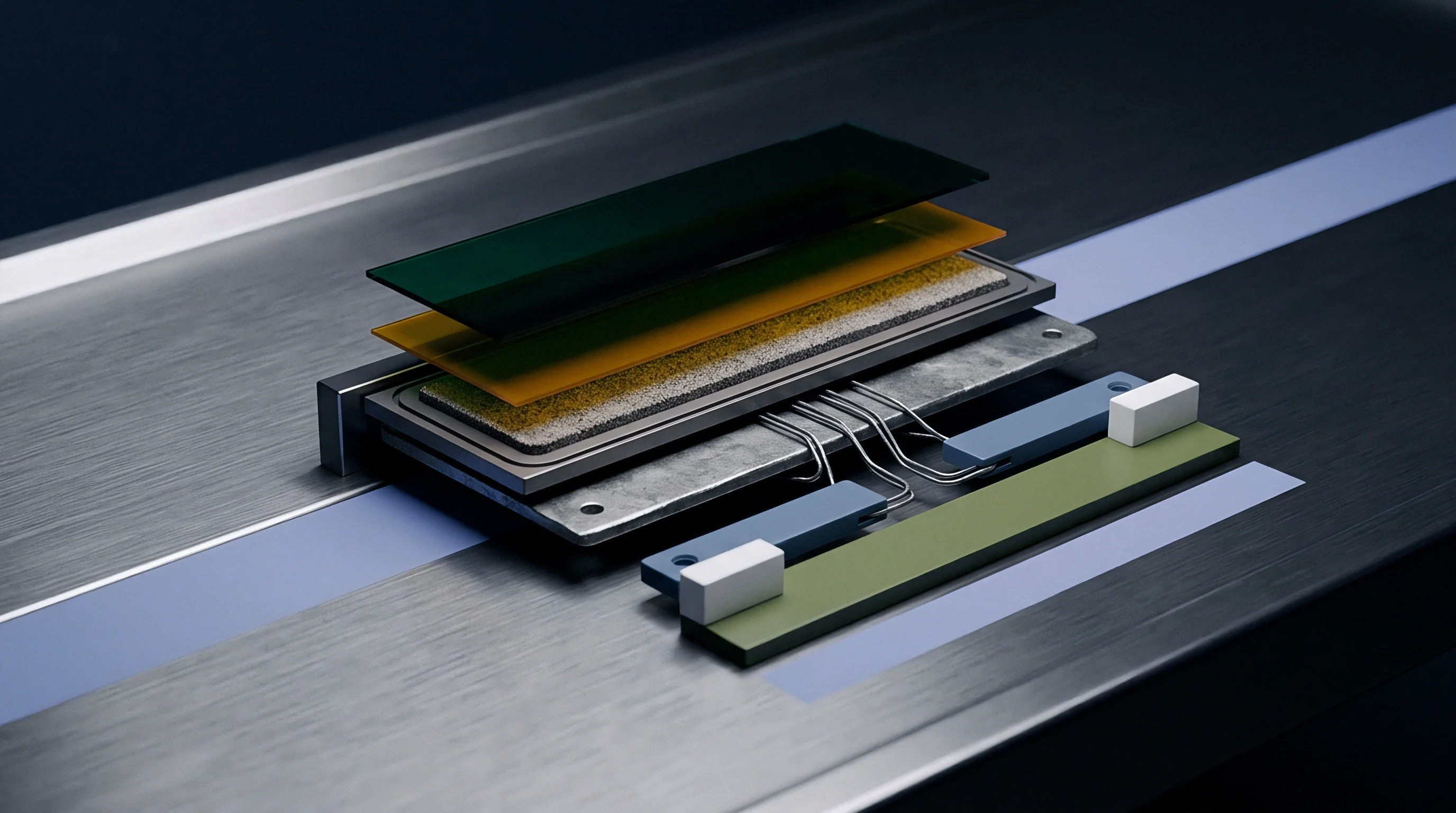
Ceramic coatings spread contact stresses over a wider area of the polymer sheet underneath. How well they do this depends heavily on particle size distribution: dense beds of sub-micron particles block indenters far better than coarse, polydisperse coatings. Once heating softens the binder resin, individual ceramic particles break free, letting burrs pierce through.
| Test Temperature (°C) | Indenter Tip Radius (µm) | Uncoated Puncture Force (N) | Coated Puncture Force (N) | Compressive Modulus (MPa) |
|---|---|---|---|---|
| 25 | 50 | 4.2 ± 0.3 | 6.8 ± 0.4 | 185 ± 12 |
| 90 | 50 | 2.1 ± 0.2 | 4.5 ± 0.3 | 62 ± 5 |
| 130 | 50 | 0.4 ± 0.1 | 2.9 ± 0.2 | 14 ± 2 |
| 160 | 50 | 0.0 ± 0.0 | 1.8 ± 0.2 | 3 ± 1 |
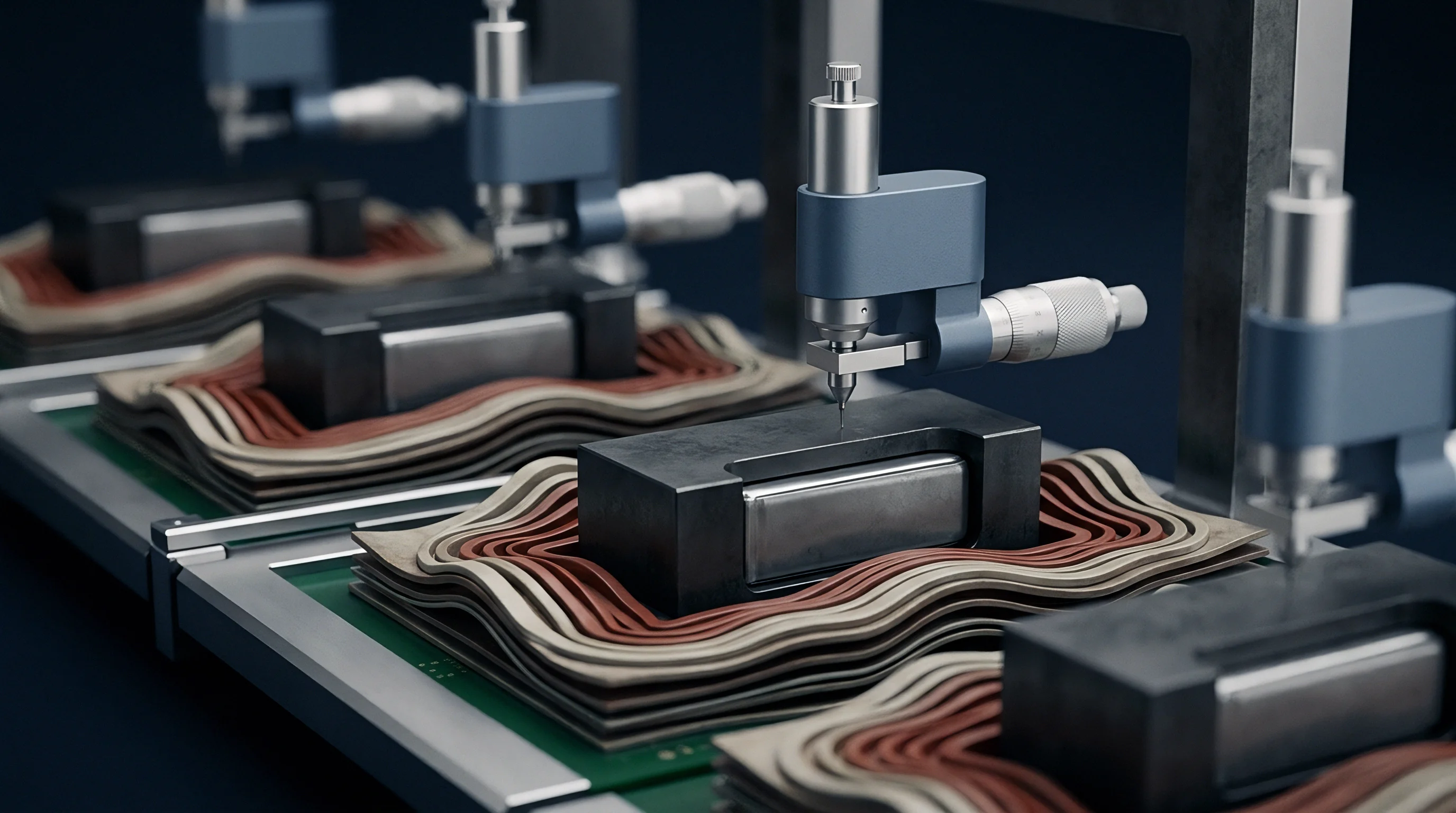
How Does Mechanical Stack Pressure Accelerate Separator Failure during Heating?
High mechanical confinement squeezes softening polymer laterally into adjacent pores, reducing film thickness right under the load point. Thinner polymer means a shorter path for puncture, allowing smaller burrs to pierce the film well before it melts entirely.
Designing a pack module with rigid end plates that cannot accommodate cell swelling creates a pressure trap during thermal spikes. Rising internal cell pressure can trigger separator puncture at temperatures thirty degrees below the nominal polymer melt point. Ignoring this thermomechanical coupling leads to failed pack-level safety tests, where thermal runaway spreads between cells, destroying prototype tooling and forcing a redesign of the pack architecture.

Scheme
Integrating viscoelastic creep equations into finite element or finite volume heat transfer models takes stable numerical algorithms. Coupling conduction equations with momentum balance and non-linear constitutive relations creates stiff systems, especially when phase changes, expansion, and viscous flow occur on drastically different timescales. Explicit time integration schemes fail here because tight Courant-Friedrichs-Lewy limits are driven by fast thermal waves and high cold-polymer stiffness.
Coupled Thermomechanical Differential Equations and Operator Splitting
The mathematical frame links energy balance directly to mechanical equilibrium. Heat source terms capture ohmic losses, exothermic decomposition reactions, and viscous dissipation. Meanwhile, the mechanical solver tracks displacements, strains, and stresses through an updated Lagrangian approach that accommodates large structural deformations.
Staggered operator-splitting algorithms separate thermal and mechanical steps within each time increment. The thermal solver first updates local temperature fields from active heat generation rates. Material properties, shift factors, and thermal strain tensors are recalculated next.
Finally, the non-linear mechanical solver uses a Newton-Raphson loop with a consistent tangent stiffness matrix to restore force equilibrium.
Consider a transient solver setup operating under fixed stack constraints. The calculation models a multi-layer ceramic separator subjected to an exothermic heat flux that drives local temperature from 100 degrees Celsius to 200 degrees Celsius at 50 degrees Celsius per second under a 2.0 megapascal initial stack load.
Assume the following parameters for the computation:
- Initial thickness equals 12 micrometers, consisting of an 8-micrometer PE core and two 2-micrometer alumina coatings.
- Prony series parameters for PE core define a three-term model with relaxation times of 0.01 seconds, 0.1 seconds, and 1.0 seconds at a reference temperature of 25 degrees Celsius.
- Arrhenius shift factor activation energy equals 85 kilojoules per mole below 130 degrees Celsius, shifting to a WLF model formulation above 130 degrees Celsius.
- Stack pressure rises non-linearly with cell thermal expansion, reaching 8.0 megapascals at 160 degrees Celsius.
At time step t = 0.8 seconds (temperature = 140 degrees Celsius), the thermal step outputs a rapid drop in PE elastic modulus from 120 megapascals to 8 megapascals. The operator-split mechanical algorithm computes instantaneous thermal expansion strain offset by viscoelastic creep strain. Creep strain rate accelerates to 0.15 per second under the 5.2 megapascal localized stack pressure at this timestep.
The solver calculates a total core thickness reduction of 3.2 micrometers within 0.12 seconds, concentrating 82 percent of the total stack displacement inside the softening polymer core while the ceramic layers sustain the external load. If the mechanical solver fails to update the consistent tangent matrix to reflect this rapid modulus decay, Newton-Raphson iterations diverge within three equilibrium steps.
| Ramp Rate (°C/sec) | Coupling Method | Time Step Range (s) | Iterations per Step | Divergence Frequency (%) |
|---|---|---|---|---|
| 10 | Explicit Staggered | 1.0e-4 to 1.0e-3 | 1.0 | 0.0 |
| 10 | Implicit Fully Coupled | 1.0e-3 to 1.0e-2 | 3.4 | 0.0 |
| 100 | Explicit Staggered | 1.0e-6 to 1.0e-5 | 1.0 | 18.5 |
| 100 | Implicit Operator-Split | 1.0e-5 to 1.0e-3 | 5.8 | 0.2 |
Time Step Control and Numerical Convergence Criteria
Adaptive time stepping preserves numerical stability while keeping computation times manageable over long thermal runs. Step sizing relies on monitoring peak relative changes in key variables: temperature increments, plastic or creep strain steps, and element property shifts.
Implicit operator-split numerical schemes hold solution divergence below 0.2 percent during high-rate thermal ramp conditions exceeding 100 degrees Celsius per second.
During local phase changes, latent heat absorption flattens the temperature profile while stiffness drops sharply. Solvers using fixed time steps often lock up or oscillate across this boundary. Introducing convergence checks on localized state variables lets the algorithm cut time steps by two orders of magnitude automatically when rapid modulus loss is detected, preserving accuracy across the transition.
How do variations in ceramic layer particle packing density alter the effective numerical damping factor required to maintain matrix convergence during high-speed mesh distortion?
Dossier
Validating solver accuracy requires lab testing under fast heating and tight mechanical constraints that match conditions inside real battery packs. Standard, slow-heating shrinkage tests ~ like sitting in an isothermal oven for 60 minutes ~ miss short-term viscoelastic creep entirely. High-rate thermomechanical analyzers with localized induction or resistance heaters provide the experimental baseline needed to fit Prony parameters and set failure limits.

Experimental Calibration and High Rate Thermal Testing
Test setups must heat samples faster than 50 degrees Celsius per second while applying dynamic compression and shear forces. Tracking displacement, load drop, and acoustic emissions in real time signals ceramic layer cracking, polymer melt-through, and structural collapse.
Calibrating model parameters against fast-ramp lab data ensures pack-level safety simulations reflect real thermal runaway behavior. Uncalibrated models consistently underestimate how quickly mechanical collapse occurs, leading to overly optimistic propagation resistance claims in regulatory safety dossiers.
Integration into RFQ Safety Parameters and Supply Agreements
Procuring multi-layer ceramic-coated separators requires converting numerical simulation limits into enforceable purchasing standards. A cell buyer specifying separator materials for high-energy applications must define mechanical retention metrics under dynamic thermal conditions directly within request-for-quotation documents.
Include the following verification requirements within engineering specification dossiers:
- Define minimum puncture force thresholds at 130 degrees Celsius and 150 degrees Celsius under a standardized indenter geometry and specified loading rate.
- Specify maximum allowable transverse and machine direction thermal shrinkage under a 100 degree Celsius per minute ramp rate to 180 degrees Celsius under 1.0 megapascal mechanical pre-load.
- Mandate minimum ceramic coating adhesion strength values before and after exposure to standard electrolyte solvents at 60 degrees Celsius for 48 hours.
- Require full disclosure of polyolefin backbone orientation ratios, resin molecular weight distribution metrics, and ceramic particle size distributions.
Under UN 38.3.5 testing standards for lithium batteries, compliance requires verified documentation showing that single-cell thermal events remain contained without flame propagation across the module. Writing explicit thermomechanical performance limits into cell manufacturing quality agreements provides legal recourse and warranty protection if production lots fail qualification testing.