Modeling Non Equilibrium Solute Trapping Kinetics during Ultra Rapid Droplet Cooling
Modeling solute trapping kinetics during droplet cooling establishes exact gas atomization parameters to freeze supersaturated alloy phases for high-life battery anodes.
Atomization
High-pressure inert gas jets shear liquid alloy streams into microscopic droplets, driving rapid convective cooling inside the flight chamber. Droplet cooling rates during gas atomization reach 105 to 108 Kelvin per second, governing the thermal history of the melt. At these exchange rates, the velocity of the liquid-solid phase transformation interface accelerates to several meters per second ~ a boundary motion that alters how solute atoms distribute between the shrinking liquid core and the advancing crystal lattice.
Equilibrium solidification models rely on the thermodynamic partition coefficient, defined as the ratio of solute concentration in the solid phase to solute concentration in the liquid phase at chemical equilibrium. Under equilibrium, solutes with low solid solubility are rejected by the advancing interface into the remaining liquid pool, causing micro-segregation, coarse intermetallic precipitation, and non-uniform chemical gradients across the solidified microstructure. In active materials like silicon-alloy anode powders or specialized aluminum current collectors, coarse intermetallic precipitates act as structural failure sites during electrochemical cycling.
Coarse iron-silicon intermetallics in silicon composite anodes create localized stress points that pulverize the material during lithiation and delithiation cycles.
Droplet Thermal Dynamics
Rapid solidification of liquid metal droplets suspended in gas streams proceeds under high Biot numbers where internal thermal resistance remains low relative to surface transport. The thermal balance of a cooling spherical droplet combines convective heat loss to the surrounding gas medium and radiative loss to the chamber walls. Convective heat transfer dominates, with the heat transfer coefficient derived from Nusselt number correlations for spherical particles in high-velocity gas flows.
Droplet cooling rates scale inversely with the square of droplet diameter. A droplet with a diameter of fifty micrometers experiences a cooling rate near 5 × 10⁴ Kelvin per second under standard argon gas atomization at four megapascals. Decreasing the diameter to ten micrometers elevates thermal extraction past 8 × 10⁶ Kelvin per second under identical gas temperatures.
This heat flux generates steep thermal gradients across the liquid-gas boundary, rapidly undercooling the liquid melt prior to nucleation. Deep undercooling increases the thermodynamic driving force for phase transformation, supplying the free energy needed to propel the crystal interface faster than the diffusive speed of solute atoms in the liquid.
Smaller droplet diameters yield higher convective heat transfer coefficients, shifting the solidification front from equilibrium partitioning to complete kinetic solute trapping.
Interfacial Velocity Scaling
Front movement during rapid droplet solidification scales directly with heat extraction at the outer sphere surface. Interface velocity depends on both total thermal undercooling of the melt and the kinetic mobility of atoms attaching to the growing crystal lattice. In shallow undercooling, interface velocity remains limited to micrometers per second, giving solute atoms ample time to jump across the phase boundary into the liquid ahead of the front.
Hyper-rapid droplet cooling forces interface velocity to approach and exceed the characteristic diffusive velocity of the solute species. The interface Peclet number ~ the product of interface velocity and interatomic interface width divided by solute interfacial diffusivity ~ serves as the governing dimensionless parameter. At values well below unity, solute partitioning follows equilibrium phase diagrams.
Once the interface Peclet number exceeds unity, solute atoms are engulfed by the advancing crystal front before they can execute a diffusive jump away from the interface. Partition coefficients collapse as solutes freeze in place, forcing the interface to incorporate solute atoms at concentrations far exceeding equilibrium solid solubility limits to form metastably extended solid solutions.
Smaller droplet diameters boost convective heat transfer coefficients, driving the solidification front away from equilibrium partitioning and into complete kinetic solute trapping.
Partitioning
Equilibrium phase diagrams predict how chemical species separate across solidifying interfaces based on native thermodynamic solubility limits. When cooling rates exceed 106 Kelvin per second, kinetic constraints override equilibrium phase stability. The interface velocity exceeds the rate at which solute atoms diffuse across the narrow boundary layer between liquid and solid phases, making the effective partition coefficient a function of interface velocity rather than temperature alone.
Continuous interface kinetic models map this transition from equilibrium partitioning to non-equilibrium solute trapping. As interface speed accelerates, the effective partition coefficient increases monotonically from its equilibrium value toward unity. Reaching unity produces complete solute trapping ~ a diffusionless phase transformation where the solid phase retains the exact chemical composition of the parent melt.
This kinetic transition enables the synthesis of supersaturated alloy powders containing solute concentrations orders of magnitude above equilibrium limits without forming brittle intermetallic phases.
Aziz Continuous Growth Model
Kinetic trapping equations describe the velocity-dependent partition coefficient across rapidly moving crystal boundaries. The continuous growth model formulated by Aziz establishes the mathematical framework for non-equilibrium partitioning during rapid solidification:
k(V) = (k0 + (V / VD)) / (1 + (V / VD))
Here k(V) is the velocity-dependent non-equilibrium partition coefficient, k0 is the equilibrium partition coefficient from the phase diagram, V is the solidification interface velocity, and VD is the characteristic solute diffusive speed across the interface. Diffusive speed VD is defined as solute interface diffusivity divided by interatomic interface width, typically taken as five tenths of a nanometer. The ratio of interface velocity to solute diffusive speed sets the degree of non-equilibrium solute trapping inside the cooling droplet.
When interface velocity is well below solute diffusive speed, V / VD approaches zero and k(V) simplifies to the equilibrium partition coefficient k0, producing normal solute rejection and phase separation. When interface velocity matches solute diffusive speed, V / VD equals unity, bringing k(V) to an intermediate value between k0 and one. At velocities far above solute diffusive speed, V / VD grows extremely large, driving k(V) to one.
At this complete solute trapping threshold where k(V) equals one, the solidifying crystal engulfs all solute atoms without compositional partitioning.
| Alloy Solute System | Equilibrium Partition (k0) | Diffusive Speed VD (m/s) | Equilibrium Limit (wt%) | Trapped Limit (wt%) | Critical Velocity Vc (m/s) |
|---|---|---|---|---|---|
| Silicon – Iron (Si-Fe) | 0.0012 | 1.85 | 0.002 | 3.80 | 2.40 |
| Aluminum – Manganese (Al-Mn) | 0.5800 | 0.92 | 1.800 | 9.20 | 1.15 |
| Silicon – Copper (Si-Cu) | 0.0004 | 2.10 | 0.001 | 2.90 | 2.85 |
| Aluminum – Zirconium (Al-Zr) | 2.5000 | 0.45 | 0.280 | 2.10 | 0.60 |

Thermodynamic Solute Drag Dynamics
Diffusive interface theory shows that solute atoms exert a friction force on advancing crystal fronts when local velocity approaches boundary diffusivity speed. This effect, known as solute drag, consumes part of the thermodynamic driving force for phase transformation. Net free energy driving crystal growth equals the chemical free energy difference between liquid and solid phases minus energy dissipated by solute transport across the diffuse interface.
Solute drag dissipation peaks when interface velocity is comparable to solute diffusive speed. At low velocities, solute profiles relax rapidly, keeping drag forces minimal. At high velocities where solute trapping is complete, solute atoms remain stationary relative to the advancing interface, eliminating boundary dissipation.
Under intermediate rapid solidification, solute drag alters kinetic undercooling, requiring higher interface velocities to maintain stable planar growth fronts. If local thermal gradients drop below the threshold for planar stability, morphological instabilities trigger micro-dendritic or cellular growth patterns that modify local solute redistribution.
Whether multi-component atomic interactions during hyper-rapid droplet solidification alter local interfacial solute diffusion speed remains an open question in predictive kinetic modeling.

Chill
Secondary dendrite arm spacing provides a direct physical record of the cooling rate experienced by rapidly solidified metal droplets. Microstructural analysis of atomized powders reveals a logarithmic relationship between secondary dendrite arm spacing and local cooling rate. Measuring dendrite spacing via scanning electron microscopy allows empirical determination of droplet thermal history without relying solely on computational fluid dynamics simulations.
Dendrite spacing shrinks rapidly as convective cooling rates escalate. For silicon-alloy anode precursor powders, equilibrium cooling rates produce coarse dendritic arms spaced several micrometers apart, surrounded by solute-rich intermetallic networks. Elevating droplet cooling rates past 106 Kelvin per second refines secondary dendrite arm spacing down to sub-micron dimensions or suppresses dendritic branching entirely, yielding a featureless, supersaturated solid-solution microstructure.
Microstructural Phase Characterization
Transmission electron microscopy confirms whether solute elements remain trapped within extended solid solutions or precipitate into discrete nanoscale domains. Selected area electron diffraction patterns from ultrafine droplet cross-sections reveal single-phase crystalline structures when solute trapping is fully realized. X-ray diffraction lattice parameter calculations follow Vegard’s law, demonstrating linear expansion or contraction of the crystal unit cell as a function of dissolved solute content.
Dissolving transition metals into silicon or aluminum crystal matrices expands unit cell dimensions in direct proportion to atomic radius differences. In silicon-iron binary droplets cooled at rates above 4 × 10⁶ Kelvin per second, X-ray diffraction peak positions shift toward lower two-theta angles, confirming extended iron solubility up to 3.8 weight percent frozen directly into solid solution. The absence of characteristic diffraction peaks corresponding to binary intermetallic phases proves that interface velocity exceeded solute diffusive speed during droplet cooling.
Silicon alloy active powders atomized at cooling rates exceeding 3.5 × 10^6 K/s retain 3.4 weight percent iron in solid solution while exhibiting zero detectable intermetallic precipitates.
Worked Case Anode Capacity Degradation
A production run of silicon-iron-copper active material exhibited severe capacity decay when gas atomization parameters drifted away from target kinetic boundaries. The material specification called for a supersaturated silicon alloy powder containing 3.0 weight percent iron and 1.5 weight percent copper held entirely in solid solution, designed for high-density lithium-ion pack integration. During a continuous atomization run of twelve metric tons, atomization gas supply pressure dropped from 4.8 megapascals to 3.1 megapascals over a six-hour operating shift due to manifold regulator freeze-up.
Evaluations of three production lots of atomized silicon-iron-copper alloy powders measured solute trapping efficiency under varying helium quench pressures.
Droplet size distribution shifted dramatically during the pressure drop event. Median particle diameter D50 increased from eighteen micrometers to forty-two micrometers, while convective cooling rate fell from 4.2 × 10⁶ Kelvin per second down to 8.5 × 10⁴ Kelvin per second. Solidification interface velocity dropped below the critical solute diffusive speed of the solute elements, causing the velocity-dependent partition coefficient k(V) for iron to decay from 0.88 to 0.12 and allowing solute rejection to resume at the liquid-solid boundary.
Secondary phase nucleation occurred across eighty-two percent of the powder mass produced during the low-pressure operational window. Micro-X-ray diffraction and transmission electron microscopy revealed extensive precipitation of brittle iron disilicide needles measuring forty to one hundred ten nanometers in length along grain boundaries. When converted into active anode slurries and cycled against lithium metal reference electrodes, cells containing the degraded powder batch displayed rapid failure modes:
- First Cycle Loss Surge increased initial irreversible capacity loss from 9.2 percent to 24.6 percent due to continuous solid electrolyte interphase formation over micro-cracks induced by brittle intermetallic phase boundaries.
- Accelerated Swelling Rate caused anode electrode thickness to expand by 48 percent after fifty cycles compared to 14 percent expansion observed in cells using fully solute-trapped baseline powder.
- Capacity Retention Collapse dropped 100-cycle discharge capacity retention from 94.2 percent down to 61.5 percent under C/3 charging rates.
Inspectors rejected 14 metric tons of atomized powder after x-ray diffraction revealed solute segregation exceeding 1.2 weight percent. A drop in cooling rate directly caused phase separation, rendering the material unfit for commercial pack manufacturing. The plant absorbed ninety-two thousand dollars in scrap powder costs and delayed cell sampling by five weeks when incoming atomized material failed lattice expansion checks.
Alloy
Commercial production of rapid-quenched powders relies on precise control of gas jet thermodynamics and melt stream delivery. High-pressure gas atomization nozzles direct supersonic streams of inert gas into a liquid metal stream exiting a refractory crucible tundish. Momentum transfer between gas and liquid metal breaks the stream into a fine spray of molten droplets inside the atomization tower.
Gas selection plays a decisive role in achieving the thermal extraction rates necessary for complete solute trapping. Argon is widely used for its lower cost, but its low thermal conductivity limits maximum heat extraction. Helium provides a thermal conductivity nearly nine times higher than argon, dramatically boosting convective heat transfer at the droplet surface.
Utilizing helium gas quenches elevates interfacial solidification velocity past critical solute diffusive speeds for challenging alloy systems, enabling higher solute trapping yields.
How Does Gas Selection Alter Interfacial Velocity?
Helium quenches deliver thermal conductivity values nearly nine times higher than argon gas jets under equivalent injection pressures. This elevated thermal conductivity boosts convective heat transfer at the droplet surface, accelerating heat extraction from the molten sphere. As a result, droplets cooled in a helium atmosphere experience higher thermal undercooling prior to nucleation, driving interfacial solidification velocities up to three times faster than identical droplets atomized in argon.
Elevated interface velocity shifts the velocity-dependent partition coefficient closer to unity according to kinetic trapping equations. Higher partition coefficients prevent solute rejection, keeping high solute concentrations locked within the crystal lattice. Utilizing helium widens the operational window for complete solute trapping, allowing larger droplets to achieve the required supersaturation without forming coarse intermetallic precipitates.
Because costs escalate rapidly, atomization plants must integrate helium recovery systems to reclaim expensive quench gas during large-scale production.

Particle Sizing and Powder Classification
Air classification splits atomized runs into discrete particle diameter brackets to isolate high-cooling-rate fractions from coarse material. Because cooling rate scales inversely with droplet size, only particles below a critical diameter achieve the solidification velocity necessary for complete solute trapping. Coarse particles experiencing lower cooling rates contain segregated phases and must be removed from the battery material stream.
Laser diffraction particle sizing instruments monitor powder size distributions during production. Air classifiers utilize centrifugal forces and drag interactions to separate powder fractions down to fine cut-points. Powder lots destined for silicon alloy anode manufacturing undergo classification to isolate fractions between five and twenty-five micrometers.
Removing particles larger than twenty-five micrometers eliminates low-cooling-rate droplets that harbor intermetallic precipitates, protecting electrode slurry lines from structural phase defects.
| Gas Medium | Atomization Pressure (MPa) | Gas-to-Metal Ratio | Cooling Rate Range (K/s) | Median Diameter D50 (µm) | Trapped Solute Fraction (%) | Yield Below 25µm (%) | Processing Cost ($/kg) |
|---|---|---|---|---|---|---|---|
| Pure Argon | 3.5 | 2.1 | 1.2 × 10⁵ – 4.5 × 10⁵ | 32.4 | 42.5 | 28.5 | 14.20 |
| Pure Argon | 5.5 | 3.8 | 4.8 × 10⁵ – 1.2 × 10⁶ | 21.8 | 78.0 | 61.2 | 18.50 |
| Argon – 20% Helium | 4.5 | 3.0 | 8.5 × 10⁵ – 2.8 × 10⁶ | 18.2 | 89.5 | 72.4 | 26.80 |
| Pure Helium | 4.5 | 3.2 | 3.2 × 10⁶ – 9.5 × 10⁶ | 12.5 | 99.2 | 88.6 | 48.00 |
Powder atomization processes can experience operational disruptions during high-pressure runs:
- Melt Stream Pulsation causes transient flow rate fluctuations, producing broad droplet size distributions and erratic cooling rates across single atomization batches.
- Nozzle Orifice Erosion increases liquid stream diameter over extended production shifts, degrading gas-to-metal ratio efficiency and dropping average solidification velocities.
- Gas Recirculation Vortices draw solidifying droplets back into the hot zone near the melt exit, causing satellite formation and thermal annealing that breaks supersaturated solid solutions.
- Quench Gas Contamination introduces trace quantities of oxygen or moisture into the atomization tower, forming surface oxide skins on liquid droplets that alter surface tension and disrupt nucleation kinetics.
Facility audits check nozzle pressure drift over continuous casting runs. Gas nozzle orifice enlargement during long atomization runs degrades jet momentum and reduces solute solubility across later batch fractions.
Elevated argon consumption during long production runs forced reductions in chamber gas pressure, causing coarse phase precipitation in late-run powder batches.


Receipt
Receiving protocols for rapid-solidified alloy powders require quantitative verification of supersaturated solid solutions before releasing material to electrode slurry lines. Material inspection procedures must validate that solute trapping kinetics were maintained across the entire lot mass. Relying solely on bulk chemical certificates of analysis from alloy suppliers fails to protect cell manufacturing lines from microstructural defects, as raw chemistry confirms stoichiometry but reveals nothing about phase distribution, solute partitioning, or intermetallic precipitation.
Verification protocols incorporate quantitative X-ray diffraction and high-resolution electron microscopy to audit non-equilibrium phase retention. Receiving laboratories compare unit cell dimensions against calibrated reference standards to measure solid solubility extension. Powder lots exhibiting lattice parameter contraction or expansion outside defined threshold boundaries are flagged for solute segregation and intermetallic phase formation.
Rejecting untrapped material at incoming docks prevents premature capacity decay, gas generation, and mechanical failure in final battery packs.
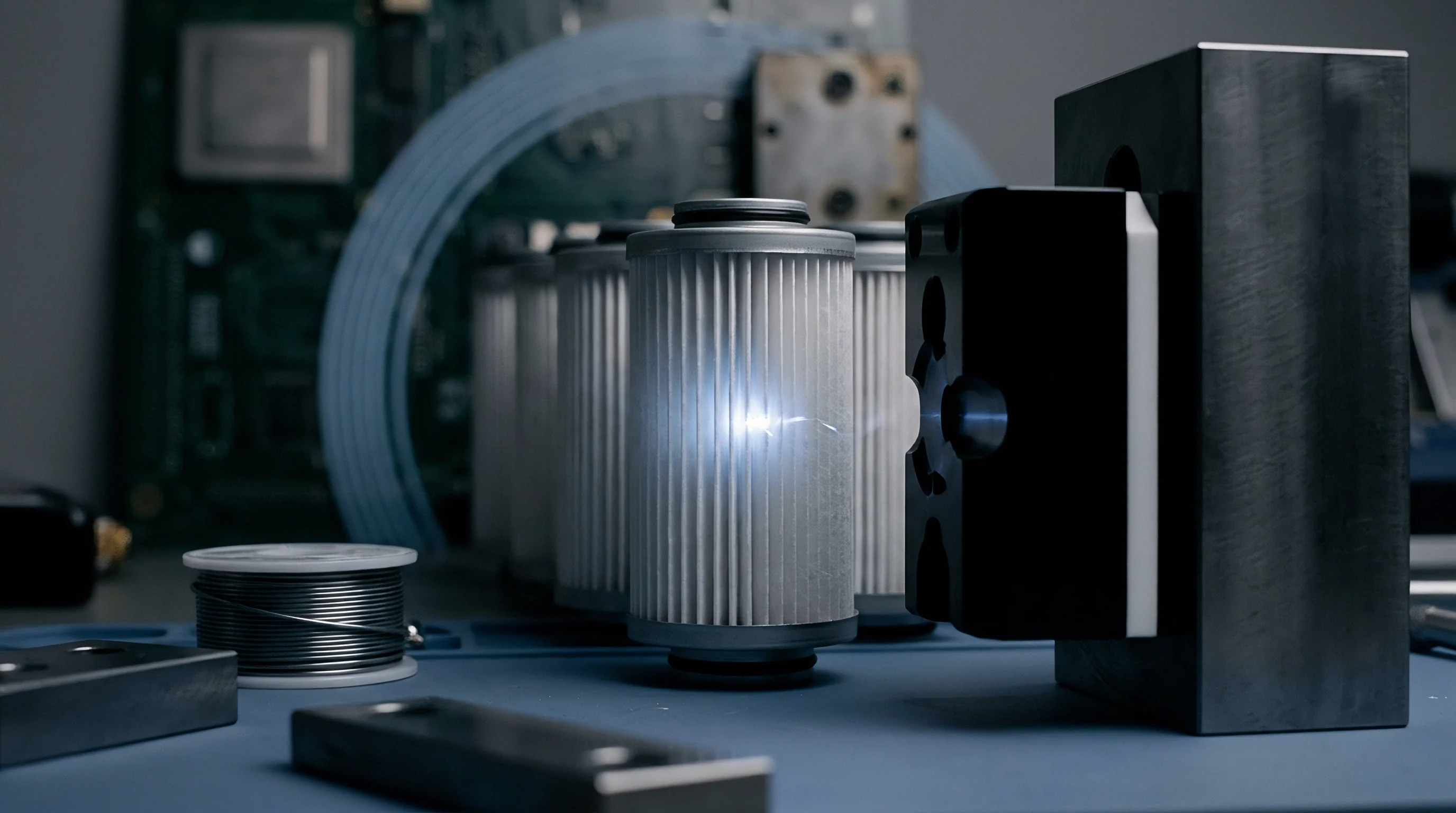
Receiving Inspection and Diffraction Auditing
X-ray diffraction scans confirm whether solute elements remain frozen in extended solid solution through exact lattice parameter expansion measurements. The diffraction angle two-theta shifts predictably when solute atoms dissolve into the primary crystal matrix. High-speed line detectors capture diffraction profiles across representative powder samples drawn from every receiving drum.
Diffraction peaks are analyzed using Pawley or Rietveld refinement techniques to calculate exact unit cell volumes. A decrease in peak full-width at half-maximum combined with peak splitting indicates phase separation and solute rejection during atomization. Conversely, broad single-phase diffraction peaks shifted to calculated non-equilibrium positions confirm complete kinetic solute trapping.
Receiving inspectors compare measured lattice metrics against contract specifications before clearing powder drums for production mixing.

Supply Agreement Quality Frameworks
Contractual terms link raw powder pricing directly to verified non-equilibrium phase retention and microstructural uniformity. Procurement contracts covering specialized alloy powders incorporate explicit analytical boundaries for solute trapping metrics. Warranties and quality performance metrics protect battery pack integrators from absorbing losses associated with deficient rapid solidification processing at the atomizer facility.
Alloy purchasing agreements rely on verified lattice strain measurements rather than nominal chemical certificates. Technical schedules define exact acceptance and rejection thresholds based on physical parameters derived from kinetic solute trapping models. Atomizers must certify process control metrics including gas pressure logs, gas-to-metal ratios, and particle size distribution bounds for every production lot.
Defining microstructural acceptance criteria in legal supply frameworks ensures commercial accountability across international supply chains.
Clause 8.3 of the raw alloy specification releases the buyer from payment obligations whenever X-ray diffraction confirms lattice expansion below 0.4042 nanometers.
Contractual quality terms state clear microstructural compliance bounds:
Clause 14.2 of the material master supply agreement transfers all secondary processing and scrap disposal costs to the powder atomizer whenever diffraction audits reveal solute partitioning exceeding zero point five weight percent.