Contractual Capacity Degradation Threshold Verification under Multi Axis Temperature Variation Field Constraints
Multi-axis thermal gradients accelerate capacity fade through non-uniform SEI growth and lithium plating, demanding spatial field testing in contract claims.


Gradient
Field operating environments rarely expose energy storage modules to uniform ambient conditions. Physical layout within a battery pack creates unequal thermal dissipation pathways across the primary axes. Fluid cooling channels, structural ribs, and proximity to adjacent power electronics establish steady-state spatial temperature differences between individual cells.
Cells situated near the coolant entry operate at lower baseline temperatures than those positioned near the discharge plenum. Radiative heat transfer from external power conversion units introduces localized heat fluxes along transverse vectors.
Standard rating schedules assume isothermal conditions during qualification testing. Industrial datasheets quote cycle life figures measured inside environmental chambers held strictly within half a degree Celsius of twenty-five degrees Celsius. Running battery strings under multi-axis spatial temperature fields invalidates these factory degradation predictions.
Isothermal lab data inflates cell longevity; cells bound within the same series circuit experience divergent aging rates as localized heat accelerates parasitic electrochemical reactions.
Spatial temperature differences across a single module generate localized internal resistance variations. Warmer cells exhibit lower initial internal resistance and higher charge acceptance, causing transient current maldistribution among parallel cell branches. Over repeated operational cycles, this thermal-electrical feedback loop shifts state of charge baselines across the string.
Pack capacity degrades to match the hottest cell group, while cold boundary conditions provoke localized lithium plating during high-rate charging.

Spatial Thermal Vectors in Module Arrays
Heat transfer inside a high-density pack occurs simultaneously along longitudinal, lateral, and vertical vectors. Longitudinal thermal gradients emerge as liquid coolant flows through cold plates, absorbing heat sequentially from front-to-back cell ranks. Lateral temperature fields develop when structural side-plates conduct ambient thermal energy inward toward the core module.
Vertical gradients manifest in tall prismatic or pouch formats where heat generated deep within the electrode stack must travel through low-conductivity cathode and separator layers to reach top-mounted thermal interfaces.
Sensors mounted on the skin miss core heating. Temperature measurements taken exclusively at terminal tabs or aluminum casings fail to register peak internal junction temperatures. Electrochemical kinetic models must account for internal thermal conduction resistance alongside external fluid boundary layers.
When vertical and lateral thermal vectors intersect, the geometric center of a pouch cell operates up to twelve degrees Celsius higher than its tab connections during two-C continuous discharge, establishing localized degradation fronts across the active material area.

Anisotropic Field Impact on Cell Balancing
Active and passive battery management system balancing algorithms struggle to correct capacity skew driven by multi-axis thermal fields. Passive balancing dissipates excess charge through resistive elements, adding thermal energy directly to the printed circuit board positioned above the cell tops and reinforcing vertical thermal gradients across upper cell headers.
Cells subjected to chronic three-degree spatial temperature variations diverge in available capacity at a rate four times faster than identical cells operating in isothermal blocks. The capacity degradation threshold established in supply agreements is breached prematurely when field thermal management systems permit multi-axis field propagation. Verification protocols evaluating only mean pack temperature fail to capture localized electrochemical exhaustion.
- Thermal Current Splitting drives current concentration into warmer parallel cells during initial charge pulses, elevating localized current density and acceleration factors.
- Localized SEI Growth occurs at accelerated rates within high-temperature spatial pockets, permanently consuming active lithium inventory.
- Anisotropic Strain Generation develops as differential thermal expansion forces adjacent cell regions to expand unevenly, damaging mechanical separator interfaces.
- Inter-String Voltage Imbalance accumulates during prolonged discharge cycles, forcing early system cut-offs while cooler cells retain usable energy.
Unmonitored hot spots breach degradation thresholds. Measuring thermal fields strictly via average pack values conceals localized mechanical and chemical destruction.
A spatial gradient exceeding three degrees Celsius across parallel cell channels shifts capacity fade from uniform SEI growth to localized lithium plating at two degrees Celsius charging.
Thermal management boundaries defined without explicit multi-axis spatial variance allowances render long-term capacity predictions invalid.


Chamber
Verifying contractual capacity degradation thresholds requires specialized environmental test setups capable of reproducing field thermal fields. Conventional single-zone test enclosures maintain uniform air velocity and temperature around the entire test article. These standard chambers cannot replicate the multi-axis thermal gradients experienced inside operational vehicle or grid-storage battery packs.
Recreating realistic field constraints demands multi-zone thermal conditioning chambers equipped with independent fluid loops, contact heaters, and localized thermal radiation plates.
Test fixture architecture must impose controlled boundary conditions across distinct faces of the module under test. Programmable liquid cold plates simulate heat absorption along the primary cooling axis, while secondary thermoelectric array plates apply transverse thermal differentials. Thermocouple arrays comprising sixty to one hundred sensors map surface temperatures across every cell within the test assembly.
Integrating real-time thermal imaging calibrated for surface emissivity ensures detection of localized thermal anomalies before macroscopic capacity degradation becomes visible.
| Test Parameter | Isothermal Standard (IEC 62660-1) | Multi-Axis Field Simulation Protocol | Impact on Degradation Threshold Verification |
|---|---|---|---|
| Spatial Temperature Delta | Less than 1.0 °C across module | 3.0 °C to 12.0 °C multi-axis vector variance | Uncovers localized capacity loss hidden by uniform testing |
| Thermal Boundary Control | Convective air flow ambient single-zone | Direct contact fluid loop plus radiant side-plates | Replicates operational vehicle cooling channel heat sinks |
| Current Distribution Monitoring | Total pack string current measurement | Sub-string multi-channel shunt array tracking | Detects current maldistribution in parallel cell branches |
| Cycle Aging Temperature Profile | Static 25 °C or 45 °C continuous soak | Dynamic profile tied to drive-cycle heat rejection | Reflects transient thermal stress on solid electrolyte interphase |
| Capacity Calibration Frequency | Every 100 cycles at 25 °C reference point | Every 50 cycles with multi-axis baseline soak | Captures non-linear degradation knee points early |

Environmental Simulation Protocol Design
Designing an environmental test routine to validate contractual capacity compliance under multi-axis thermal stress requires mapping field telemetry into laboratory control profiles. Drive-cycle or load-profile dynamic heat output data provides the basis for setting multi-zone temperature targets. Test engineers map longitudinal fluid temperature rise alongside lateral radiant flux to mirror real-world operational stress during accelerated lifetime testing.
Before performing reference capacity checks, modules must reach isothermal equilibrium at twenty-five degrees Celsius for twelve hours to reset transient thermal expansion and concentration polarization effects. Skipping this thermal equilibration step introduces measurement errors of up to two-and-a-half percent in total discharge capacity, invalidating baseline data against contractual thresholds.

Thermal Mapping and Sensor Array Calibration
Accurate verification relies on precise sensor calibration and placement across the module under test. Surface-mounted thermistors must be positioned using thermally conductive adhesive with a minimum conductivity rating of two watts per meter-kelvin. Placing sensors exclusively on module busbars yields distorted data, as high electric current induces resistive heating in the metallic conductors that does not reflect active material core temperatures.
Thermocouple wiring routed near high-voltage lines requires braided metallic shielding to prevent electromagnetic interference from switching power supplies during rapid charge-discharge cycling. Invalid temperature input invalidates the underlying Arrhenius rate equations used to extrapolate twenty-year operational life from twelve-month accelerated testing programs.
Laboratory multi-axis thermal gradients can exceed original cell qualification boundaries, while field cooling system design deficits risk voiding factory capacity commitments.


Degradation
Capacity retention thresholds specified in commercial cell procurement contracts establish the minimum allowable state of health over time or throughput. When multi-axis temperature fields act upon lithium-ion battery modules, capacity fade diverges from simple root-time empirical models. Chemical degradation processes operate simultaneously at different rates across the physical volume of each cell and module.
High-temperature zones accelerate solid electrolyte interphase layer growth, consuming active cyclable lithium ions and increasing charge transfer resistance. Concurrently, low-temperature zones exposed to high charging rates trigger localized metallic lithium deposition on the graphite anode surface. This dual-mode destruction mechanism causes rapid non-linear capacity roll-off, commonly termed the capacity knee point, after which degradation accelerates sharply beyond standard warranty projections.

Electrochemical Aging Mechanisms under Anisotropic Heat
Spatial temperature variations distort active ion pathways within porous electrode structures. In warmer cell regions, lower electrolyte viscosity and higher ion diffusivity promote faster reaction kinetics, drawing elevated local current density. This disproportionate current load generates localized mechanical strain within the nickel-manganese-cobalt or lithium-iron-phosphate lattice structures.
At the cold margin of an anisotropic cell, slow charge-transfer kinetics cannot process incoming lithium ions quickly enough during fast-charging events. Lithium ions deposit as metallic dendrites on the anode surface rather than intercalating into the graphite structure. This loss of cyclable lithium permanently reduces total capacity while creating micro-short circuit risks that threaten long-term safety integrity.

Micro-Plating and Impedance Divergence
Impedance divergence between cells within a thermal gradient breaks string balance long before nominal bulk capacity reaches its end-of-life specification. Electrochemical impedance spectroscopy reveals that charge-transfer resistance increases rapidly in cells subjected to cyclic multi-axis thermal fields. As individual cell internal resistance values diverge, the battery management system terminates charge and discharge cycles prematurely based on single-cell voltage safety limits.
- Module design exposes cell rank three to continuous liquid coolant ingress while cell rank eight receives pre-heated fluid.
- Rank eight operates eight degrees Celsius hotter, accelerating electrolyte oxidation and solid electrolyte interphase growth.
- Rank three operates at lower temperature, developing elevated overpotential during winter fast-charging protocols.
- Rank three initiates lithium plating, losing cyclable lithium ions, while rank eight suffers active material isolation through lattice cracking.
- The battery pack reaches seventy-nine percent state of health after two thousand cycles, breaching the eighty percent contractual threshold eight hundred cycles early.
Spatial gradients skew individual cell impedance. Ignoring multi-axis thermal field effects during cell qualification results in unbudgeted warranty reserves and early asset write-downs.
Thermal non-uniformity across cell blocks degrades usable pack capacity faster than high mean ambient temperatures.
Failing to account for multi-axis thermal degradation mechanisms leaves system integrators absorbing the full landed cost of premature field replacements when cell manufacturers reject warranty claims based on non-isothermal operating logs.


Arithmetic
Contractual capacity degradation threshold verification rests on mathematical modeling that translates thermal exposure into equivalent full cycle degradation metrics. The standard Arrhenius rate relationship defines chemical reaction acceleration as a function of absolute temperature. In a multi-axis thermal field, total module degradation represents the volume-weighted integral of localized reaction rates across the entire thermal spatial spectrum.
Consider a fifty-kilowatt-hour commercial battery module containing pouch cells operating under a spatial thermal gradient where thirty percent of the cell volume resides at twenty-five degrees Celsius, fifty percent at thirty-five degrees Celsius, and twenty percent at forty-five degrees Celsius. The localized reaction rate multiplier doubles for every ten-degree Celsius rise in internal temperature, based on an activation energy parameter of thirty-five kilojoules per mole. Calculating degradation under single mean temperature assumptions severely underestimates total capacity loss.

What Margin Holds under Thermal Spatial Anisotropy?
Calculating the true capacity retention curve requires integrating local degradation factors over operational time. Assume a contractual capacity degradation threshold of eighty percent retained state of health after three thousand cycles. Standard single-zone qualification testing at a uniform twenty-five degrees Celsius yields a linear degradation rate of 0.005 percent per cycle, reaching exactly eighty-five percent capacity at cycle three thousand, leaving a five percent safety margin above contract terms.
Under a multi-axis thermal field with a ten-degree spatial gradient across the module axes, the effective degradation rate increases due to non-linear Arrhenius acceleration in hot zones and plating losses in cold zones. The hotter cell regions degrade at 0.012 percent per cycle, while the colder regions degrade at 0.008 percent per cycle due to plating-induced lithium isolation. The effective combined module degradation rate shifts to 0.0098 percent per cycle.
| Operating Thermal Profile | Mean Temperature (°C) | Spatial Delta Vector (°C) | Effective Fade Rate (%/cycle) | Cycles to 80% SOH Threshold | Contractual Margin Status |
|---|---|---|---|---|---|
| Isothermal Baseline (Lab Standard) | 25.0 | 0.0 | 0.0050 | 4,000 | 1,000 cycles surplus margin |
| Mild Thermal Field (Ideal Liquid) | 28.5 | 3.0 | 0.0068 | 2,941 | 59 cycles short of contract |
| Moderate Thermal Field (Air Cooled) | 33.0 | 7.0 | 0.0089 | 2,247 | 753 cycles short of contract |
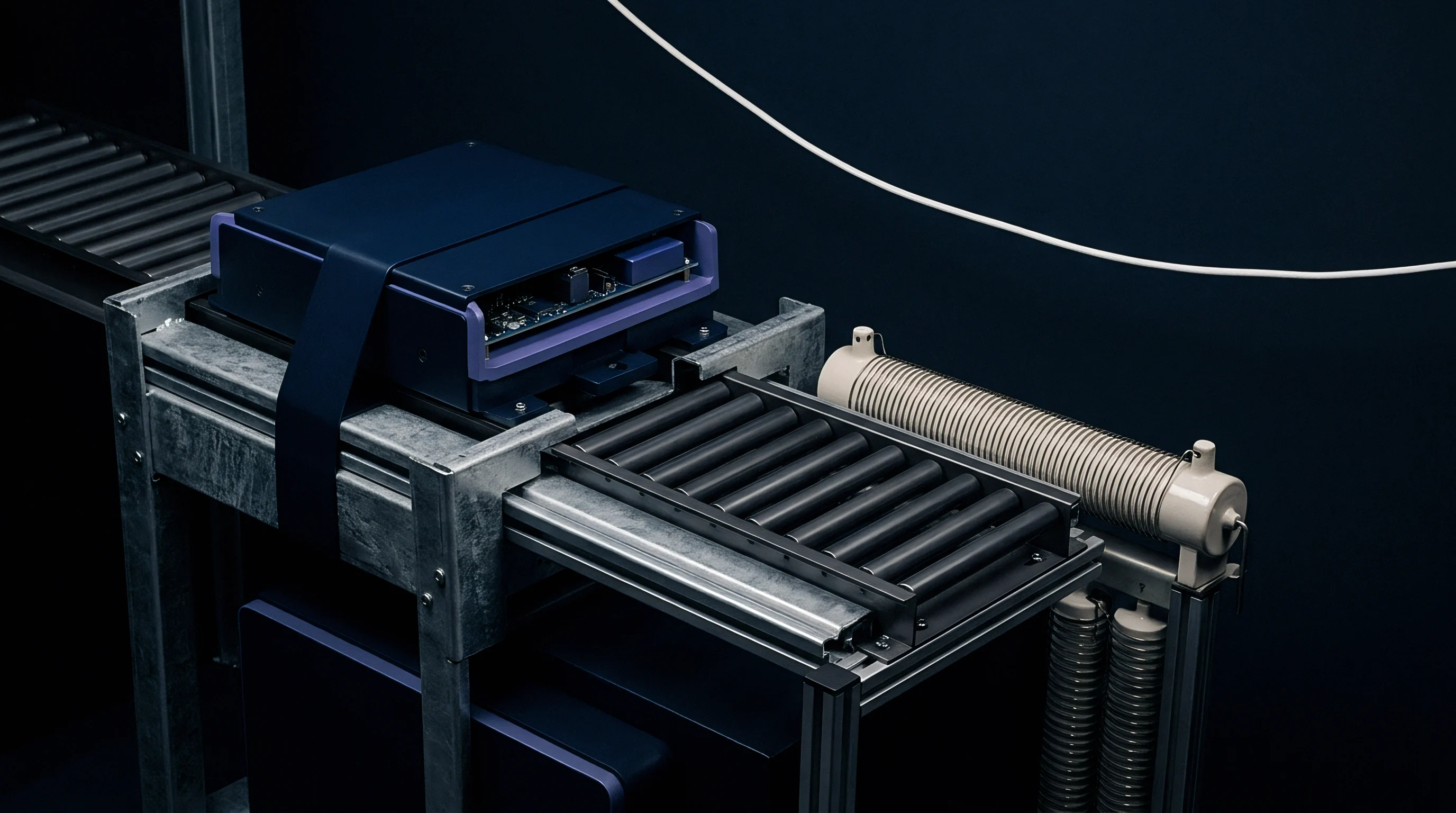
| Severe Multi-Axis Field (High Ambient) | 38.0 | 12.0 | 0.0125 | 1,600 | 1,400 cycles short of contract |
Model Sensitivity and Warranty Threshold Projections
Evaluating financial exposure requires modeling warranty claims under dynamic field conditions. Take a ten-megawatt-hour battery energy storage system order comprising two hundred identical modules at a landed cost of one hundred and ten dollars per kilowatt-hour. Total initial cell capital investment equals one million one hundred thousand dollars.
The supply contract mandates eight-year or four-thousand-cycle capacity retention above seventy percent state of health, backed by a liquidated damages clause assessing forty dollars per kilowatt-hour of lost capacity below threshold.
If field thermal management systems allow a seven-degree spatial thermal gradient along longitudinal module channels, effective module capacity drops to sixty-two percent state of health at cycle four thousand. The eight percent capacity shortfall below the contractual seventy percent threshold across ten megawatt-hours represents eight hundred kilowatt-hours of non-compliant capacity loss. Multiplying eight hundred kilowatt-hours by the contractual penalty rate of forty dollars per kilowatt-hour yields a financial penalty of thirty-two thousand dollars per system block, eroding thirty percent of the integrator’s net project margin.
What unmeasured micro-structural degradation kinetics remain hidden within high-capacity silicon-composite anodes when localized thermal fields induce cyclic mechanical stress alongside electrochemical capacity loss?

Paperwork
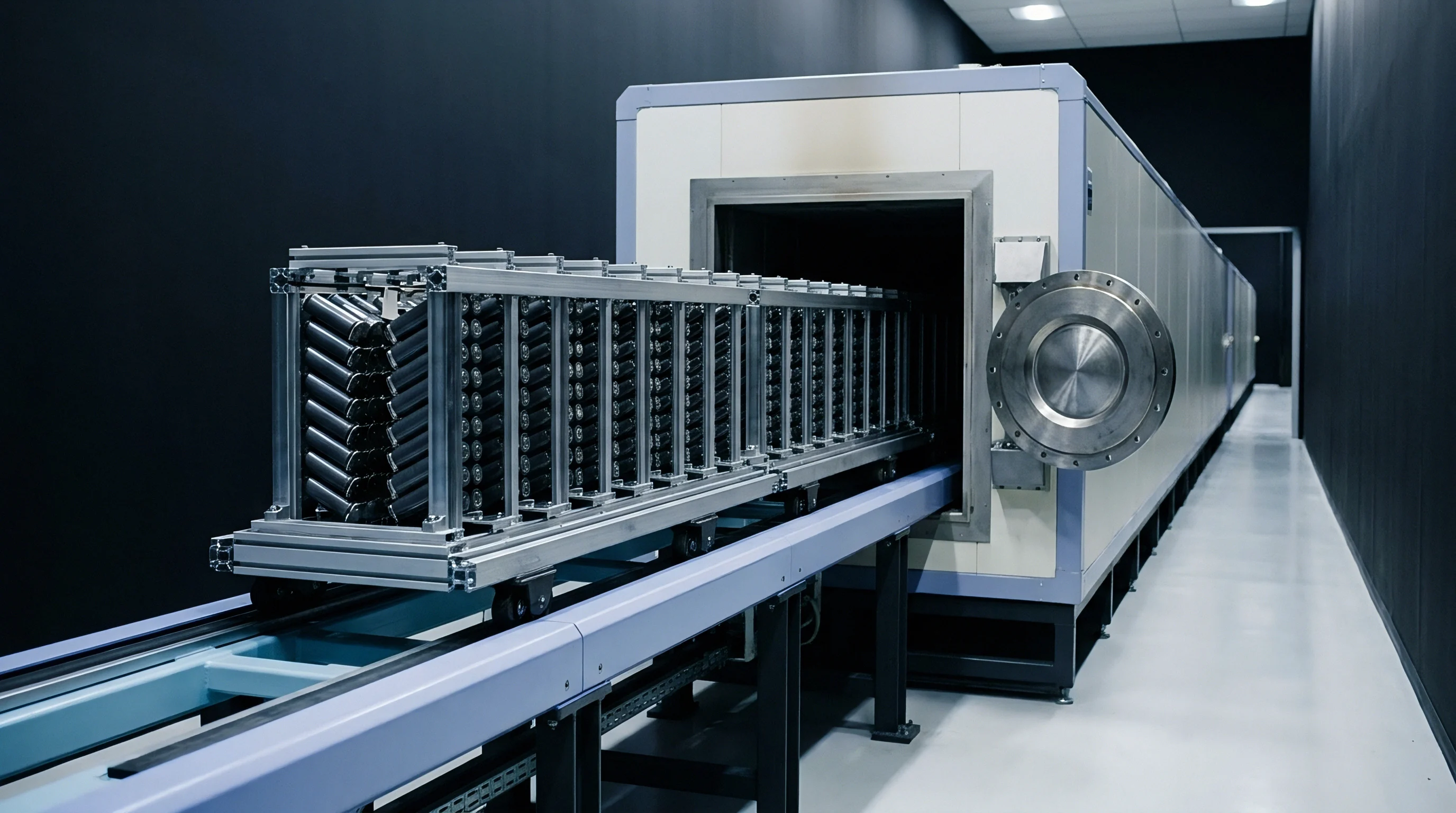
Establishing legal and technical compliance for capacity degradation thresholds under multi-axis thermal conditions requires a structured qualification dossier. A standard factory certificate declaring compliance with UN 38.3 or IEC 62133-2 proves basic transport safety and abuse tolerance, but offers zero evidence regarding long-term contractual capacity retention under spatial thermal stress. The buyer must enforce specific verification testing protocols directly within the purchase specification paperwork.
Transport safety paperwork remains tightly bound to cell design and factory verification summaries. Dangerous goods declarations for lithium battery shipments, governed by IATA Dangerous Goods Regulations Packing Instruction 965 for air freight or the IMDG Code for sea transit, demand a valid UN 38.3 test summary document. If cell degradation under non-uniform field thermal stress causes physical deformation, cell swelling, or internal gas generation beyond dimensional specifications, the original UN 38.3 structural safety envelope is invalidated, stranding shipments at port customs facilities.

Standards Conformance and Audit Dossier Architecture
A compliant verification dossier must aggregate factory lot acceptance data, environmental test bench logs, and regulatory certification summaries into a unified traceable record. The verification dossier forms the foundational defense during commercial disputes over degraded cell performance.
| Document Type | Regulatory or Industry Standard | Required Multi-Axis Field Verification Content | Compliance Risk Handled |
|---|---|---|---|
| UN 38.3 Test Summary | UN Manual of Tests and Criteria Section 38.3 | Proof of physical integrity post-thermal cycling T1-T4 | Customs seizure and air transport carrier refusal |
| Cell Quality Dossier | ISO 9001 / IATF 16949 Manufacturing Audit | Electrode thickness variance and thermal conductivity specs | Inconsistent cell-to-cell internal heat dissipation rates |
| Capacity Verification Log | IEC 62660-1 / ISO 12405-4 Protocol Extension | Multi-axis dynamic temperature field cycle data | Premature contractual capacity warranty claims rejection |
| BMS Telemetry Schema | EU Battery Regulation 2023/1542 Passport | High-frequency multi-point thermal sensor data logging | Loss of legal evidence in degradation dispute arbitration |

Transport Regulatory File Integration
Regulatory frameworks increasingly bind commercial cell performance metrics to official compliance documentation. The European Union Battery Regulation requires a digital battery passport for industrial energy storage systems exceeding two kilowatt-hours. This digital record must store performance metrics, including state of health, capacity fade tracking, and thermal boundary condition histories throughout the operational lifecycle of the pack.
To verify capacity threshold compliance under multi-axis thermal constraints, buyers must incorporate explicit testing criteria into the procurement documentation:
- Define baseline capacity test conditions requiring twelve-hour thermal equilibration at twenty-five degrees Celsius.
- Specify multi-axis thermal gradient testing bounds matching actual field cooling system performance limits.
- Mandate continuous logging of surface temperature deltas across longitudinal, lateral, and vertical module axes during cycle life qualification.
- Establish clear mathematical models for translating measured multi-axis degradation rates into equivalent full cycle contract adjustments.
BMS temperature sensor logs provide the sole evidentiary baseline when arbitrating warranty claims driven by localized thermal accelerated aging.
Section 14 of the standard material safety data sheet and UN 38.3 revision 7 test summaries strictly mandate that cell capacity degradation resulting in physical swelling beyond eight percent of nominal pouch thickness converts cargo classification to defective or damaged lithium batteries, rendering transport via standard commercial cargo channels illegal.


Dispute
Resolving commercial disputes over capacity degradation thresholds requires clear contractual definitions regarding operating conditions. Cell manufacturers defend warranty claims by asserting that field thermal management systems failed to maintain uniform single-cell temperatures. When cell modules operate under multi-axis spatial thermal gradients, allocating financial liability depends on whether thermal boundary conditions were explicitly specified inside the supply agreement.
Master supply agreements frequently contain ambiguous clauses promising eighty percent capacity retention over ten years while burying operational exclusions within technical annexes. If the technical annex defines operating temperature strictly as single-point ambient enclosure temperature, the supplier retains legal grounds to void capacity warranties whenever field data shows internal module thermal gradients. The buyer must draft precise contract language that explicitly encompasses multi-axis spatial temperature fields within guaranteed operational parameters.

Contractual Warranty Redrafting for Thermal Non-Uniformity
Effective risk mitigation demands replacing vague temperature clauses with bounded multi-axis thermal definitions. Contracts must state that guaranteed capacity degradation thresholds remain fully binding provided module thermal gradients do not exceed specified spatial boundaries. Specifying maximum allowable delta-T vectors across longitudinal and lateral module channels protects the buyer against total warranty voidance caused by real-world thermal non-uniformity.
Redrafting contract specifications to protect capacity retention rights requires including explicit technical covenants:
- Spatial Thermal Boundary Definitions must set quantitative maximum temperature deltas across module axes during peak charge and discharge modes.
- Arrhenius Extrapolation Rules must specify precise activation energy constants used to adjust cycle life targets when field thermal profiles diverge from laboratory baselines.
- Telemetric Evidence Covenants must establish BMS memory storage protocols, sampling frequencies, and data encryption standards required to prove compliance during arbitration.
- Remedy Allocation Formulas must define precise dollar-per-ampere-hour compensation rates for capacity deficits resulting from supplier cell manufacturing variations.

Allocation of Liabilities for Cooling System Deficits
Disputes often center on whether capacity loss stems from cell-level electrochemical defects or system-level thermal management failures. If liquid cooling plates deliver non-uniform fluid distribution, the pack integrator bears structural liability for resulting multi-axis thermal gradients. Conversely, if individual cells within the same fluid channel exhibit divergent internal resistance and heat generation, liability shifts back to the cell manufacturer for failing to enforce internal quality control tolerances.
Arbitration panels rely strictly on logged telemetry and certified test dossier evidence to resolve these technical claims. Integrating multi-axis thermal testing into incoming cell lot acceptance protocols ensures system integrators identify latent thermal performance variations before installing cells into finished battery modules. Landed cost calculations must account for potential capacity warranty write-downs, ensuring financial reserves reflect realistic field degradation trajectories under complex operational environments.