Meaning
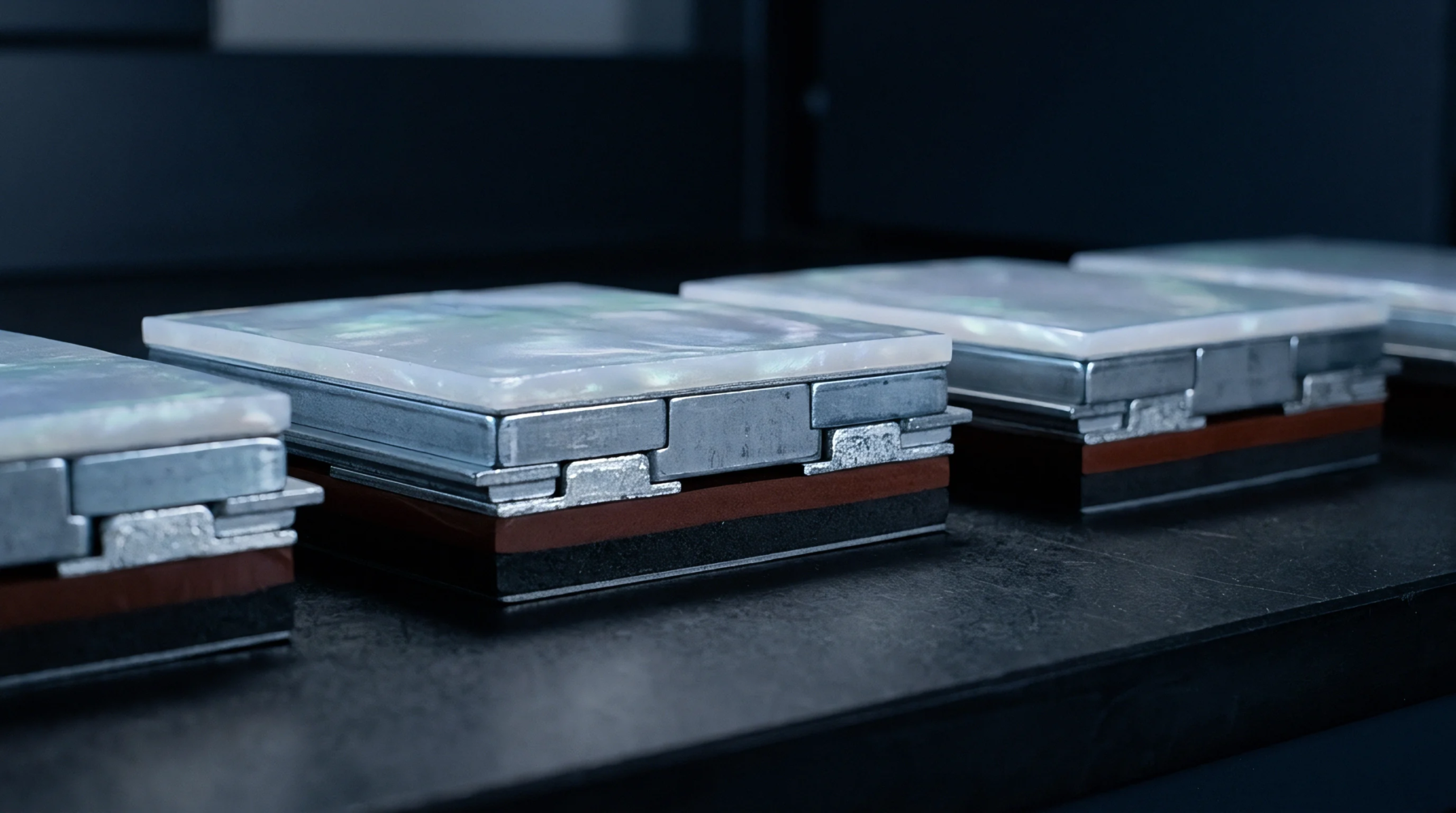
Lithium ion pouch cells generate internal outward pressure during repeated charge and discharge cycles, which requires monitoring via a cell expansion force metric during procurement qualification. Suppliers measure the mechanical pressure exerted by electrodes and separators against enclosing barriers by placing assembled devices between rigid plates connected to load cells. Procurement teams evaluate this mechanical feedback to verify that swelling remains within safe operational limits specified for battery pack enclosures.
Mechanical Constraint
Rigid aluminium frames or composite housings must absorb the internal pressure developed during high rate cycling without suffering structural deformation or seal failure. Engineering teams establish maximum allowable force thresholds to prevent adjacent jelly roll layers from delaminating or developing localized high resistance pathways. Exceeding these mechanical boundaries accelerates capacity fade and compromises the physical integrity of stacked pouch configurations inside heavy electric vehicle modules.
Cycling Behavior
Gaseous generation and active material intercalation drive volumetric changes that peak at distinct states of charge during normal operational routines. Pouch cells exhibit higher physical stress amplitudes during fast charging protocols compared to standard trickle routines because lithium ions insert into graphite anodes at accelerated rates. Commercial buyers review cyclic pressure curves to ensure suppliers control side reactions that produce unwanted electrolyte decomposition gases over extended operational lifetimes.
Pressure Management
Prismatic and pouch formats rely on internal boundary conditions and external clamping plates to maintain uniform contact across active electrode layers during long term usage. Manufacturing engineers design active and passive spring loaded fixture geometries to accommodate thickness variations without generating destructive localized stress concentrations. Battery pack assemblers incorporate elastomer pads or compression foam between individual cells to absorb mechanical expansion while preserving electrical contact resistance across the module.