Meaning
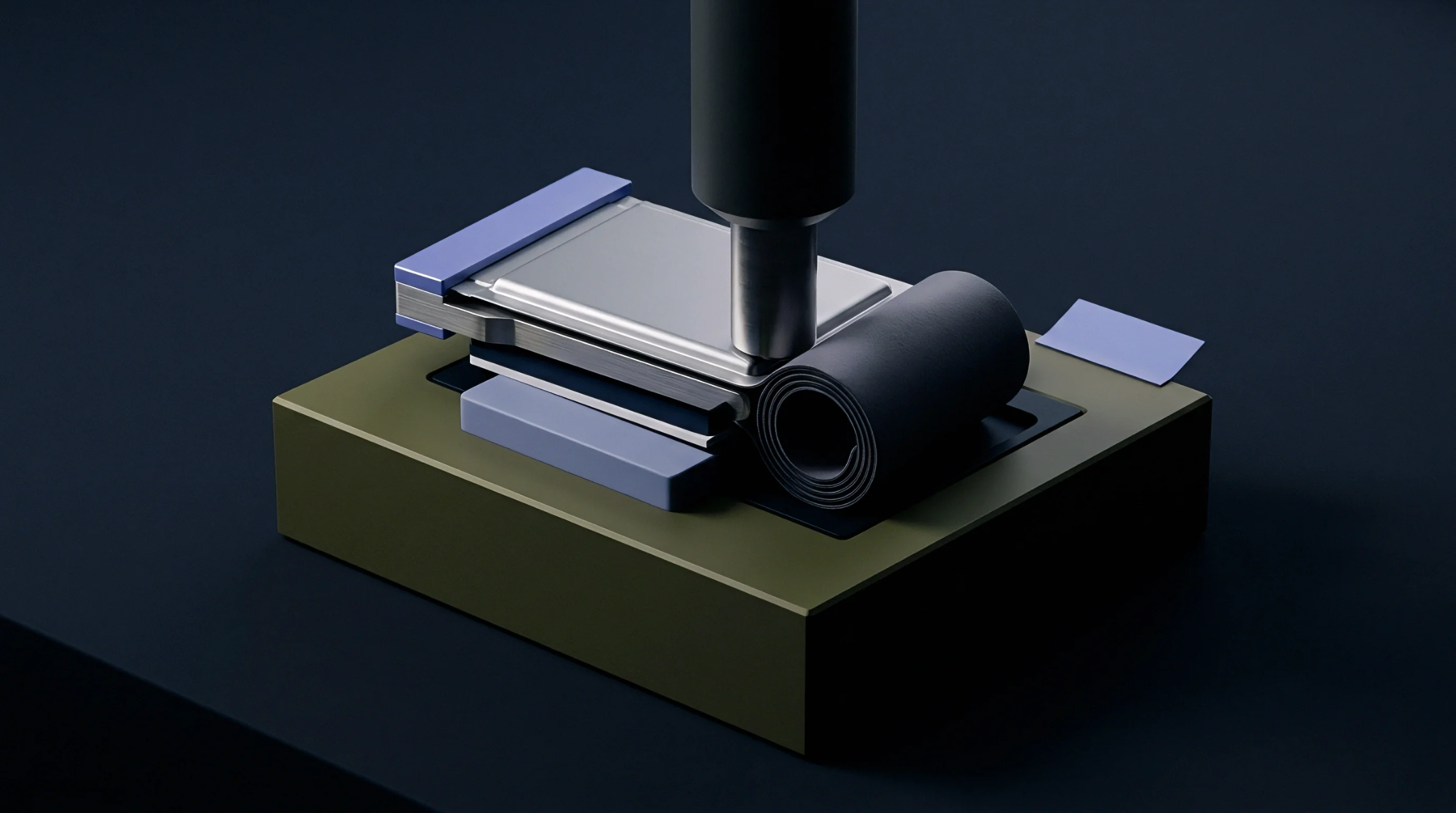
Structural separation between electrode layers and flexible pouch enclosure film leads to impedance growth and localized current distribution hot spots. Physical layer detachment termed pouch cell delamination compromises mechanical contact between current collectors, active coatings, and separator membranes. This physical defect occurs specifically within flexible-pouch battery formats subjected to internal gassing or mechanical stress.
The phenomenon boundary stops where outer mechanical compression plates prevent physical separation of internal layers.
Layer Separation
Internal gas generation during high-temperature degradation or overcharge events creates expanding pockets within the sealed pouch envelope. Expanding gas pressure pushes stacked electrode layers apart, disrupting uniform pressure distributions across active surface areas. Separation deprives active material areas of physical contact, stopping local electrochemical charge transfer processes.
Microscopic gaps break conductive paths, causing localized capacity loss across damaged electrode regions.
Impedance Growth
Detached electrode layers force current to flow through remaining connected active areas, increasing localized current density. Higher local current densities generate disproportionate resistive heating, triggering accelerated thermal degradation hot spots inside the casing. Overall cell internal resistance increases significantly as effective surface area for charge transfer declines.
Rising impedance reduces usable energy capacity and severely degrades high-rate discharge capabilities under heavy loads.
Mechanical Containment
Preventing physical layer separation requires applying external mechanical compression via rigid end plates within battery module housings. Foam pads and spring-loaded enclosure frames maintain continuous pressure across pouch surfaces during operational expansion and contraction cycles. Proper mechanical clamping suppresses internal void formation and prevents gas accumulation from pushing active layers apart.
Uniform surface compression preserves cell impedance levels and extends operational cycle life.