Meaning
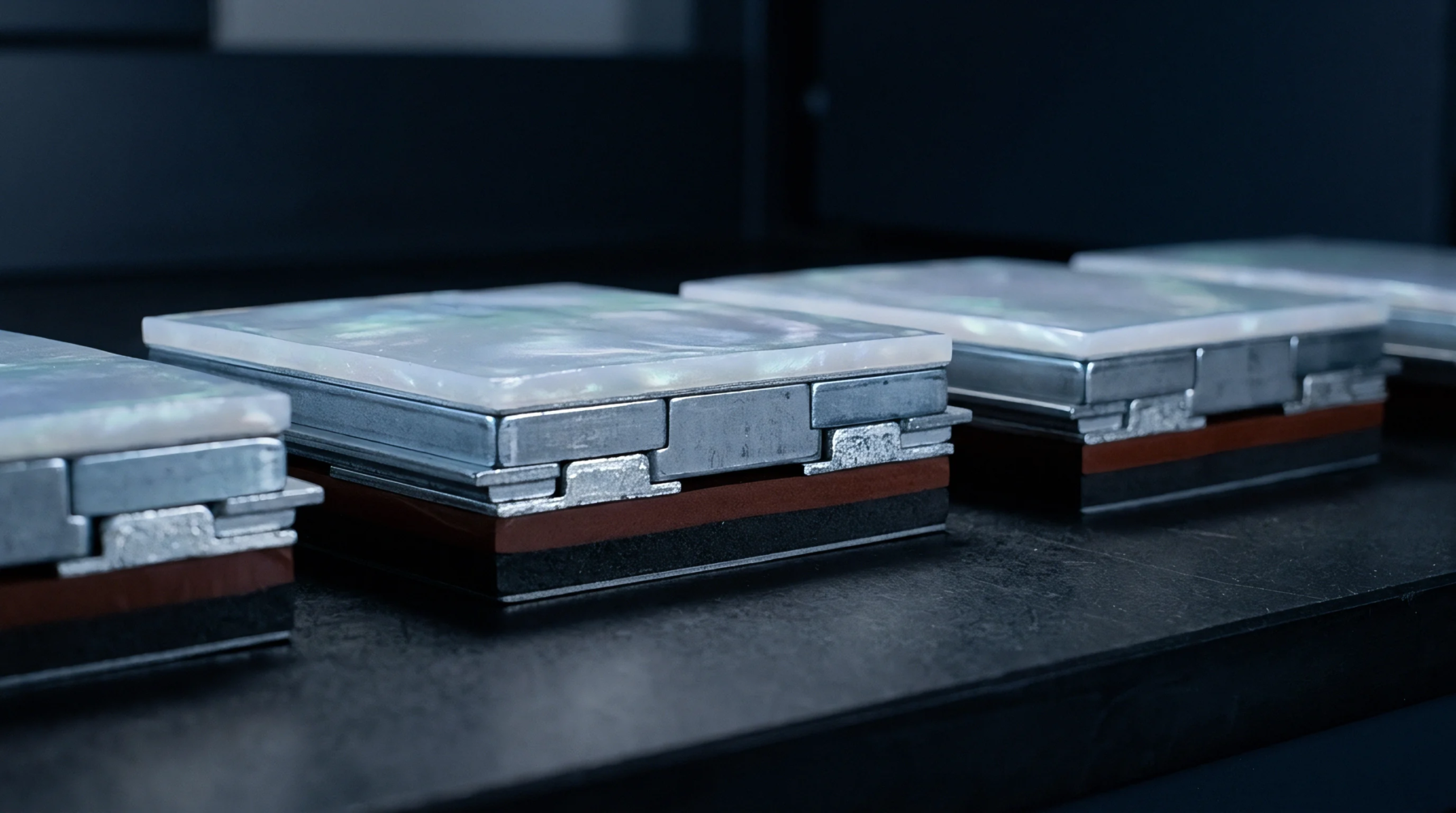
Cyclical expansion and contraction of battery cells during repetitive charge and discharge cycles alter total displacement volume within pack enclosures. Managing volumetric breathing requires battery module engineers to integrate flexible spaces and compliant compression materials that accommodate dynamic cell dimensional variations. Inserting and extracting lithium ions within active electrode lattices drives physical volume changes that scale directly with state of charge and current throughput.
Constraining these dimensional changes without compliant pads creates intense internal pressures that degrade cell structure. The phenomenon describes dynamic, reversible volume changes occurring during active cell operation, distinct from long-term irreversible structural swelling over extended calendar aging.
Breathing Dynamics
Intercalation mechanics drive dynamic volume variations as lithium ions shuttle between positive and negative electrodes during operation. Anode materials expand as they fill with lithium during charging, driving total cell thickness upward until full state of charge is reached. De-intercalation during discharge contracts the anode lattice, returning the cell toward its original dimensions.
Silicon-doped anode formulations amplify dynamic thickness changes significantly compared to conventional pure graphite electrodes. High charge and discharge rates generate transient thermal expansion that overlays electrochemical volume shifts, increasing total dimensional displacement. Dynamic volume shifts repeat continuously throughout every operational charge-discharge cycle.
Enclosure Design
Pack integration engineers must accommodate dynamic volume shifts to prevent mechanical structural damage or thermal interface decoupling. Unconstrained cell breathing alters total module stack length, requiring flexible electrical interconnections that absorb physical movement without fatiguing. Constraining cells within rigid structural frames converts volume changes into fluctuating mechanical pressures applied against housing walls and inter-cell pads.
Flexible foam inserts absorb dynamic expansion, maintaining steady contact pressure across cell surfaces without exceeding upper load limits. Preserving steady contact pressure prevents electrode layer delamination while avoiding structural frame distortion.
Diagnostic Tracking
Monitoring dynamic pressure or displacement variations provides real-time diagnostic insights into internal cell operational status. In situ displacement sensors or load cells placed inside module frames track breathing amplitude during charge cycles. Changes in the breathing force signature indicate localized electrolyte loss, gas generation or non-uniform current distribution across active faces.
Advanced management algorithms process force tracking data to detect premature aging or mechanical degradation before electrical performance drops. Validation testing measures breathing behavior across variable temperature ranges to tune mechanical compliance systems. Designing for dynamic breathing ensures structural pack integrity throughout the complete operational lifespan.