Meaning
Thermochemical surface hardening treatments introduce active nitrogen ions into solid steel alloys using glow discharge plasma to form hard nitride surface diffusion zones. Process execution of plasma nitriding enhances wear resistance, fatigue strength, and surface hardness without requiring high processing temperatures that cause thermal distortion. The method governs surface modification of precision gears, injection molding screws, and battery cell stamping dies.
Treatment boundaries stop at non-ferrous alloys lacking nitride-forming elements unless specialized surface preparation protocols are implemented.
Ion Diffusion
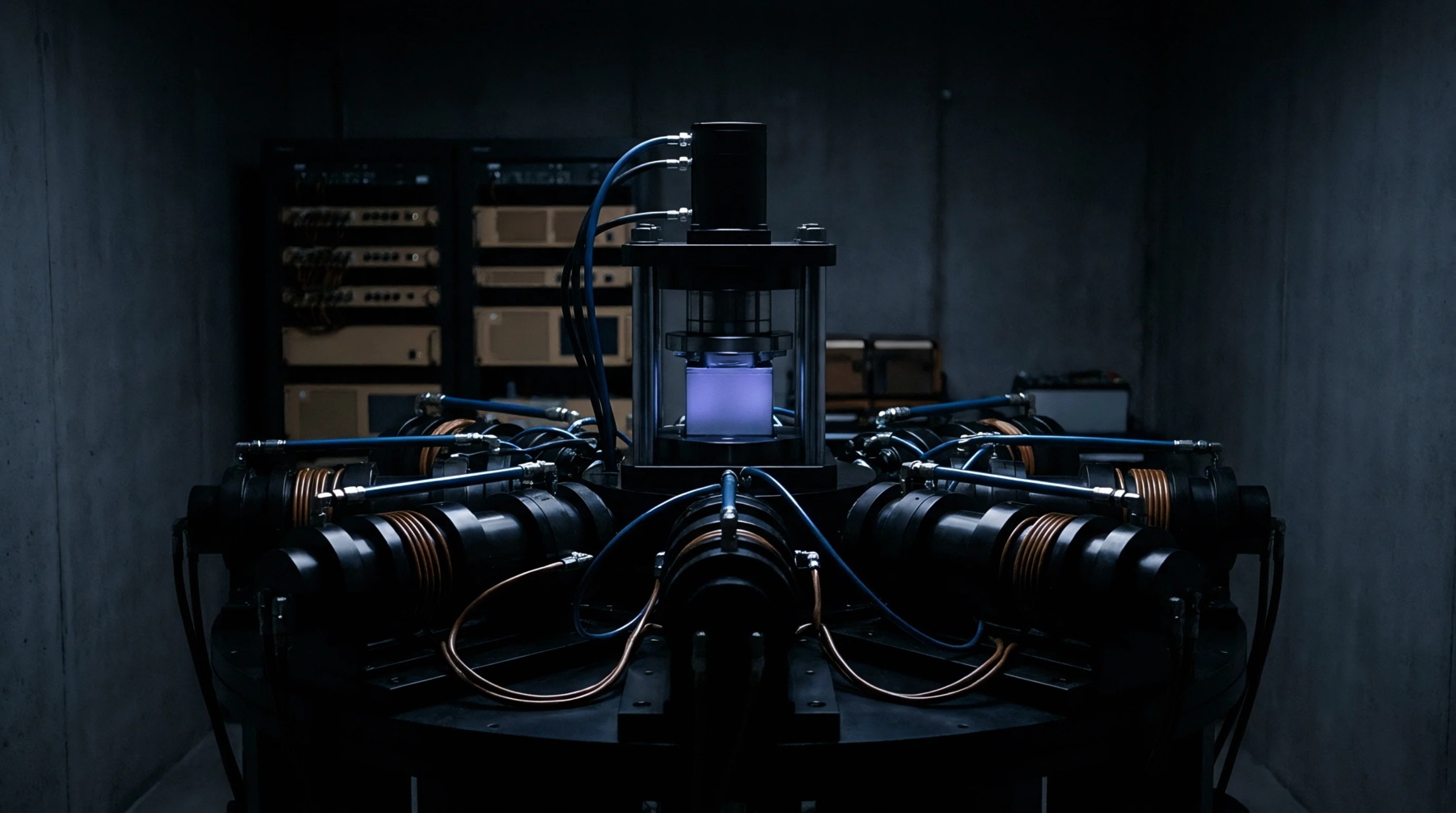
Vacuum chambers loaded with steel components are evacuated and filled with low-pressure nitrogen and hydrogen gas mixtures. High electrical voltage applied between chamber walls and workpieces generates glowing plasma, ionization of nitrogen gas atoms. Positively charged nitrogen ions accelerate toward biased steel components, bombarding surfaces and diffusing into the atomic crystal lattice.
Diffused nitrogen reacts with chromium, molybdenum, and iron alloying elements to form ultra-hard ceramic nitride precipitates within the surface diffusion zone.
Temperature Boundary
Low operating temperatures between four hundred and five hundred fifty degrees Celsius prevent phase transformations that cause dimensional distortion in precision tool steels. Process parameters control compound layer formation, allowing engineers to produce single-phase gamma-prime layers or completely eliminate brittle white layers. Preserved core hardness ensures that heat-treated alloy substrates maintain underlying structural strength beneath thin, hard diffusion layers.
Excessive treatment times expand diffusion depth but risk over-tempering underlying core microstructures in heat-sensitive tool steel grades.
Surface Specification
Quality control specs mandate precise surface hardness levels and diffusion depth measurements verified via microhardness testing on sample coupons. Plasma-nitrided tooling exhibits high resistance to adhesive wear and galling during dry metal stamping operations. Surface compression stresses induced by nitrogen diffusion increase mechanical fatigue resistance under cyclic bending loads.
Clean glow-discharge processing eliminates environmental waste gases associated with traditional salt-bath nitriding processes. Surface engineering guidelines select plasma parameters based on specific component load profiles and operational wear environments.