Solid State Electrolyte Interphase Degradation and Dead Lithium Accumulation Mechanisms during Subzero Charging
Subzero charging drives anode potential below zero volts, causing mechanical interphase rupture, active electrolyte depletion, and dead lithium isolation.
Cold
Subzero charging forces liquid lithium-ion cells into an electrochemical regime dominated by steep kinetic barriers. Below zero degrees Celsius, the ionic conductivity of organic carbonate electrolytes drops rapidly. Solvation shells around lithium ions tighten, raising the activation energy required for desolvation at the anode interface, while interfacial charge transfer kinetics decelerate by factors exceeding ten for every twenty-degree drop in temperature.
When overpotentials from high charge transfer resistance and slow solid-state diffusion drive the graphite or silicon-graphite anode potential below zero volts relative to the reference metal electrode, thermodynamic conditions favor metallic lithium deposition over intercalation. Instead of entering the host lattice, incoming ions accept electrons on the particle surface to form metallic nuclei. Low temperatures flatten the concentration gradient within graphite particles, saturating the surface while leaving the core unutilized.
The transition from intercalation to surface plating alters localized current density across the negative electrode, concentrating deposition at high-curvature edge sites, macro-pores, and interfacial regions closest to the separator. At charge rates as low as one-tenth C at minus twenty degrees Celsius, localized overpotential pushes the interfacial potential into negative values within minutes of current flow, shifting the driving force from orderly intercalation toward competitive metallic growth.
At minus twenty degrees Celsius under a charge rate of zero point two C, interfacial charge transfer resistance accounts for over eighty percent of total cell impedance.
Mass transport limitations in the liquid phase amplify this localized polarization. Lithium-ion transport numbers in conventional carbonate formulations hover around zero point three five at room temperature, but drop further under subzero conditions as solvent viscosity rises and ion-pair association increases. The bulk electrolyte cannot replenish ions stripped from the immediate boundary layer fast enough for constant current charging, and the resulting ion starvation accelerates overpotentials that drive metallic nucleation across vulnerable regions of the anode surface.
| Temperature (°C) | Ionic Conductivity (mS/cm) | Desolvation Energy (kJ/mol) | Anode Interfacial Resistance (Ω·cm²) | Critical Plating C-Rate Threshold |
|---|---|---|---|---|
| 25 | 10.5 | 50.2 | 12.5 | 1.50 C |
| 0 | 4.2 | 58.6 | 48.0 | 0.35 C |
| -10 | 2.1 | 64.1 | 125.0 | 0.12 C |
| -20 | 0.8 | 72.8 | 380.0 | 0.03 C |
Solid-state diffusion within the graphite bulk represents another bottleneck during subzero operation. The diffusion coefficient of lithium ions inside host materials decreases exponentially with temperature following an Arrhenius relationship. When intercalation kinetics fall behind the rate of arriving ions, surface accumulation reaches saturation limits; excess charge density cannot relax into the bulk lattice, leaving metallic nucleation as the primary charge acceptance pathway across the interface.

Kinetic Bottlenecks at Low Temperatures
Energy barriers associated with stripping the solvation sheath dominate the total overpotential under subzero conditions. Lithium ions move through bulk liquid as hexasolvated or tetrasolvated complexes bound to cyclic and linear carbonate molecules. Stripping these solvent jackets to enter the solid electrolyte interphase requires significant activation energy.
At low ambient temperatures, available thermal energy falls below the desolvation threshold, creating a kinetic backing-up effect at the outer edge of the interphase layer.
Planar diffusion along particle boundaries grows restricted as thermal energy decreases. Ions that manage to penetrate the outer layer aggregate at defect sites rather than dispersing evenly through the active material. Localized current density spikes exceed normal operating parameters by orders of magnitude, creating micro-scale hot spots of electrochemical activity in an otherwise sluggish matrix.
This surface aggregation induces structural stress within host graphite flakes, leading to micro-cracking and loss of electrical contact between adjacent active particles.
The balance between ohmic resistance, charge transfer resistance, and solid-state diffusion shifts dynamically during subzero operation. Although ohmic drop across the electrolyte increases, the exponential surge in charge transfer impedance dominates overall behavior. Dynamic impedance measurements show charge transfer arcs expanding dramatically on Nyquist plots, obscuring secondary mass transport signatures and shifting the dominant failure mode from simple energy loss to structural degradation of the interphase layer.

Interphase
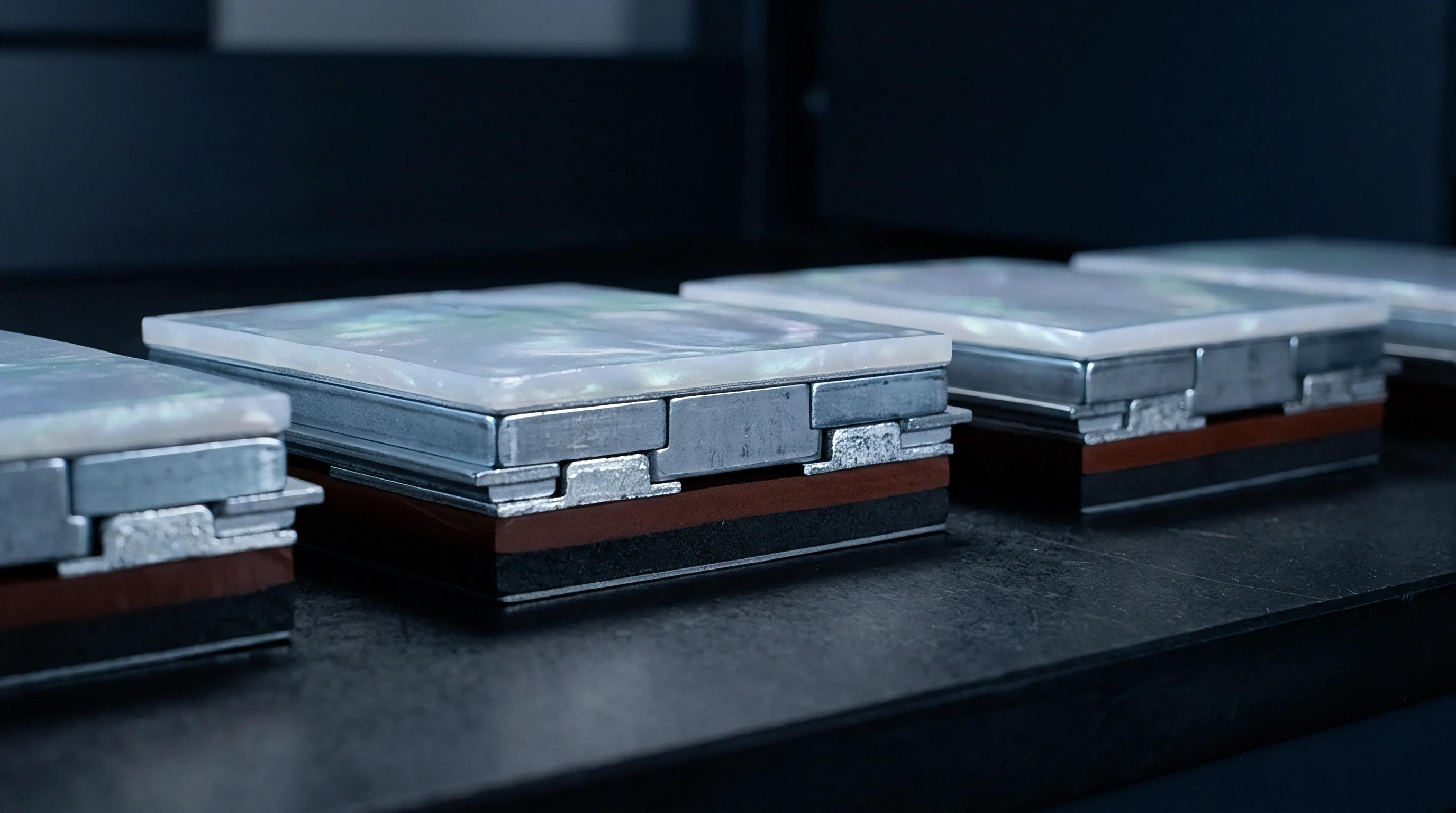
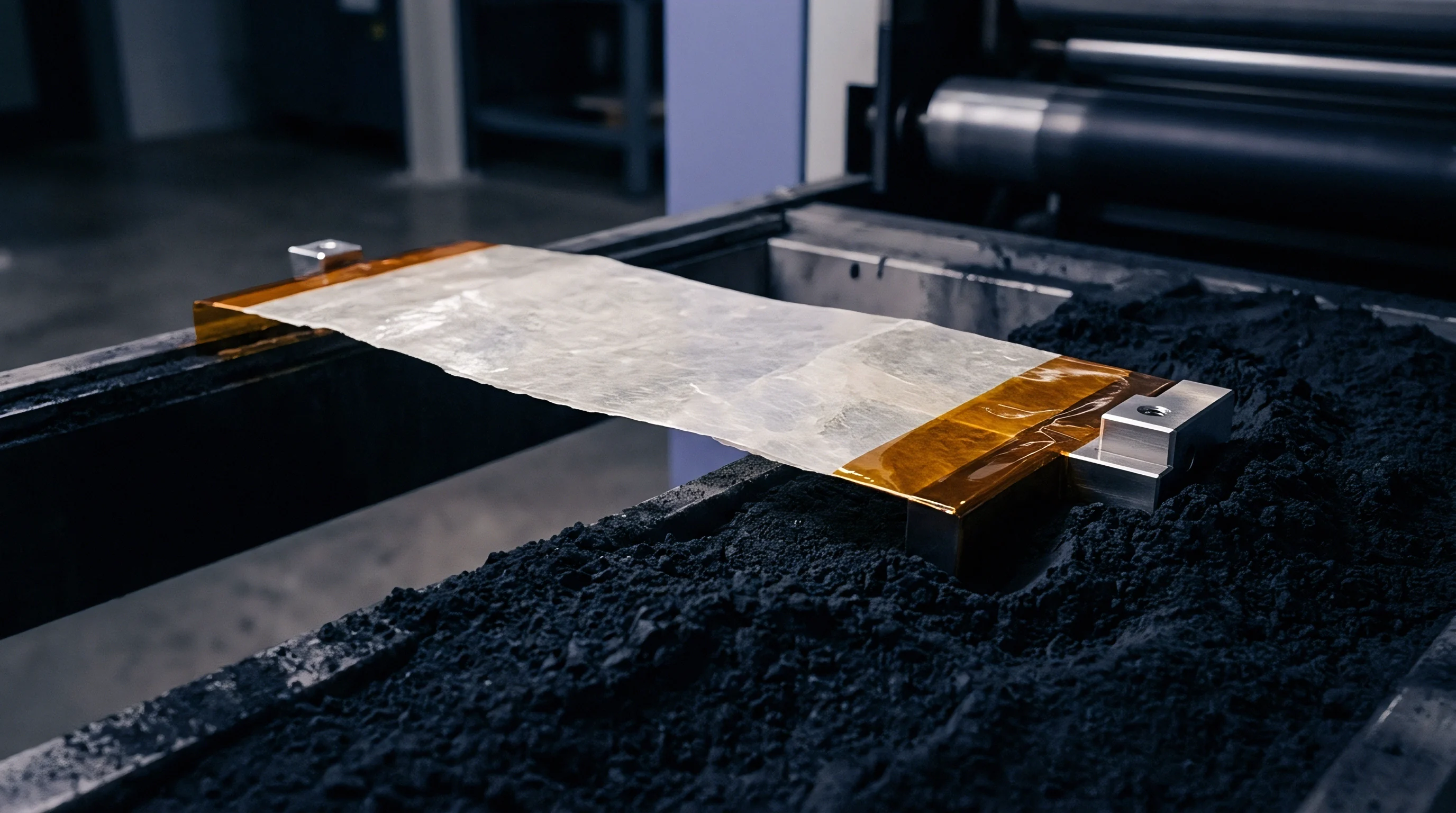
Solid electrolyte interphase layers formed during factory formation are tailored for room-temperature stability, consisting of an inner inorganic layer rich in lithium fluoride and lithium carbonate, and an outer organic layer containing alkyl carbonates. When subjected to subzero charging, this composite layer undergoes severe mechanical and chemical degradation: metallic lithium plating beneath or within the interphase causes large volumetric expansion that the brittle inorganic components cannot accommodate.
Mechanical fracturing of the interphase layer exposes fresh, highly reactive metallic lithium directly to the liquid electrolyte. Thermodynamically unstable in organic solvents, this exposed metal spontaneously reduces surrounding electrolyte components, rebuilding a protective layer over the newly plated surface while irreversibly consuming active lithium ions and solvent molecules. Continuous cracking and secondary film growth rapidly deplete the liquid electrolyte stock.
IEC 62660 3 dictates low temperature charging safety qualification to verify that localized metallic growth does not induce internal short circuits.
The chemical composition of a subzero-rebuilt interphase differs markedly from initial formation films. Lower temperatures favor the precipitation of dense, non-uniform organic oligomers and high concentrations of lithium alkyl carbonates over protective inorganic fluoride species. This organic-rich secondary film possesses lower ionic conductivity and poor elasticity, increasing total cell impedance while offering minimal resistance to ongoing dendrite penetration during subsequent cycles.
- Interphase Mechanical Rupture Structural cracking driven by volume expansion during surface lithium deposition exposes pristine metal surfaces to solvent molecules.
- Continuous Electrolyte Consumption Solvents reduce continuously upon contact with fresh lithium, driving liquid drying and exponential impedance growth.
- Inorganic Layer Dissolution Highly reactive decomposition products weaken structural inorganic components, degrading interfacial mechanical stability.
- Gas Generation Dynamics Parasitic solvent reduction releases gaseous species including ethylene, hydrogen, and carbon monoxide inside sealed pouch or prismatic housings.
Gas evolution during subzero degradation creates localized dry spots across the separator interface. Pouch expansion and internal structural distortion divert stack pressure away from central active areas toward outer frame edges. These localized pressure drops diminish physical contact between the separator and active electrode surfaces, aggravating non-uniform current density profiles and creating a feedback loop of chemical and structural breakdown.
Chemical Breakdown and Electrolyte Depletion
Parasitic reduction reactions during cold charging alter bulk solvent ratios. Linear carbonates such as dimethyl carbonate and ethyl methyl carbonate undergo preferential reduction at low potentials, shifting solvent mixtures toward higher concentrations of cyclic carbonates like ethylene carbonate. This raises the freezing point and viscosity of the remaining liquid electrolyte, further impairing low-temperature performance in subsequent charge cycles once interphase rupture begins.
Lithium salt breakdown accompanies solvent reduction under low-temperature polarization. Lithium hexafluorophosphate decomposes at freshly exposed metallic interfaces, producing traces of hydrofluoric acid and insolubilized lithium compounds. Acidic species attack cathode materials and dissolve transition metal ions, which migrate across the separator to deposit on the negative interphase.
This transition metal contamination acts as a catalyst, accelerating secondary interphase breakdown and dead lithium formation.
Thickening of the interphase film alters the local potential drop across the boundary layer. As impedance increases, electric field strength across the organic-inorganic junction intensifies, favoring electron tunneling through thin spots in the film. Tunneling electrons reduce electrolyte molecules directly within the pores of the interphase layer, clogging internal pores and further restricting ionic pathways.
Without interphase integrity during low-temperature charging, premature cell dry-out and capacity roll-off follow.

Isolation
Dead lithium formation represents the primary mechanism of non-recoverable capacity loss during subzero cycling. Plated metallic lithium does not remain structurally coherent during subsequent discharge or heating phases; during discharge, stripping of metallic lithium begins at the base of the plated structure, nearest to the electron-conducting graphite surface.
When the base of a metallic protrusion dissolves completely before the outer tip finishes stripping, the metallic filament detaches from the electrical circuit. This detached fragment retains its reduced neutral oxidation state but loses electrical connectivity to the electrode matrix. Enclosed by a thick, electronically insulating secondary interphase layer, the isolated metallic chunk can no longer participate in oxidation or reduction reactions.
- Base stripping initiates at the metallic-graphite junction due to localized high electron conductivity during discharge phase.
- Structural necking occurs as electrical oxidation strips metal from narrow filament foundations faster than outer tip zones.
- Electrical detachment isolates metallic dendrite tips, creating floating metallic lithium islands trapped within the organic matrix.
- Secondary interphase encapsulation completely surrounds isolated metal, blocking electron transport while maintaining ionic isolation.
- Accumulation of dead metal volume increases physical electrode thickness, creating irreversible mechanical stress across cell housings.
Quantifying dead lithium requires distinguishing between active metallic lithium capable of re-oxidation and electronically isolated, unreactive metal. Nuclear magnetic resonance studies confirm that up to seventy percent of metallic lithium plated during subzero charging transforms into dead lithium during the subsequent discharge cycle. This accumulated metal forms a porous, spongy mossy lithium matrix between the graphite anode and separator, permanently trapping active charge carriers.
Unreacted metallic lithium isolated within secondary interphase matrices creates severe impedance spikes while permanently consuming active cyclable lithium capacity.
Thermal reheating of cold-charged cells induces complex phase transformations within the dead lithium matrix. As ambient temperature rises, reaction rates between encapsulated metallic lithium and surrounding interphase species increase. Exothermic self-heating reactions start at temperatures as low as sixty degrees Celsius when large volumes of high-surface-area dead lithium are present, compressing thermal safety margins as dead lithium volume fractions grow.

Should Pulsed Current Protocols Replace Constant Current below Freezing?
Pulsed current charging periodically interrupts forward charge currents with brief relaxation windows or short discharge pulses. Relaxation windows allow localized ion concentration gradients in the boundary layer to dissipate, lowering interfacial overpotentials before plating conditions stabilize. Short reverse-discharge pulses strip newly formed metallic lithium nuclei before continuous secondary interphase layers encapsulate them, preserving active lithium inventory.
Pulse charging protocols mitigate dead lithium accumulation by suppressing dendritic growth morphology. High-frequency pulse regimes redistribute localized current density across the anode surface, encouraging uniform nucleation rather than localized needle growth. Stripping efficiency increases when discharge pulses dissolve high-curvature tip sites, preventing base-necking and mechanical detachment of metallic filaments during subsequent cycles.
Duty cycle design, frequency selection, and pulse amplitude selection dictate the commercial feasibility of pulse protocols. Pulse frequencies ranging from zero point five Hertz to five Hertz with zero-current relaxation intervals exhibit reduced impedance buildup compared to continuous constant current charging, though extended total charge times and charger hardware complexity complicate field deployment.
Uncertainties persist regarding the long-term impact of high-amplitude discharge pulses on cathode structural integrity during subzero pulsing regimes. While anode plating decreases, high-rate reverse discharge pulses subject cathode particle surfaces to sudden oxidation spikes at low temperatures, risking localized lattice distortion and transition metal dissolution over thousand-cycle life frames. The trade-off threshold between suppressed anode plating and cathode surface degradation under fast subzero pulsing requires multi-year field verification.
Diagnosis
Detecting subzero interphase breakdown and dead lithium accumulation requires specialized analytical techniques capable of isolating weak physical signatures from background electrochemical noise. Standard electrochemical impedance spectroscopy provides non-destructive monitoring of cell state changes; Nyquist plot analysis reveals high-frequency film resistance growth alongside mid-frequency charge transfer impedance expansion, marking the onset of interphase breakdown during low-temperature operation.
Differential capacity analysis transforms voltage profiles into distinct peak signatures representing phase transitions within the electrode materials. Subzero lithium plating manifests as an anomalous high-voltage plateau during initial discharge, followed by a differential capacity peak corresponding to the oxidation of metallic lithium. The area under the metallic stripping peak yields a direct quantitative measure of reversible plated lithium, while missing capacity indicates dead lithium formation.
| Diagnostic Method | Primary Target Parameter | In Situ Capability | Detection Limit | Operational Bottleneck |
|---|---|---|---|---|
| Electrochemical Impedance Spectroscopy | Interphase and Charge Transfer Resistance | Yes | 5 mΩ shift | Overlapping time constants |
| Differential Capacity Analysis (dQ/dV) | Reversible Plating vs Inversion Peaks | Yes | 1% capacity fraction | Requires low C-rate discharge |
| Operando Acoustic Emission Monitoring | Structural Cracking and Gas Evolution | Yes | Micro-fracture events | Background mechanical noise |
| In Situ Nuclear Magnetic Resonance | Quantification of Metallic vs Dead Li | Yes | 0.1 mg metallic Li | Specialized cell geometries |
| Titrimetric Gas Chromatography | Consumed Electrolyte and Gas Species | No (Destructive) | 0.01 μmol gas | Destructive harvest process |
Operando acoustic emission sensors capture high-frequency elastic stress waves generated by mechanical events inside sealed cells. Micro-fracturing of brittle interphase layers and gas bubble formation produce acoustic signatures distinct from normal thermal expansion. Tracking cumulative acoustic counts during cold charging allows real-time monitoring of interphase mechanical degradation before measurable electrical capacity loss occurs.
Acoustic emission tracking isolates structural interphase micro-cracking events long before capacity decay trends become observable on cycler telemetry logs.
Ex situ destructive analysis validates non-destructive screening methods. Post-mortem harvesting of cold-cycled anodes inside argon-filled gloveboxes allows direct observation of gray, mossy dead lithium layers using scanning electron microscopy. Nuclear magnetic resonance spectroscopy on harvested anode materials provides absolute mass determination of dead metallic lithium versus lithium ions trapped inside inorganic interphase compounds, establishing baseline figures for model validation.
In Situ Screening Protocols
Non-destructive qualification protocols rely on relaxation voltage profile tracking immediately following cold charge termination. Plated metallic lithium establishes a mixed potential at the negative electrode, creating an extended voltage plateau during open-circuit relaxation. The duration of this relaxation plateau correlates with the quantity of metallic lithium sitting on the anode surface, offering a rapid quality screening metric for batch production testing.
Electrochemical mass spectrometry analyzes gas species evolved during subzero cycling via capillary sampling tubes embedded within prototype cell designs. Quantitative tracking of hydrogen, ethylene, and carbon dioxide generation pinpoints the exact voltage and temperature thresholds where solvent reduction accelerates, enabling precise mapping of safe charging envelopes tailored to specific cell chemistries and electrolyte formulations.
Subzero screening protocols must balance diagnostic sensitivity against test duration. Rapid voltage relaxation steps combined with brief impedance interrogations allow high-throughput automated grading equipment to flag cells exhibiting elevated interphase degradation tendencies without adding prohibitive hours to qualification cycles. While factory formation protocols aim to minimize cold-charging vulnerabilities, early field failures frequently trace back to improper pack thermal management.
Valuation
Accounting for subzero interphase degradation and dead lithium accumulation shifts cell procurement valuation models dramatically. Standard datasheet cycle-life ratings, measured at twenty-five degrees Celsius, drastically overstate operational life in cold-climate application profiles. Uncontrolled subzero charging can degrade cell SOH to eighty percent in under fifty cycles, compared to two thousand cycles under nominal conditions.
Consider a commercial vehicle electrification program purchasing 50 Ah NMC graphite cells at an initial purchase price of $85 per kilowatt-hour. Assuming a pack size of 100 kWh, representing 200 cells in a standard series-parallel configuration, these cells yield an expected lifetime of 3,000 cycles before reaching 80 percent remaining capacity under normal operating conditions, bringing the amortization cost to approximately $0.028 per delivered kilowatt-hour per cycle.
If the operational profile demands unheated subzero charging at minus ten degrees Celsius at a 0.5C rate without pulse mitigation or thermal preconditioning, dead lithium accumulation reduces functional cell life to 250 cycles. This rapid capacity loss elevates the amortized battery cost to $0.34 per delivered kilowatt-hour per cycle, representing a twelve-fold increase in lifetime operational expense.
Incorporating active pack pre-heating hardware mitigates low-temperature degradation but adds upfront hardware expenses, parasitic power losses, and manufacturing complexity. Internal cell self-heating structures using nickel foil inserts add approximately 5 percent to raw cell manufacturing costs, elevating initial cell price to $89.25 per kilowatt-hour. However, pre-heating restores subzero cycle life to over 2,200 cycles, reducing amortized operational cost back down to $0.040 per delivered kilowatt-hour per cycle.
| Operational Charging Regime | Initial Pack Cost ($/kWh) | Subzero Cycle Life to 80% SOH | Thermal Energy Overhead per Cycle | Landed Cost per Delivered kWh-Cycle |
|---|---|---|---|---|
| Unmitigated Cold Charge (-10°C, 0.5C) | $85.00 | 250 | 0.0 kWh | $0.340 |
| External Resistance Heater Pre-Heat | $92.00 | 2,000 | 4.2 kWh | $0.046 |
| Internal Nickel Foil Self-Heating | $89.25 | 2,200 | 2.1 kWh | $0.040 |
| Subzero Pulse Current Protocol | $85.00 | 1,100 | 0.5 kWh | $0.077 |
System integrators must weigh the capital expenditure of embedded cell heating elements against the operational expense of early pack replacement under field warranty conditions. Warranties that fail to explicitly account for low-temperature charging logs expose cell purchasers to massive replacement liabilities when cold-weather end users fast-charge frozen battery packs.

Commercial Procurement Provisions
Master supply agreements must include explicit operational boundaries governing low-temperature charge acceptance criteria. Technical specifications must define allowed charge current limits as a step-down function of temperature, mandating zero current acceptance below minus twenty degrees Celsius unless active thermal management brings core cell temperatures above freezing. Clear temperature-dependent charge matrix definitions prevent disputes during field failure claims.
Data logging requirements embedded within battery management system software provide essential audit trails for warranty enforcement. Monitoring minimum core temperature, charge current, and cell voltage during every charge event allows engineering teams to prove whether interphase degradation stemmed from cell manufacturing defects or user operation outside agreed thermal limits, shortening claim resolution timelines significantly.
Specific warranty language must define capacity retention thresholds conditioned on strict adherence to mandated thermal preconditioning protocols. The seller warrants that cells subjected to subzero charging will retain eighty percent of nominal rated capacity over two thousand cycles, provided the buyer enforces a BMS charge lockout that holds charge current to zero until internal cell temperature reaches or exceeds zero degrees Celsius as logged by embedded sensors.