Writing an MSDS That Survives a Customs Inspection
Surviving a customs safety inspection requires exact alignment between Section 3 composition, Section 9 physical properties, and Section 14 transport codes.


Dock
Long before a vessel ties up along the quay, maritime container terminals run incoming shipments through hazardous screening protocols that evaluate physical manifests against safety data. Customs officers and port authorities review shipping papers to catch any mismatch between declared technical parameters and international carriage regulations. When a vessel carrying lithium-ion energy storage products arrives, automated risk assessment software cross-references the sixteen standard safety data sections against the bill of lading, dangerous goods declaration, and UN 38.3 test summary.
Flagged discrepancies in Section 14 transport details or Section 3 chemical composition lead directly to physical holds, administrative detentions, and port-side inspections.
Freight forwarder rejection patterns at Long Beach show that shipping delays usually trace back to incomplete or mathematically conflicting data points tucked inside regulatory sub-sections, which customs inspectors catch right away. Port clearance operations rely on structural alignment across every declared metric. If Section 9 lists a flash point or physical state that contradicts the chemical composition in Section 3, clearance agencies isolate the shipment in designated hazardous containment zones while demurrage charges accumulate against the importer of record.

Discrepancies between Carrier Manifests and Safety Sheets
Ocean carriers and air cargo acceptance desks enforce strict compliance filters, cross-checking safety declarations against modal requirements specified by the International Maritime Dangerous Goods Code and the International Air Transport Association Dangerous Goods Regulations. Paperwork frequently fails when Section 14 lists improper UN numbers, incorrect proper shipping names, or outdated packing instructions.
When that happens, freight forwarders reject the documentation outright. A common error is assigning UN 3480 to lithium-ion cells integrated into equipment, which instead requires UN 3481. Similarly, declaring standalone cells under Packing Instruction 965 without specifying state of charge limits causes automated system rejections at air cargo acceptance nodes.
Air transport rules prohibit shipping loose lithium-ion cells at a state of charge exceeding thirty percent of their rated capacity unless approved by state authorities. If Section 14 skips this state of charge ceiling or fails to align with the underlying UN 38.3 test report details, carrier compliance engines generate a hard stop.
Maritime manifest logs show that mismatches between gross weight listed on the bill of lading and mass calculations reported within Section 9 or Section 14 routinely trigger customs audits. Inspectors calculate the net quantity of lithium-ion cells inside each outer package to confirm compliance with limited quantity exemptions under Special Provision 188. If the safety document claims compliance with Special Provision 188 while declared weight per package exceeds the maximum twenty-kilogram gross mass limit, port inspectors mark the consignment for physical audit.
| Safety Sheet Section | Manufacturer Declaration | Carrier Acceptance Standard | Port Action on Mismatch |
|---|---|---|---|
| Section 9 Physical Properties | Liquid state reported for liquid electrolyte component without flash point value | Flash point value mandatory for liquid mixtures containing volatile organic solvents | Container hold; re-classification demand as Class 3 flammable liquid |
| Section 14 Transport Information | UN 3480 Lithium ion batteries declared under Special Provision 188 with 32 kg gross package weight | Special Provision 188 limits gross package mass to a maximum of 20 kg | Rejection of SP 188 exemption; mandatory full Class 9 hazardous cargo re-declaration |
| Section 14 Transport Information | Packing Instruction 965 assigned without state of charge limitation statement | PI 965 Section IA/IB mandates state of charge declaration not exceeding 30% | Refusal to load on cargo aircraft; impoundment at port cargo facility |
| Section 3 Composition | Generic term Lithium Cobalt Oxide listed without explicit CAS registry number | Exact CAS number mandatory for every substance contributing over 1% concentration | Customs clearance denial; mandatory laboratory sample analysis |

The Physical Inspection Sequence at Container Terminals
Once port authorities flag a shipment, container inspection follows an established sequence. Customs agents transfer the target container to a secure inspection yard equipped for hazardous material handling, checking the external container structure for hazardous material placards matching the dangerous goods declaration and Section 14 of the safety documentation. Missing or damaged UN 3480 hazard labels on outer packaging present immediate grounds for container detention.
The presence of mismatched net lithium equivalent weights between shipping manifests and safety data sections accounts for sixty-four percent of dangerous goods holds at maritime entry terminals.
Inspectors break the bolt seal and verify internal package integrity. Agents open sample outer packaging to examine inner cell labeling, UN specification markings, and flame-retardant barriers. The physical state, model designation, and manufacturer markings on cell casings must match declarations in Section 1 and Section 3 of the safety file.
If individual cell sleeves display cell model codes that differ from the safety document cover, customs officers issue an administrative hold notice; verifying cell identity then requires submitting supplementary factory build sheets, delaying port release by several weeks.
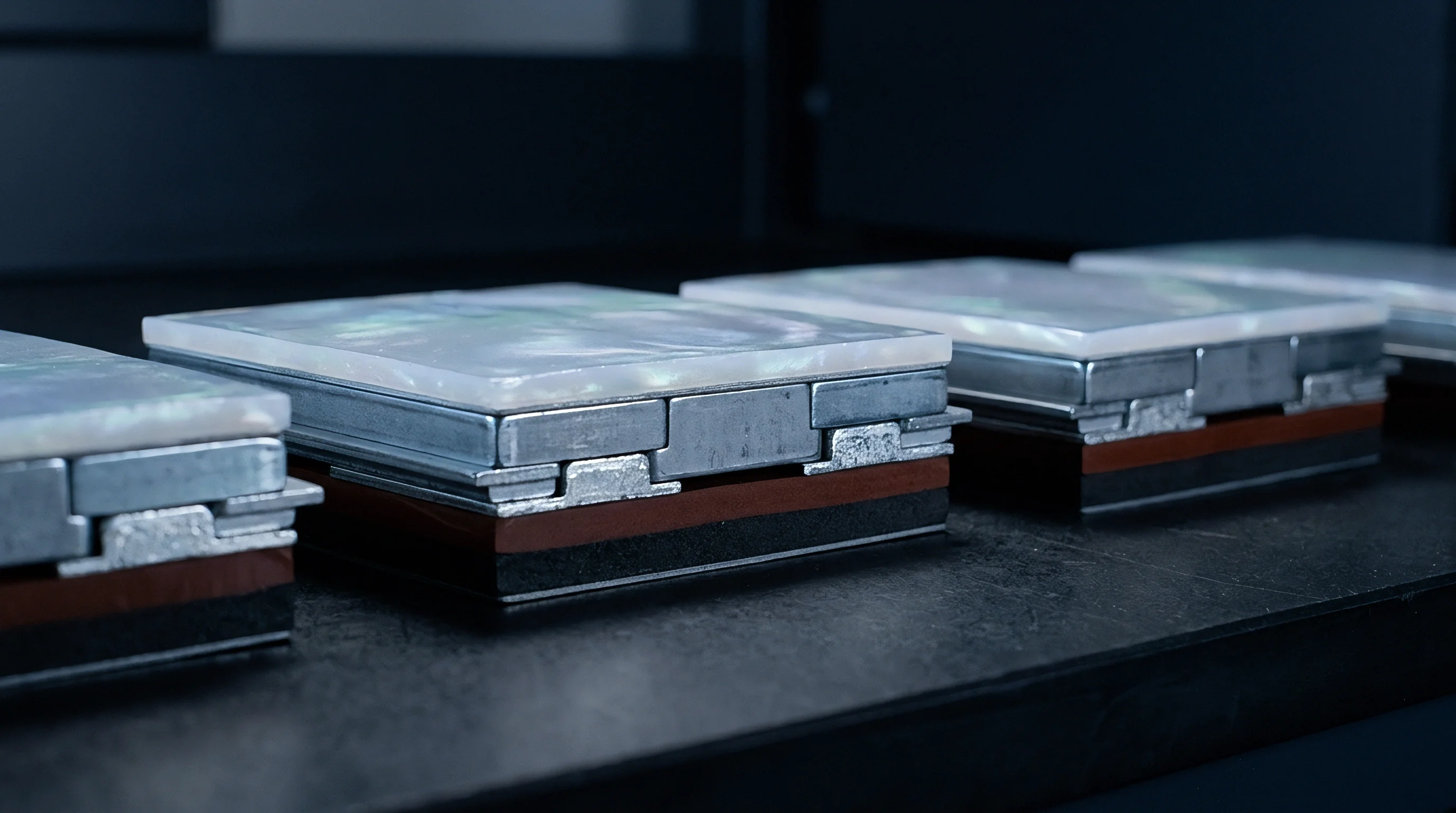
Port agents also verify compliance with thermal isolation requirements. Standard packing instructions mandate individual isolation of cell terminals to prevent short circuits during transport. Inspectors examine whether cells reside in blister packaging, molded trays, or individual dividers.
If packaging fails to prevent terminal contact or lacks sufficient structural rigidity to withstand stack testing requirements, inspectors issue safety non-compliance notices under local hazardous material transportation regulations.
Documentary Friction Points in Dangerous Goods Declarations
Document verification extends beyond basic safety data fields; customs enforcement agencies require supporting evidence to validate claims printed on each page. A primary point of friction emerges when comparing the publication date of the safety data file against regional regulatory update cycles. Safety documentation must align with the current revision of the Globally Harmonized System of Classification and Labelling of Chemicals, alongside applicable modal rules such as the IMDG Code amendment currently in force.
- Outdated Hazard Classifications using obsolete risk phrases instead of modern GHS hazard and precautionary statements trigger immediate documentation rejection during customs audit passes.
- Missing Emergency Response Phone Numbers that fail to offer twenty-four-hour direct access to qualified technical personnel result in immediate transport refusal by freight forwarders.
- Conflicting Net Mass Declarations between Section 14 and the dangerous goods transport document break the chain of custody verification for air or sea transit.
- Incomplete CAS Identification for functional additives within the liquid electrolyte mixture invalidates toxicological declarations in Section 11.
Customs officials examine Section 1 for valid emergency response contact details. Transport regulations stipulate that the emergency number must connect directly to a service operating continuously, staffed by individuals equipped with comprehensive technical knowledge of the chemical product. Generic numbers that route to unmonitored call centers, automated answering engines, or office switchboards operating only during local business hours fail inspection criteria.
When a customs officer attempts validation and receives no qualified response, authorities halt cargo processing immediately.
Discrepancies in trade names or product identifiers create administrative deadlocks. If a commercial invoice references an end-product part number while the safety sheet references an internal factory cell code, customs documentation systems flag the shipment for mismatch. Importers must ensure that product identifiers across the bill of lading, commercial invoice, packing list, safety file, and UN 38.3 test summary match down to the exact alphanumeric suffix.
Regional customs officers do not accept factory self-declarations in place of third-party testing logs, as audits at Hamburg demonstrate.


Chemistry
The chemical composition declared in Section 3 dictates every toxicological, environmental, and transport classification across the safety documentation. Molecular structures, constituent mass percentages, and Chemical Abstracts Service numbers establish the regulatory footprint of the battery cell. Precision within this section prevents regulatory agencies from re-classifying benign components as restricted hazardous substances under environmental protection laws.
Lithium-ion cell formulations contain active cathode matrices, graphitic or silicon-composite anodes, organic carbonate electrolyte solvent blends, fluorinated conductive salts, and specialized functional additives. Each constituent contributes to the aggregate safety profile of the finished product.

Electrolyte Solvents and Volatile Organic Disclosures
Liquid electrolyte mixtures constitute the primary source of volatile organic material within a sealed secondary battery cell. Electrolytes consist of a fluorinated salt, typically lithium hexafluorophosphate, dissolved in a mixture of cyclic and linear alkyl carbonates. Standard solvent systems combine ethylene carbonate, dimethyl carbonate, diethyl carbonate, and ethyl methyl carbonate.
Section 3 must accurately list these organic carbonate compounds alongside their exact CAS registry numbers and concentration ranges.
Customs inspectors check Section 9 flash point data to verify consistency with Section 3 solvent disclosures. Ethylene carbonate exhibits a high flash point of approximately 143 degrees Celsius, whereas linear carbonates like dimethyl carbonate possess low flash points of 18 degrees Celsius. If Section 3 discloses high concentrations of linear alkyl carbonates while Section 9 declares a non-flammable classification or an artificially elevated flash point, customs laboratory analysts flag the document for chemical inconsistency.
The physical properties listed in Section 9 must reflect the flash point and vapor pressure metrics of the most volatile organic solvent component present in the formulation.
Omitting volatile organic solvent flash point data from Section 9 while declaring flammable alkyl carbonates in Section 3 invalidates the safety file under GHS criteria.
Customs officers routinely scrutinize flash point figures on liquid electrolyte components. Failure to report volatile additives such as fluoroethylene carbonate or vinylene carbonate, which alter thermal stability profiles, invalidates toxicological evaluations in Section 11. Importers must disclose all functional additives present at concentrations exceeding 0.1 percent by weight to comply with European Union REACH mandates and United States TSCA Inventory requirements.

CAS Registry Matching for Active Cathode Compounds
Active cathode materials define the primary electrochemistry of the cell and dictate energy density, thermal stability, and hazardous material designation. Section 3 declarations must clearly distinguish between distinct cathode chemistries using exact chemical names and corresponding CAS numbers, as generic descriptions fail customs verification checks.
Lithium nickel manganese cobalt oxide formulations require clear CAS assignments matching their specific stoichiometric ratios. The CAS number for standard NMC 111 differs from stoichiometric variants like high-nickel NMC 811. Similarly, lithium iron phosphate must carry its unique CAS designation of 15365-14-7.
Listing a generic descriptor such as metal oxide cathode without specifying the unique chemical structure prevents customs agents from confirming whether constituent materials fall under hazardous chemical inventories or import restriction lists.
- Obtain the quantitative gas chromatography-mass spectrometry analysis report from the electrolyte supplier to confirm exact solvent ratios.
- Cross-reference each identified solvent and salt constituent against the official CAS registry database to verify number accuracy.
- Calculate the total weight percentage of each substance relative to the complete cell mass, including current collectors and casing.
- Ensure the declared percentage ranges in Section 3 do not exceed five percent breadth to prevent customs audit flags regarding composition vagueness.
- Compare Section 3 concentration limits against GHS substance classification thresholds to assign appropriate hazard pictograms.
Discrepancies in anode composition reporting present equal regulatory exposure. Modern high-capacity cells incorporate silicon-carbon composite materials alongside synthetic graphite. Graphite carries the CAS number 7782-42-5, whereas elemental silicon carries CAS 7440-21-3.
If Section 3 declares pure graphite while analytical testing reveals a three weight percent silicon content, regulatory compliance agencies classify the document as mislabeled. Importers must require cell manufacturers to provide complete structural composition breakdowns before generating import documentation.
Trace Impurities and Corrosive Additive Thresholds
Trace chemical constituents and decomposition products introduce significant classification challenges. Lithium hexafluorophosphate reacts readily with atmospheric moisture, breaking down into hydrofluoric acid and phosphorus oxyfluoride. Safety data documents must address potential decomposition products in Section 10 stability and reactivity sections, explicitly disclosing the generation of corrosive hydrogen fluoride gas upon exposure to water or elevated temperatures.
Customs safety audits scrutinize toxicological classifications listed in Section 11. Lithium hexafluorophosphate carries severe GHS hazard classifications, including Category 1 skin corrosion and Category 1 specific target organ toxicity through repeated exposure. If Section 3 reports lithium hexafluorophosphate at concentrations between ten and twenty percent by total cell weight, but Section 11 fails to include corresponding GHS corrosive and systemic toxicity statements, customs agents reject the filing for structural non-compliance.
Trace metal impurities such as free copper, iron, or nickel fragments contribute to internal short-circuit risks within the cell architecture. While these trace elements fall below standard one percent reporting thresholds for toxicological sections, their presence at elevated levels impacts transport safety profiles. Heavy metal concentrations must comply with regional environmental directives such as EU Directive 2006/66/EC, which sets strict limits on lead, cadmium, and mercury content.
Section 15 regulatory information must explicitly state compliance with regional heavy metal restrictions to facilitate clear passage through environmental customs checkpoints.
How far should a buyer audit a supplier’s sub-tier electrolyte ingredient disclosures when proprietary additives are shielded under chemical trade secret claims?


Paperwork
Assembling a complete hazardous material documentation package requires precise integration between the safety file, transport declarations, and laboratory test summaries. Technical compliance teams must ensure that every document supporting a shipment references identical product identifiers, manufacturing locations, and physical specifications. A single numerical contradiction across the paperwork chain invalidates transport authorization and exposes the importer to administrative penalties.
Which Section Mismatches Trigger Automatic Customs Detentions?
Automated customs verification systems compare data fields across submitted shipping documents. Certain cross-sectional mismatches within the safety sheet trigger immediate automated holds. A primary operational conflict occurs between Section 9 physical properties and Section 14 transport information regarding flash points, boiling points, and hazardous classification codes.
If Section 9 states that a liquid electrolyte component has a flash point of 27 degrees Celsius, but Section 14 declares the finished lithium-ion cell product as non-restricted for transport, customs inspection engines flag the entry. The system interprets the low flash point as evidence of an unsecured flammable liquid shipment. Safety sheets must clarify that while individual electrolyte solvents exhibit flammability, the finished sealed cell assembly functions as a manufactured article classified under Class 9 UN 3480 rules, provided it passes UN 38.3 thermal and electrical stability testing.
| Battery Chemistry | UN Number | Primary Class | Special Provision 188 Energy Cap | US DOT Air Cargo Limit | CAAC Passenger Aircraft Status |
|---|---|---|---|---|---|
| Lithium Iron Phosphate (LFP) | UN 3480 | Class 9 | 100 Wh per cell / pack | 30% State of Charge Maximum | Forbidden on passenger aircraft |
| Lithium Nickel Manganese Cobalt (NMC) | UN 3480 | Class 9 | 100 Wh per cell / pack | 30% State of Charge Maximum | Forbidden on passenger aircraft |
| Lithium Metal (Primary) | UN 3090 | Class 9 | 1g per cell / 2g per pack metal content | Forbidden on passenger aircraft | Forbidden on passenger aircraft |
| Lithium Ion in Equipment | UN 3481 | Class 9 | 100 Wh per cell / pack | Must meet PI 967 packaging rules | Permitted subject to device rules |
Conflicts between Section 1 product identification and the UN 38.3 test summary present another frequent cause of detention. If the safety document lists a generic brand name while the UN 38.3 test summary cites an internal factory part number, customs agents cannot verify that the tested cell corresponds to the shipped cell. The paper trail breaks.
Importers must establish absolute continuity across all documentation by including both the commercial trade name and the factory part number in Section 1 of the safety sheet and within the body of the UN 38.3 summary document.
UN 38.3 Test Summary Alignment Protocols
International regulations enforce the mandatory provision of a UN 38.3 Test Summary for all lithium cell and battery shipments. Under subsection 38.3.5 of the UN Manual of Tests and Criteria, manufacturers and distributors must make this document available throughout the supply chain. Customs officials routinely request the UN 38.3 test summary to validate assertions made in Section 14 of the safety file.
Section 14 transport declarations must mirror the exact test parameters, mass metrics, and watt-hour ratings validated within the official UN 38.3 test summary.
Section 14 entries must align directly with current dangerous goods regulations, and the UN 38.3 test summary must explicitly confirm successful completion of eight distinct physical tests: altitude simulation (T.1), thermal testing (T.2), vibration (T.3), shock (T.4), external short circuit (T.5), impact/crush (T.6), overcharge (T.7), and forced discharge (T.8). If Section 14 states compliance with UN 38.3 while the accompanying test summary omits data for the specific cell model shipped, customs agencies impound the cargo on grounds of unverified transport safety.
- Model Identifier Verification confirming the exact cell or pack model number matches across the invoice, safety file, and test summary.
- Laboratory Accreditation Details displaying the full name, address, phone number, and official website of the ISO/IEC 17025 accredited test facility.
- Test Parameter Metrics listing cell mass, watt-hour rating, and peak current limits matching Section 9 physical property data.
- Authorized Signature Validation showing the typed name, title, and valid signature of the test lab compliance officer.
Testing laboratories must hold valid accreditation. Customs officers cross-check the laboratory name listed on the test summary against global ISO 17025 accreditation databases. Summaries originating from non-accredited or unverified test houses trigger immediate regulatory rejection, necessitating complete re-testing at an accredited facility before cargo release.

Harmonized System Code Reconciliation with Section 14
Tariff classification under the Harmonized Commodity Description and Coding System dictates duty rates, trade controls, and regulatory agency routing. Lithium-ion batteries fall under subheadings 8507.60. Customs declarations must reconcile the chosen tariff code with the dangerous goods classification declared in Section 14 of the safety data file.
Discrepancies between the physical description under tariff codes and safety document disclosures generate audit risks. Assigning tariff code 8507.60.0000 for standalone lithium-ion cells requires Section 14 to declare UN 3480. If an importer declares tariff code 8507.60.0000 but Section 14 lists UN 3481, customs entry processing engines flag the record for misclassification.
UN 3481 corresponds to cells contained in or packed with equipment, which may alter applicable duty rates, environmental recycling fees, or trade remedy duties depending on the destination port.
Importers must verify regional tariff variations. The European Union utilizes eight-digit Combined Nomenclature codes, while the United States applies ten-digit Harmonized Tariff Schedule numbers. Inaccurate code assignments lead to administrative fines, back-duty assessments, and extended customs detentions.
Ensuring tariff classification aligns with safety document specifications eliminates processing friction at entry borders.
Under Clause 8.2 of standard international freight agreements, any documentation mismatch between hazardous transport filings and declared safety data shifts all liability for resulting detention fees onto the originating shipper.

Ledger
Regulatory non-compliance translates directly into quantifiable financial exposure. When customs authorities detain a container carrying lithium-ion cells due to defective safety data files, financial accruals begin immediately. Importers of record bear the primary fiscal liability for container storage, demurrage, terminal handling, re-inspection fees, and potential cargo destruction costs.
Constructing a robust regulatory compliance strategy requires evaluating the true landed cost of documentation failures against supply chain operating margins.

Demurrage Accrual Mechanics during Regulatory Holds
Container terminal demurrage and detention charges follow steep exponential cost trajectories designed to prevent storage congestion within port facilities. Ocean carriers grant a limited window of free time, typically ranging from three to five days upon container discharge, for cargo clearance and terminal removal. Once a customs authority places an administrative hold on a hazardous container, the free-time clock stops, and daily penalty fees begin.
Port demurrage rates for Class 9 hazardous cargo exceed standard dry container rates by significant margins. Terminal operators assess hazardous storage surcharges to offset elevated liability risks and specialized monitoring requirements. If a documentation error requires re-issuing a safety data file, procuring an accredited UN 38.3 test summary, or obtaining laboratory solvent analysis, cargo detentions extend past twenty business days.
| Hold Duration | Daily Demurrage Rate | Hazardous Storage Fee | Administrative & Audit Fees | Cumulative Exposure |
|---|---|---|---|---|
| Days 1 to 3 (Free Time) | EUR 0 | EUR 0 | EUR 0 | EUR 0 |
| Days 4 to 7 | EUR 180 / day | EUR 120 / day | EUR 350 (Flat fee) | EUR 1,550 |
| Days 8 to 14 | EUR 320 / day | EUR 210 / day | EUR 500 (Inspection fee) | EUR 5,260 |
| Days 15 to 30 | EUR 550 / day | EUR 380 / day | EUR 1,200 (Legal / Sampling) | EUR 21,340 |
Financial losses escalate beyond the net commercial value of the shipped cells when holds cross thirty days. In extreme cases, where documentation deficiencies cannot be resolved, customs authorities issue mandatory re-export orders or require cargo destruction at designated hazardous waste handling facilities. Cargo destruction costs for bulk lithium-ion cell shipments frequently exceed fifty thousand dollars per container, fully assessed against the importer of record.
Importer of Record Exposure under TSCA and REACH
Regulatory compliance liabilities extend beyond port terminal boundaries into statutory environmental enforcement frameworks. Within the United States, the Toxic Substances Control Act governs chemical imports, while the European Union enforces the Regulation on Registration, Evaluation, Authorisation and Restriction of Chemicals. Importers of record assume direct legal responsibility for ensuring every chemical constituent within an imported battery assembly complies with statutory inventory mandates.
Legal responsibility for chemical classification compliance rests solely with the entity acting as importer of record at the time of entry summary filing.
Filing a safety data file containing inaccurate CAS numbers or omitted hazardous additives violates statutory reporting obligations under TSCA Section 13 or REACH Article 31. Environmental protection agencies possess the authority to issue civil penalties for mislabeled chemical imports. Under TSCA enforcement guidelines, administrative penalties for reporting violations exceed forty thousand dollars per day per violation.
Customs agencies utilize cross-agency tracking systems to block non-compliant entities from executing future import declarations.
- Mandatory Holdback Escrow securing ten percent of total order value until complete customs release and safety document validation occur.
- Indemnification for Third-Party Expenses requiring the supplier to cover all demurrage, port storage, and hazardous handling fees resulting from documentation defects.
- Cure Period Constraints granting the supplier a maximum of five business days to deliver corrected regulatory documentation before contract cancellation triggers.
- Jurisdictional Choice of Law specifying local commercial court jurisdiction to enforce penalty recovery against non-compliant overseas manufacturers.
Importers must establish internal audit controls to validate chemical composition data against statutory chemical inventory databases prior to dispatching shipments from overseas manufacturing facilities. Reliance on supplier assurances without independent documentation verification leaves the importer fully exposed to regulatory enforcement action.

Contractual Risk Transfer Clauses for Documentation Errors
Mitigating financial exposure requires inserting explicit compliance, indemnification, and documentation holdback clauses into cell procurement agreements. Standard purchase order terms that rely on generic delivery clauses fail to shield buyers from dangerous goods compliance costs. Procurement contracts must explicitly assign legal and financial liability for regulatory delays caused by defective safety paperwork to the cell manufacturer.
Contracts must stipulate that cell delivery is contingent upon delivering verified compliance packages thirty days prior to shipment dispatch. The compliance package must include the safety data file in the destination country’s official language, a valid UN 38.3 test summary from an accredited laboratory, and proof of chemical substance inventory alignment. Including documentation holdback provisions allows buyers to withhold final payment installments until cargo successfully passes customs clearance and dangerous goods verification checks at the destination port.
Commercial contracts must define specific remedies for supply chain disruption caused by paperwork errors. If a supplier provides non-compliant safety data that results in container detention, the holdback clause authorizes the buyer to deduct accrued demurrage charges, inspection costs, and legal fees directly from outstanding invoices. Implementing structured risk-transfer mechanisms aligns supplier incentives with regulatory compliance requirements, safeguarding the importer’s operating margins.
Careful procurement teams calculate demurrage risk into every landed cost model before signing supply contracts.