Quantifying Legal Importer Liability in Subcontracted UN 38.3 Laboratory Scope Failures
Importers carry strict liability for invalid UN 38.3 certificates when subcontracted labs lack accredited scope, driving mandatory direct accreditation audits.


Scope
Primary test laboratories frequently accept lithium-ion cell qualification contracts while lacking in-house testing capacity for the full battery test sequence defined in Section 38.3 of the United Nations Manual of Tests and Criteria. To complete the qualification file, the primary facility issues a test summary under its own letterhead while silently subcontracting individual environmental or mechanical trials to third-party facilities. The legal importer of record accepts the resulting test summary as proof of dangerous goods transport compliance, unaware that the underlying testing sequence breached the formal accreditation boundaries required by maritime and aviation enforcement agencies.
When an unaccredited or non-scoped third-party laboratory performs thermal, vibration, or shock tests, the legal integrity of the entire safety document collapses. International dangerous goods regulations, including Packing Instruction 965 of the IATA Dangerous Goods Regulations and Chapter 2.9 of the International Maritime Dangerous Goods Code, mandate that lithium batteries transported across commercial borders possess a valid UN 38.3 test summary. Under European Union Regulation 2023/1542 and United States Department of Transportation Title 49 CFR Part 173, the statutory duty to verify the validity of this documentation rests entirely on the entity bringing the cells into the jurisdiction.
Transgressions discovered during port inspections or field safety audits trigger immediate cargo impoundment, formal customs redetermination, and regulatory enforcement actions against the importer.
| UN 38.3 Test Parameter | Subcontracted Facility Scope Requirement | Primary Facility Accreditation Obligation | Customs and Forwarder Audit Failure Mechanism |
|---|---|---|---|
| T.1 to T.4 Environmental Tests | ISO/IEC 17025 scope must explicitly list UN 38.3 thermal, altitude, vibration, and shock methods. | Must formally report subcontracted status in test report under ISO/IEC 17025 Clause 6.8. | Unlisted subcontracted testing removes mutual recognition validity, rendering test summary legally void. |
| T.5 External Short Circuit | Short circuit bench must maintain continuous resistance below 100 milliohms at 55 degrees Celsius. | Must verify subcontracted lab calibration records for high-current sampling hardware. | Omission of exact loop resistance in subcontracted raw logs exposes importer to false certification liabilities. |
| T.6 Impact and Crush | Mechanical press must hold accreditation for physical crush force and internal temperature monitoring. | Must validate that cell mass and format limitations in subcontracted scope cover the imported cell. | Testing prismatic cells under a scope restricted to cylindrical geometries invalidates the physical safety claim. |
| T.7 Overcharge Protection | Power supply must deliver continuous double the maximum manufacturer charging current. | Must confirm subcontracted test bench matches cell voltage thresholds and current density limits. | Inadequate power capacity during overcharge trials creates unverified thermal runaway risk profiles. |
| T.8 Forced Discharge | Direct current bench must log dynamic voltage decay while driving cells into reverse polarity. | Must retain direct raw current data logged by the accredited subcontracted technician. | Summarized pass results without raw data traces invite regulatory rejection during compliance audits. |
ISO/IEC 17025 Subcontracting Mandates
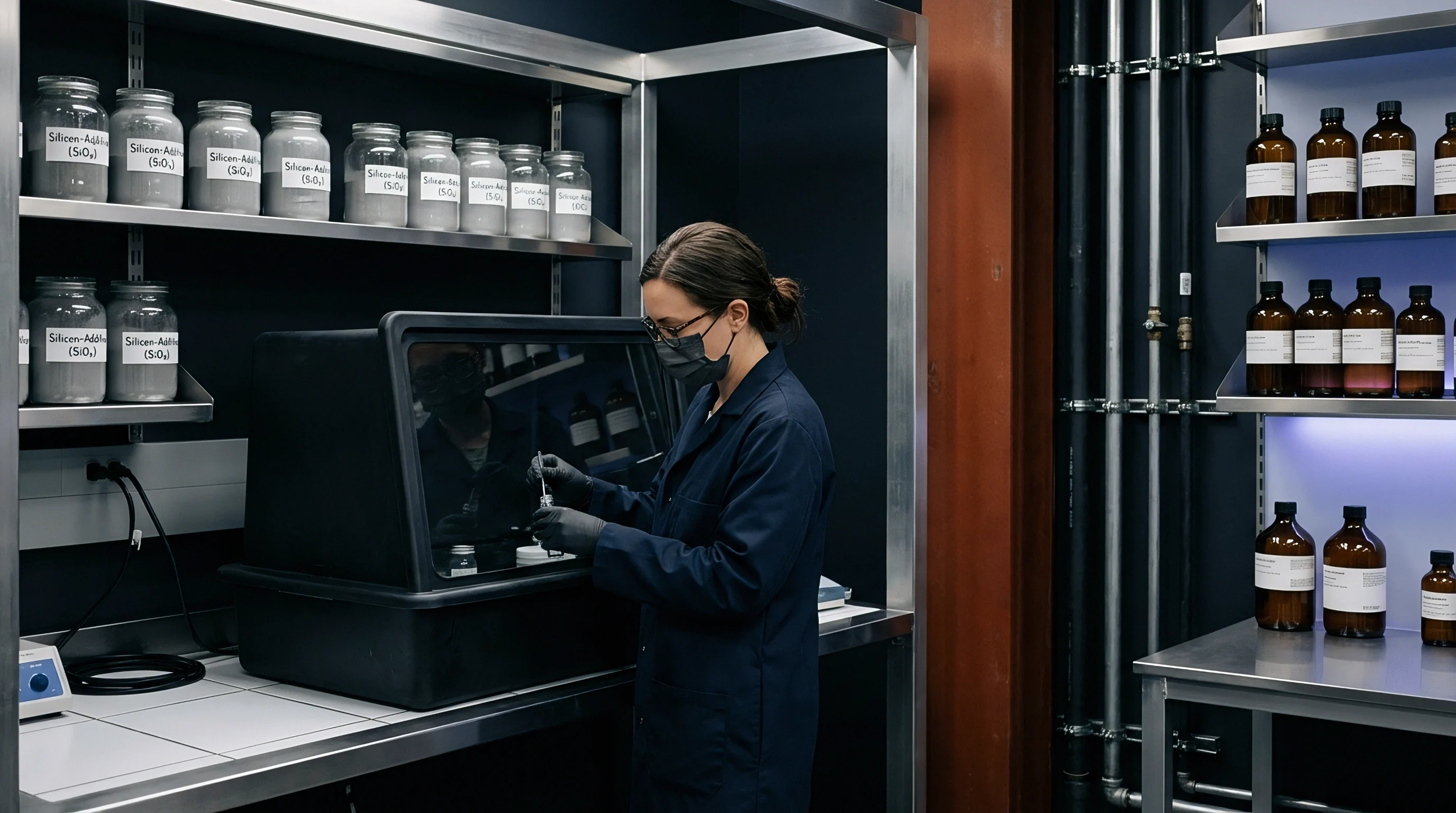
Accredited testing facilities operate under the structural dictates of ISO/IEC 17025, the international standard governing testing and calibration laboratories. Clause 6.8 of this standard governs externally provided products and services, explicitly specifying how laboratory operations must manage subcontracted work. When a testing facility farms out a UN 38.3 trial, it retains complete responsibility to disclose the subcontractor’s identity and specific accreditation status to the client.
The testing facility must obtain written client authorization before transferring cell samples to external locations, ensuring that the contracting party maintains oversight of the supply chain sequence.
The ISO/IEC 17025 accreditation of a primary laboratory covers only those physical test procedures explicitly named within its published schedule of accreditation.
A primary laboratory breaches international accreditation frameworks when it incorporates data generated by an unaccredited subcontractor into its official test summary without distinct qualification markers. Laboratory accreditation bodies operating under the International Laboratory Accreditation Cooperation Mutual Recognition Arrangement require clear demarcation between accredited bench data and unaccredited secondary entries. If a primary facility performs the T.1 altitude simulation and T.2 thermal test on its own bench but delegates the T.3 vibration and T.4 shock trials to an unaccredited facility down the road, the final test document cannot claim universal ISO/IEC 17025 endorsement.
Regulatory authorities treating such documents as unified certificates identify them as fraudulent submissions upon examining raw laboratory schedules.
Contract manufacturing facilities in Southeast Asia and East Asia often present high-level certificates of conformity to European and North American buyers, claiming that local testing handles all safety verification duties. The buyer accepts these documents at face value during initial product development gates, neglecting to cross-reference the testing facility’s scope document against national accreditation body databases. When queried regarding missing raw vibration logs or unlisted laboratory locations, the offshore factory usually replies that their local partner laboratory possesses general national approval and that formal scope breakdowns remain confidential internal records.


Statute
Dangerous goods regulatory frameworks establish strict liability regimes for legal importers. The importer of record acts as the legal entity presenting goods to customs authorities and commercial freight carriage networks. Title 49 of the United States Code of Federal Regulations, under Section 171.2, states that no person may offer or accept hazardous materials for transportation unless those materials are properly classed, packaged, marked, labeled, and certified.
The legal burden of verifying these technical parameters falls squarely on the entity submitting transport documentation, regardless of whether that entity manufactured the cells or performed the safety testing directly.
Jurisdictional enforcement agencies do not accept reliance on third-party test summaries as a defense against regulatory non-compliance. Under European Union law, Article 38 of Regulation 2023/1542 mandates that importers verify that the manufacturer has carried out appropriate conformity assessment procedures before placing a battery on the market. If an importer presents cargo backed by an invalid or scope-deficient UN 38.3 test summary, civil and administrative authorities treat the shipment as an unauthorized transport of uncertified Class 9 Dangerous Goods.
Enforcement actions follow rapid administrative pathways, starting with immediate detention of cargo at port border entry terminals.

Statutory Liabilities across Import Jurisdictions
Customs officers and dangerous goods inspectors evaluate compliance by auditing the complete compliance file behind the summary document. A single discrepancy between the physical cell format and the accredited scope of the testing laboratory invalidates the entry clearance. The following compliance breakdown mechanisms expose the importer to immediate administrative penalties:
- Dangerous Goods Fine Assessment occurs when transport authorities identify invalid certification during transit, resulting in statutory civil penalties reaching tens of thousands of dollars per violation day under regional shipping codes.
- Customs Entry Invalidation forces cargo into bond storage under formal border detention order, where storage and inspection charges accrue directly to the importer of record.
- Compulsory Product Recall Directives arise under market surveillance rules when imported cells operating in finished goods lack verifiable accredited safety evidence, requiring full commercial extraction from market channels.
- Insurance Coverage Breach Exclusions apply automatically when commercial insurers discover that catastrophic battery thermal events originated from shipments transported under deficient or void safety documentation.
Administrative fines represent only the immediate layer of financial exposure. Commercial liability expands rapidly when non-compliant cells enter assembly operations or finished product distributions. When an uncertified cell experiences thermal runaway during transit or field operation, the legal importer faces civil claims for property damage, personal injury, and business interruption.
Subcontracting laboratory scope failures removes the legal shield that valid compliance documentation provides, exposing company officers to personal regulatory liability under hazardous materials safety statutes.
Financial exposure escalates when national maritime authorities intercept containerized battery shipments presenting suspect UN 38.3 documentation. Authorities compel the importer to discharge cargo into secure containment facilities, pay specialized hazardous waste handling fees, and fund certified third-party re-testing sequences before granting cargo release. The cumulative costs of these regulatory interventions often exceed the original commercial value of the underlying battery shipment.


Variance
A primary laboratory that accepts cell samples for UN 38.3 qualification without maintaining active accreditation for all eight sub-tests creates an immediate compliance variance. The UN Manual of Tests and Criteria outlines specific physical requirements for T.1 through T.8 testing. Each test evaluates a distinct stress vector, requiring specialized instrumentation, environmental chambers, high-rate current supplies, and calibrated mechanical crush rigs.
When a facility lacks specific hardware, such as a shaker table capable of handling high-mass battery packs for T.3 vibration testing, it delegates that trial to an outside engineering facility.
Subcontracting creates critical documentation gaps within the regulatory file. ISO/IEC 17025 demands that external testing results are clearly identified in the final test report, complete with the secondary facility’s accreditation body registration number and explicit scope boundaries. In practice, non-compliant laboratories blend data from unaccredited secondary facilities directly into standard summary templates.
The resulting test summary displays the primary laboratory’s logo and accreditation stamp on the cover, giving the appearance of unified compliance while concealing the unaccredited nature of individual test components.
Subcontracted laboratory scope failures invalidate the UN 38.3 test summary, transforming compliant freight into illegal dangerous goods carriage.

Whose Signature Validates a Subcontracted Test Summary?
The validity of a UN 38.3 test summary depends entirely on the credentials of the signatory and the formal relationship between the testing entities. Under the UN Manual of Tests and Criteria, Section 38.3.5, the test summary must contain specific mandatory elements, including the signature, name, and title of the authorized signatory. When testing responsibilities split across multiple facilities, the primary laboratory signatory assumes direct legal responsibility for the integrity of subcontracted data incorporated into the file.
- Verify that the primary laboratory holds active ISO/IEC 17025 accreditation issued by an ILAC MRA signatory body covering the exact test standards.
- Cross-reference the physical address of every facility that performed T.1 through T.8 tests against the published schedule of accreditation.
- Request the complete underlying test report, examining section headers to identify secondary laboratory names, addresses, and calibration record IDs.
- Check the specific scope parameters listed on the secondary lab accreditation document to confirm coverage for the cell mass, voltage, and chemistry.
- Confirm that the test summary explicitly states whether subcontracted testing took place and identifies the accredited status of each sub-test.
Failure to execute these verification steps exposes the importer to severe legal variance risks. If a secondary facility performed the T.6 impact test using an uncalibrated drop tower, the resulting data fails to prove physical safety under transportation stress. Regulatory audits inspect calibration chains, sample tracking logs, and chamber temperature traces.
Discrepancies within these primary laboratory records render the test summary legally void, placing the entire commercial import history at risk of statutory review.
Importers often rely on the visual presence of standard laboratory stamps, assuming that an accredited logo guarantees compliance across all sub-tests. This assumption ignores the operational reality of commercial testing labs, where scope limits are bound by physical equipment capabilities. A lab accredited for small cylindrical cells cannot legally certify large prismatic traction modules, yet labs frequently accept high-capacity work and subcontract the physical press operations to industrial metalworking facilities lacking ISO/IEC 17025 certification entirely.
Unresolved questions persist regarding how national enforcement agencies will treat historical cell import lines when a major contract laboratory loses its ISO/IEC 17025 accreditation due to systematic scope falsification and undocumented subcontracting practice.

Foil
Physical pouch cells rely on thin aluminum-laminated foil wraps to seal electrode assemblies and liquid electrolyte within the cell cavity. During T.2 thermal cycling and T.3 vibration testing, internal mechanical stress acts directly upon these foil seals and internal electrical tabs. If a subcontracted laboratory lacks precise environmental chambers with rapid temperature ramp rates, thermal stress fails to generate the mechanical expansion and contraction needed to expose defective foil crimps or micro-seams.
The test summary reports a pass result, while the physical batch carries latent seal defects into commercial logistics networks.
Improper mechanical bench execution at an unaccredited subcontractor hides severe failure modes. During the T.4 shock test, half-sine acceleration pulses test the structural integrity of internal current collector foils welded to cell terminals. An unaccredited test facility using an uncalibrated acceleration table may deliver dampened pulse profiles that fail to exert required peak G-force loads on the internal electrode stack.
The internal foil welds remain untested against actual shipping shocks, creating a population of cells susceptible to internal short-circuiting during transit.
Mechanical test execution on non-scoped bench equipment masks latent structural faults within internal cell foil welds and pouch package seals.
The integrity of internal protective current-collector foil structures depends on proper qualification during T.5 external short circuit bench testing. At 55 degrees Celsius, the external resistance must remain strictly below 100 milliohms throughout the test duration. Non-scoped subcontracted facilities often run this test with long, high-resistance power cables, artificially elevating total circuit resistance.
This reduced current flow prevents internal foil tabs from experiencing realistic thermal and mechanical stresses, producing a false compliance pass for an unstable cell design.
Customs officials and transport safety inspectors target these physical vulnerabilities by subjecting landed shipments to random physical and documentary audits. When inspectors identify structural swelling, trace electrolyte venting, or mismatching test scope data, they order the immediate containment of the entire container block. The legal importer must then manage specialized dangerous goods remediation protocols at high-cost port facilities.
Cell insulation layers and thermal barrier foils experience degradation when subject to unaccredited T.7 overcharge testing environments. Subcontracted facilities lacking high-capacity programmable power supplies often terminate overcharge trials prematurely or fail to sustain twice the manufacturer-specified continuous charge current. This deviation leaves the overheating safety limits of internal foil layers unverified, exposing down-stream pack configurations to catastrophic thermal runaway during field operation.

Arithmetic
Quantifying importer legal liability requires systematic financial modeling of cargo impoundment, regulatory fines, laboratory re-testing, legal intervention, and product recall costs. Consider a commercial procurement scenario where an importer brings in a shipment of 40,000 lithium-iron-phosphate (LFP) prismatic cell units designed for commercial energy storage systems. The imported shipment carries a declared commercial invoice value of $2,400,000.
The cell manufacturer supplied a UN 38.3 test summary from a primary domestic testing facility. A post-entry dangerous goods audit by port authorities reveals that the primary facility subcontracted the T.3 vibration and T.6 crush tests to an unaccredited mechanical shop, rendering the transport documentation legally invalid.
The regulatory authority immediately impounds the containerized cargo at the port of entry, issuing a formal notice of dangerous goods non-compliance under maritime safety regulations. The importer faces immediate statutory non-compliance fines of $27,500 per day for offering uncertified hazardous materials for transport. The port authority transfers the containers to a certified bonded dangerous goods holding yard, charging a daily hazardous storage rate of $1,800 per container across a four-container lot.
Legal counsel charges an average of $650 per hour to navigate regulatory hearings and file emergency stays with customs officials.
| Cost Component | Calculation Parameters and Unit Assumptions | Low Exposure ($) | High Exposure ($) |
|---|---|---|---|
| Statutory Regulatory Fines | 49 CFR / IMDG code violation assessment; 10 to 30 days penalty window. | 275,000 | 825,000 |
| Bonded Dangerous Goods Storage | 4 containers at $1,800 per day; 21 to 60 days detention period. | 151,200 | 432,000 |
| Emergency Re-Testing Sequence | Fully accredited ISO 17025 lab priority fee for T.1-T.8 on cell lot samples. | 45,000 | 85,000 |
| Legal and Regulatory Representation | Specialist trade defense counsel; 80 to 200 billable hours. | 52,000 | 130,000 |
| Port Handling and Containment Fees | Dangerous goods hazard mitigation, crane moves, and specialized transport. | 38,000 | 95,000 |
| Commercial Business Interruption | Contractual supply delay penalties at 0.5% invoice value per week (4-8 weeks). | 48,000 | 96,000 |
| Total Financial Exposure | Cumulative direct financial outlay resulting from scope failure. | 609,200 | 1,663,000 |
The exposure calculation demonstrates that administrative and operational penalties alone range from $609,200 to $1,663,000, representing between 25% and 69% of the total commercial invoice value of the cell shipment. If the compliance failure remains undiscovered until the cells are distributed to industrial customers, the required commercial recall outlays escalate exposure by an order of magnitude, often driving the legal importer into immediate insolvency.
Direct regulatory fines and bonded storage surcharges during hazardous goods detention routinely exceed half the total landed invoice value of the cell lot.
The exposure model relies on specific baseline parameters that move dramatically based on regional jurisdiction and carrier cooperation. The following operational decision sequence outlines the verification steps an importer must execute prior to issuing commercial purchase orders:
- Documentary Audit Initiation requires obtaining the full primary ISO/IEC 17025 schedule of accreditation directly from the issuing accreditation body database before signing cell purchase contracts.
- Scope Matching Protocol demands mapping every individual sub-test from UN 38.3 T.1 through T.8 directly against the explicit text lines of the laboratory scope statement.
- Subcontracting Trace Execution involves requiring the supplier to provide written certification that no unaccredited secondary facilities contributed data to the safety file.
- Raw Data Validation mandates requesting original, time-stamped digital data logs for thermal chambers, vibration shakers, and short-circuit benches, verifying hardware ID tags against accredited laboratory equipment registers.
When entering supply agreements for high-volume cell deliveries, a practical rule of thumb dictates setting aside financial reserves equal to thirty percent of cargo value whenever relying on foreign testing documentation without direct independent accreditation verification.


Redress
Importers must protect themselves against financial losses caused by subcontracted laboratory scope failures by redrafting supply contracts, implementing strict compliance warranties, and establishing clear indemnity mechanisms. Standard commercial purchase agreements containing vague legal guarantees regarding product quality fail to shield the importer from dangerous goods regulatory liability. Contracts must contain explicit, enforceable language that ties payment release to verified ISO/IEC 17025 scope compliance for every individual safety test standard.
Supply contracts must incorporate explicit compliance clauses that shift regulatory financial risk directly back to the cell manufacturer or primary testing agency. The agreement must establish that presenting an invalid, scope-deficient, or improperly subcontracted UN 38.3 test summary constitutes a material breach of contract, triggering immediate indemnification obligations. The legal framework must clearly stipulate that indemnification covers all direct regulatory fines, customs storage fees, legal expenses, re-testing costs, and commercial losses stemming from dangerous goods transport enforcement actions.
Contractual Risk Allocation Clause Framework
To establish legally enforceable protection, buyers must insert dedicated compliance and verification clauses into all master supply agreements and purchase orders. The following standard contract clause establishes direct liability assignment for subcontracted scope failures:
The Seller warrants that all lithium-ion cells, modules, and battery packs supplied under this Agreement possess fully valid UN 38.3 compliance documentation, issued strictly by a testing facility holding active ISO/IEC 17025 accreditation for each specific test parameter (T.1 through T.8) from an ILAC MRA signatory body. The Seller explicitly warrants that no unaccredited secondary laboratories or non-scoped testing hardware were utilized to generate safety test data. Any breach of this warranty constitutes a material breach, rendering Seller liable for all direct, indirect, administrative, and consequential damages, including regulatory fines, customs detention charges, mandatory re-testing costs, and full indemnification of Importer of Record liabilities.
Inserting rigorous contract language represents only one component of a comprehensive risk mitigation strategy. Importers must establish active compliance verification workflows, conducting independent scope audits of supplier documentation before cargo leaves the export port. Utilizing third-party technical auditors to verify raw laboratory calibration logs and accreditation body entries ensures that scope gaps are identified and remedied long before cargo reaches customs entry points.
Commercial protection improves substantially when importers require suppliers to post compliance performance bonds or hold escrow funds until dangerous goods transport clearance is formally granted by destination port authorities. Financial hold-backs create immediate commercial incentives for offshore cell manufacturers to maintain fully transparent, accredited testing protocols, ensuring that subcontracted laboratory scope failures do not compromise international battery supply chains.