Meaning
Crystallographic parameter defining the distance between the basal planes in a graphite lattice serves as the primary metric for assessing the degree of graphitization in carbonaceous anode materials. The d002 interlayer spacing is measured using X-ray diffraction, where the position of the (002) diffraction peak is used to calculate the spacing according to Bragg’s Law. In a perfectly crystalline graphite structure, this distance is zero point three three five four nanometers.
As carbon materials are heated to extreme temperatures, the disordered layers begin to align and the spacing between them decreases toward this theoretical minimum. This parameter is used in the battery industry to verify the quality of synthetic and natural graphite used in lithium ion anodes. It provides a direct indication of how well the carbon atoms have been organized into a layered structure.
Diffraction Measurement
X-ray beams striking the sample are reflected by the atomic planes, creating a diffraction pattern that is characteristic of the crystal structure. The d002 interlayer spacing is derived from the angle of the first major peak in the pattern, which corresponds to the stack of hexagonal carbon sheets. A sharper and more intense peak indicates a higher degree of crystallinity and a more uniform spacing throughout the sample.
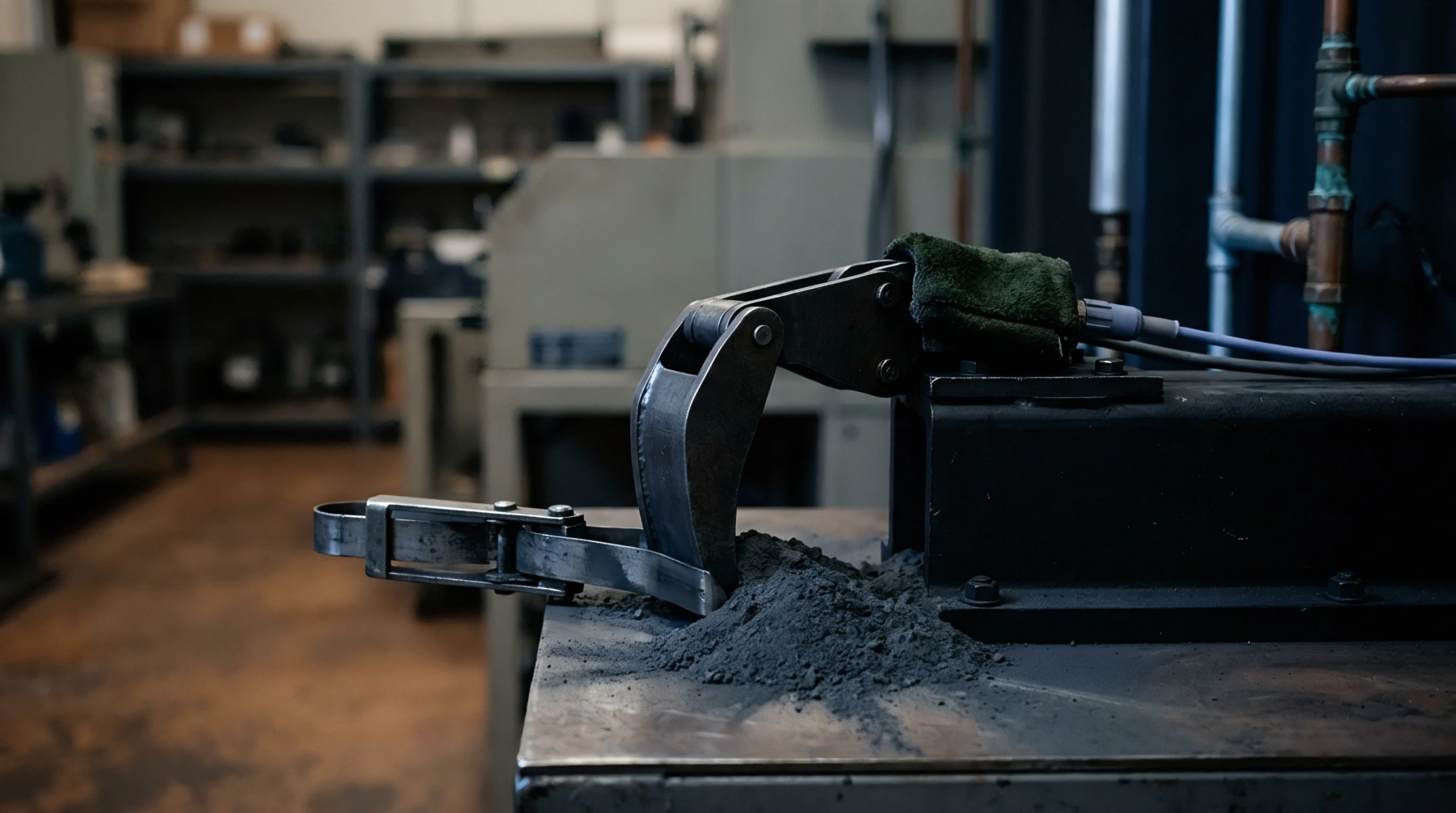
During the measurement, the sample must be finely ground and oriented to ensure that a representative number of crystal planes are in the correct position to diffract the X-rays. The resulting value is typically reported in nanometers or angstroms and is accurate to several decimal places. This non-destructive test is the standard method for verifying the structural state of carbon materials after high temperature processing.
Electrochemical Relevance
Battery performance is closely linked to this crystallographic value because the distance between the layers determines how easily lithium ions can move in and out of the anode. A smaller d002 interlayer spacing generally indicates a more graphitic structure, which offers higher electrical conductivity and a more stable platform for ion intercalation. This stability leads to higher reversible capacity and better cycling performance over the life of the battery.
If the spacing is too large, it indicates a more disordered or turbostratic structure, which can result in lower capacity and higher initial losses. However, some expansion of the lattice is necessary to accommodate the lithium ions without causing excessive mechanical stress. The relationship between the lattice spacing and the electrochemical behavior is a key focus for researchers developing next-generation anode materials.
Synthesis Influence
Manufacturing processes for synthetic graphite are optimized to achieve the lowest possible d002 interlayer spacing through controlled heating and the use of specific precursors. The transformation from amorphous carbon to crystalline graphite requires temperatures above two thousand five hundred degrees Celsius to overcome the energy barriers for atomic migration. The duration of this heating phase and the presence of any catalytic impurities can also influence the final spacing achieved.
Petroleum coke with a highly aligned needle-like structure typically produces graphite with a lower spacing than more isotropic coke types. Quality control protocols in graphitization facilities include regular diffraction testing to ensure that every batch meets the required structural specifications. The measurement remains the most reliable way to distinguish between different grades of carbon and to track the progress of the graphitization reaction.