Subzero Charge Transfer Limitations in Standard Lithium Carbonate Electrolytes
Subzero charging in standard carbonate electrolytes is limited by lithium desolvation activation energy, requiring BMS current derating to prevent plating.
Subzero charging in standard carbonate electrolytes is limited by lithium desolvation activation energy, requiring BMS current derating to prevent plating.

Differential voltage analysis isolates microstructural lithium loss and active material degradation to predict battery rollover before capacity loss accelerates.

Raw cycler time-series auditing identifies structural electrochemistry failures by tracking dQ/dV peak shifts and voltage relaxation dynamics before capacity drops.
Differential voltage analysis detects electrode stoichiometry shifts to predict capacity knee fade hundreds of cycles before linear capacity decay drops.
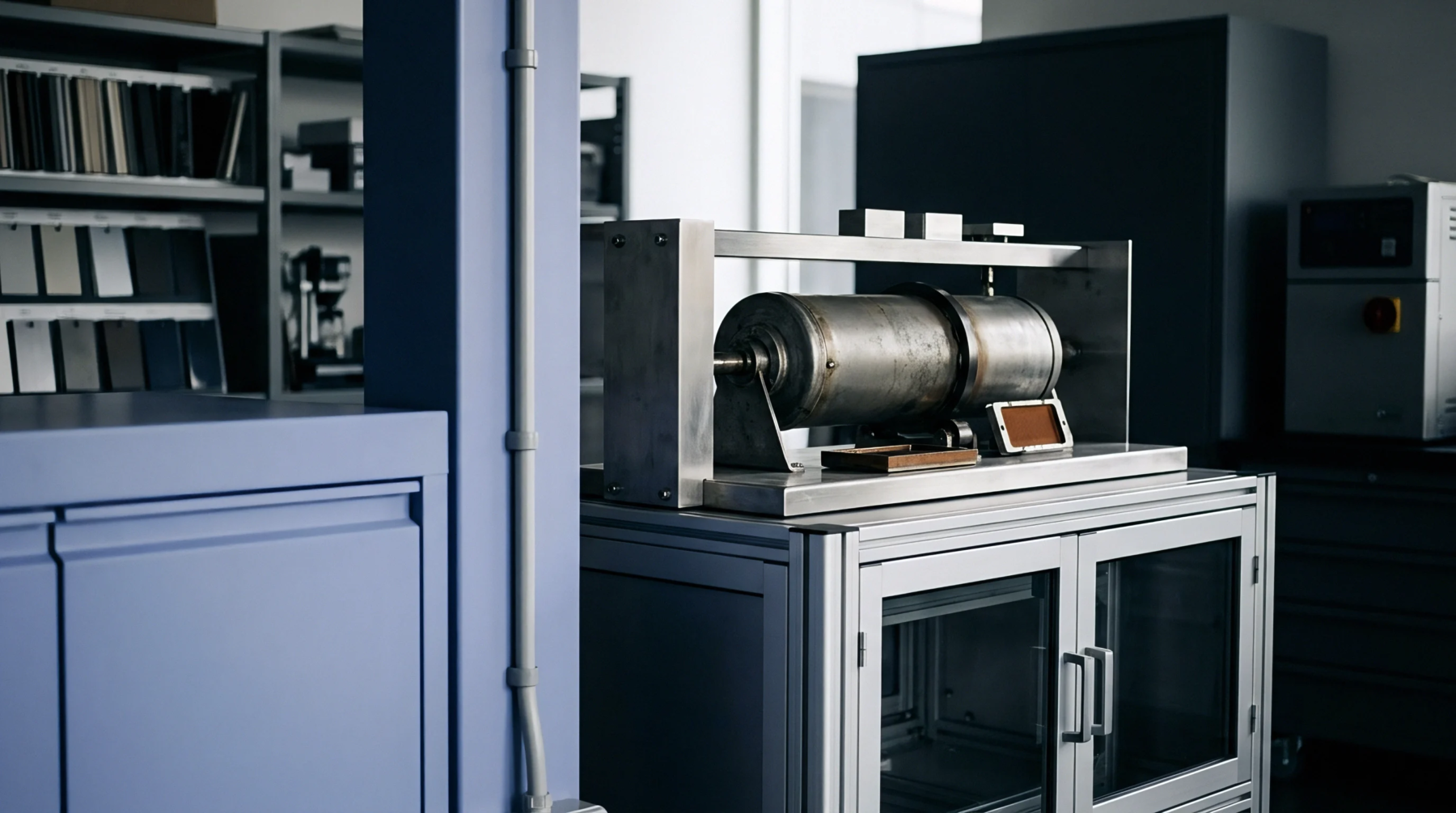
Verify cycle life claims by testing cells in rigid compression fixtures with precision coulombic efficiency tracking rather than unconstrained bench cycling.

Differential voltage analysis tracks lithium iron phosphate degradation by converting flat voltage plateaus into sharp derivative peaks for LLI and LAM.

Dynamic reduction of upper cutoff voltage counters silicon-induced anode slippage to suppress cathode overcharging and extend cell cycle life.
Hardware distributed clock synchronization via IEEE 1588 PTP eliminates sub-millisecond phase skew to prevent false capacity fade and warranty disputes.

Isothermal microcalorimetry and differential voltage analysis decouple cathodic solvent oxidation from anodic interphase breakdown during elevated thermal storage.

Tracking post-charge voltage relaxation at sub-zero temperatures eliminates SOC errors, detects lithium plating, and extends cold-storage battery life.

Extracting in situ voltage relaxation signatures during reefer rest intervals isolates sub-zero impedance growth and lithium plating across mixed cell fleets.

Differential voltage decay isolates the mixed-potential plateau during post-charge rest to quantify stripped versus irreversible plated lithium below freezing.
Commercial procurement contracts shift cold plating risks to buyers unless agreements mandate continuous telemetry logging and clear forensic teardown criteria.

Sub-zero graphite charging drives anode potential below 0V vs Li/Li+, causing destructive lithium metal plating that voids cell warranties and risks thermal failure.
Anisotropic microstrain creates path-dependent thermodynamic voltage hysteresis that corrupts static OCV-based SOH estimation algorithms by up to 12% over life.

Decoupling cathode and anode strain via differential thickness analysis eliminates open circuit voltage drift, cutting state-of-charge errors below one percent.
Alternating current pulses above 1 kHz bypass anode mass-transfer constraints, raising the lithium deposition threshold and extending pack cycle life.

Graphite anode potential drops below zero volts versus lithium when subzero charge rates exceed solid-state diffusion kinetics, triggering irreversible plating.

Lithium iron phosphate open circuit voltage mapping requires multi-hour relaxation and high-precision voltage sensing to resolve flat plateau hysteresis.
Accurate lithium iron phosphate state estimation uses three-dimensional lookup tables combined with dynamic observer filtering to resolve plateau ambiguity.
Quantifying LFP cell dispersion and hysteresis requires directional OCV lookup tables and sub-millivolt resolution to prevent BMS diagnostic failures.
Differential voltage analysis isolates lithium loss and electrode degradation in LFP cells by converting flat voltage plateaus into measurable derivative peaks.

Deconvolution of thermodynamic hysteresis from kinetic polarization in aged LFP cells prevents up to twenty percent SOC estimation drift under variable thermal cycles.
Subzero lithium plating occurs when sluggish desolvation and diffusion force graphite potential below 0.000 V, triggering irreversible metallic deposition.
Electrochemical impedance spectroscopy identifies lithium plating through charge-transfer resistance drops, DRT peak splits, and post-charge relaxation shifts.
Expertise is a utility, not a secret. sentiention™ publishes its working knowledge as open reference: intelligence layer covering the materials it sources, the markets it enters, and the reference that serves both.