
Standard Testing Schedules for Lithium Ion Battery Capacity Retention
Standard testing schedules isolate capacity retention by combining accelerated cycle and calendar aging with low-rate reference performance tests.
Standard testing schedules isolate capacity retention by combining accelerated cycle and calendar aging with low-rate reference performance tests.

Ultra-fast charging above 4.35V drives localized anode salt depletion and cathode anion oxidation, accelerating lithium plating and reducing delivered cycle life.

Verify cycle life claims by testing cells in rigid compression fixtures with precision coulombic efficiency tracking rather than unconstrained bench cycling.
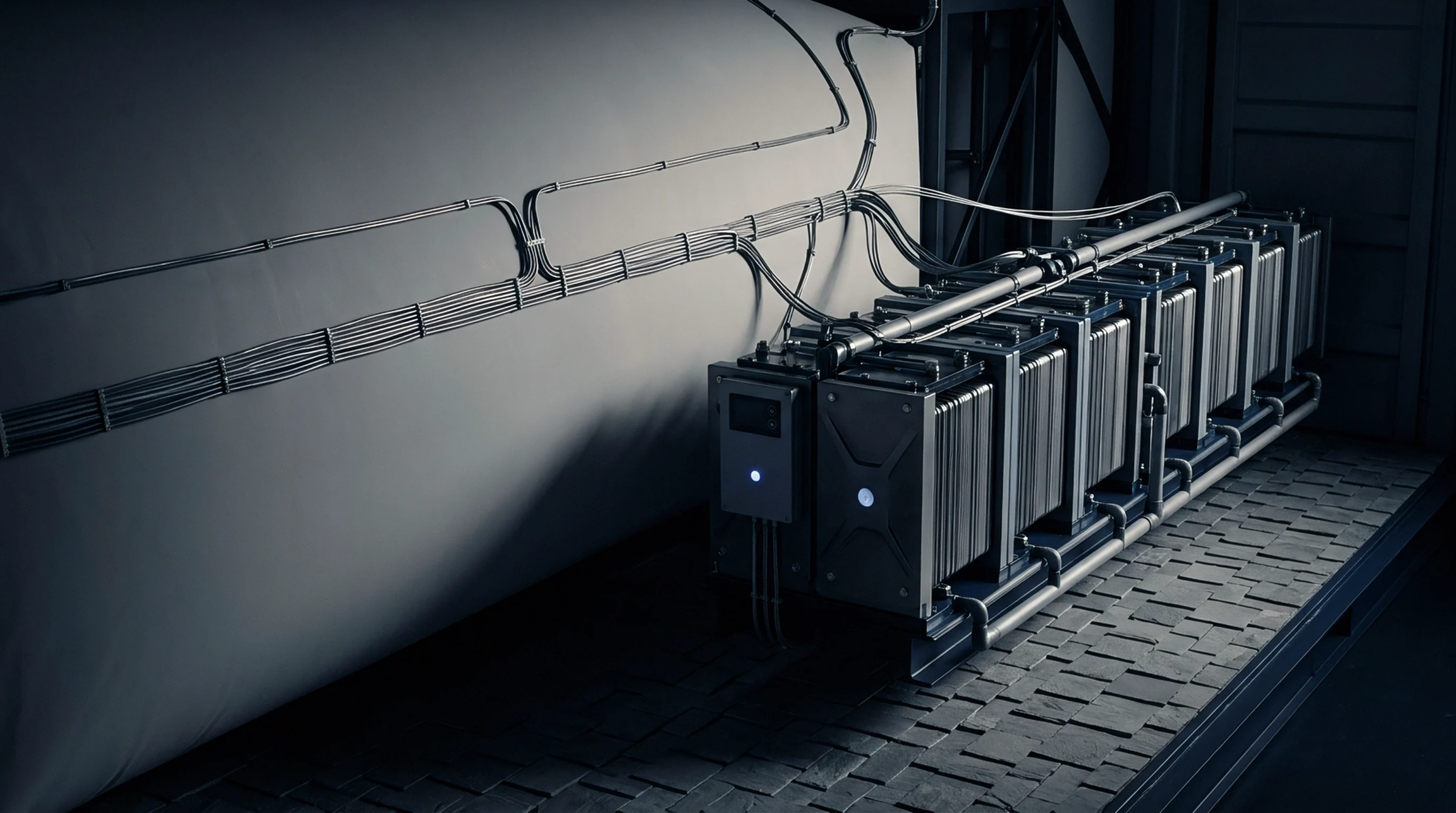
Unsynchronized backplane bus clock jitter distorts dynamic differential capacity peaks, producing artificial kinetic broadness that invalidates cell qualification dossiers.

Uncompensated wiring inductance in multi-channel EIS cabinets causes severe phase distortion, skewing low-impedance battery cell parameter extraction.

Extracting in situ voltage relaxation signatures during reefer rest intervals isolates sub-zero impedance growth and lithium plating across mixed cell fleets.

Maintain stack pressure between 2.0 and 5.0 MPa using engineered spring compliance to prevent void formation and counteract long-term viscoelastic relaxation.

Electrolyte acid scavengers bind hydrofluoric acid and PF5 gas to prevent transition metal dissolution and severe calendar fade during warm cell storage.

Lattice microstrain alters cathode entropic coefficients, causing open circuit potential drift that degrades state of charge estimation accuracy in aged cells.

Decoupling cathode and anode strain via differential thickness analysis eliminates open circuit voltage drift, cutting state-of-charge errors below one percent.

Nanostructuring eliminates two-phase mechanical fracture during high-rate cycling but degrades tap density, accelerates parasitic dissolution, and inflates cost.

Decoupling pouch cell anode and cathode EIS spectra requires central reference wire placement, high-impedance sense channels, and geometric phase correction.

Temperature dependent distribution of relaxation times deconvolutes overlapping interfacial transfer and SEI migration, identifying low-temperature charge limits.

Modulating electrolyte solvation shells reduces interfacial desolvation overpotential, enabling rapid subzero charge transfer and extending cell cycle life.

Sub-zero charging forces anode overpotential below zero volts, causing lithium plating that dissipates via chemical re-intercalation only during enforced rest periods.

Extended sub-zero cycling drives exponential SEI impedance growth via lithium plating and film cracking, requiring low-desolvation additives to prevent roll-off.

Misfit strain in high-rate manganese olivines peaks at ten percent, driving mechanical particle fracture that requires sub-fifty nanometer grains to prevent early cell fade.

Contractual allocation of EU Battery Passport diagnostic drift requires bench verification under IEC 62660-1 to enforce component indemnification caps.
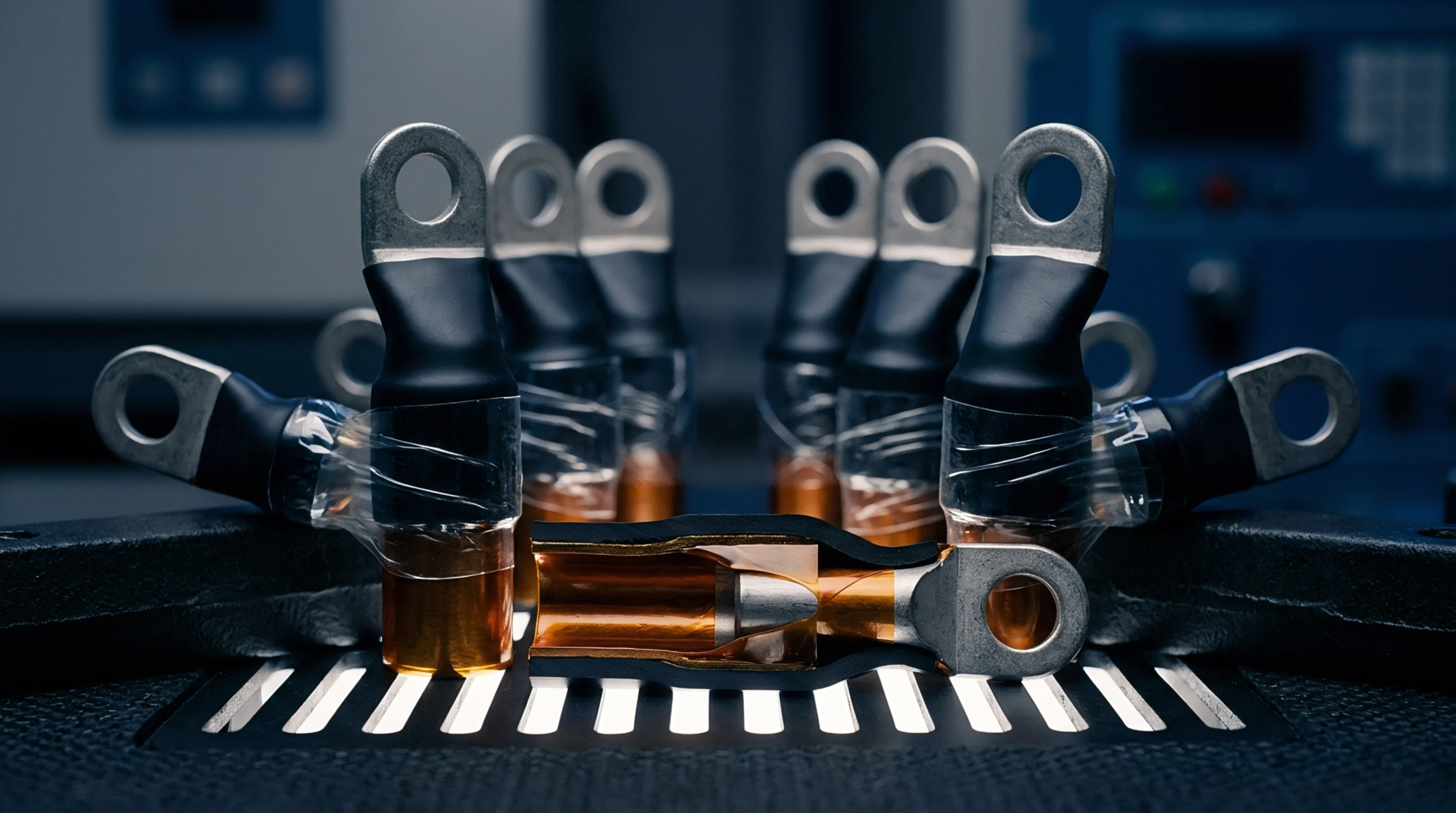
Active isothermal terminal control prevents fixture contact heat from distorting internal cell current density and corrupting high-rate battery qualification data.

Digital FIR and all-pass filters compensate high-current cycler group delay skew, preventing false dV/dt cutoffs in battery transport compliance testing.
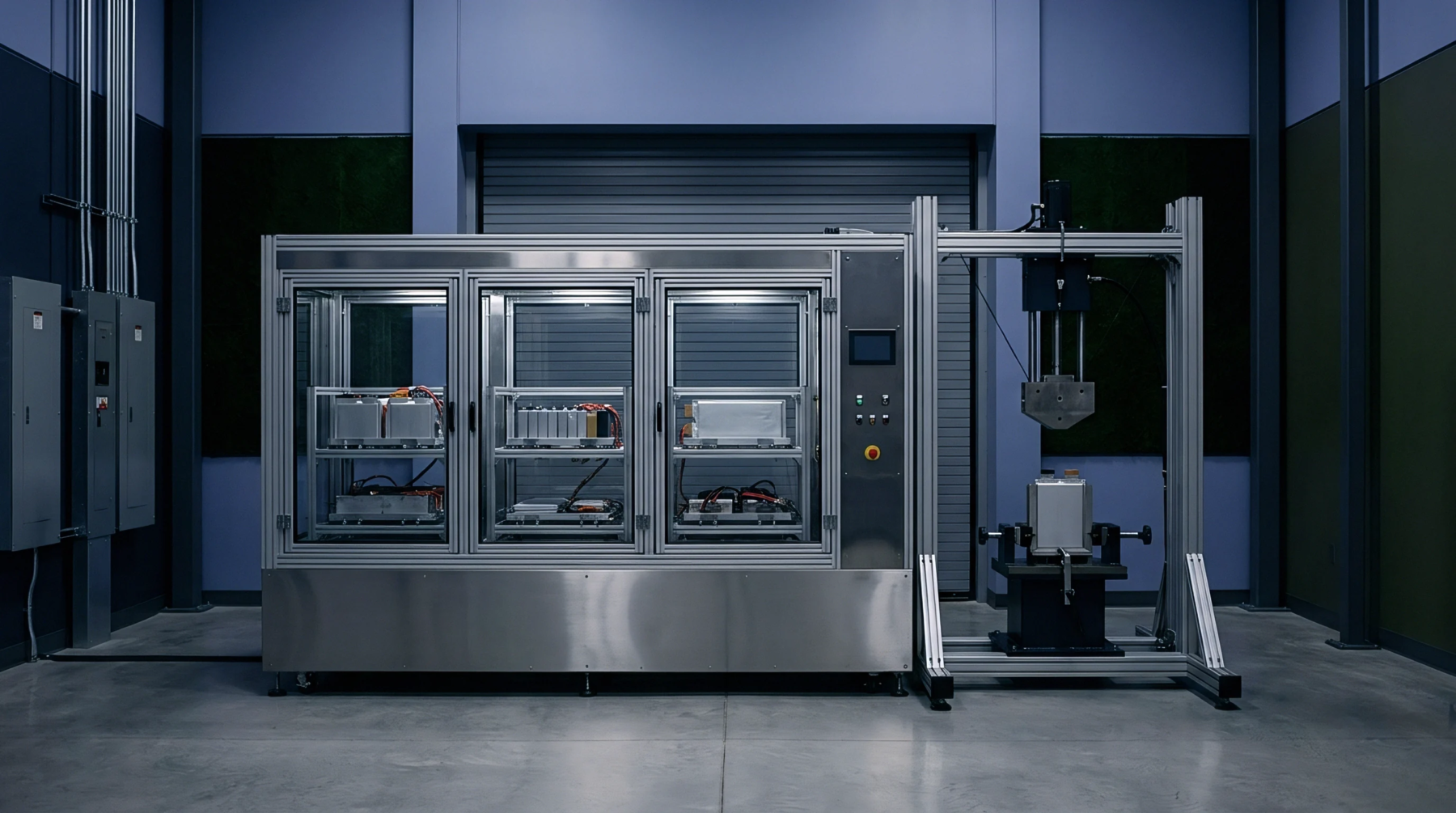
Microsecond timing skew between acquisition channels distorts cell ohmic resistance calculations, causing false batch grading and pack thermal imbalances.

Subzero rapid lithium stripping forces desolvation kinetic inversion, demanding fluorinated low-viscosity electrolytes to suppress interfacial overpotential.

Sub-zero cell qualification requires verifying charge-transfer impedance and anode overpotential thresholds to prevent irreversible field lithium plating.

Low current cycle testing resolves structural phase changes and parasitic side reactions to screen out micro-shorts before pack assembly.

Prelithiated silicon composite anodes dissipate significant mechanical hysteresis energy as heat across phase boundaries, requiring calibrated pack-level thermal mitigation.

Enforcing cell lower cutoff voltages above 70 millivolts suppresses Li15Si4 crystallization, tripling silicon anode cycle life and preventing rapid cell swelling.

Olivine cell phase transitions generate flat voltage envelopes that require derivative diagnostic tracking rather than raw voltage thresholding.

Dynamic temperature-dependent OCV modeling accounts for SEI-induced stoichiometric slippage and shifting entropic coefficients to prevent costly pack estimation errors.

Passivation interphase growth follows diffusion-limited parabolic kinetics, scaling interfacial resistance and demanding direct current pulse lot screening.

Dynamic duty cycling triggers non-equilibrium phase boundary kinetics and coherency fracture, demanding pulse-specific screening and pack sizing derating.
Expertise is a utility, not a secret. sentiention™ publishes its working knowledge as open reference: intelligence layer covering the materials it sources, the markets it enters, and the reference that serves both.