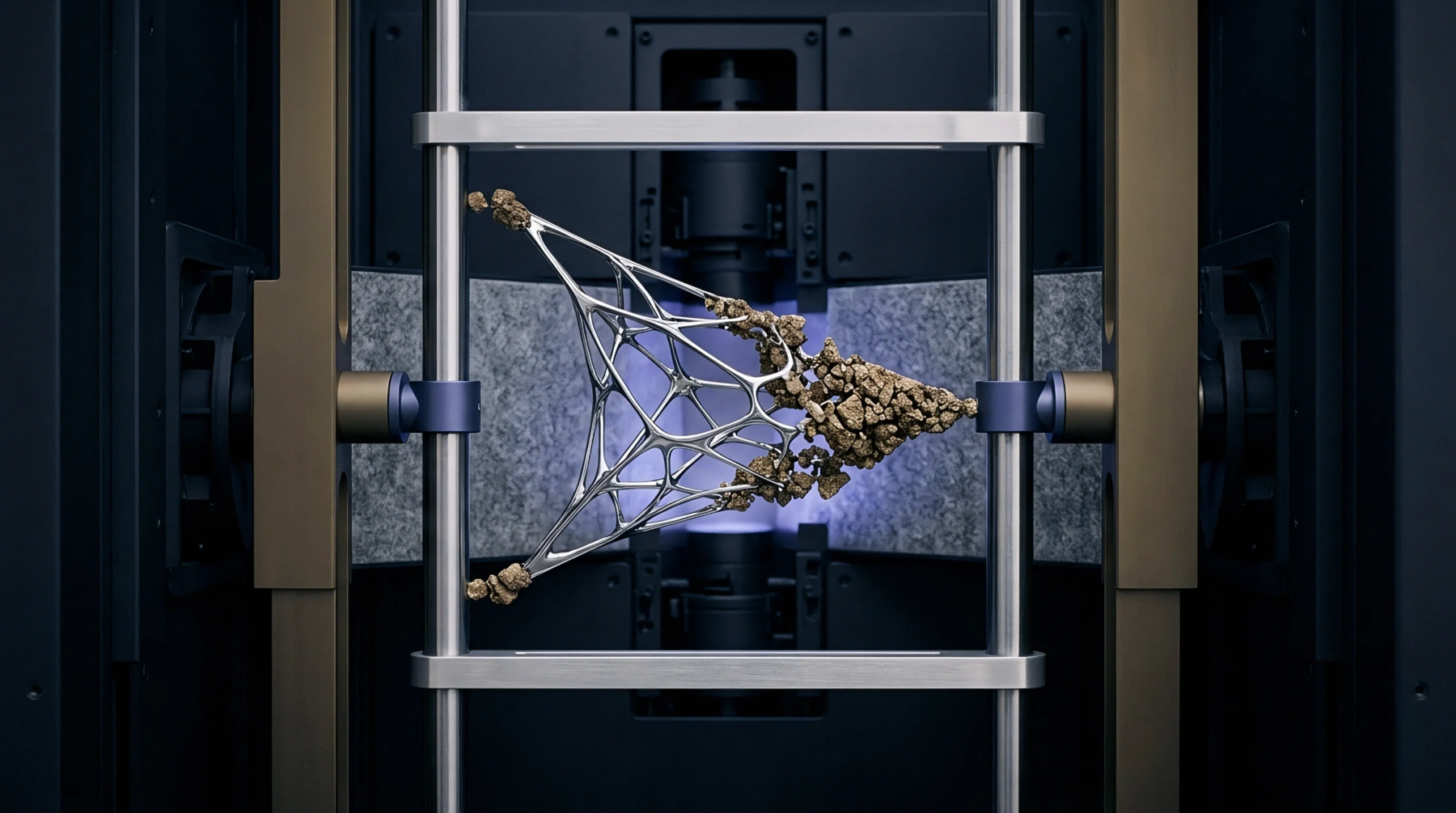
Mechanical Load Frame Design for Isothermal Pouch Cell Characterization
Isothermal load frames require sub-micron stiffness, decoupled thermal paths, and uniform pressure control to accurately capture pouch cell swelling kinetics.
Isothermal load frames require sub-micron stiffness, decoupled thermal paths, and uniform pressure control to accurately capture pouch cell swelling kinetics.

Swelling channels require matching elastomeric pad non-linearity to frame compliance to bound cell face pressure between 0.1 MPa and 1.0 MPa across cell life.

Dynamic spring pack compliance modules maintain prescribed stack pressure across pouch expansion to preserve solid electrolyte interfaces and prevent cell failure.

Thermal cycling drives micro-void coalescence in cold plate adhesives, amplifying local electric fields and degrading dielectric breakdown voltage.

Dispensing single divergent beads under controlled squeeze rates prevents micro air void trapping, suppressing interfacial thermal resistance below 0.5 K·cm²/W.

Dynamic squeeze flow mechanics govern peak compression forces and void entrapment during automated cell placement and cyclic cell breathing in thermal joints.

Active decompression and shear-rate speed scaling stabilize progressive cavity dispensing of aerated battery adhesives up to fifty bar backpressure.

Herschel-Bulkley hydraulic loss modeling dictates dispensing channel pressure drops and prevents line stalls in battery structural adhesive channels.

Precision positive displacement metering and inline 3D laser profilometry govern volumetric liquid gap filler accuracy in automated battery module dispensing lines.

Designing custom battery packs requires accounting for cell breathing and manufacturing tolerance stack-ups to protect thermal interfaces and weld joints.

Module BMS integration requires direct metallurgical sense taps, isolated daisy-chain telemetry, rigid thermal sensor retention, and verified dielectric creepage.

Optimizing prismatic thermal joints requires matching TIM gap filler rheology to cell face dish tolerances under controlled stack compression.
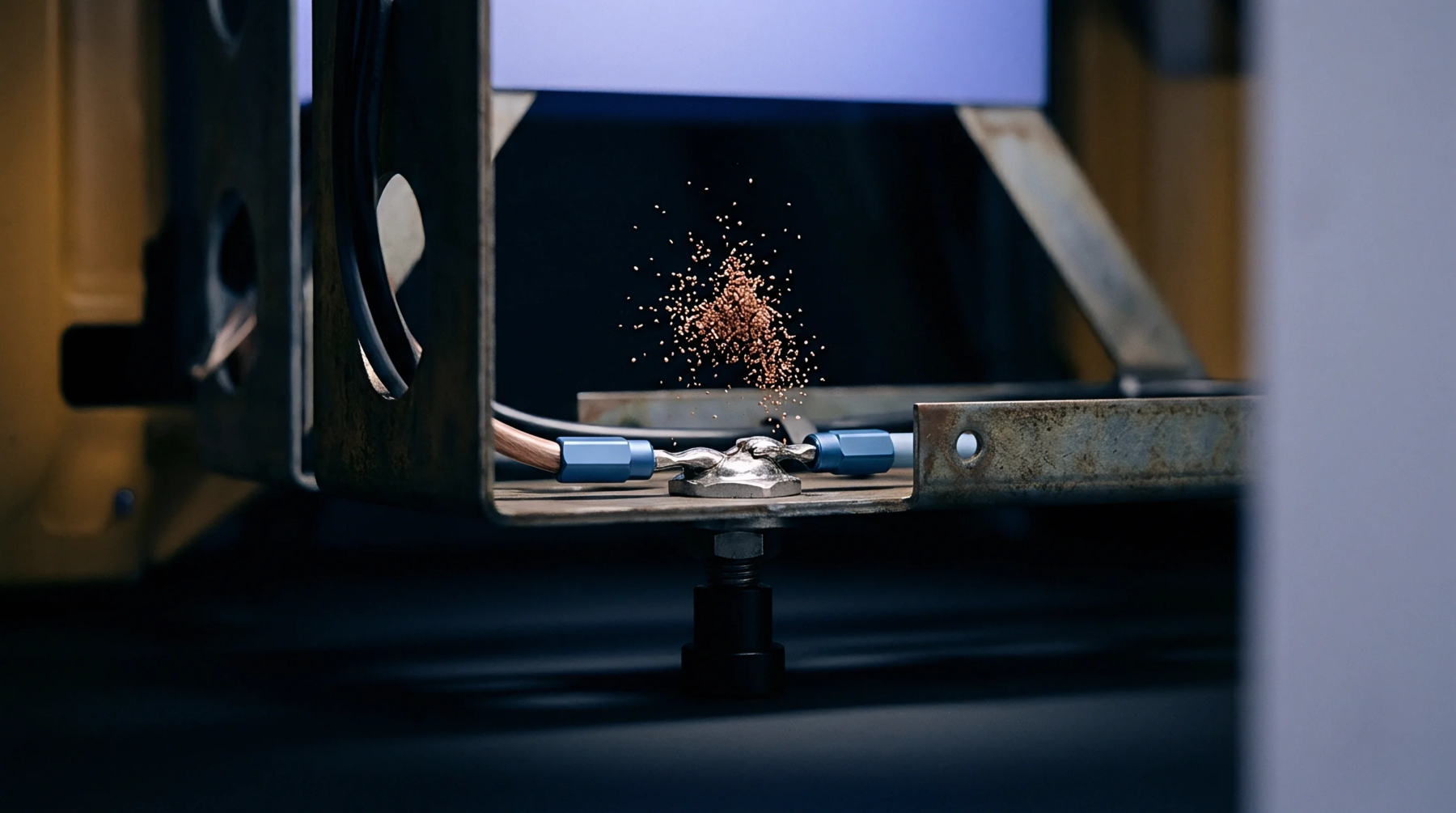
Calibrating high current cell terminal thermal interfaces demands traceable sensor calibration, strict torque retention, and explicit uncertainty budgets.

Active preheating circuits prevent sub-zero lithium plating by raising core temperatures above five degrees Celsius before high-rate charging commences.
Repetitive sub-critical roadway stone strikes induce cyclic strain ratcheting that progressively exhausts alloy ductility and closes cell safety clearances.

Sub-surface voids in additive cold plates concentrate thermal-cycling stresses, driving fatigue cracks that breach coolant walls into high-voltage battery spaces.

Enforce off-the-shelf pack bill of materials integrity by linking firmware hashes, destructive physical screening, and escrow holdbacks to signed drawings.

Off-the-shelf pack propagation mitigation relies on exterior inter-module barriers, high-rate egress venting, and thermal sink interfaces to arrest cascade.
Expertise is a utility, not a secret. sentiention™ publishes its working knowledge as open reference: intelligence layer covering the materials it sources, the markets it enters, and the reference that serves both.