
UN 38.3 Air Dangerous Goods Compliance for Lithium Cell Shipments
UN 38.3 air transport compliance requires mandatory T.1-T.8 safety qualification, under 30 percent state of charge, and complete statutory test summary files.
UN 38.3 air transport compliance requires mandatory T.1-T.8 safety qualification, under 30 percent state of charge, and complete statutory test summary files.
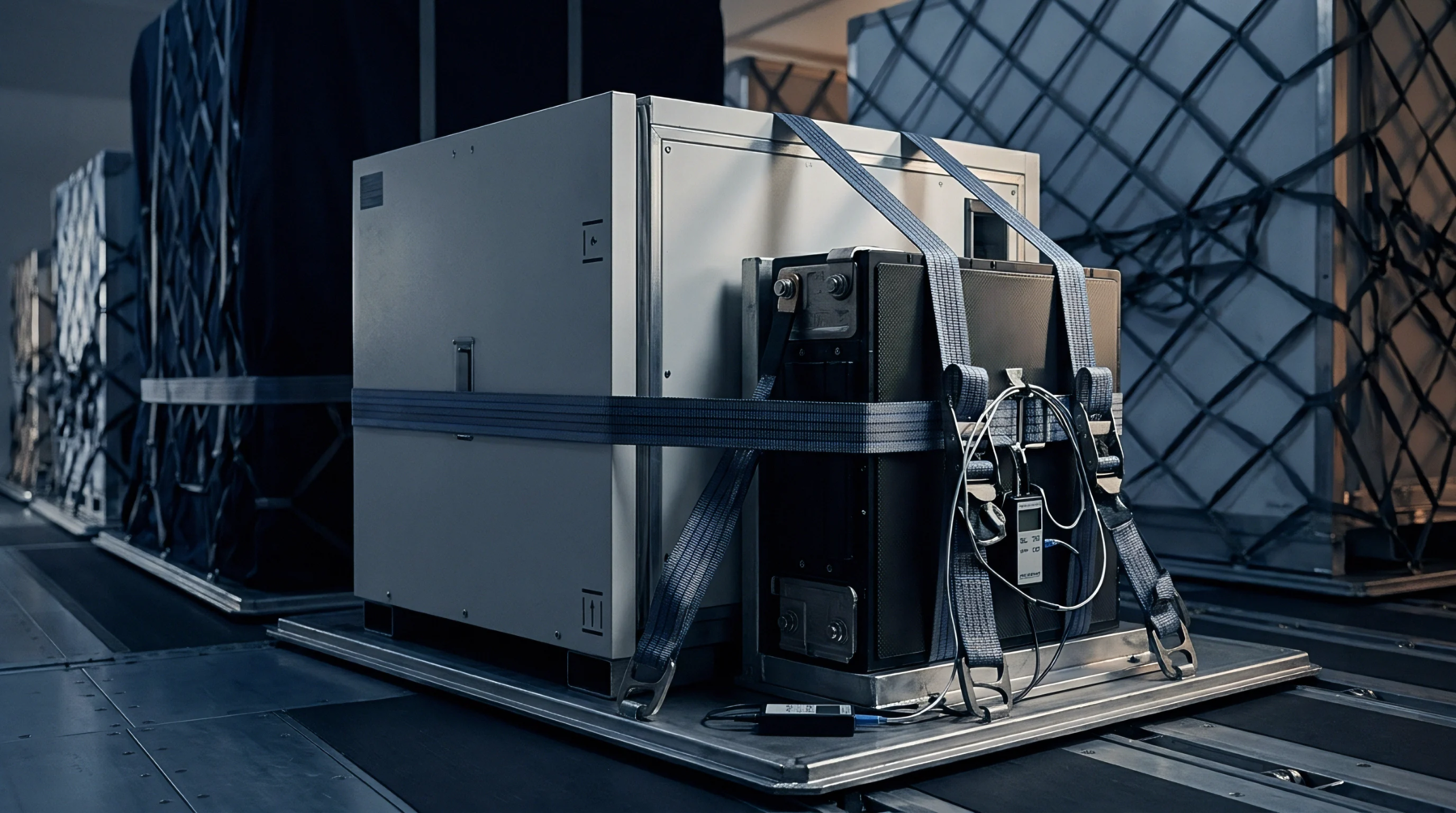
Verify UN 38.3 test summaries against physical cell markings and ISO 17025 lab databases before dispatch to prevent customs seizure and terminal demurrage.

Shippers face strict, uncapped statutory indemnity under maritime conventions when undeclared or non-compliant battery cargoes cause catastrophic vessel losses.

Uncertified lithium battery consignments move legally under Special Provision 310 and PI 910 packaging with state competent authority flight permits.

Validating UN Manual test summaries demands tracing cell and pack part numbers, weights, and lab accreditations directly back to originating test facilities.

Compliant cross-border battery transport requires an unredacted UN 38.3.5 test summary aligning with carton marks and carrier acceptance checks.

Hazardous battery storage accelerates to peak penalties within 48 hours; halting accruals requires immediate bonded drayage to an off-dock facility.

Compliant battery imports demand verified UN 38.3 test summaries, accurate dangerous goods declarations, state of charge caps, and partner agency clearances.

Carriers and forwarders share joint remediation liability for abandoned battery cargo under maritime environmental statutes when shippers vanish.
Verify primary vessel fuel burn and reefer auxiliary power under ISO 14083 rather than secondary database defaults to survive EU Battery Regulation audits.

Customs transit declarations suspend duty and import VAT on industrial cells by binding the carrier to an active financial guarantee until inland discharge.

Incoming battery pack inspection enforces ISO 2859-1 sampling using open-circuit voltage, 1500 VDC isolation, CAN telemetry, and pressure decay sealing tests.

Battery passport architectures streamline dangerous goods clearance by binding UN 38.3 test summaries to machine-readable declarations at customs borders.

Lithium cell transit mandates Class 9 classification, certified UN 38.3 summaries, verified low charge states, and rigid UN-spec packaging across air and sea.

Pegging batch release to sub-zero direct current resistance limits insulates battery buyers from cold-weather derating penalties and field warranty exposure.

Statutory importer liability attaches strictly to domestic consignees, converting dangerous goods transport and testing deficits into immediate financial exposure.
UN 38.3 compliance mandates verified T.1-T.8 testing, complete ten-point test summaries, and modal packaging discipline for legal intermodal cell transit.

Verify cell voltage and 1 kHz impedance boundaries at receiving inspection to prevent invalidating UN 38.3 transport dossiers and triggering cargo seizure.

UN 38.3 compliance requires an accredited test summary matching physical cell design metrics to clear Class 9 dangerous goods freight inspections.

Primary duty rates for lithium cells depend on HTSUS 8506 versus 8507 lines, cathode chemistry formulation, assists valuation, and Section 301 exposure.

Verify lithium ion cell type approval by matching laboratory ISO 17025 accreditation, raw thermocouple abuse logs, and physical cell mass to shipping manifests.
Statutory IMDG compliance permits maritime transport, but carrier-specific safety rules dictate vessel loading, requiring matched dossiers before gate-in.

Air transit compliance demands cell state of charge verification below thirty percent using calibrated current integration and relaxation-corrected voltage lookups.
Laser weld micro-defects drive preferential linear carbonate vapor loss under storage and transport pressure deltas, degrading cell life and voiding transit safety files.

Verify cell voltage stability after relaxation to certify thirty percent state of charge limits on dangerous goods ocean shipping manifests.

Cross-referencing UN 38.3 test summaries with air waybills aligns model names, watt-hour ratings, and package weights to prevent carrier rejections and fines.
Incoming battery pallet inspection combines shock monitoring, four-wire OCV/IR screening, and AQL sampling to catch transit damage and enforce debit notes.

Cross-border battery transport requires verified UN 38.3 test summaries, sub-30-percent aviation charge limits, and modal UN packaging marks to clear customs.

Dynamic fast charging induces non-linear spatial kernel divergence, driving localized lithium plating that requires reduced-order observer screening.
Verify UN 38.3 test summaries against accredited lab databases and audit physical batch metrics at receiving to prevent demurrage and cargo seizure.
Expertise is a utility, not a secret. sentiention™ publishes its working knowledge as open reference: intelligence layer covering the materials it sources, the markets it enters, and the reference that serves both.