
Spatial Lithium Ion Concentration Gradients in Low Temperature Charging
Low-temperature charging creates porous anode lithium salt depletion, driving localized overpotentials below zero volts and triggering irreversible lithium plating.
Low-temperature charging creates porous anode lithium salt depletion, driving localized overpotentials below zero volts and triggering irreversible lithium plating.

Sub-zero charging of thick anode cells drives localized lithium plating and severe capacity loss, manageable only through controlled heating and reduced charge C-rates.

Excessive anode calendering elevates microstructural tortuosity, causing localized electrolyte salt crystallization and rapid cell degradation during cold rate operation.

Low-temperature carbonate blend transport requires linear ester co-solvents to suppress viscosity spikes and lower desolvation impedance under cold thermal strain.

Graphite anode potential drops below zero volts versus lithium when subzero charge rates exceed solid-state diffusion kinetics, triggering irreversible plating.
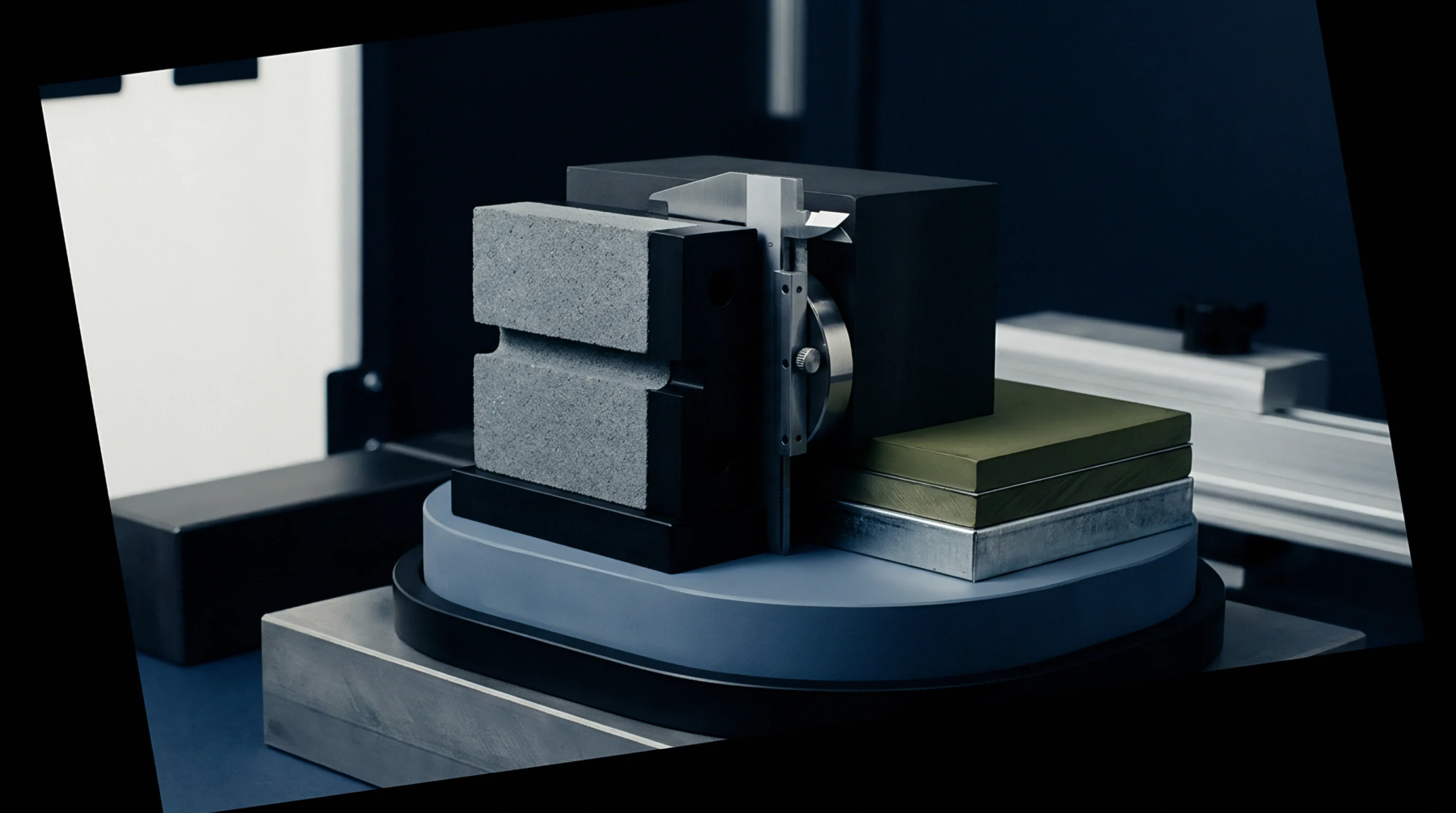
Misfit strain in high-rate manganese olivines peaks at ten percent, driving mechanical particle fracture that requires sub-fifty nanometer grains to prevent early cell fade.

LMFP cell hysteresis causes SOC estimation errors and efficiency drops that demand strict dQ/dV lot screening and pack energy oversizing.

Electrochemical screening of manganese substituted LFP cells requires dQ dV peak separation and 45C K-value tracking to isolate manganese dissolution before pack build.

Phase boundary strain and thermodynamic voltage hysteresis in high-manganese cathodes degrade round-trip efficiency and drive structural voltage decay.
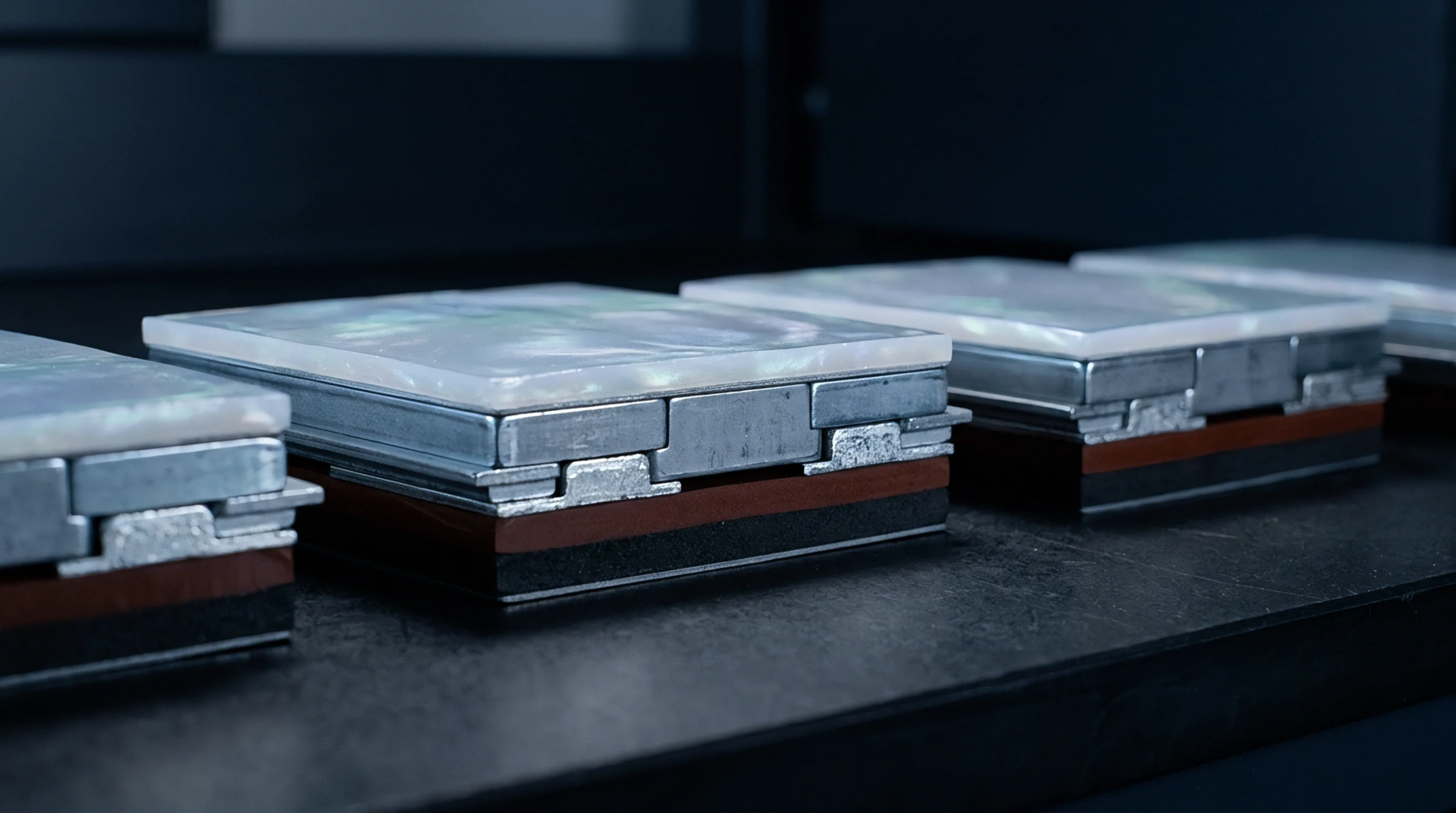
State-expanded Kalman filters correct LFP hysteresis by adding a dynamic voltage state tracking path-dependent phase transitions across flat OCV plateaus.

Lithium iron phosphate open circuit voltage mapping requires multi-hour relaxation and high-precision voltage sensing to resolve flat plateau hysteresis.

Electrochemical impedance spectroscopy isolates reversible polarization from structural cathode decay by tracking mid-frequency charge transfer resistance.

Variables sampling under ISO 3951-1 reduces battery cell acceptance sample sizes by eighty percent while maintaining strict lot quality protection.

Verify cell capacity using four-wire Kelvin fixtures under IEC 61960-3 parameters at 25°C to catch lot variances before pack integration.

Non-stationary thermal gradients distort differential capacity peaks by shifting overpotentials non-uniformly across storage cells, demanding thermal-model inversion before state-of-health estimation.

Adaptive Kalman filtering on flat battery plateaus succeeds only when covariance updates carry strict numerical bounds and hysteresis-aware measurement compensation.

Accurate lithium iron phosphate state estimation uses three-dimensional lookup tables combined with dynamic observer filtering to resolve plateau ambiguity.

Extracting non-equilibrium micro-hysteresis parameters in aged LFP packs eliminates state-of-charge estimator drift across dynamic operational profiles.
Quantifying LFP cell dispersion and hysteresis requires directional OCV lookup tables and sub-millivolt resolution to prevent BMS diagnostic failures.
Differential voltage analysis isolates lithium loss and electrode degradation in LFP cells by converting flat voltage plateaus into measurable derivative peaks.

Deconvolution of thermodynamic hysteresis from kinetic polarization in aged LFP cells prevents up to twenty percent SOC estimation drift under variable thermal cycles.
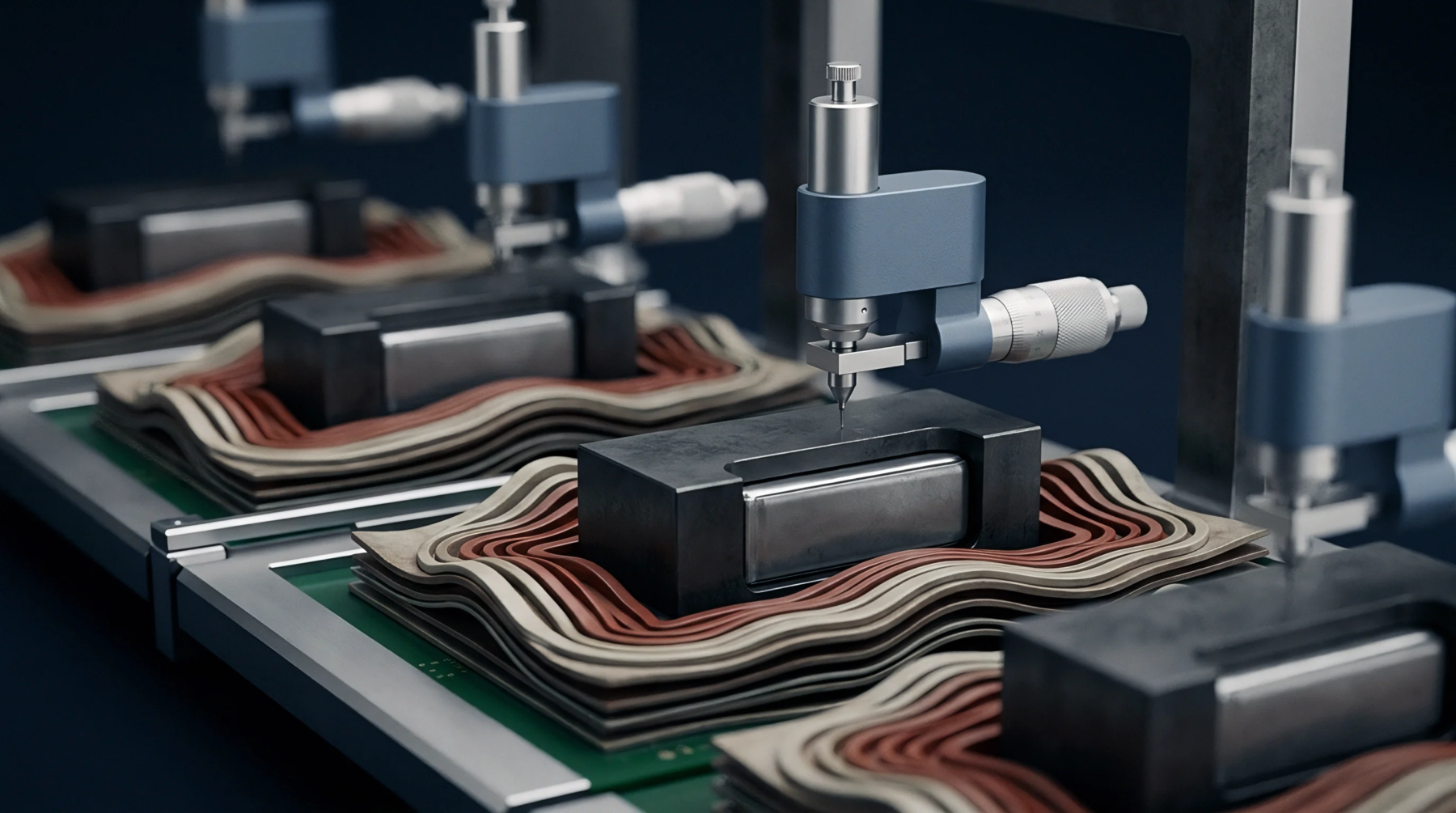
Flat voltage gradients paralyse closed-loop state observers, requiring high-precision analog front-ends and structured rest windows to prevent state drift.

Titration testing isolates solid-state diffusion and overpotential across LFP state-of-charge regions, exposing true fast-charge and cold-weather limits.
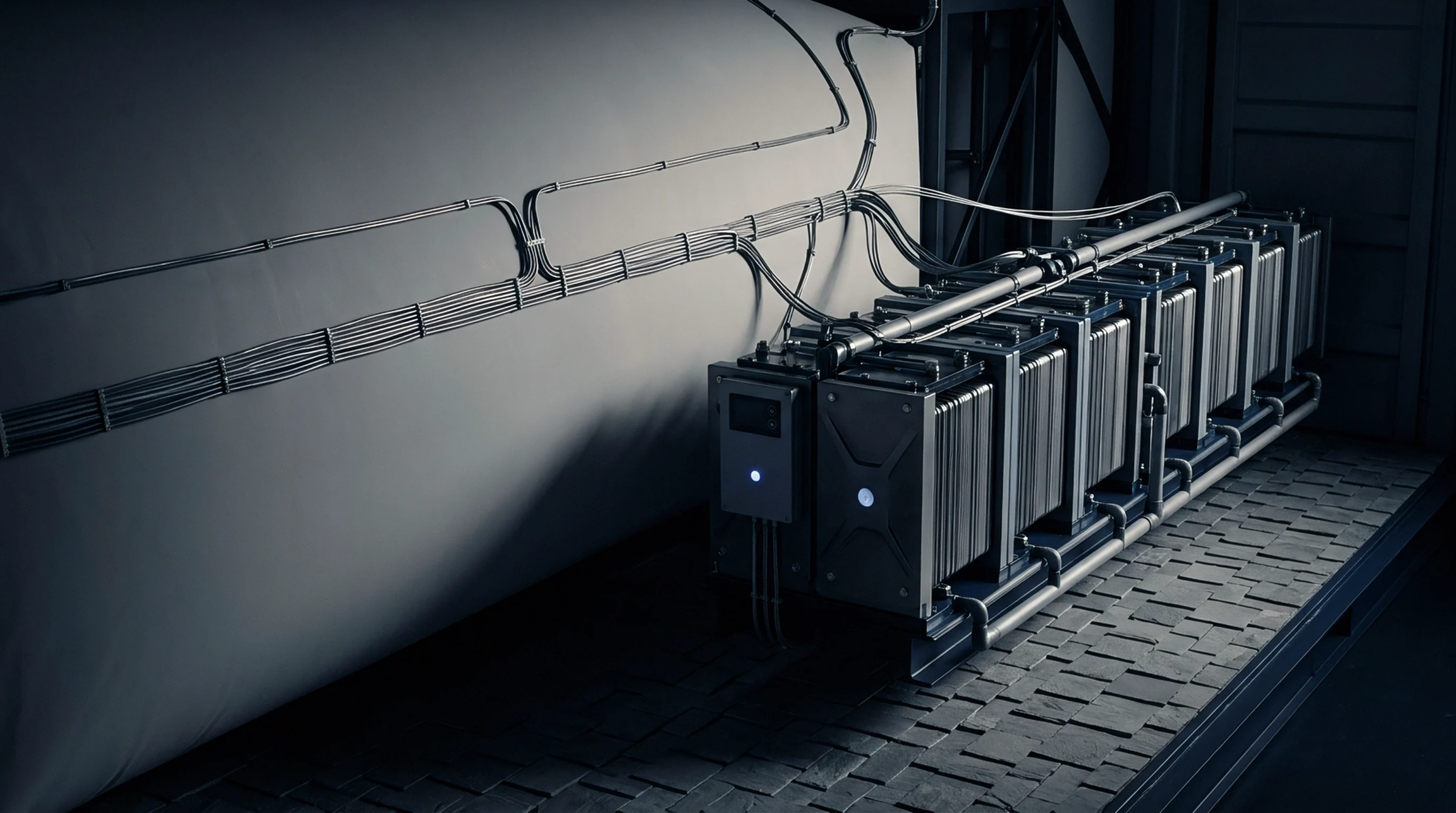
Subzero EIS deconvolution separates SEI growth from charge transfer stagnation, identifying premature cell failure risks before commit of pack assembly funds.

Differential capacity analysis detects cold charging phase transformations and lithium plating by resolving staging shifts and discharge stripping peaks.

Sub-zero lithium plating triggers when negative electrode charge transfer overpotential drops below zero volts against metallic lithium reference potentials.

Subzero charging drives anode potential below zero volts, causing mechanical interphase rupture, active electrolyte depletion, and dead lithium isolation.

Subzero graphite charging drives anode potentials negative through desolvation and diffusion overpotentials, inducing irreversible lithium metal plating.

Subzero lithium plating occurs when sluggish desolvation and diffusion force graphite potential below 0.000 V, triggering irreversible metallic deposition.

Subzero rapid lithium stripping forces desolvation kinetic inversion, demanding fluorinated low-viscosity electrolytes to suppress interfacial overpotential.
Expertise is a utility, not a secret. sentiention™ publishes its working knowledge as open reference: intelligence layer covering the materials it sources, the markets it enters, and the reference that serves both.