
Differential Capacity Analysis for Onset Identification of Graphite Lithium Plating
Differential capacity analysis identifies lithium plating onset through stripping peaks during relaxation, protecting fast-charging cells from dendrite growth.
Differential capacity analysis identifies lithium plating onset through stripping peaks during relaxation, protecting fast-charging cells from dendrite growth.
Fast charging accelerates mechanical particle microcracking and active lithium loss, reducing cell life and changing UN 38.3 thermal safety parameters.

Differential capacity analysis resolves cell degradation modes to verify manufacturing batch consistency and validate regulatory shipping state.

Non-destructive in situ characterization resolves localized aging in large prismatic cells by coupling multipoint thermal sensing with differential capacity and expansion force signals.

Lithium inventory loss in commercial LFP cells is driven by secondary interphase growth and isolated using low C-rate differential capacity analysis.

Differential capacity analysis quantifies battery degradation modes from low-rate cycler data, enabling non-destructive incoming lot rejection and warranty claims.

Manganese crossover accelerates anode impedance growth by catalytic SEI breakdown, demanding elevated temperature diagnostic screening and strict contract terms.

High voltage cycling of high-nickel cathodes causes abrupt H2 to H3 phase transitions, intergranular fracturing, and rapid capacity fade above 4.15V vs Li/Li+.
Elevated temperature formation accelerates passivation while requiring strict thermal control to prevent excessive active lithium inventory loss.

Interphase stability hinges on controlled initial reductive decomposition, sacrificial additive consumption, and uniform high-temperature stabilization.

Enforcing cell lower cutoff voltages above 70 millivolts suppresses Li15Si4 crystallization, tripling silicon anode cycle life and preventing rapid cell swelling.

Dynamic multi-gigapascal contact stress accelerates vacancy migration into planar clusters that cleave cathode primary particles and invalidate transport safety.

Subsurface phase inversion transforms active high-nickel cathode surfaces into high-resistance rock-salt layers, driving impedance growth and safety risks.

Cathode surface phase stability verification prevents sudden impedance growth and thermal instability by auditing spectroscopic depth profiles and impedance growth.

Verify raw voltage logs against qualification dQ/dV curves using residual variance tests to prevent smoothed derivatives from hiding active material degradation.

Reconstructed time-series timestamps, differential voltage phase tracking, and ADC noise thresholds expose fabricated cell qualification fade curves.

Low-temperature sodium charging in biomass carbon anodes requires tuning d002 spacing above 0.37 nm and using ether solvents to prevent plating overpotentials.

Closed pore shrinkage and desolvation limits force sodium plating below zero volts, demanding preheating above ten degrees Celsius to preserve cell life.

Ohmic gradients across large current collectors distort differential capacity peaks, requiring rate-adjusted spectroscopy to prevent false SOH degradation claims.
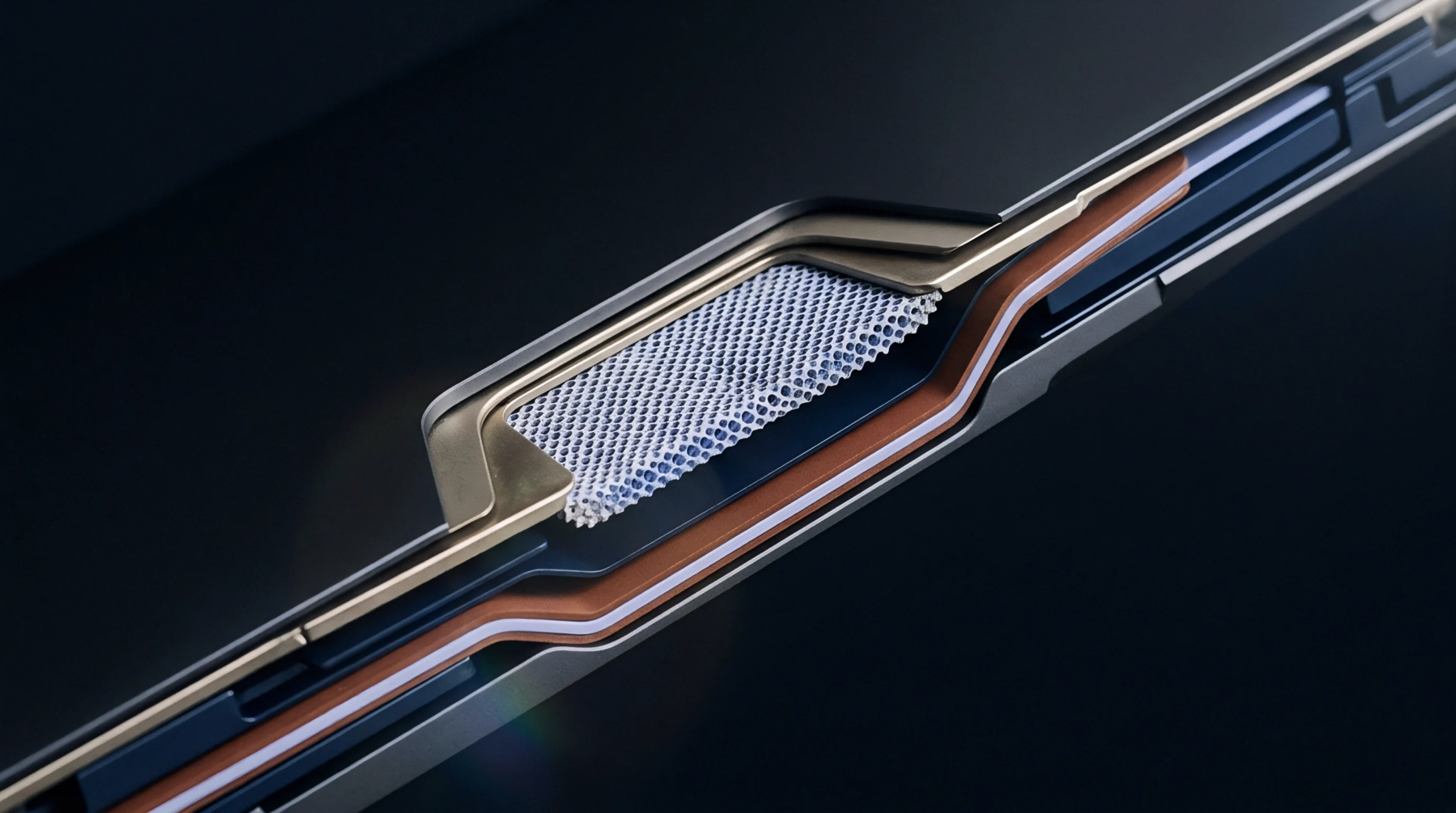
Internal temperature gradients trigger localized current crowding and plating; tab cooling and real-time core thermal estimation mitigate premature cell failure.

Tracking dual-phase cathode current divergence under thermal gradients protects cells from localized overcharge and premature capacity rejection.

Extreme fast charging drives tab-adjacent anode zones below zero volts, causing localized metallic lithium plating that evades standard bulk diagnostics.

Differential capacity peak tracking isolates active lithium inventory loss from electrode degradation to verify true cell health before commercial acceptance.
Low-temperature graphite intercalation is limited by charge-transfer impedance and slow solid diffusion, forcing lithium plating unless charging current drops.

Asymmetric pack cooling generates local overpotentials and microstructural stresses that drive localized lithium plating during high rate fast charging.

Differential capacity deconvolution separates active lithium loss from solid interphase growth by tracking peak voltage displacement against peak area decay.

Standardized diagnostic recalibration uses thermodynamic dQ/dV peak alignment and cubic splines to correct reference drift in battery transport safety files.
Algorithmic drift correction isolates instrumentation bias from true electrochemical fade using thermodynamic phase anchors to protect warranty claims.
Voltage relaxation plateau tracking identifies metallic lithium stripping, separating reversible plating from chemical solid electrolyte consumption.

Quantifying in situ passivation layer rupture energy under cold fast charging requires operando acoustic emission and impedance isolation to enforce supplier liability.
Expertise is a utility, not a secret. sentiention™ publishes its working knowledge as open reference: intelligence layer covering the materials it sources, the markets it enters, and the reference that serves both.