
Quantifying Non Linear Capacity Rollover Mechanics in High Nickel Cathode Formulations
High-nickel cathode rollover stems from high-voltage H2-H3 phase strain and microcracking; contractually bound dQ/dV and resistance growth limits protect assets.
High-nickel cathode rollover stems from high-voltage H2-H3 phase strain and microcracking; contractually bound dQ/dV and resistance growth limits protect assets.

Sacrificial cathode additives offset hard carbon initial sodium loss, raising cell energy density when decomposition potential and off-gassing match formation limits.

Structured silicon alloy kinetics depend on managing stress-driven diffusion back-pressure and silicide matrix creep under external mechanical stack confinement.

Controlled stack pressure suppresses terminal crystalline phase transitions in silicon alloy anodes, doubling cell cycle life through mechanical containment.

Sub-zero thermal qualification requires precise soak verification, active heating uniformity controls, and three-electrode plating boundary detection.

Active pressure vacuum degassing during cell formation eliminates trapped gas voids in high capacity sodium electrodes to prevent local salt depletion and plating.

Calibrating reduced order particle observers optimizes usable cell capacity and fast charging rates while preventing lithium plating through precise surface state tracking.

Sub-zero sodium storage depends on balancing slope intercalation kinetics against closed-pore clustering while maintaining overpotential above metallic plating.

Closed loop micro reference sensing measures anode potential directly to eliminate sub-zero lithium plating during fast charging without compromising cell life.

Early cycle analytics fail to predict nonlinear battery degradation knees when sacrificial additives mask microstructural stress accumulation.

Subzero charge drives graphite surface potential below 0V vs Li/Li+, causing metallic lithium plating that demands temperature-compensated derating.

Operando NMR isolates trapped dead lithium during sub-zero fast charging, enabling quantitative plating prevention and dynamic charging algorithm design.

Electrochemical impedance transmission line modeling isolates micro-structural electrolyte salt depletion under continuous high-C discharge before voltage collapse.

Continuous hard carbon graphitization requires tight thermal control to preserve closed nano-cavities, while pre-sodiation economics rely on holding web yield above 96 percent.

Calculated elastic strain energy penalties in graphite matrices raise nucleation barriers, suppressing destructive phase transitions during fast lithiation.
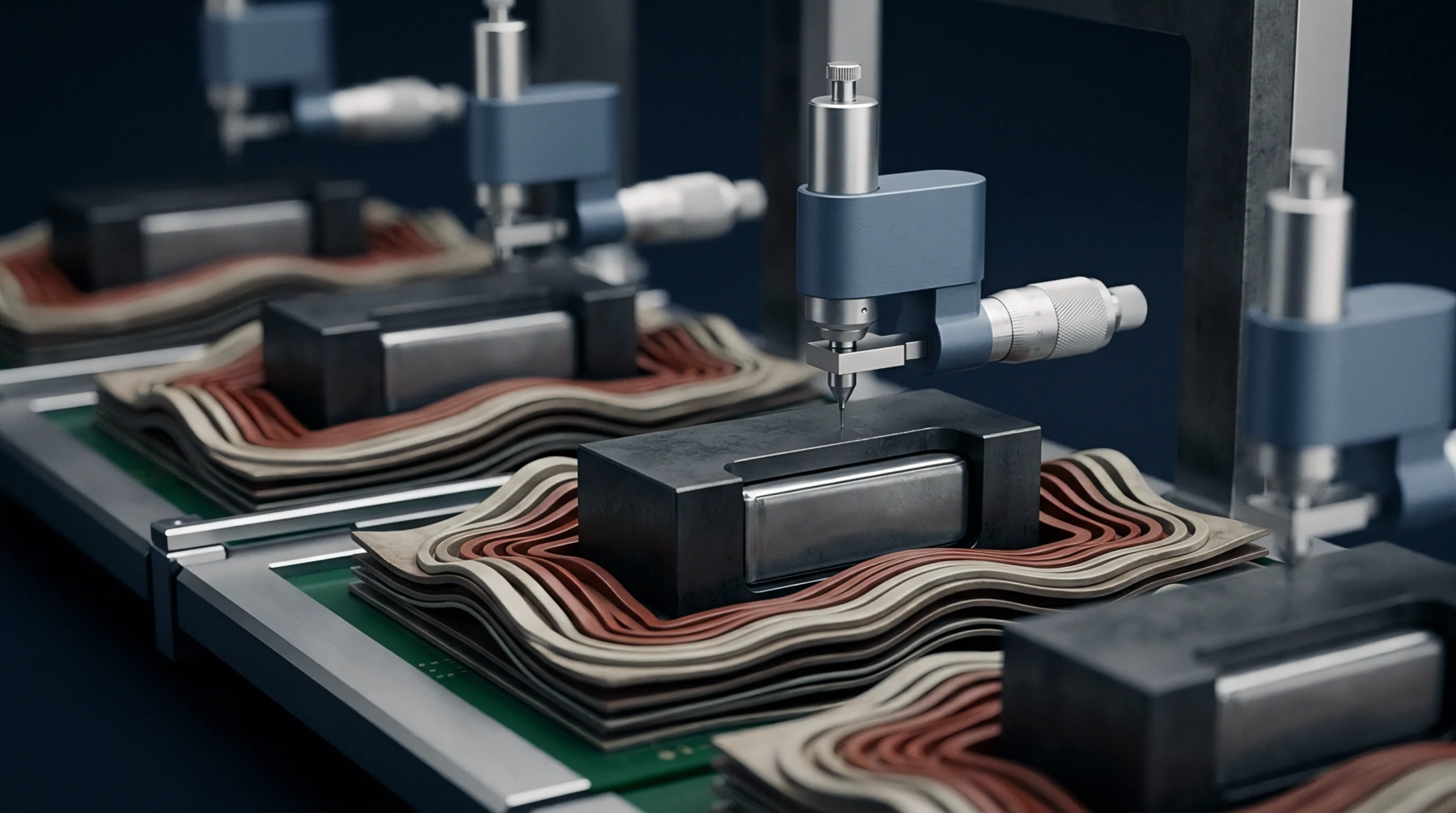
High silicon content lowers the local overpotential threshold for metallic lithium nucleation during fast charging through non-linear strain energy interactions.

Sub-zero fast charging shifts anode kinetics from intercalation to metallic plating; controlling overpotential via pre-heating or step-down profiles prevents rapid cell failure.

Datasheet cycle life claims overestimate real field performance by up to 45 percent under uncompressed thermal dynamic stress envelopes.

Microstructural separator pore collapse and gas evolution during pouch cell storage exponentially increase internal impedance and drive irreversible capacity scrap rates
Expertise is a utility, not a secret. sentiention™ publishes its working knowledge as open reference: intelligence layer covering the materials it sources, the markets it enters, and the reference that serves both.