
Evaluating Cell Parameter Drift Boundaries in Volume Transport Compliance Testing
Verify cell voltage and 1 kHz impedance boundaries at receiving inspection to prevent invalidating UN 38.3 transport dossiers and triggering cargo seizure.
Verify cell voltage and 1 kHz impedance boundaries at receiving inspection to prevent invalidating UN 38.3 transport dossiers and triggering cargo seizure.

Validate ISO/IEC 17025 schedules directly on ILAC registries to confirm specific battery test standards and ranges before signing cell procurement contracts.

UN 38.3 compliance requires an accredited test summary matching physical cell design metrics to clear Class 9 dangerous goods freight inspections.

Algorithmic drift correction isolates instrumentation bias from true electrochemical fade using thermodynamic phase anchors to protect warranty claims.

Miscalibrating compression pad relaxation models during fast charge cycles risks stack force decay below minimum thresholds, driving cell impedance spikes.

Contractual specification limits must define measurable cell and module thermal gradient thresholds enforced by liquidated damages and capacity warranty baselines.

Prismatic cell thermal management requires accounting for 30-to-1 anisotropic conductivity ratios and internal thermal resistance to prevent hidden core overheating.

Subzero fast charging accelerates SEI growth and irreversible plating via elevated desolvation resistance, demanding pre-heating or multi-stage current tapering.

Optimizing battery preload requires balancing compliant cushions and chassis stiffness to hold cell pressure between 0.10 MPa and 1.0 MPa across full lifecycle.

Optimize module stack compression between 0.20 and 0.50 MPa to balance active layer contact against separator pore collapse and impedance growth.
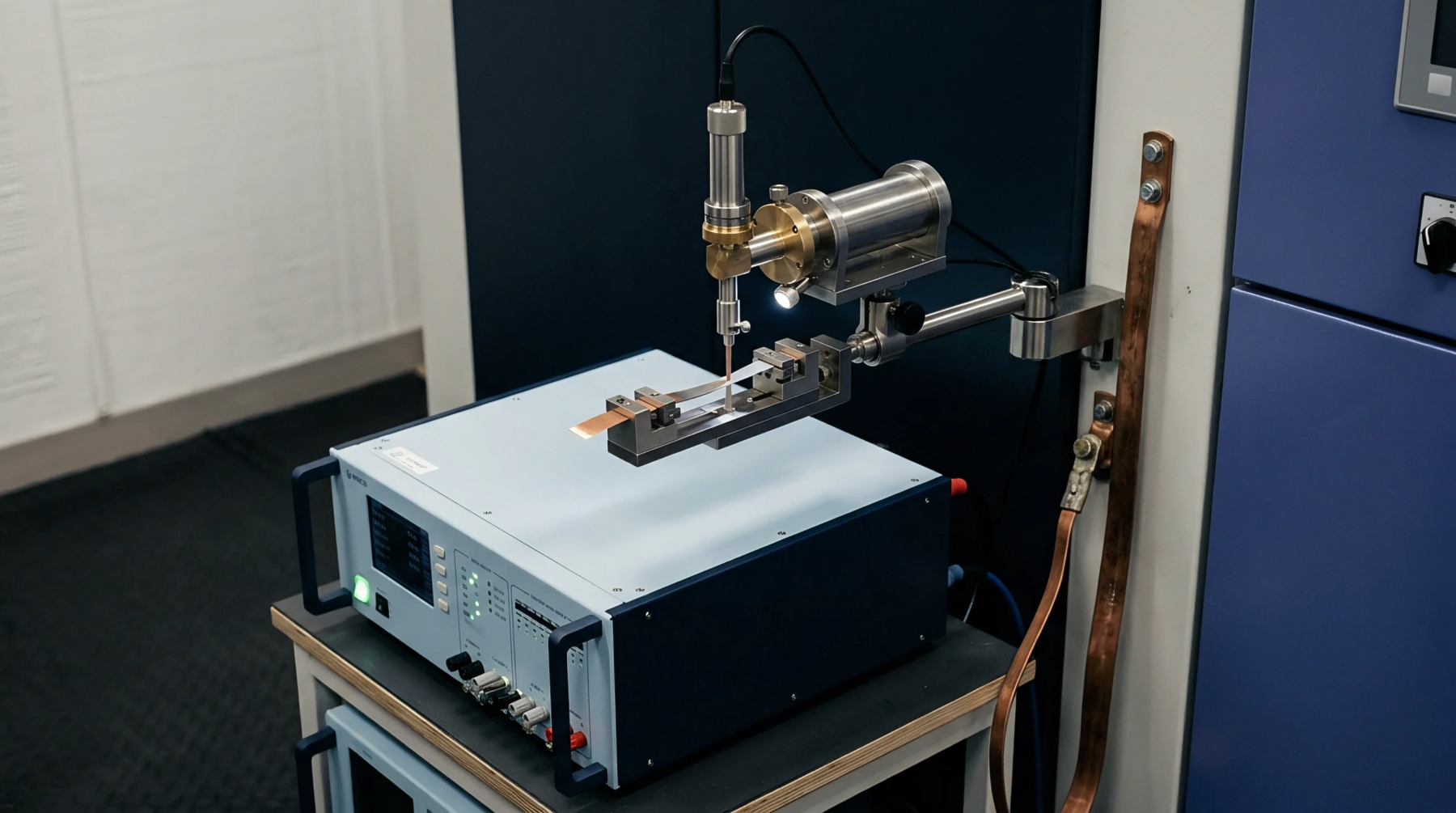
Evaluate end-of-life cell swelling by testing under module-equivalent spring compliance to balance initial interfacial contact against structural failure limits.

Viscoplastic stress relaxation in silicon-lithium alloys mitigates localized current divergence only when charge rates remain below the material creep velocity.

Controlled formation cycle protocols govern graphite interphase passivation, bounding irreversible capacity loss, transport stability, and warranty liability.

Verify ISO/IEC 17025 accreditation schedules directly against current UN 38.3 revisions to prevent customs interdiction and port demurrage penalties.

Validate testing laboratory ISO 17025 scope annexes to ensure equipment ranges, current shunts, and thermal chambers cover actual cell safety test parameters.

Verify the laboratory ISO 17025 scope annex directly with the accreditation body to ensure testing standards, ranges, and specific clauses match shipped cells.

Actuarial defect models price tail-risk exposures by replacing zero-defect assumptions with compound Poisson-Weibull distributions and contractual escrow sizing.

Transition metal transport across separators causes rapid anode SEI decay; quantify crossover via ICP-MS to enforce supplier coating and cycle-life contracts.

Physical tool registration, firmware source code escrow, and regulatory applicant control establish the only legally enforceable pack manufacturing IP boundaries.

Lock bills of materials and enforce incoming statistical Cpk gates on cell mass, ACIR, and anode overhang to halt manufacturing drift before pack assembly.

Verify lithium ion cell type approval by matching laboratory ISO 17025 accreditation, raw thermocouple abuse logs, and physical cell mass to shipping manifests.

Statutory IMDG compliance permits maritime transport, but carrier-specific safety rules dictate vessel loading, requiring matched dossiers before gate-in.

Air cargo intake verification requires cross-checking the ten mandatory UN 38.3.5 data parameters directly against physical cell labels and manifest records.

Electrochemical cycling drives anisotropic particle volume shifts, fracturing grains and tearing binder networks to accelerate capacity fade under poor clamping.

Electrolyte volatility drives latent cell mass loss, requiring buoyancy-corrected analytical balances to verify hermetic integrity before transit acceptance.

Foreign arbitral awards for battery test summary fraud enforce successfully by joining subcontractors via agency doctrines and garnishing global OEM receivables.

Dynamic sub-zero charging firmware shifts strict product liability to integrators when overpotential margins breach cell manufacturer limits.

Closed-loop impedance feedback tracks subzero charge-transfer resistance to throttle charging current, preventing anode overpotential from inducing lithium plating.

Sub-zero fast charging shifts graphite anodes below zero volts, causing dangerous lithium plating that accelerates degradation and triggers shipping refusal.

Iron dendrite micro shorts drive exponential voltage decay detectable through multi-week K-value screening, mitigating thermal runaway in warehouse storage.
Expertise is a utility, not a secret. sentiention™ publishes its working knowledge as open reference: intelligence layer covering the materials it sources, the markets it enters, and the reference that serves both.