
Graphite Anode Potential Dynamics under Subzero Charge Conditions
Subzero charge drives graphite surface potential below 0V vs Li/Li+, causing metallic lithium plating that demands temperature-compensated derating.
Subzero charge drives graphite surface potential below 0V vs Li/Li+, causing metallic lithium plating that demands temperature-compensated derating.

Operando NMR isolates trapped dead lithium during sub-zero fast charging, enabling quantitative plating prevention and dynamic charging algorithm design.

Differential capacity analysis extracts thermodynamic phase boundaries to deconvolve lithium inventory loss from active material degradation non destructively.

UN 38.3 limits lithium cell solvent leakage during transport through strict mass loss thresholds and zero visual electrolyte loss criteria across T.1-T.8 tests.

Verify inbound cell compliance using ISO 2859-1 sampling, microvolt OCV screening, K-value decay tracking, and UN 38.3 audit chains before pack assembly.

Importers of record become statutory producers under EU 2023/1542 upon customs clearance, incurring strict EPR registration, passport, and takeback liabilities.

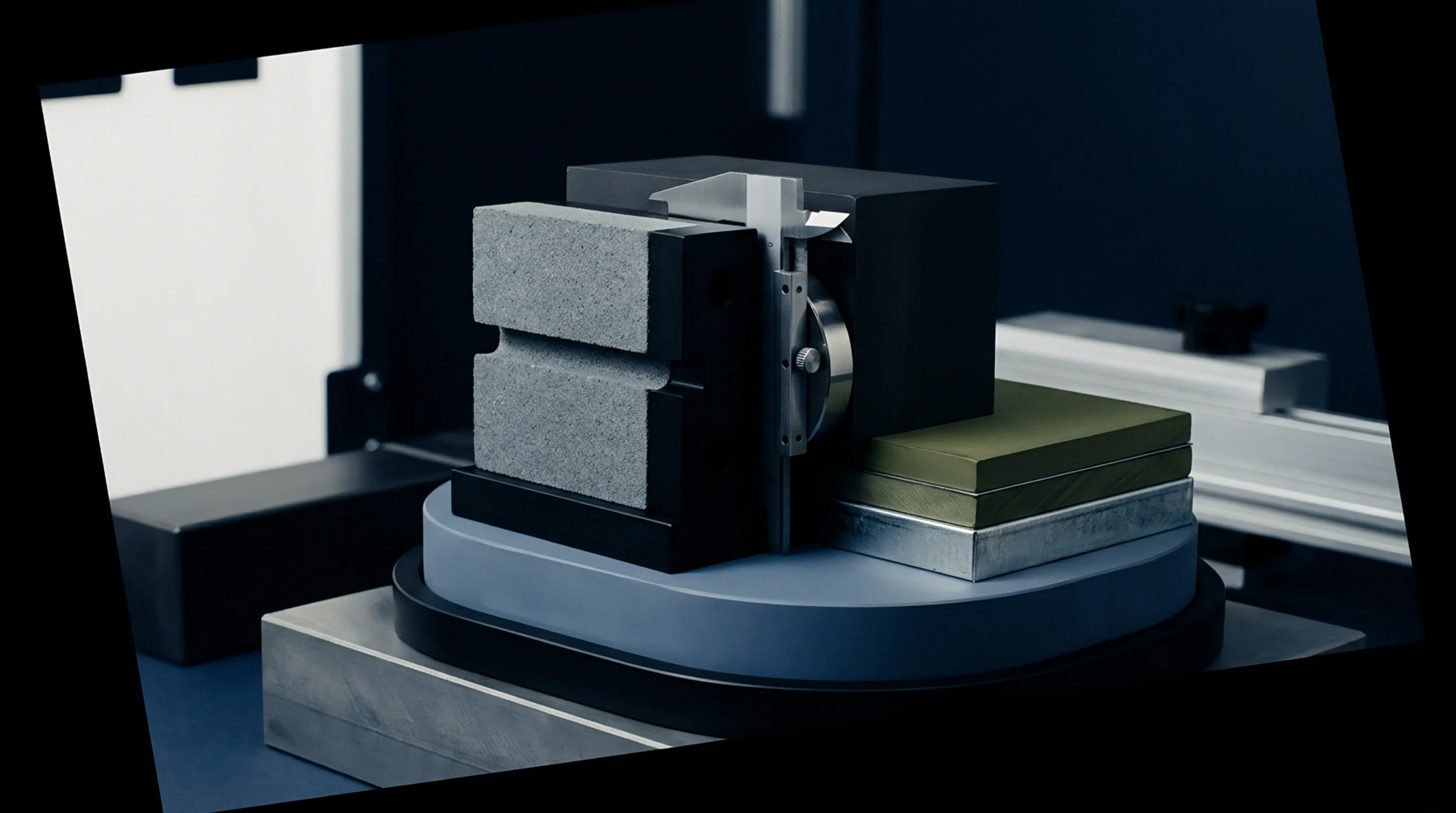
Dynamic drop tower qualification of consolidated battery tubs requires controlling impactor kinetic energy, strain-rate sensitivity, and elastic intrusion limits.
EU Regulation 2023/1542 forces BESS importers to hold accredited third-party test dossiers and active Digital Battery Passports prior to single-market port entry.
Cell screening protocols isolate thermodynamic voltage hysteresis from active capacity deficits to defend contract compliance and warranty reserve calculations.

Enforce zero-acceptance sampling plans and 48-hour thermal soak protocols on imported prismatic cell lots to prevent non-conforming units from entering pack production lines.

Low temperature battery testing requires rigorous cold soak protocols, four-wire Kelvin sensing, and impedance analysis to ground supplier performance claims.

High-nickel cell passivation growth follows diffusion-limited kinetics driven by cathode lattice oxygen loss and transition metal dissolution cross-talk.
High-voltage operation accelerates cathode surface reconstruction and transition metal dissolution, demanding operando impedance testing and warranty risk controls.

Subzero fleet battery warranties require high-frequency edge telemetry capturing transient overpotentials to defend claims against lithium plating denial excuses.
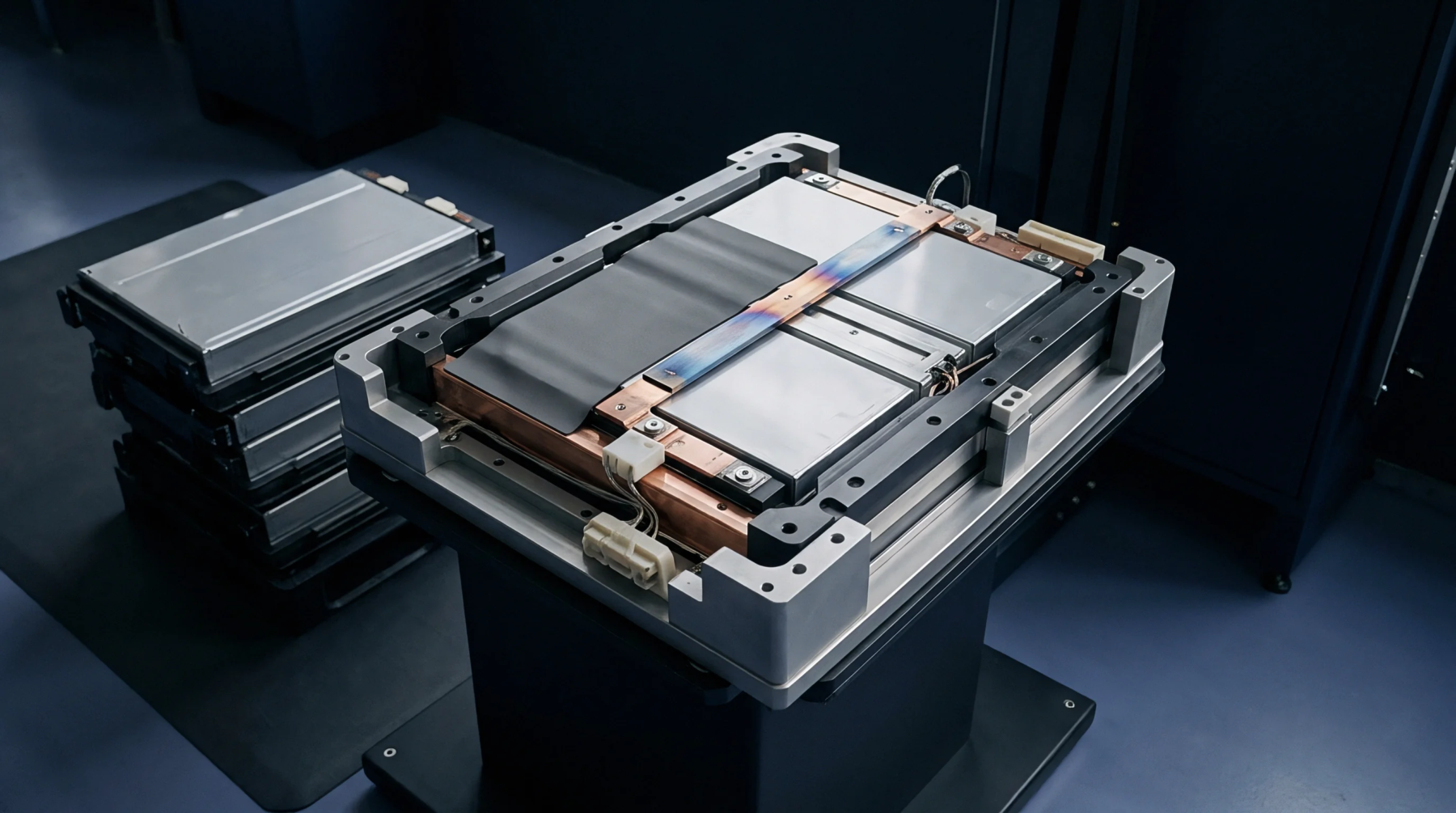
Solid-state prismatic cell swelling generates edge rotation bending strain at header weld roots, requiring wobble laser trajectories and compliant header contours to prevent premature fatigue failure.

Importing lithium batteries demands verifying UN 38.3.5 test summaries, ISO 17025 lab scope, state of charge limits, and importer dossier records.
Customs holds on non-compliant cell shipments generate compounding dangerous goods demurrage fees that require enforceable supplier indemnities and payment holdbacks.
Hazardous goods audit frameworks require verified UN 38.3 test summaries, strict state of charge caps, and compliant packaging to ensure legal transport authorization.

Format selection dictates tooling capital, cooling architecture, and mechanical containment: cylindrical cells minimize stack stress, while prismatic cells maximize spatial fill.

Sub-zero fast charging shifts anode overpotential negative, forming non-reversible plated lithium that degrades cell capacity and demands strict BMS thermal thresholds.

Structure custom pack sourcing by retaining mechanical IP and UN 38.3 file ownership while negotiating cell-direct contract manufacturing terms.

Verify UN 38.3 reports by matching test dates against active ISO 17025 scopes from ILAC MRA national registries before shipping to avoid customs holds.
Verify UN 38.3 test summaries by matching technical report fields against accredited lab databases, factory trace codes, and physical SOC transport limits.
Decoupling Seebeck voltage offsets requires bipolar pulse excitation or spatial thermal modeling to isolate thermo-galvanic artifacts from true electrochemical overpotentials.

UN 38.3 mandates eight environmental and electrical safety tests for lithium batteries, requiring verified test summaries for legal commercial transport.
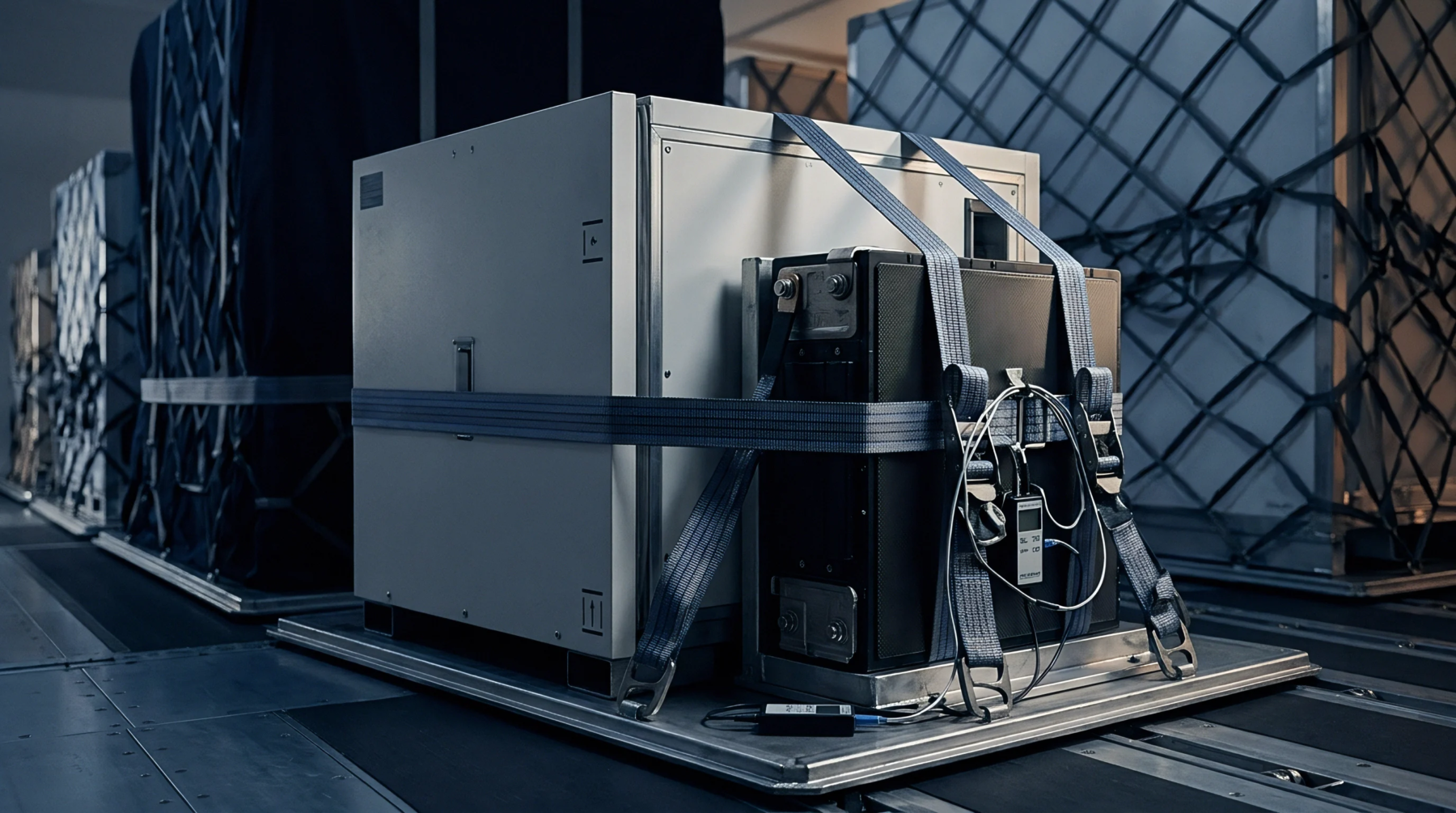
Verify UN 38.3.5 test summary lab accreditation, physical model metrics, and 30 percent SOC limits prior to air cargo tendering to avoid stranded shipments.

Dynamic intra-cell thermal gradients generate thermoelectric voltage noise that masks lithium plating signals; decoupling algorithms isolate true stripping.
Low-rate galvanostatic testing isolates lithium loss from material degradation, providing true chemical health metrics that standard factory checks mask.

Verifying UN 38.3 test summaries requires matching physical cell markings, mass, and laboratory ISO 17025 scope against mandatory section 38.3.5 fields.

Cross-border cell movement requires an unbroken paper trail linking UN 38.3 lab tests, 30% SOC limits, GHS safety data sheets, and local customs filings.
Expertise is a utility, not a secret. sentiention™ publishes its working knowledge as open reference: intelligence layer covering the materials it sources, the markets it enters, and the reference that serves both.