
Contractual Risk Shift Provisions for Hazardous Battery Cargo Seizures
Structure cell purchase agreements with retroactive title reversion, immediate invoice setoff rights, and uncapped indemnities for customs seizures.
Structure cell purchase agreements with retroactive title reversion, immediate invoice setoff rights, and uncapped indemnities for customs seizures.

Validate UN 38.3 test summaries by matching all ten required section 38.3.5 fields against physical cell metrics before filing import declarations.

Dynamic sub-zero charging firmware shifts strict product liability to integrators when overpotential margins breach cell manufacturer limits.

Closed-loop impedance feedback tracks subzero charge-transfer resistance to throttle charging current, preventing anode overpotential from inducing lithium plating.

Sub-zero fast charging shifts graphite anodes below zero volts, causing dangerous lithium plating that accelerates degradation and triggers shipping refusal.

Iron dendrite micro shorts drive exponential voltage decay detectable through multi-week K-value screening, mitigating thermal runaway in warehouse storage.

Iron particles dissolve at high storage OCV and plate onto anodes as sharp dendrites, causing delayed short circuits through mechanical separator creep.

Inline electromagnetic filtration combined with dual-stage high-temperature K-value screening stops microscopic iron inclusions before cell shipment.

Solid-state cell import verification requires modified UN 38.3 testing under active stack pressure and UN 3090 dangerous goods compliance.

Validate UN 38.3 test summaries against accredited laboratory databases to ensure mandatory data compliance and prevent cross-border shipment seizures.

Customs entry demands an exact match between shipping papers, physical box markings, and UN 38.3 test summary values to prevent cargo holds and fines.
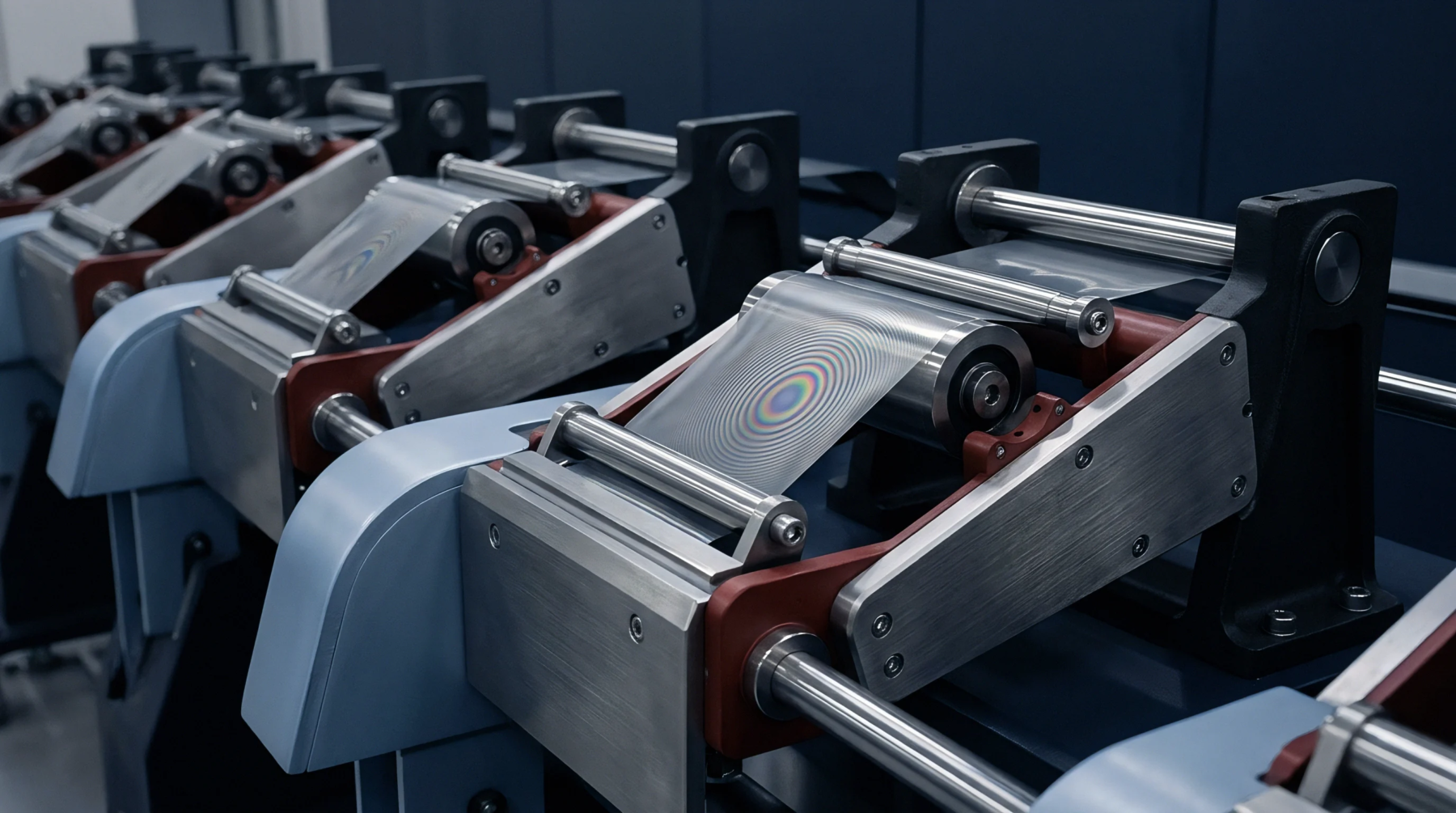
Continuous Rayleigh OFDR requires physical capillary isolation or low-condition matrix inversion to decouple thermal and mechanical strain in battery cells.

Evanescent fiber-optic signal separation detects sub-micron lithium plating in pouch cells before voltage shifts appear, requiring validated hermetic tab seals.

Embedded fiber optics resolve real-time anode lattice strain and metallic plating during fast charging, enabling dynamic high-rate current regulation.

Dynamic closed-loop phase alignment cancels thermal backplane clock skew, eliminating false channel-to-channel resistance variations in high-density cell grading.

Sampling phase skew between current and voltage channels entrains charge transfer polarization into ohmic DCIR calculations, inflating cell resistance.

Detect clock drift by injecting synchronized microsecond pulses across channels and inspecting integrated Ampere-hour divergence over extended cycling.

Non compliant battery test summaries trigger container quarantine, daily Class 9 demurrage, regulatory civil penalties, and insurance voidance at ports.

Verify cell voltage stability after relaxation to certify thirty percent state of charge limits on dangerous goods ocean shipping manifests.

Cross-referencing UN 38.3 test summaries with air waybills aligns model names, watt-hour ratings, and package weights to prevent carrier rejections and fines.

Pressure drops drive toxic gas effusion through cathode microcracks, requiring sub-ppm spectroscopic validation to survive dangerous goods carriage limits.

Mass spectrometry differentiates Knudsen from viscous leaks in solid electrolytes by measuring tracer gas effusion ratios to isolate nano-cracks from bulk defects.

Hermetic containment below 1.0e-8 mbar l/s prevents fatal sulfide electrolyte hydrolysis, demanding helium tracer verification to clear safety regulations.

Dynamic thermal pressure cycling opens interfacial micro-conduits that require Knudsen slip corrections and tracer gas testing to quantify true hermetic decay.

GC-SIM calibration for battery permeation quantifies trace solvent leaks, proving cell hermetic containment to satisfy transport regulations and warranty specs.

Direct electrolyte mass spectrometry supersedes helium leak testing for filled cells because solvent fluids block tracer gas while feeding vapor to mass sensors.

Penalties issued to non-resident cell manufacturers default onto domestic importers because foreign courts refuse to enforce extraterritorial administrative fines.

Cross-border battery transport requires verified UN 38.3 test summaries, sub-30-percent aviation charge limits, and modal UN packaging marks to clear customs.

Passport surveillance holds importers liable as manufacturers under Article 43, turning broken QR codes and missing carbon dossiers into customs forfeitures.

Dynamic fast charging induces non-linear spatial kernel divergence, driving localized lithium plating that requires reduced-order observer screening.
Expertise is a utility, not a secret. sentiention™ publishes its working knowledge as open reference: intelligence layer covering the materials it sources, the markets it enters, and the reference that serves both.