
Electrolyte Desolvation Kinetics and Phase Depletion inside Highly Tortuous Anodes
Electrolyte desolvation barriers and tortuosity-induced salt depletion starve inner anode pores during fast charging, triggering destructive lithium plating.

Electrolyte desolvation barriers and tortuosity-induced salt depletion starve inner anode pores during fast charging, triggering destructive lithium plating.

Passport surveillance holds importers liable as manufacturers under Article 43, turning broken QR codes and missing carbon dossiers into customs forfeitures.

Subzero fast charging forces graphite polarization below zero volts, causing metallic lithium plating detectable via voltage relaxation and gas titration.

Sub-micron carbide wire EDM in water leaches cobalt via galvanic micro-cells, requiring bipolar generators, oil dielectrics, or multi-trim passes to halt edge chipping.

Early cycle screening uses high-precision coulometry and differential voltage peak shifts over five cycles to catch cell defects before pack integration.

Operando acoustics and dQ/dV resolve additive boundaries down to 0.2 wt% before catastrophic gassing and rapid impedance growth compromise warranty life.

Dynamic fast charging induces non-linear spatial kernel divergence, driving localized lithium plating that requires reduced-order observer screening.

Powder metallurgy tool steels eliminate coarse carbide pull-out to hold sub-three-micron foil burrs across millions of cuts in battery slitting lines.

High-precision coulombic slip and differential capacity peak tracking isolate lithium loss, identifying cell degradation knee points hundreds of cycles early.
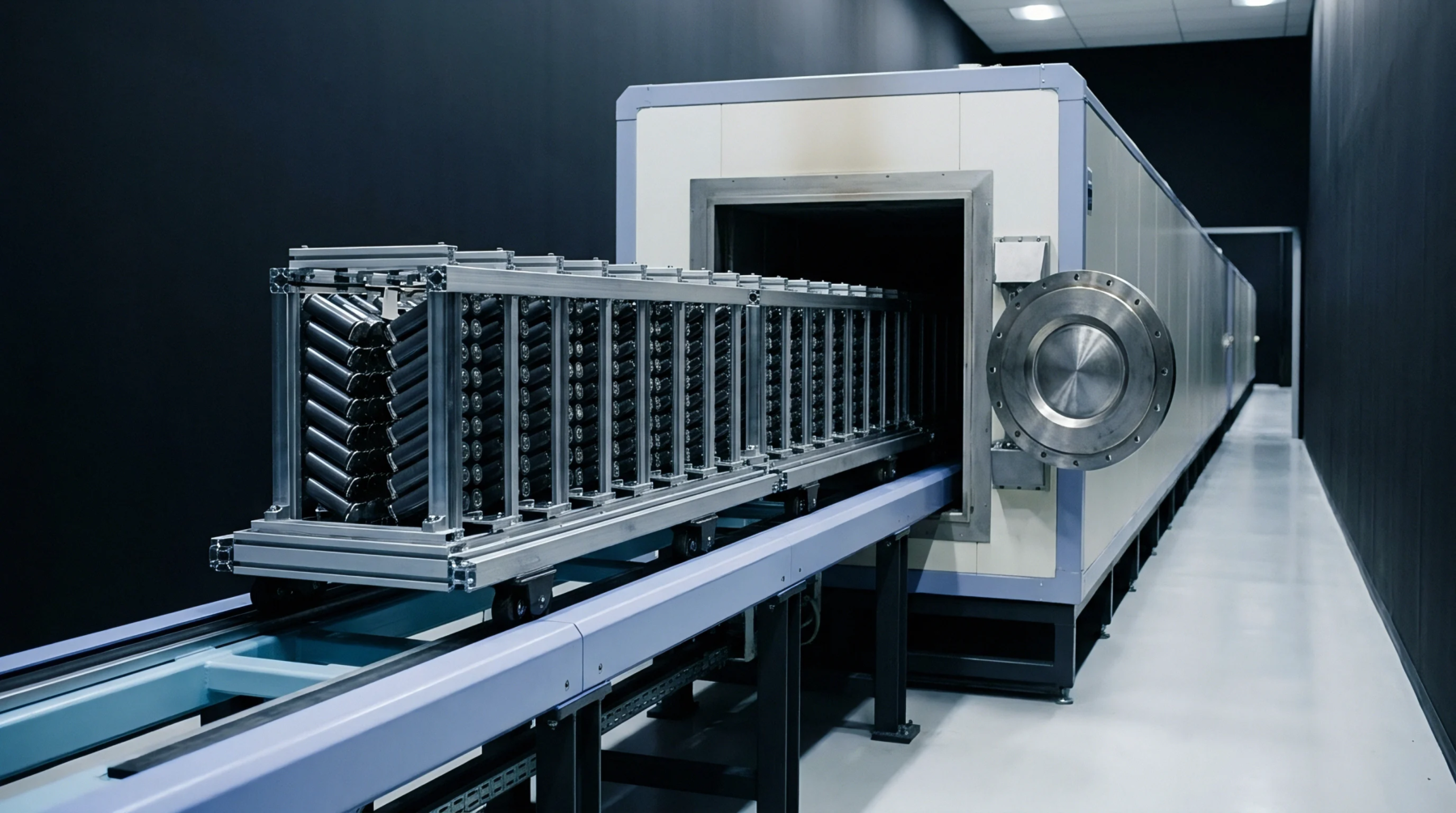
Dynamic control of high temperature anode overpotentials prevents solvent decomposition while accelerating formation kinetics and preserving cell life.

Automated pouch cell degassing requires matching chamber vacuum dwell to exact gas evolution rates of 12 to 18 mL/Ah to prevent seal contamination.

Selecting sub-micron carbide powder metallurgy tool steels with deep cryogenic stabilization prevents foil burrs that pierce cell separators.

Sodium oxalate provides 400 mAh/g presodiation capacity at 3.9-4.2V, releasing CO2 that demands specialized two-stage degassing lines and tooling.

Silicon-graphite composite anodes under fast charging require controlled module compression and step-down current profiles to limit mechanical stress fade.

Regularized spatial matrix inversion reconstructs internal cell gradients from boundary sensors while suppressing noise amplification on embedded hardware.
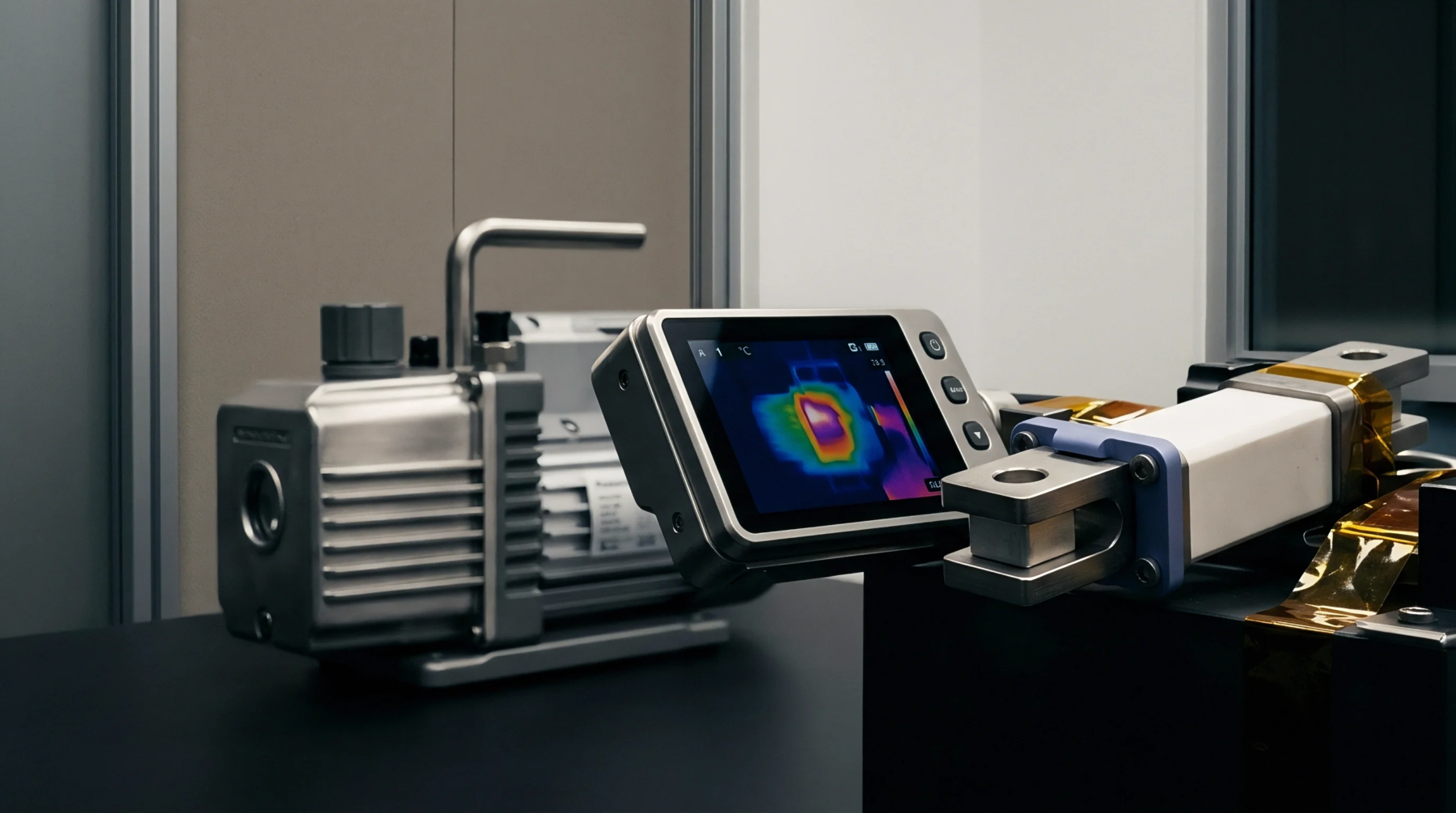
Arrhenius-compensated voltage drift algorithms isolate true micro-short resistance from ambient temperature variations in large-format lithium-ion cells.

Fluoroethylene carbonate consumption scales directly with active silicon surface area and volume swing, requiring precise dosage to prevent rollover failure.
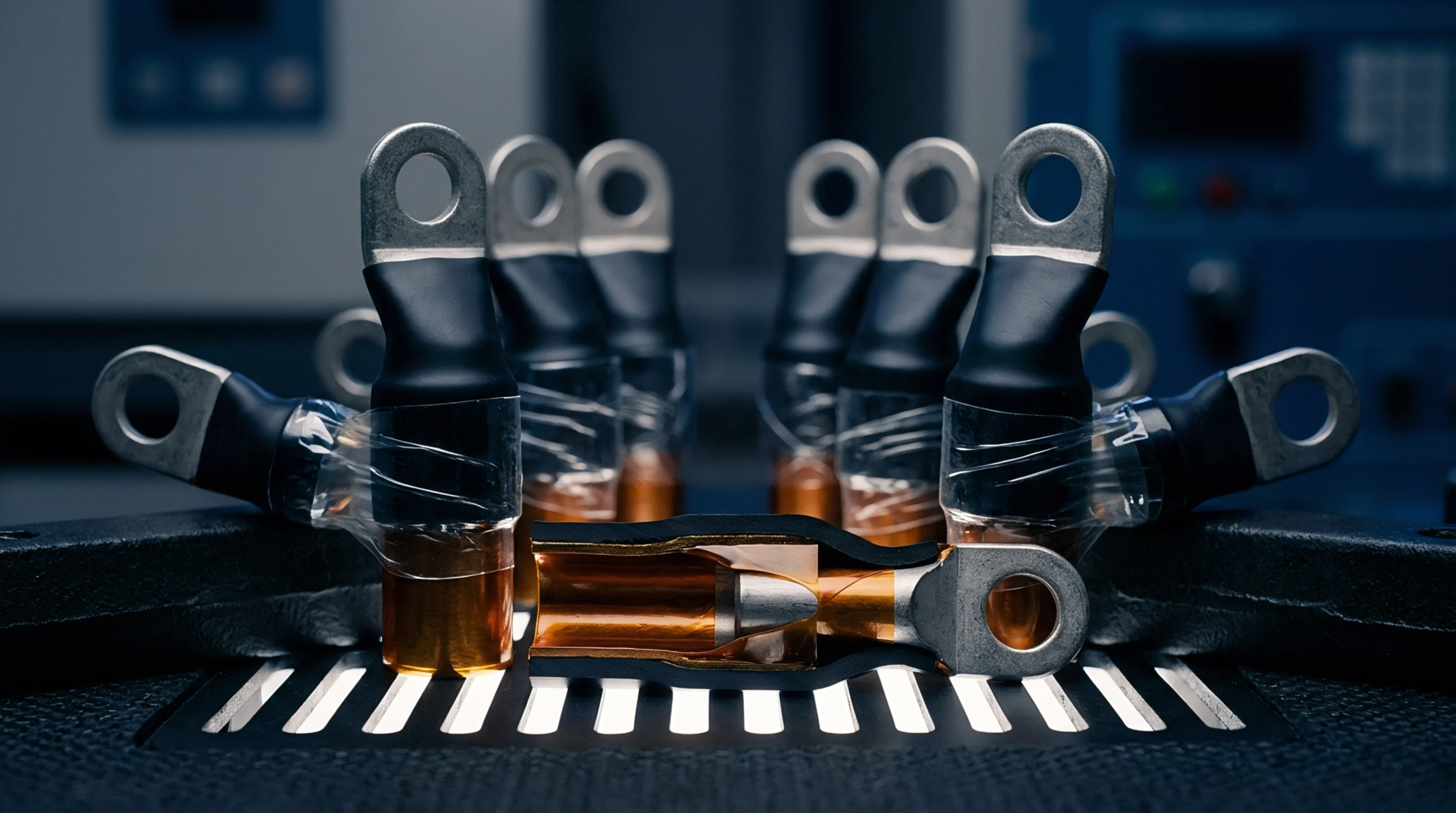
Statistically valid internal resistance screening requires non-parametric capability metrics and thermal corrections to prevent high-resistance distribution tails.

Zero acceptance sampling plans eliminate defect escapes by rejecting entire incoming battery cell lots upon discovering a single non-conforming unit.

Spatial discretization maps planar potential drops and localized overpotentials in large pouch cells, preventing undetected lithium plating during high-rate charging.

High rate lithiation suppresses crystalline Li15Si4 formation while steep diffusion gradients amplify mechanical fracture and interfacial SEI growth in silicon.

High precision derivative spectroscopy quantifies active phase stability and isolates lithium inventory losses to identify premature cell rollover failures.

Resolve inline electroplating void detection limits by coupling multi-frequency eddy current screening with automated diversion to phase-contrast X-ray computed tomography.

Differential capacity deconvolution isolates lithium loss and electrode degradation at receiving inspection, allowing objective batch rejection under ISO 12405-4.

Dynamic subzero current derating balances desolvation barriers against anode plating overpotentials to preserve cell cycle life.

Elevated temperature battery operations accelerate interfacial intermetallic growth, requiring nickel diffusion barriers to prevent joint embrittlement.

Electroplated nickel thickness on copper substrates is reliably quantified using calibrated XRF per ASTM B568, verified via coulometric stripping per ASTM B504.

Sub-zero lithium plating occurs when anode potential drops below 0V vs Li/Li+; three-electrode analysis isolates overpotentials to define safe charge windows.

Battery open circuit voltage profiling measures relaxed cell equilibrium potentials to map thermodynamic state metrics, requiring strict rest criteria.

Nonproportional out-of-phase biaxial strain paths increase cyclic hardening up to eighty percent in high-density PM steels via multi-slip dislocation locking.
Expertise is a utility, not a secret. sentiention™ publishes its working knowledge as open reference: intelligence layer covering the materials it sources, the markets it enters, and the reference that serves both.