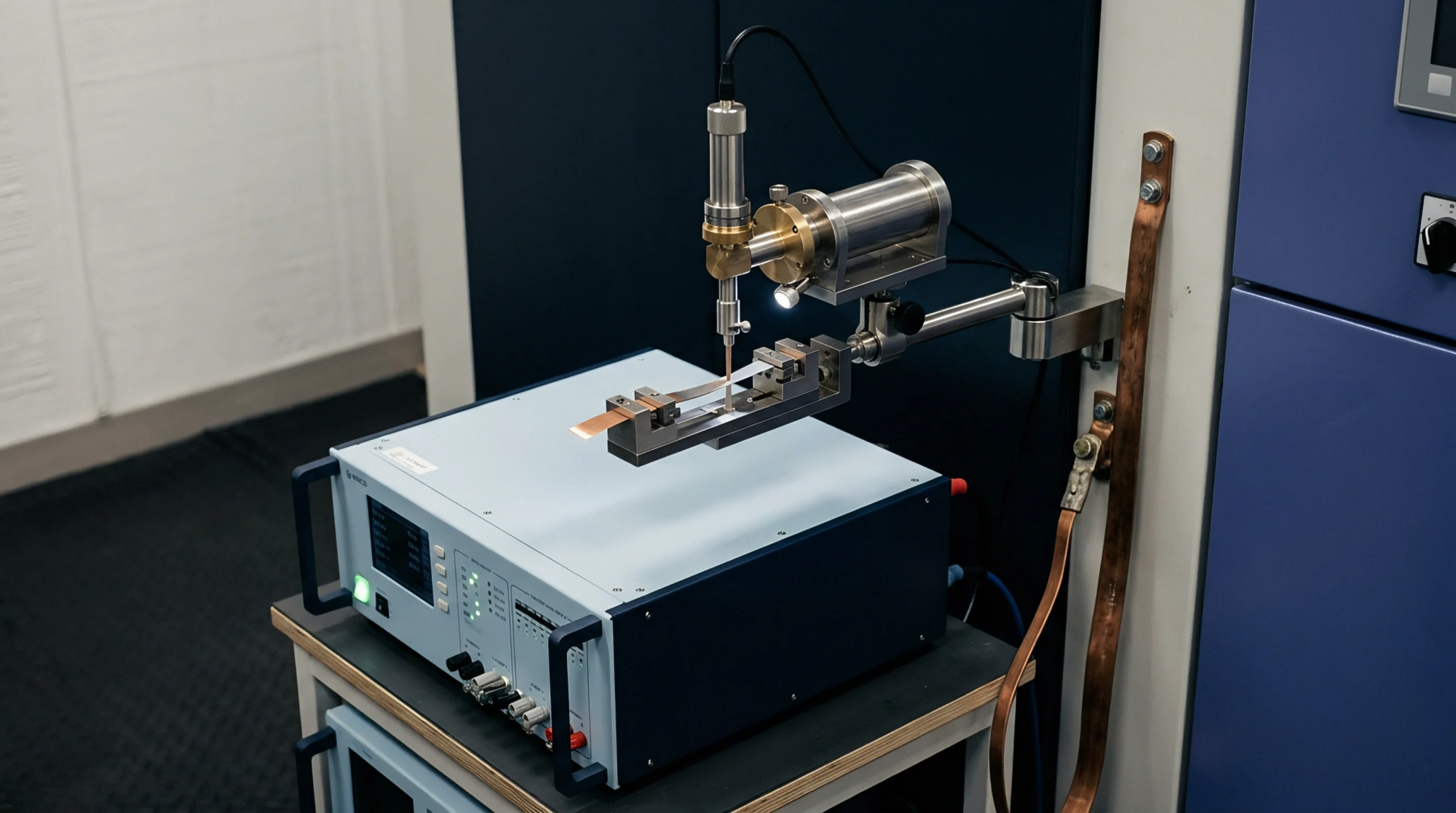
Decoupling Mass Transport Impedance from Contact Resistance in Rapid Factory Batch Screening
Decouple contact resistance from mass transport impedance by combining microsecond Kelvin sensing with sub-second transient pulse relaxation analysis.

Decouple contact resistance from mass transport impedance by combining microsecond Kelvin sensing with sub-second transient pulse relaxation analysis.
Cryogenic fast charging forces graphite anode overpotentials below zero volts, driving metallic lithium deposition that requires pre-heating or dynamic current scaling to prevent cell failure.

Broadband EIS frequency sweeps isolate mid-frequency charge transfer resistance to catch high-rate lithium cell batch defects invisible to 1 kHz resistance testing.

Reconciling offgas deflagration testing with reduced setbacks requires empirical UL 9540A overpressure data to size NFPA 68 vents and justify NFPA 855 clearances.

Operando acoustic resonance tracking detects sub-zero metallic lithium plating up to 150 cycles before electrical terminal voltage curves diverge.

Automotive cell incoming resistance inspection relies on strict thermal equilibration, isolated 4-wire Kelvin probing, and clear AC-IR vs DC-IR correlation protocols.

Dynamic interfacial pressure retention in large-format solid-state pouch cells requires engineered compliance systems to prevent voiding and edge-seal fatigue.

Baseline compression calibration for sulfide solid-state cells demands platen deflection under 2 µm/100mm and temperature-compensated force sensing.
Expertise is a utility, not a secret. sentiention™ publishes its working knowledge as open reference: intelligence layer covering the materials it sources, the markets it enters, and the reference that serves both.