
What a UN 38.3 Test Summary Actually Covers
A valid UN 38.3 test summary documents standardized baseline transport safety survival under ten mandatory fields, without guaranteeing cell life or batch quality.

A valid UN 38.3 test summary documents standardized baseline transport safety survival under ten mandatory fields, without guaranteeing cell life or batch quality.

Buying cells requires owning BMS development, weld quality, thermal isolation, and pack safety files; buying packs trades unit margin for transferred liability.

Sodium ion cells offer compelling low-temperature performance and transport safety advantages, but energy density gaps and hard carbon pricing limit immediate adoption to target duties.
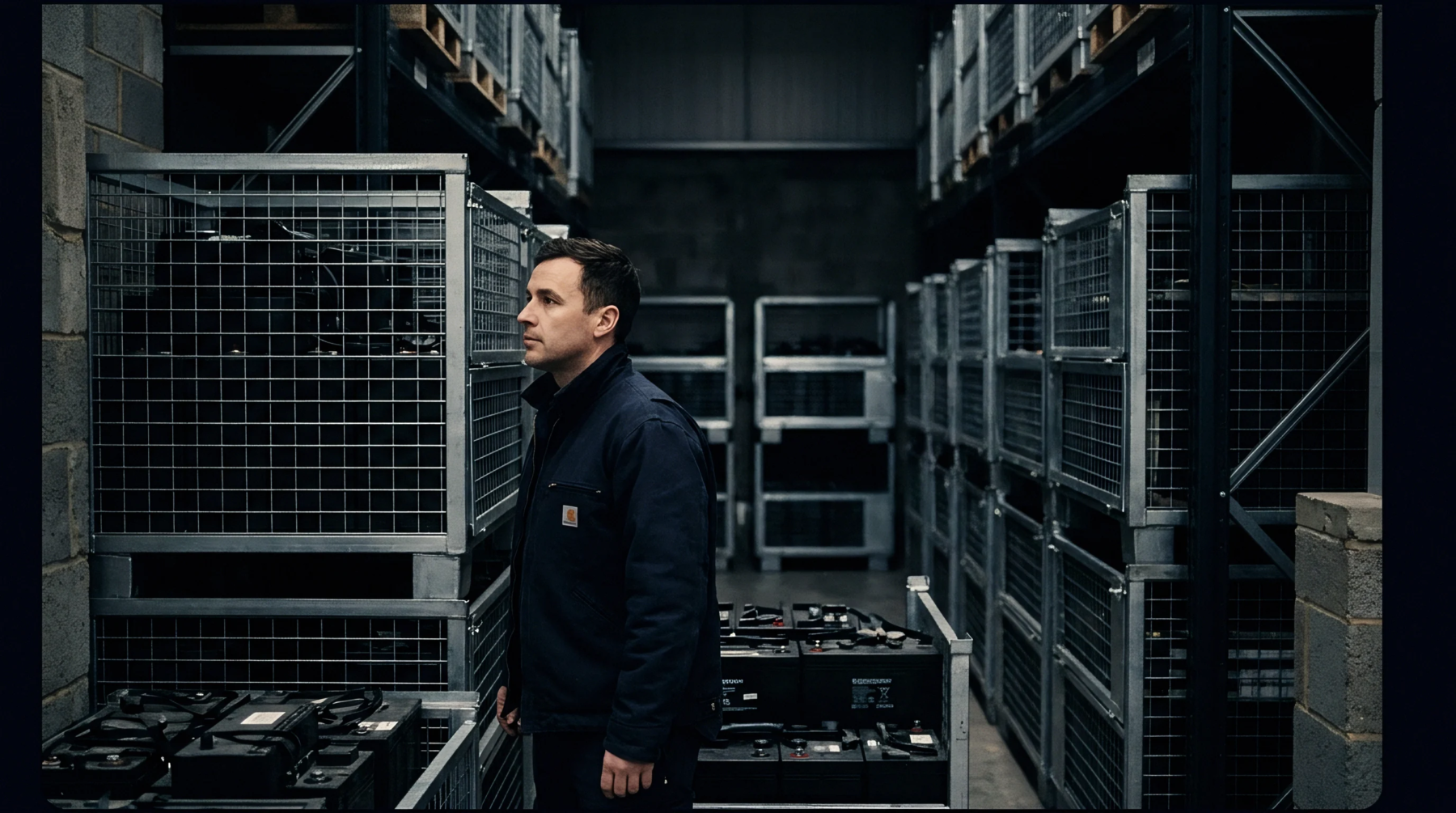
Datasheet shelf life claims hide permanent capacity loss and resistance growth; real storage stability demands dock impedance screening and temperature tracking.

Audit tool steel specs upfront and enforce explicit bailment terms to prevent amortized tooling fees from inflating custom pack unit costs.

Structurally bonding cell stacks eliminates module mass but transforms minor field defects into complete pack scrap liabilities.

Sub-zero lithium-ion charging without precise current derating triggers irreversible anode plating, driving immediate capacity loss and fire hazards.

Galvanic corrosion across bare copper-aluminum busbar joints creates escalating thermal interfaces that erode pack life and trigger unbudgeted warranty claims.

Surviving a customs safety inspection requires exact alignment between Section 3 composition, Section 9 physical properties, and Section 14 transport codes.

Recycled cathode precursors match virgin cell performance when hydrometallurgical refining limits trace iron and copper contaminants below 10 and 5 ppm respectively.

Rigorous dangerous goods document audits verify UN 38.3 test summaries, safety data sheets, and shipper declarations to prevent costly port delays and cargo holds.

Capacity grading accuracy depends on controlling thermal soaking windows, pneumatic pin resistance, and strict four-wire Kelvin probe calibration on the line.

Incoming cell lot clearance requires zero-acceptance sampling combined with temperature-controlled K-value screening to intercept latent internal micro-shorts.

Transport certificates for fresh cells fail to cover chemically aged stock, exposing buyers to severe maritime customs rejections and uninsured liability.

Sodium-ion cells require d002 interplanar spacing above 0.37 nm in hard carbon and stabilized O3/P2 cathode lattices to deliver low-cost zero-volt transport.

Polymer injection mold degradation driven by thermal softening, glass-fiber abrasion, acidic gas corrosion, and thermomechanical fatigue demands steel grade alignment with resin additives.

Cross border tooling recovery relies on foreign bailment registration, explicit title stamping, and pre-negotiated factory access deeds.

Polyurethane structural adhesives balance lap shear strength and thermal compliance in cell-to-pack builds but mandate plasma activation and void control.

Verify UN 38.3 test summaries and state-of-charge limits before signing dangerous goods manifest declarations to prevent port seizures and cargo holds.

Extended producer responsibility binds the importer of record to end of life battery recycling fees based on chemistry and pack mass.
Microstructural separator pore collapse and gas evolution during pouch cell storage exponentially increase internal impedance and drive irreversible capacity scrap rates

Inbound hazardous goods certificate validation requires cross-checking UN 38.3 test summaries, SDS Section 14, and dock voltage readings against shipper declarations.

Sub-zero battery cell qualification demands low-temperature impedance screening combined with argon glovebox teardown verification to substantiate lithium plating warranty claims.

High nickel cells experience self-discharge via transition metal dissolution and interphase breakdown, demanding strict K-value screening to prevent pack imbalance.

Transit delays drive cell degradation and document expiry, requiring clear contract clauses to shift re-certification and scrap liabilities to suppliers.

LFP cells resist thermal runaway during transport due to stable olivine crystal structures, whereas NMC chemistries require strict 30 percent state of charge caps to prevent catastrophic thermal breakdown under logistics stress.

Fix format, compression pads, NRE tooling costs, and BMS regulatory boundaries before signing supply contracts to avoid costly re-tooling and unhedged liability.

LFP outperforms NMC in non-resting duty cycles by maintaining lattice stability, eliminating continuous microcracking, and cutting cooling costs over 4,000 cycles.

Clear BMS ownership requires unbundled NRE terms, immutable toolchain escrows, static memory rules, and defined regulatory re-certification liabilities.

Secondary cell sorting games artificially elevate capacity ratings via thermal and discharge rate manipulation, requiring strict incoming testing to avoid severe pack failure.
Expertise is a utility, not a secret. sentiention™ publishes its working knowledge as open reference: intelligence layer covering the materials it sources, the markets it enters, and the reference that serves both.