
Quantifying Localized Lithium Plating Onset via Differential Voltage Tracking
Differential voltage tracking identifies localized lithium plating onset by detecting subtle slope shifts during charge and characteristic dV/dt relaxation plateaus.

Differential voltage tracking identifies localized lithium plating onset by detecting subtle slope shifts during charge and characteristic dV/dt relaxation plateaus.

Dynamic fatigue micro-cracking in high-vanadium tool steels initiates at carbide clusters where inter-particle spacing drops below 0.3 µm under cyclic shear.

Standard operating procedures for dangerous goods document audits require rigorous verification of UN 38.3 parameters, SDS details, and modal rules to ensure cargo compliance.

Internal thermal gradients accelerate prismatic cell active material loss by driving localized current crowding, high-temperature SEI growth, and particle cracking.

Solvent egress quantification demands micro-gravimetric balance tracking with air buoyancy corrections and chemical speciation to verify hermetic seal limits.

IP boundaries in contract battery manufacturing require frozen component tiers, full BMS source code custody, explicit tooling asset title, and destructive teardowns.

Receiving screening of stored prismatic lithium lots requires thermal stabilization, sub-millivolt OCV drift tracking, and clamped DCIR metrology to catch self-discharge and swelling defects.

Subcontracted battery test summary defects trigger customs seizures, exposing importers to demurrage and fines solvable only via uncapped indemnities.

Transient modeling of shock boundary layer dynamics predicts nozzle aspiration stability and droplet breakup by coupling compressible flow with reaction kinetics.

Close coupled atomization controls melt superheat, aspiration pressure, and supersonic gas shear to yield ultrafine spherical powders for battery manufacturing.

Controlling rotary kiln pyrolysis kinetics optimizes hard carbon interlayer spacing and closed porosity, raising sodium-ion anode initial coulombic efficiency.

Dynamic fast charging below zero degrees requires real-time overpotential feedback control to prevent lithium plating and maintain safety certification validity.

Sub-zero graphite charging is constrained by desolvation and pore diffusion limits that induce lithium plating when anode potential drops below zero volts.

Iron contamination in stored prismatic cells dissolves in acidic electrolyte and nucleates anode dendrites, requiring strict K-value screening to prevent micro-shorts.

Primary carbide banding in conventional ingot tool steels accelerates die fatigue cracking; specifying isotropic powder metallurgy steel extends tab punch life ten-fold.

Precision electrode slitting requires powder metallurgy tool steels with high vanadium carbide volume to eliminate micro-chipping and maintain burr limits below 10 µm.

Customs clearance for imported cells requires an authenticated UN 38.3.5 test summary, compliant SDS, and validated laboratory scopes to pass border entry audits.

Kinetic solute trapping in rapid atomization suppresses coarse silicon crystallites by overriding equilibrium partitioning above critical interface speeds.

Early cycle analytics fail to predict nonlinear battery degradation knees when sacrificial additives mask microstructural stress accumulation.

Multi-point optical signal separation isolates mechanical strain from thermal drift, enabling real-time detection of localized anode lithium plating in fast-charged pouch cells.

Contractual allocation of latent micro-short liability requires strict incoming K-value screening windows, extended defect claim definitions, and explicit supplier indemnification clauses covering recall logistics.

Thermal expansion and cell swell induce cyclic shear stresses that trigger weld fatigue and interconnect creep, requiring compliance flexure loops.

Prismatic pack reliability hinges on balancing cell expansion pre-charge with non-linear pads to maintain thermal contact without exceeding end-plate yield limits.

Structural thermal seams form when differential thermal expansion degrades interface media, shifting pack warranty claims between cell vendors and contract assemblers.

Sodium oxalate oxidation kinetics dictate pouch formation degassing timing, where 3.85 V step holds prevent cell swelling and minimize solvent evaporation.

Microsecond timing drift across multi-channel cyclers corrupts DCIR and dQ/dV metrics, requiring hardware-latched PTP clocks to ensure phase alignment.

Silicon anodes demand strict lower cutoff voltage limits and cross-linked polar binders to restrict volume expansion and prevent continuous interphase degradation.

Cross referencing battery test summaries with freight manifests verifies watt-hour limits, state of charge compliance, and lot trace numbers before cargo tender.
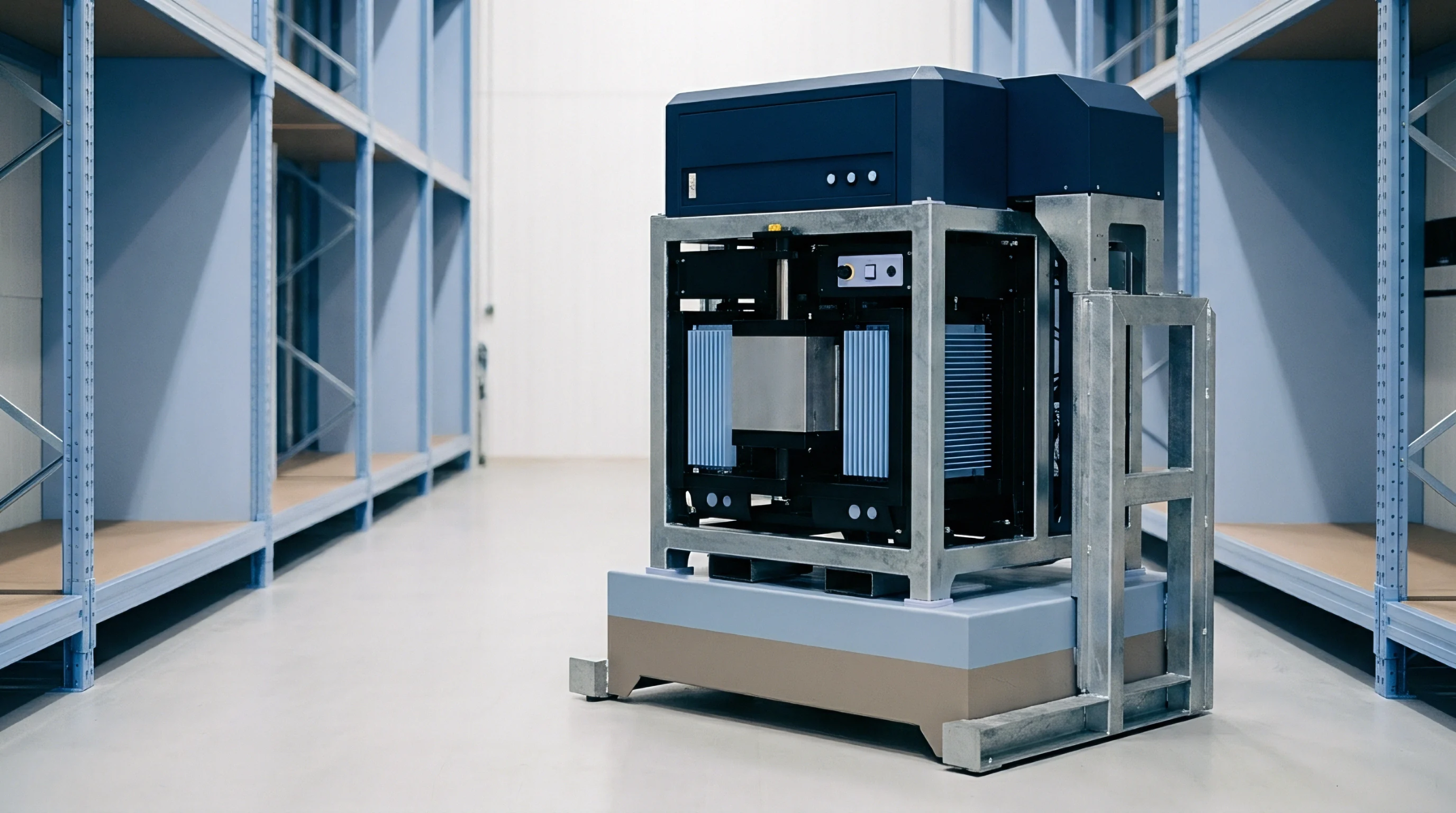
In situ deflection mapping decouples test tooling flexure from cell swelling to restore true electrochemical capacity and volumetric degradation profiles.

Polymer permeation scales with temperature while Knudsen flow tracks gas molecular weight, enabling helium argon ratios to isolate structural leak channels.
Expertise is a utility, not a secret. sentiention™ publishes its working knowledge as open reference: intelligence layer covering the materials it sources, the markets it enters, and the reference that serves both.