
Differential Capacity Deconvolution of Active Lithium Loss and Solid Interphase Growth
Differential capacity deconvolution separates active lithium loss from solid interphase growth by tracking peak voltage displacement against peak area decay.
Differential capacity deconvolution separates active lithium loss from solid interphase growth by tracking peak voltage displacement against peak area decay.

Standardized diagnostic recalibration uses thermodynamic dQ/dV peak alignment and cubic splines to correct reference drift in battery transport safety files.

Voltage relaxation plateau tracking identifies metallic lithium stripping, separating reversible plating from chemical solid electrolyte consumption.

Combining 1 kHz AC ohmic offsets with 100-millisecond DC step pulses resolves charge transfer resistance without compromising high-throughput triage line speed.
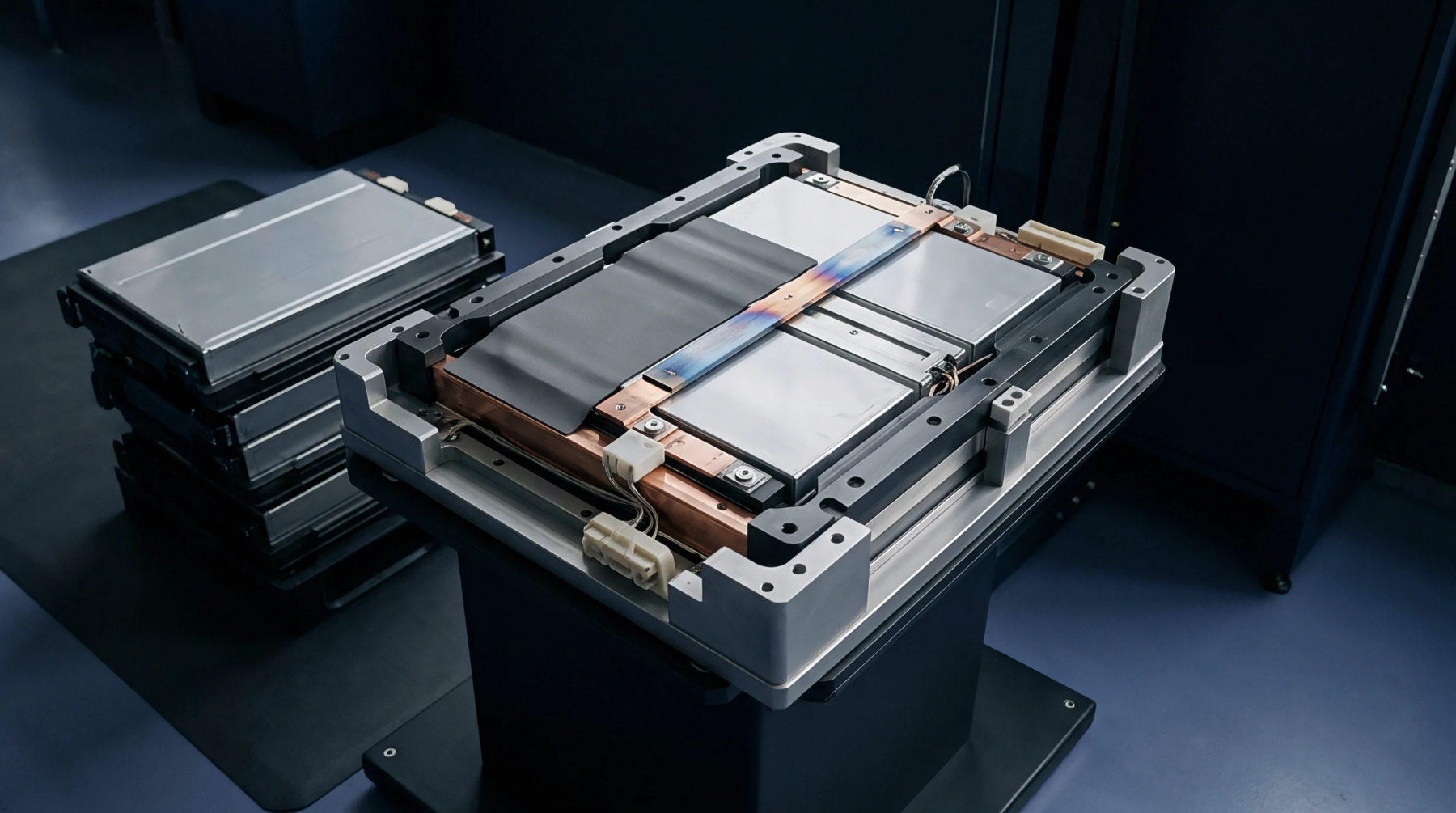
Mitigating spatial overpotential in large prismatic cells requires full-edge tab collection and strict low-temperature screening to prevent anode plating.
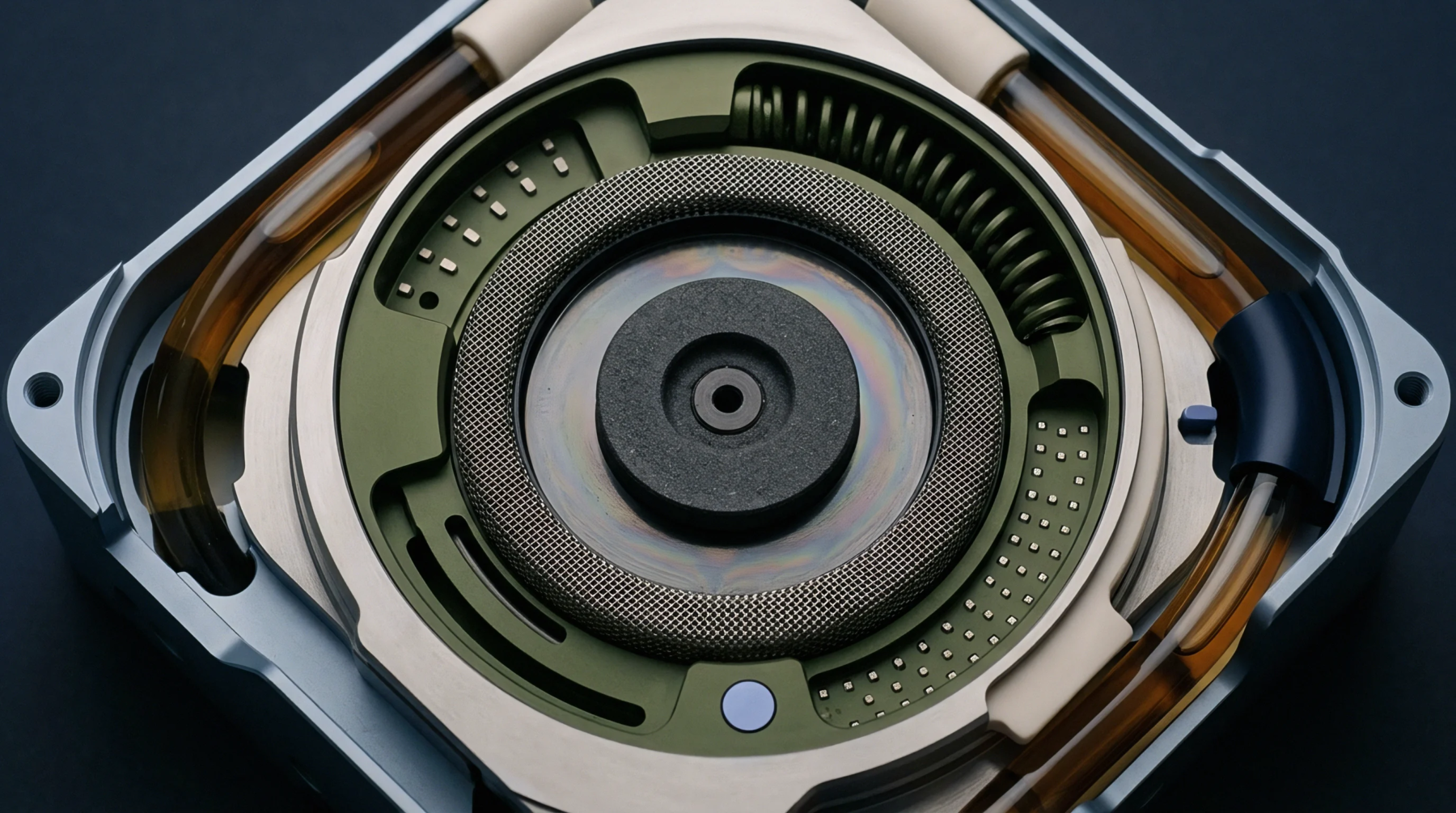
Contractual specification limits must define measurable cell and module thermal gradient thresholds enforced by liquidated damages and capacity warranty baselines.

Localized current maldistribution accelerates lithium plating and premature fade; mitigate exposure through strict dV/dQ screening and tab design warranties.

Quantifying in situ passivation layer rupture energy under cold fast charging requires operando acoustic emission and impedance isolation to enforce supplier liability.

Applied stack pressure of 0.5 to 1.2 MPa suppresses anode overpotential loss, raising fast-charge lithium plating thresholds without crushing separator pores.

Subzero fast charging accelerates SEI growth and irreversible plating via elevated desolvation resistance, demanding pre-heating or multi-stage current tapering.

Optimizing battery preload requires balancing compliant cushions and chassis stiffness to hold cell pressure between 0.10 MPa and 1.0 MPa across full lifecycle.

Optimize module stack compression between 0.20 and 0.50 MPa to balance active layer contact against separator pore collapse and impedance growth.

Transient polarization decay modeling extracts sub-milliampere internal short circuits during post-charge rest to stop latent thermal runaway before module assembly.

AC 1 kHz checks catch weld defects, while DC pulse tests quantify true polarization thermal loads essential for cell grading and pack warranty validation.
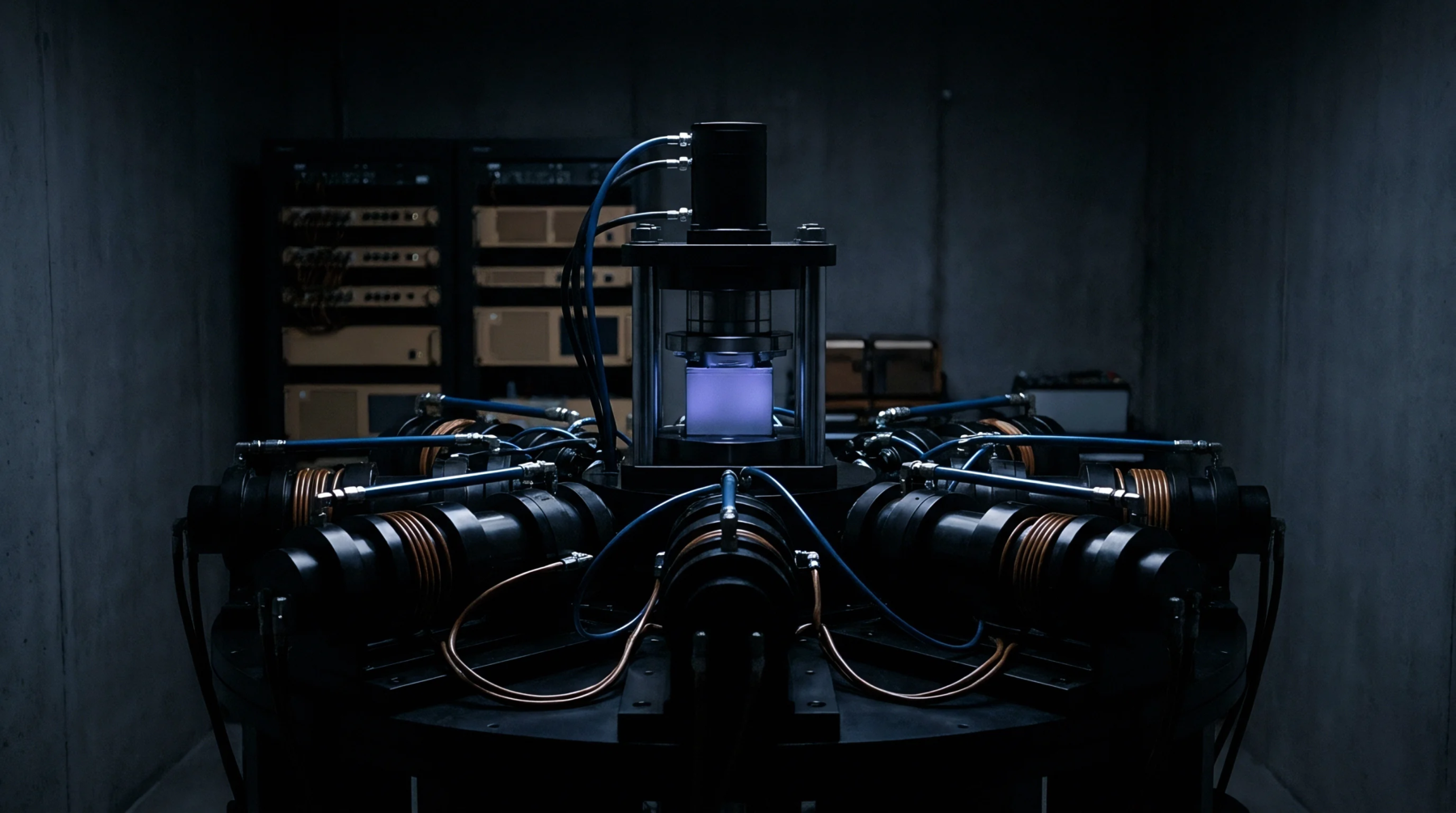
In situ pressure monitoring reveals that void-constrained core-shell silicon anodes arrest phase boundary migration when internal contact stress exceeds 300 MPa.

Maintain constant hydrostatic confinement between 0.30 and 0.60 MPa to prevent active silicon particle detachment without causing separator pore collapse.

Interphase fracture under fast charging drives plating and fade, demanding rigorous receiving screening and strict carrier compliance.

Extrusion die erosion thickens enclosure walls, shrinking internal cavities and accelerating destructive mechanical over-compression across cell lifespans.

Dynamic mechanical compression between 0.3 and 0.8 MPa suppresses silicon void nucleation and crack propagation to extend high-capacity pouch cell cycle life.

Parasitic electrolyte reduction continuously consumes cyclable lithium under float storage, driving premature capacity knee-point failure in scaled battery systems.
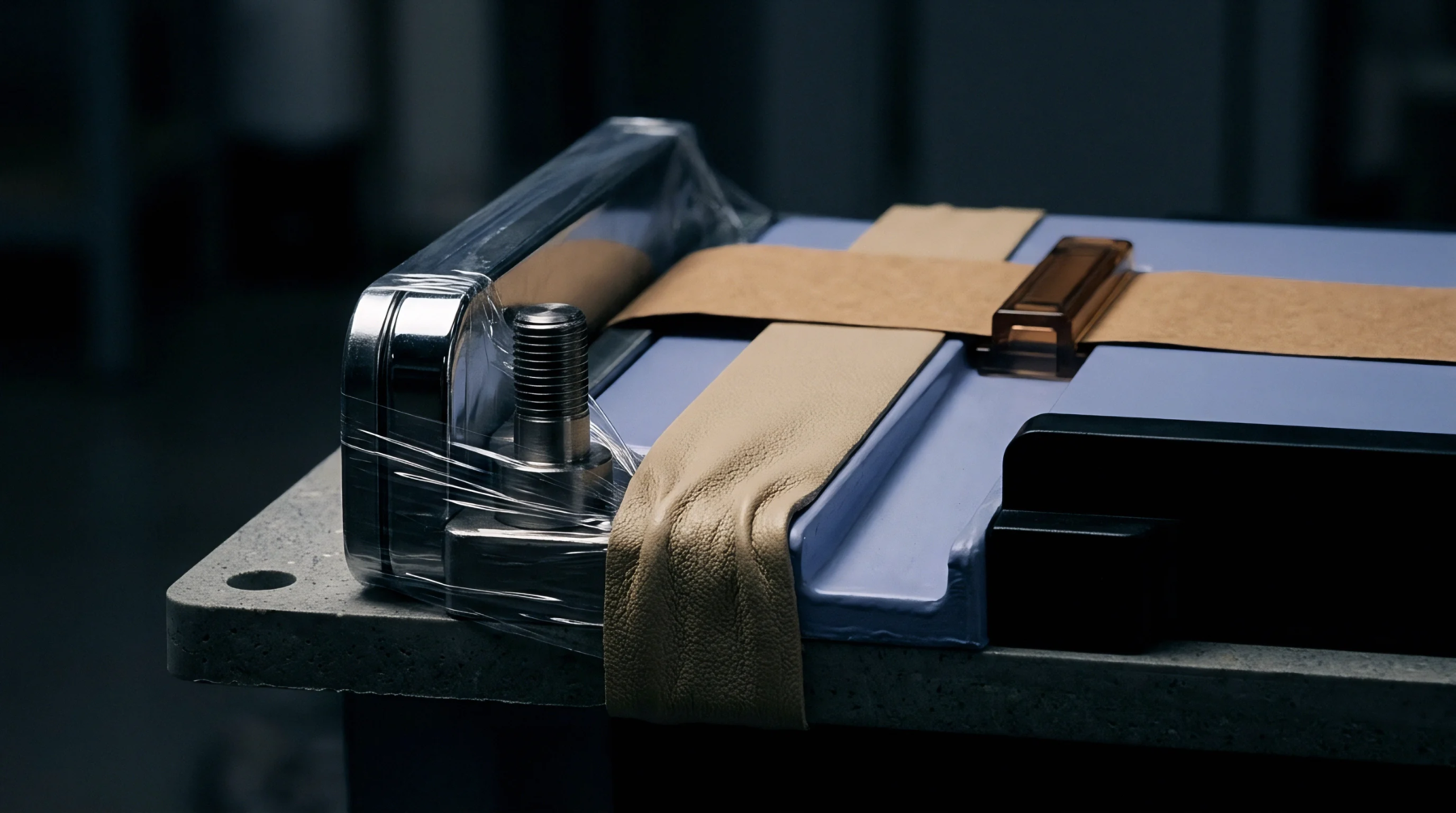
Compliant foam pads resolve microscale SEI heterogeneity by dampening edge pressure spikes and maintaining uniform local overpotential across pouch electrodes.
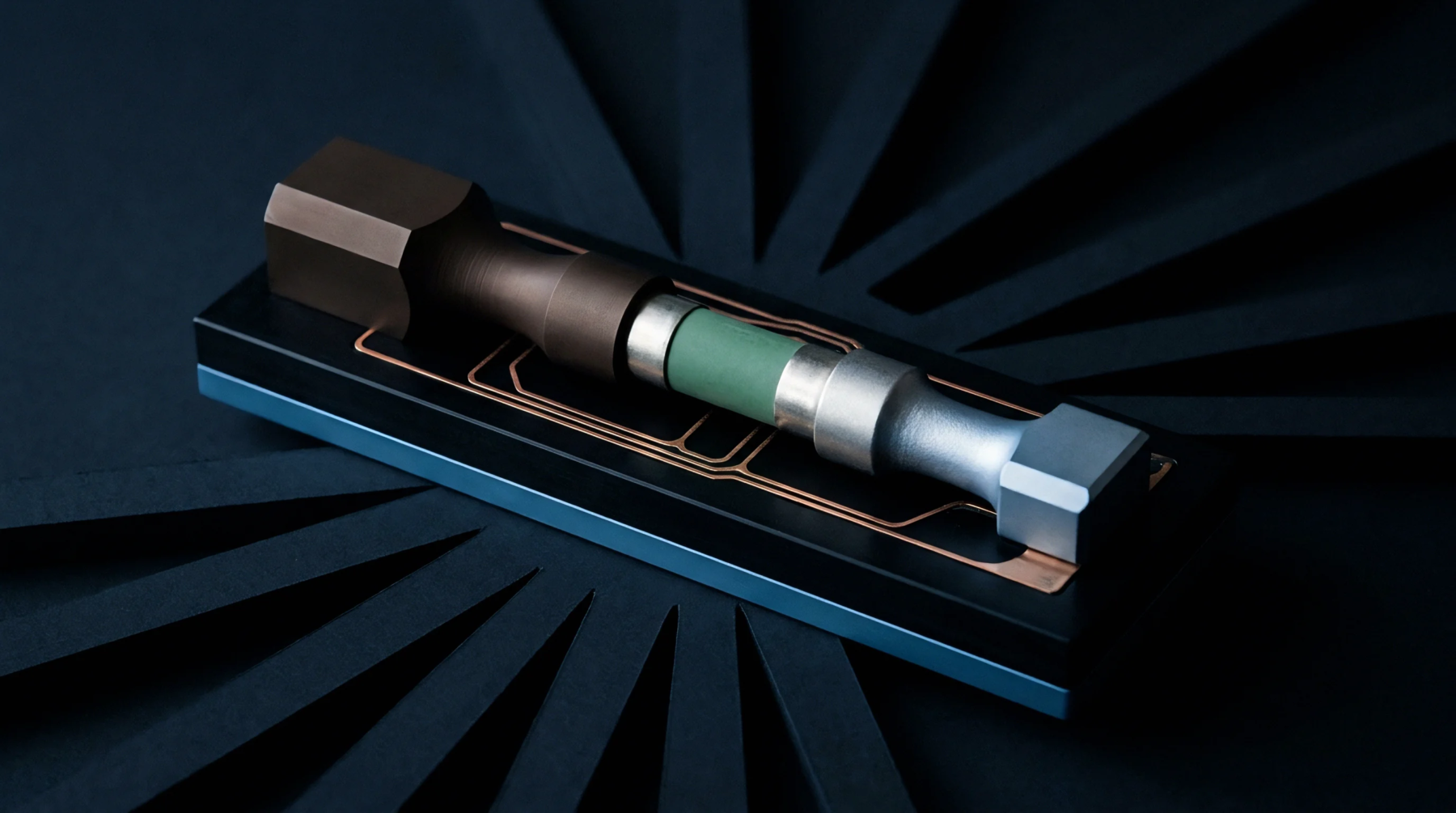
Fast-charge radial SEI thickening concentrates at the cylindrical core due to anisotropic thermal resistance, demanding core cooling to prevent premature fade.

Cross-plane thermal gradients drive localized overpotential spikes that trigger premature lithium plating, uneven passivation thickness, and warranty-killing fade.

Controlled formation cycle protocols govern graphite interphase passivation, bounding irreversible capacity loss, transport stability, and warranty liability.

Sort parallel cells across 10-second DCIR, capacity, and 14-day K-value windows rather than 1 kHz ACR alone to prevent localized overcurrent and premature pack fade.

Integrating insurer loss survey telemetry into cell contracts converts ambient transit logging into binding warranty triggers that assign liability immediately.

Prismatic cell acceptance hinges on dockside AQL sampling that isolates electrochemical variance and mechanical header tolerances before pack welding commits cost.

Entrained organosodium ethers decompose inside hard carbon closed nanopores below 0.1V, consuming active sodium and accelerating long term capacity fade.

Continuous rotary kiln yield optimization requires tight residence profiles and sealed inert draft to preserve closed nanovoids and maximize initial efficiency.

Underwriters price battery storage risk by converting cell lot formation logs, K-value decay rates, and UL 9540A test dossiers directly into asset premium basis points.
Expertise is a utility, not a secret. sentiention™ publishes its working knowledge as open reference: intelligence layer covering the materials it sources, the markets it enters, and the reference that serves both.