
Quantifying Solid Interphase Formation Kinetics in Commercial Lithium Cells
High precision coulometry and differential voltage analysis isolate solid interphase formation kinetics and active lithium consumption in lithium cells.

High precision coulometry and differential voltage analysis isolate solid interphase formation kinetics and active lithium consumption in lithium cells.

Silicon anode cells suffer 10 to 25 percent energy efficiency losses from stress-coupled thermodynamic hysteresis unrecoverable by rate reduction.

Phase control above 70 mV suppresses c-Li15Si4 nucleation, trading initial capacity for extended cycle life and reduced hysteresis loss in silicon anodes.
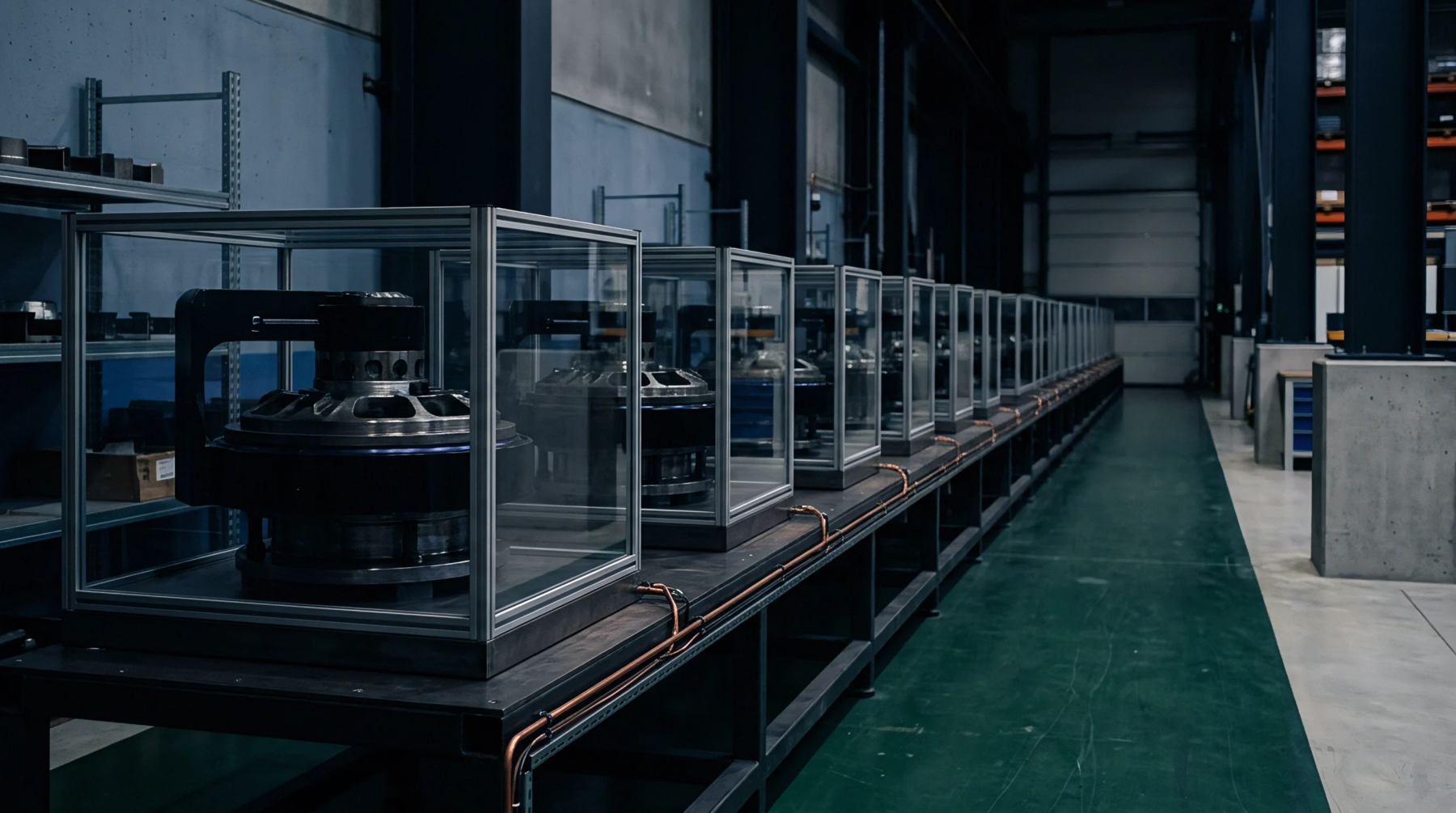
Inline phased array testing maps structural adhesive wet-out and void formation through metal pack enclosures in real time at production line speeds.

Augmenting filter state vectors with differential hysteresis operators resolves LFP voltage plateau ambiguity and eliminates conservative 15% capacity buffering.

Acoustic phase inversion mapping detects cell bond voiding by identifying the 180 degree pulse polarity shift caused by metal to gas impedance drops.

Accurate iron phosphate state of charge tracking relies on temperature compensated open circuit voltage hysteresis mapping measured after four hour rest periods.

Volumetric displacement precision, shear rate thermal control, and wear-resistant fluid metering govern automated thermal gap filler dispensing performance.

Optimal prismatic module thermal interface selection balances bulk conductivity against rheology and compliance to accommodate swelling without dielectric rupture.

Active pressure vacuum degassing during cell formation eliminates trapped gas voids in high capacity sodium electrodes to prevent local salt depletion and plating.

Cryptographic ledgers validate cold chain battery telemetry via edge hashing, zero-knowledge proofs, and automated smart contract escrow claims
Resolve transborder cell test liabilities by enforcing ILAC-MRA accredited retesting, securing escrow retentions, and substituting compliant dangerous goods dossiers.

Spatial point process modeling quantifies microstructural carbide clustering in powder metallurgy tool steels to prevent premature fatigue failure in tooling.

Auditing factory process control indices validates cell test certificates by proving batch uniformity and preventing latent field defects.

Stereological volume calculations in rolled tool steel require multi-planar geometric integration to correct directional carbide stringer measurement bias.
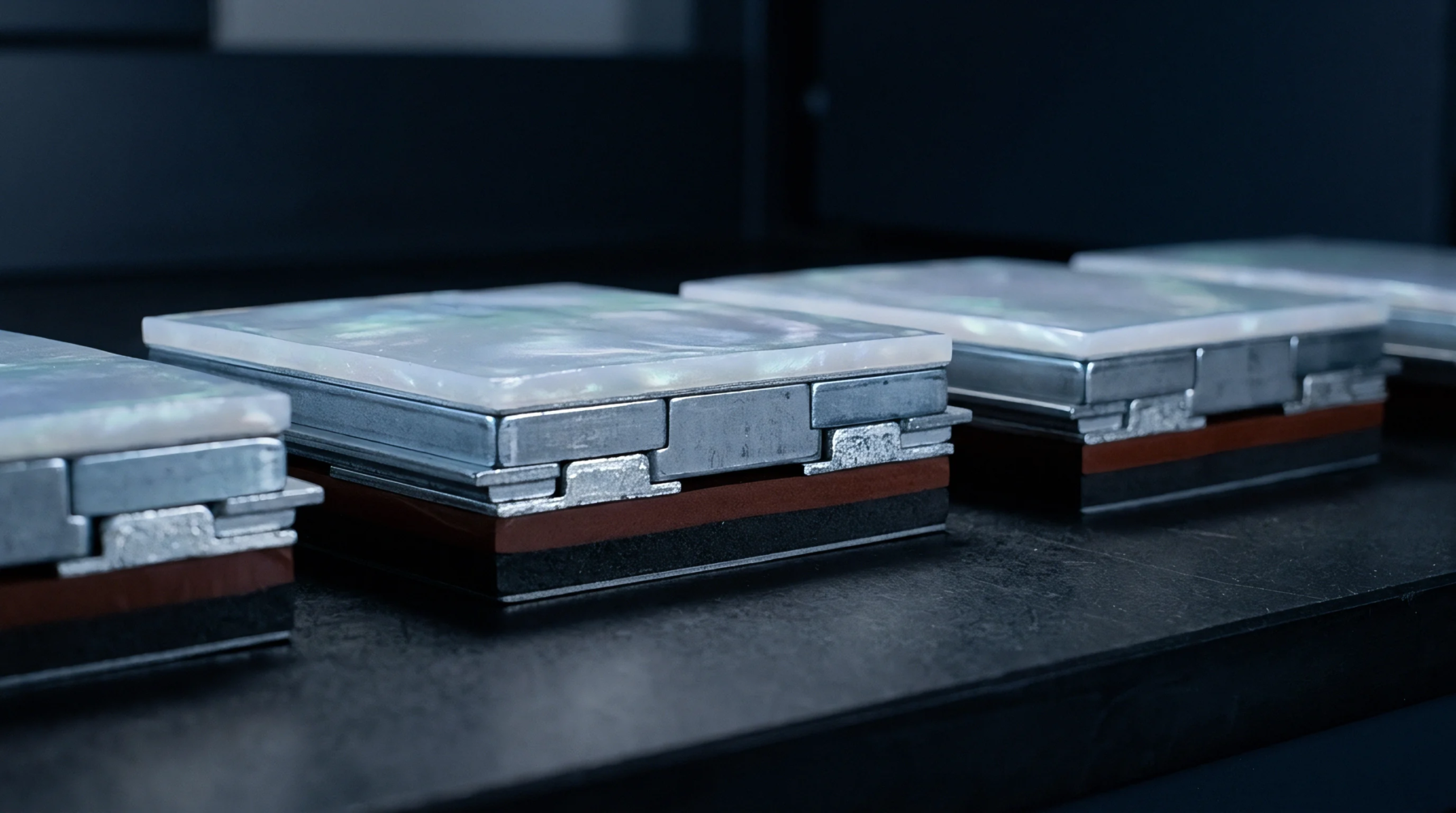
Decoupling thermal expansion from operando intercalation creep separates reversible lattice breathing from irreversible structural degradation across modules.

Systematic ASTM E562 manual point counting protocols quantify tool steel carbide and austenite volume fractions within verified statistical error boundaries.

Operando fiber sensing decouples internal cell temperature and strain via multi-grating waveguides, detecting lithium plating onset before voltage deviations occur.

Subzero battery warranty validation requires compact CAN FD payload packing of cell voltage differentials and temperature rates to prove lithium plating limits.

Uncorrected Soret diffusion in post-fast-charge diagnostics inflates measured SEI resistance by up to 40 percent, skewing life and safety dossiers.

Optimize close-coupled gas atomization gas-to-metal ratio between 3.5 and 4.0 to maximize 5 to 25 micrometer battery powder yield while limiting fines.

Subtracting thermo-galvanic voltage offsets from post-pulse relaxation telemetry prevents state-of-charge drift and protects battery warranty diagnostics.

Active isothermal terminal calibration eliminates contact heat injection during high-current cell testing, preventing false capacity and cycle life data.

Converting helium bombing signal data to standard air leak rates requires applying the Howl-Mann equation with explicit cavity volume and dwell parameters.

Contractual impedance guarantees depend on ten-second DC resistance metrics, bridging microstructural interphase degradation models to commercial warranty enforcement.

Combining high-frequency impedance metrics with dQ/dV peak shifting catches early cell resistance variations before cycling degradation becomes visible.

Sacrificial electrolyte additives stabilize high-nickel cathode surface phases by forming inorganic passivation films that inhibit nickel reduction and oxygen gas release.

Sub-microsecond test hardware synchronization requires carrier phase noise below -138 dBc/Hz at 10 kHz offset to keep channel timing jitter under 5 nanoseconds.

Maintaining gas atomization pressure between 2.5 MPa and 4.0 MPa optimizes particle sphericity while suppressing fine satellite dust in battery precursor synthesis.

Solid phase hysteresis requires state space BMS modeling and GITT quantification to prevent severe state of charge errors and uncompensated efficiency loss.
Expertise is a utility, not a secret. sentiention™ publishes its working knowledge as open reference: intelligence layer covering the materials it sources, the markets it enters, and the reference that serves both.